
Why Visit Tanzania: The Timeless Heart of the African Safari
Tanzania is a land where the soul of Africa beats in rhythm with the wind across the savannah, where the ancient roar of lions echoes beneath endless skies, and where nature unveils her most dramatic masterpieces. From the snow-capped summit of Mount Kilimanjaro to the golden plains of the Serengeti, from the flamingo-lined shores of Lake Manyara to the turquoise calm of Zanzibar’s beaches, Tanzania is more than a destination – it’s an awakening. Every corner of this vast country tells a story of wilderness, culture, and beauty that seems untouched by time.
The Cradle of the Great Migration
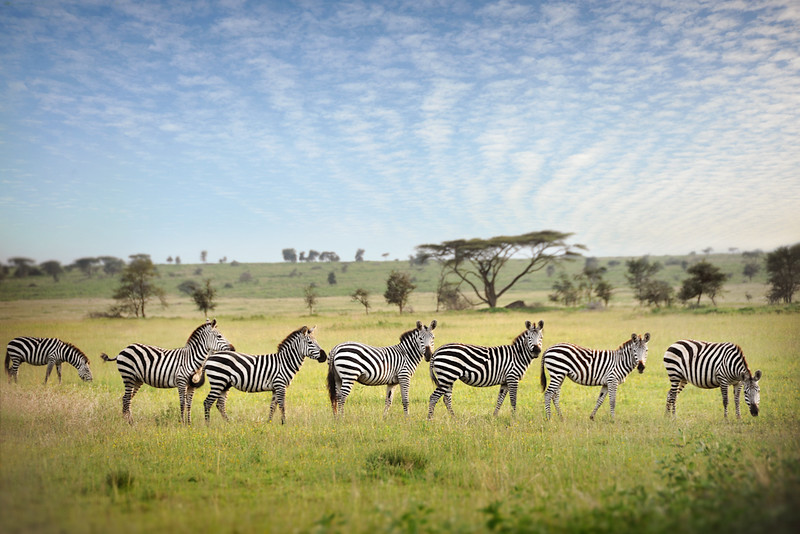
Tanzania’s Serengeti National Park is perhaps the most famous wildlife stage on Earth – home to the Great Migration, a natural spectacle that defines the rhythm of life itself. Over 1.5 million wildebeests, accompanied by zebras and gazelles, move in a perpetual cycle across the Serengeti plains in search of greener pastures. This breathtaking journey – shadowed by predators, storms, and dust – is nature’s most profound drama. Watching a river crossing or a lioness stalking the herds on the golden plains is not just a safari moment; it’s witnessing evolution in motion. The Serengeti embodies Africa’s purest wild spirit – vast, eternal, and uncontainable.
The Majesty of Mount Kilimanjaro
Rising to 5,895 meters, Mount Kilimanjaro – Africa’s highest peak – is both a challenge and a dream for adventurers worldwide. Its snow-capped summit towers above the clouds, visible for miles across the plains, and its slopes transition from lush rainforest to alpine desert and icy glaciers. Climbing Kilimanjaro is a journey through ecological worlds – from tropical birds and monkeys in the lower forest to the stark, silent beauty of its volcanic peak. Even those who never ascend feel its magnetic presence, watching its silhouette at dawn from nearby Amboseli or Arusha – a symbol of Africa’s grandeur.
The Wonder of Ngorongoro Crater
The Ngorongoro Crater, a UNESCO World Heritage Site, is one of the world’s most extraordinary natural wonders – a collapsed volcanic caldera teeming with wildlife. Inside its steep walls lies a microcosm of East Africa’s ecosystem: lions, elephants, black rhinos, buffaloes, flamingos, and countless others living within a self-contained Eden. The crater floor feels like a secret sanctuary, where time has paused and nature reigns supreme. Overlooking it from the crater rim is an experience that humbles even the most seasoned traveler – the realization that you’re gazing into one of Earth’s most perfect creations.
The Shores of Zanzibar
After the thrill of the savannah, Tanzania invites you to unwind in the tropical paradise of Zanzibar, the “Spice Island.” With its white-sand beaches, swaying palms, and coral reefs glowing beneath turquoise waters, Zanzibar feels like another world. The island’s soul, however, lies in Stone Town, a labyrinth of ancient alleys, carved wooden doors, and lingering scents of cloves and cinnamon. Here, cultures from Africa, Arabia, India, and Europe blend into one timeless rhythm. Whether diving with dolphins, sailing on a traditional dhow at sunset, or exploring spice farms, Zanzibar completes Tanzania’s magic – the perfect harmony of adventure and serenity.
The Untamed South and West
Beyond the famous north lies a wilder, quieter Tanzania – the Southern and Western Circuits, where the spirit of true adventure thrives. Ruaha National Park and Selous Game Reserve (now part of Nyerere National Park) stretch across millions of hectares of untouched wilderness. Here, game drives feel intimate and raw – with hardly another vehicle in sight. Farther west, Katavi National Park and Mahale Mountains host some of Africa’s last great chimpanzee populations, offering rare trekking experiences by the shores of Lake Tanganyika. This lesser-traveled side of Tanzania reveals the country’s true depth – authentic, remote, and profoundly wild.
A Tapestry of Cultures and People
Tanzania’s richness is not only natural but deeply human. Over 120 ethnic groups coexist peacefully, each preserving traditions that shape the country’s cultural identity. From the proud Maasai herders of the north to the Chagga farmers on Kilimanjaro’s slopes and the Swahili traders along the coast, every encounter tells a story of heritage and harmony. Visitors are often welcomed with warm smiles and the phrase “Karibu Tanzania” – meaning “You are welcome to Tanzania.” This open-hearted hospitality is not a formality; it’s a way of life, rooted in the spirit of Ubuntu – “I am because we are.”
Adventure Without Boundaries
Tanzania’s landscape is one of contrasts and endless possibilities. You can climb Kilimanjaro one week, photograph the Great Migration the next, and dive among coral gardens in Zanzibar the week after. Balloon safaris over the Serengeti at sunrise, walking safaris through Tarangire’s baobab valleys, or cultural visits to Maasai bomas add texture to every journey. It is a destination that satisfies explorers, romantics, photographers, and families alike. Here, adventure isn’t about adrenaline alone – it’s about connection: to the land, to its creatures, and to the rhythm of life that pulses beneath its soil.
Conservation and Legacy
Tanzania stands at the forefront of African conservation. Nearly 40% of the country’s land is protected through national parks, reserves, and conservation areas – an extraordinary commitment to nature’s preservation. Initiatives involving local communities ensure that tourism benefits both people and wildlife, creating a model of coexistence that sustains the future of the wild. From the anti-poaching patrols in Selous to reforestation programs around Kilimanjaro, every safari contributes to a legacy of protection and pride.
The Spirit of Tanzania
To visit Tanzania is to journey through the living heart of Africa – a place that awakens awe, humility, and gratitude. Its landscapes speak in colors and silences that words can barely capture. Its wildlife embodies freedom. Its people embody grace. Every sunrise over the Serengeti, every wave lapping Zanzibar’s sands, and every breath drawn beneath Kilimanjaro’s peak reminds you that the wild still exists – and that it welcomes you home.