
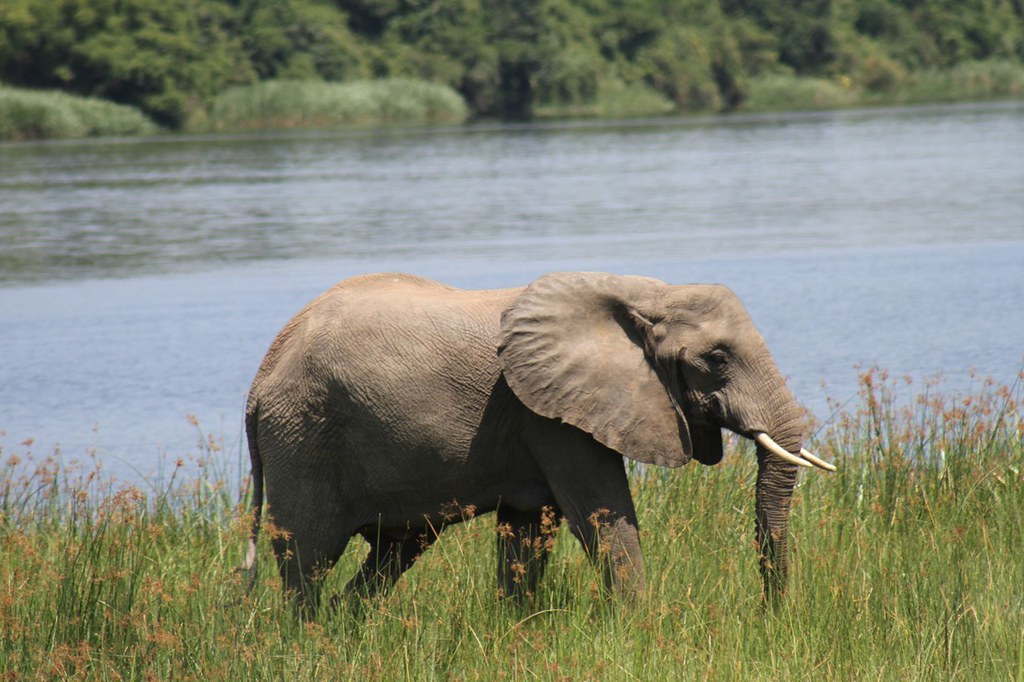
Uganda offers the widest single-country safari variety in the region we operate in: mountain gorilla trekking, chimpanzee tracking, classic savannah game drives, and one of the most dramatic waterfalls on the continent, all reachable within a few hours’ drive of each other. Known as the “Pearl of Africa,” it sits directly on the equator, packing forest, savannah, wetland and mountain habitats into a country roughly the size of Oregon.
Gorilla Trekking in Bwindi and Mgahinga
Bwindi Impenetrable National Park is home to roughly half of the world’s remaining mountain gorillas, spread across four trekking sectors – Buhoma, Ruhija, Rushaga and Nkuringo – each with its own habituated families and its own character. Buhoma is the most developed and accessible sector; Ruhija sits highest and coolest; Rushaga has the most habituated families and hosts the Gorilla Habituation Experience; Nkuringo is the most remote, with a steeper, more demanding trek. Mgahinga Gorilla National Park, further south near the Rwanda and Congo borders, offers a smaller-scale alternative with a single habituated family, often with a quieter, less-visited trekking experience.
Beyond gorilla trekking, Uganda’s national parks form a genuinely connected circuit rather than isolated stops. Chimpanzee tracking in Kibale Forest pairs naturally with a Bwindi or Mgahinga gorilla trek on the same trip, and Queen Elizabeth National Park’s game drives and Kazinga Channel boat cruise sit roughly midway between the two on the standard driving route, making a combined primate-and-savannah itinerary straightforward to build without significant extra transfer time. Murchison Falls, further north, adds the Nile’s dramatic plunge and a different game-viewing register entirely for travellers with enough days to extend the trip. However you sequence it, permit cost stays fixed at $800 per person regardless of which sector or park you’re trekking from, so the main planning question is really about pacing and which combination of parks fits the days available – something we work through directly during itinerary planning rather than offering a single fixed Uganda package.
Uganda at a Glance
| Gorilla permit | $800 per person |
| Chimpanzee permit (Kibale) | ~$250 per person |
| Main gateway airport | Entebbe International Airport |
| Currency | Ugandan shilling (USD widely accepted) |
| Core parks | Bwindi, Mgahinga, Kibale, Queen Elizabeth, Murchison Falls |
Chimpanzee Tracking in Kibale Forest
Kibale National Park, often called the “Primate Capital of the World,” hosts an estimated 1,500 chimpanzees alongside twelve other primate species in tall, hardwood forest. Daily guided treks depart from Kanyanchu visitor centre with strong, consistent success rates, and the longer Chimpanzee Habituation Experience is available for travellers who want more than the standard one-hour visit. Kibale pairs naturally with a stop at nearby Bigodi Wetland Sanctuary, a community-run boardwalk good for birding and monkey sightings.
Classic Safari in Queen Elizabeth National Park
Queen Elizabeth National Park delivers the savannah safari half of a Uganda trip: game drives across the Kasenyi plains for elephant, buffalo, Uganda kob and lion, tree-climbing lions specifically in the Ishasha sector, and a boat cruise along the Kazinga Channel that reliably delivers some of the highest hippo and Nile crocodile density anywhere in the country, plus strong birdlife along the banks. The park sits conveniently between Bwindi and Kibale, making it a natural stop on a multi-park Uganda itinerary rather than a detour.
Murchison Falls and the Nile
Murchison Falls National Park, in Uganda’s north, centres on the point where the Nile River forces itself through a gorge roughly seven metres wide before plunging over a 43-metre drop – the world’s most powerful waterfall by force per unit width. A boat cruise to the base of the falls is a highlight in its own right, alongside game drives across the park’s northern sector for lion, elephant, giraffe and buffalo. Ziwa Rhino Sanctuary, Uganda’s only place to see rhinos in the wild, sits directly on the road between Kampala and Murchison Falls, making it an easy stop to add without a separate detour.
Beyond the Core Circuit
Travellers with more time can add Kidepo Valley National Park in Uganda’s remote northeast, genuinely one of Africa’s least-visited parks despite rivalling the more famous reserves for scenery and wildlife density, or Lake Mburo National Park, a smaller, calmer park good for a lower-intensity stop with zebra, giraffe and impala. Hikers can tackle the Rwenzori Mountains, the legendary “Mountains of the Moon,” for a multi-day trekking experience distinct from anything else in the region.
Getting Around Uganda
Ground transport between parks runs anywhere from two to nine hours depending on the specific combination, in a dedicated 4×4 vehicle with a driver-guide for the full trip. Domestic flights connect the major parks and cut the longest transfers significantly – useful on itineraries with limited time, though most travellers on a week or longer find the road transfers themselves genuinely scenic rather than simply a means to an end, passing through terraced hillsides, tea plantations, and small trading towns along the way.
Best Time to Visit
Uganda’s two dry seasons – June through September, and December through February – offer the firmest trekking trails, though gorilla and chimpanzee sightings stay consistently high throughout the year since neither species migrates seasonally. The wetter months (March-May, September-November) bring muddier trails but easier permit availability and a noticeably greener forest.
Where to Stay in Uganda
Accommodation near Bwindi’s sectors spans budget guesthouses through top-tier luxury lodges, with mid-range properties like Buhoma Lodge and Engagi Lodge offering the most popular balance of comfort and value for most trekkers. Queen Elizabeth and Murchison Falls both have a comparable spread of lodges positioned for wildlife viewing and river or channel access, while Kibale’s forest-edge properties range from simple guesthouses to Kyaninga Lodge’s genuinely striking crater-lake setting. We match specific lodges to your sector, dates and budget rather than defaulting to one standard recommendation, and we’re happy to walk through two or three real options at whichever tier genuinely fits your trip.
A Sample Uganda Itinerary
A representative week-long trip might open with a transfer from Entebbe to Bwindi (roughly eight to nine hours by road, or around ninety minutes by scheduled light aircraft), followed by the gorilla trek itself on day two. The route then continues north through Ishasha to Queen Elizabeth National Park for a day combining the Kazinga Channel boat cruise with a game drive, before pushing on to Kibale for chimpanzee tracking and a stop at Bigodi Wetland Sanctuary. The trip closes with a return transfer to Entebbe, timed against an onward or international flight. Shorter itineraries drop one or two of these stops; longer ones add Murchison Falls, Kidepo Valley, or a Rwanda extension.
Culture and Communities Around the Parks
Uganda’s parks sit alongside genuinely distinct communities worth engaging with beyond the wildlife itself. The Batwa, traditionally forest-dwelling people displaced when Bwindi and Mgahinga became protected parks, run cultural experiences near several trekking sectors that offer real insight into pre-conservation forest life – foraging demonstrations, traditional dance, and firsthand accounts of the transition to life outside the forest. Local markets, craft cooperatives and school visits are all genuinely easy to build into a non-trekking day, particularly around Buhoma and the wider Kibale area, giving a trip real texture and human context that wildlife viewing alone doesn’t provide on its own.
Frequently Asked Questions
How many days do I need for a Uganda trip?
A single gorilla trek can be done in as few as three days including transfers, but seven days is a popular length that adds chimpanzee tracking and a savannah park without feeling rushed.
Can I combine Uganda with Rwanda on one trip?
Yes – the land border crossing between Bwindi and Volcanoes National Park takes a few hours, making a two-country gorilla trip straightforward to arrange.
Is Uganda cheaper than Rwanda for gorilla trekking?
Yes – Uganda’s $800 permit sits well below Rwanda’s $1,500, making it the more affordable of the two primary trekking countries.
Do I need a visa for Uganda?
Most nationalities need an e-visa, processed online well in advance of travel. Uganda also participates in the East Africa Tourist Visa scheme, allowing convenient single-visa travel between Uganda, Rwanda and Kenya for eligible travellers on a combined itinerary.
What’s the minimum age for gorilla trekking in Uganda?
15 years old, strictly enforced with ID checks at park headquarters. Chimpanzee tracking in Kibale has a lower minimum age of 12, making it a realistic option for slightly younger travellers in the same family group.
Choosing a Bwindi Sector
The choice of trekking sector matters more than it might first appear, since it shapes both the trek itself and the rest of your itinerary. Buhoma, in the park’s north, is the most established sector with the widest lodge selection and easiest access from Queen Elizabeth National Park, making it the natural default for a first-time multi-park itinerary. Ruhija, the highest and coolest sector, tends to appeal to travellers less concerned with lodge variety and more interested in a quieter, higher-altitude trekking experience. Rushaga, in the south, has the largest number of habituated families of any sector and hosts the Gorilla Habituation Experience for travellers wanting more than the standard hour. Nkuringo, the most remote and highest-altitude of the four, offers the most physically demanding trek and the fewest crowds, appealing to more experienced or adventurous trekkers specifically.
Uganda’s Wildlife Beyond Primates
While gorillas and chimpanzees are the headline draw, Uganda’s savannah parks hold their own against better-known destinations elsewhere in East Africa. Queen Elizabeth National Park alone hosts over 95 mammal species and 600 bird species, an unusually high count reflecting the park’s mix of savannah, wetland and forest habitat within one boundary. Murchison Falls supports one of Uganda’s largest elephant populations along with giraffe, buffalo and a healthy lion population, while Kidepo Valley in the far northeast adds cheetah and a genuinely different, more arid landscape rarely seen elsewhere in the country.
Plan Your Uganda Safari
Tell us your dates, budget and priorities, and we’ll build a genuinely tailored Uganda itinerary around the specific parks and activities that matter most to you, rather than a generic route. Get in touch to start planning.