
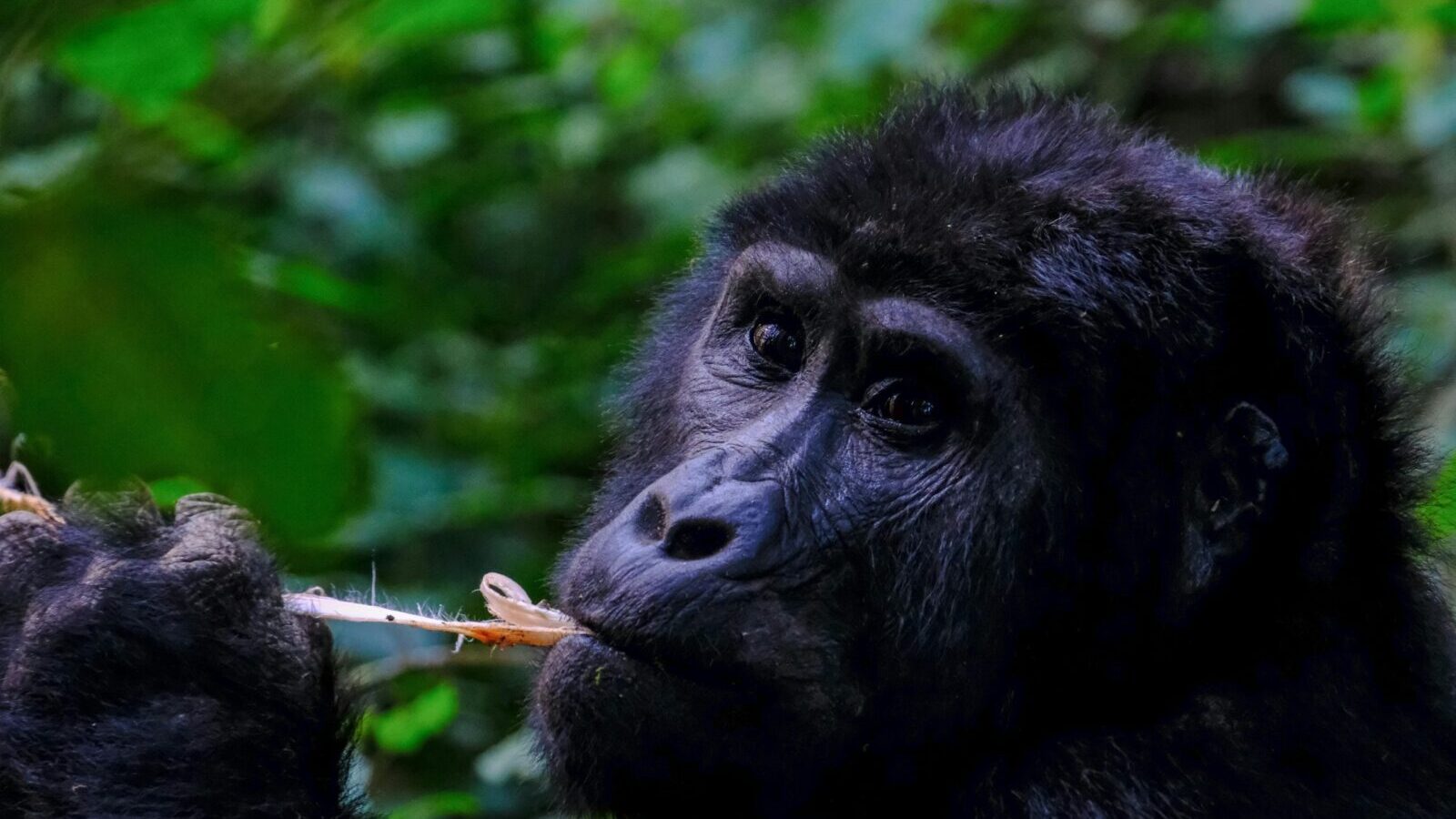
Bwindi Impenetrable National Park earns its name honestly. Spread across roughly 321 square kilometres of southwestern Uganda, its forest is one of the oldest and most biologically diverse habitats in Africa, a tangle of vines, ferns and hardwood canopy that has stood largely undisturbed since before the last Ice Age. Inside that tangle live just over half of the world’s remaining mountain gorillas, split across four separate trekking sectors that each offer their own version of the same experience: a guided walk into the forest to spend a single, regulated hour with a habituated family.
Unlike a game drive, where wildlife sightings are a matter of luck and open plains, gorilla trekking in Bwindi is a deliberate, physical undertaking. Trackers leave before dawn to locate the previous night’s nest site and begin following fresh signs – flattened vegetation, discarded fruit, dung – while your own group departs later from a central briefing point. The forest decides how long the walk takes, not the itinerary. Some mornings the family has barely moved and the walk is over within ninety minutes. Other days it takes most of the day to close the distance. Either way, once your guide raises a hand and the forest goes quiet, you get exactly sixty minutes, no more, with a wild gorilla family going about its ordinary life a few metres away.
The hour itself rarely feels like sixty minutes – it feels like the forest has simply let you in for a while.
The Four Sectors, and How They Differ
Bwindi is not one trailhead but four, and which one your permit assigns you to shapes almost everything else about the day, from drive time and lodge choice to how physically demanding the walk itself turns out to be.
Buhoma
The park’s original and most developed sector, in the north, with the widest concentration of lodges and the gentlest average terrain of the four. A strong choice for first-time trekkers or anyone travelling with a mixed-fitness group, and the sector most people picture when they imagine gorilla trekking in Uganda.
Ruhija
Bwindi’s highest sector, sitting at real altitude in the east of the park. The climate here is noticeably cooler than Buhoma, and the surrounding forest is one of the richest birding areas in Africa, which makes Ruhija a natural pairing with a dedicated birdwatching walk the following day.
Rushaga
The sector with the most habituated families of any in Bwindi, and currently the only one offering the extended, four-hour Gorilla Habituation Experience alongside standard trekking. Terrain here is hilly but manageable, and permit availability tends to be a little easier than the other three sectors given the number of families based here.
Nkuringo
The most physically demanding of the four, perched on a ridge with sweeping views toward the Virunga volcanoes on a clear day. The trek typically descends into a forest valley to find the family, which means the climb back out after your hour is the real test of the day – worth knowing before you commit if your fitness is a genuine concern.
What to Expect on the Day
Every trek begins the same way regardless of sector: a 7:30am briefing at your sector’s park headquarters, where rangers cover safety rules, split trekkers into groups of up to eight per gorilla family, and introduce the guide and armed ranger who’ll lead your walk. Porters are available to hire on the spot for a modest fee – they carry day packs and offer a steadying hand on steep or muddy sections, and hiring one is also a direct, meaningful way to put trekking income into the local community rather than just the park authority.
From there, the walk itself varies enormously. Trackers radio updates on the family’s location throughout the morning, and your guide adjusts the route accordingly, sometimes doubling back or taking a longer path around difficult terrain. There’s no fixed trail – Bwindi’s paths are cut and re-cut through undergrowth as the gorillas move, which is part of what makes the walk feel genuinely wild rather than curated.
When you’re close, your guide will ask you to leave bags and walking sticks behind and approach the final stretch quietly. The rules are simple and firmly enforced: keep at least seven metres from the gorillas, speak in whispers if at all, no flash photography, and stay masked if you have even a mild cold, since these are contagious respiratory illnesses no gorilla immune system has evolved to handle. Then the hour begins, and it is, without much competition, the single most talked-about hour of most people’s entire trip.
Permits, Costs and Booking
A Uganda Wildlife Authority gorilla permit currently costs $800 per person and covers exactly one trek, one family, one hour. Permits are date- and family-specific, non-transferable, and capped at eight trekkers per family per day – which is the reason serious advance booking matters. Peak season (June–August and December–February) permits can sell out four to six months ahead for the more popular sectors, particularly Buhoma.
| Minimum age | 15 years old |
| Group size per family | 8 trekkers maximum |
| Fitness required | Moderate – variable terrain, 2–8 hours on foot |
| Health rule | No trekking with visible cold or flu symptoms |
| Booking lead time | 3–6 months recommended in peak season |
Permits are booked through us in advance using each trekker’s passport details, and payment is typically required in full at the time of booking since the Uganda Wildlife Authority does not hold permits on a provisional basis. We handle this step directly so you’re not left navigating a foreign government booking portal on your own.
What to Pack
Sturdy, broken-in hiking boots matter more than almost anything else on this list – Bwindi’s trails are frequently muddy and uneven regardless of season. Gaiters are worth packing too, since the undergrowth genuinely lives up to “impenetrable” in patches and will otherwise work its way into your boots. A rain jacket is non-negotiable even in the dry season, since Bwindi is rainforest by definition and short showers can arrive with little warning.
Beyond footwear and rain gear, bring more water than you think you’ll need, gardening-style gloves for handling thorny vegetation on steep sections, a long-sleeved shirt and trousers in neutral colours, and a small day pack (or arrange for a porter to carry it). A basic first-aid kit, sun protection, and insect repellent round out the list. Binoculars are optional for the trek itself but genuinely useful if you’re pairing your visit with a nature walk or birding session.
Health and Safety Rules
The seven-metre minimum distance rule exists specifically to protect the gorillas, not trekkers – mountain gorillas share close to 98% of human DNA, which means they’re susceptible to the same respiratory illnesses we are, without any built-up immunity. A cold that would keep you home from work for a day could be genuinely dangerous to a gorilla family. If you’re feeling unwell in the days before your trek, tell your guide honestly; sectors can sometimes accommodate a permit date change, but knowingly trekking while contagious puts an endangered species at real risk.
Beyond that core rule, rangers carry radios and, in Uganda’s case, are typically armed as a precaution against forest buffalo and other wildlife rather than the gorillas themselves, which are almost never aggressive toward habituated-experience visitor groups behaving as instructed.
Best Time to Trek
Bwindi is trekked year-round, and gorillas are found in every month – this isn’t a seasonal migration. What changes with the season is the trail underfoot. The two dry windows, June through August and December through February, bring firmer, less slippery ground and are correspondingly the most heavily booked months. The rainier months in between are quieter and occasionally cheaper on the lodge side, at the cost of muddier trails and a higher chance of rain gear actually getting used.
Photography During Your Trek
Flash photography is prohibited outright – it can startle or distress the gorillas at close range – so plan around available light instead. Bwindi’s canopy is dense, meaning even midday treks happen in fairly low, green-tinted light; a lens that performs well at a wide aperture makes a real difference. Because you can’t move freely once you’re near the family (staying roughly in position is part of the etiquette), a moderate zoom is more useful than a fixed wide-angle. Above all, keep your phone or camera secondary to actually watching – most trekkers report that the moments they remember best are the ones they weren’t looking at through a screen.
Frequently Asked Questions
How physically fit do I need to be?
Moderate fitness is enough for most sectors, particularly Buhoma. Nkuringo and Ruhija ask more of trekkers given their terrain and altitude. Porters can carry your pack and offer support on steep sections regardless of sector.
What happens if I can’t complete the trek?
Rangers will never leave a struggling trekker behind – pace is adjusted, rest stops added, and in genuine cases a sedan-chair carry (arranged and paid for separately) can bring someone the rest of the way.
Can children trek?
The Uganda Wildlife Authority sets a firm minimum age of 15. Younger children can join a nature walk or the Bigodi Wetland Sanctuary walk while parents trek.
What if it rains on trek day?
Treks proceed in the rain – this is rainforest, and rain doesn’t cancel a permit. A proper rain jacket and gaiters are the only real preparation needed.
Can I choose which sector I trek in?
Yes, within permit availability. We match your sector to your lodge preference, fitness level and travel dates, and confirm the assignment before booking your permit.
Book This Trek
We match your permit to the right sector, dates and lodge, and confirm every detail before you fly. Get in touch to start planning.