
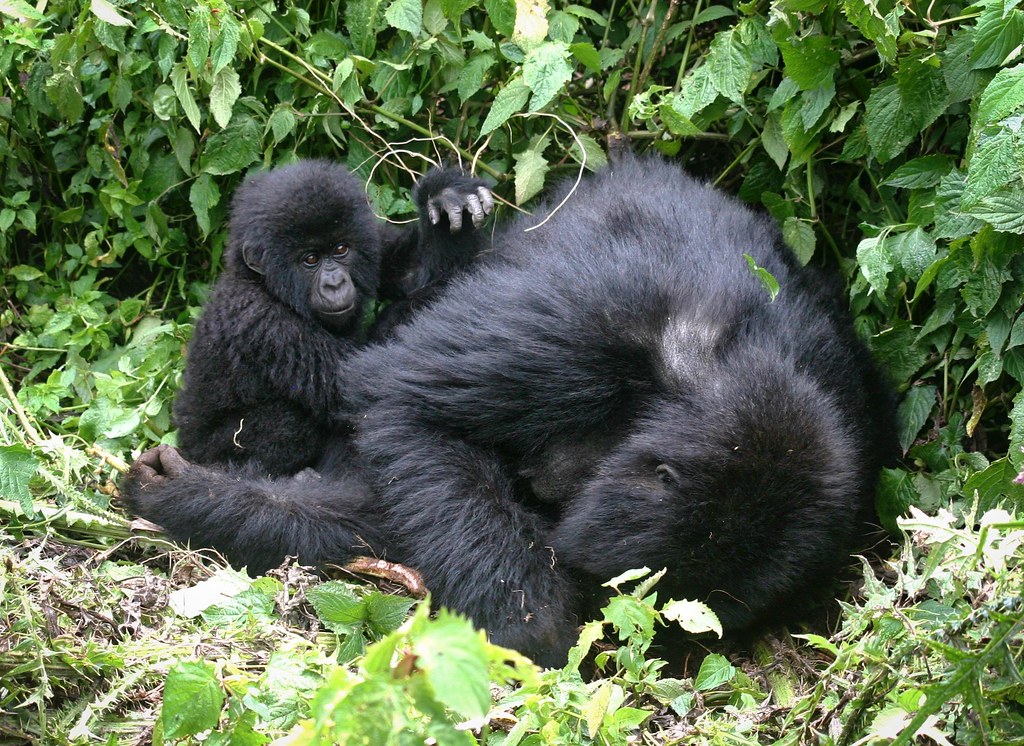
The Gorilla Habituation Experience is the longer, more immersive alternative to standard gorilla trekking, giving up to four hours with a family still being habituated to human presence rather than the standard hour. Run exclusively in Bwindi’s Rushaga sector alongside genuinely ongoing research, it’s the primate equivalent of a backstage pass – real, hands-on access to the habituation process itself, not merely its polished finished result.
How Habituation Differs From Standard Trekking
A gorilla family selected for habituation is calmer around people than a completely wild group but hasn’t yet reached the settled, predictable state of Bwindi’s long-established habituated families used for standard treks. Participants join researchers and trackers as part of the ongoing habituation process itself, spending a full morning block with the family rather than a fixed hour, and picking up detail on individual gorillas, family dynamics and behavioural development that a standard visit doesn’t have time to cover.
Habituation at a Glance
| Location | Rushaga sector, Bwindi Impenetrable National Park |
| Duration | Up to 4 hours with the family |
| Permit cost | ~$1,500 per person |
| Daily group size | 4 people per family, smaller than standard treks |
| Minimum age | 15 years |
Why Rushaga Specifically
Bwindi’s Rushaga sector hosts more habituated and semi-habituated gorilla families than any other single sector in the park, which is why the habituation experience runs here rather than elsewhere. This concentration genuinely reflects years of dedicated, patient habituation work carried out by the Uganda Wildlife Authority and its research partners, and it means Rushaga alone currently has both the necessary infrastructure and the specific families genuinely available to support the longer, research-adjacent format that the habituation experience requires.
Why the Daily Group Is So Small
Standard gorilla treks allow up to eight visitors per family per day; the habituation experience caps the group at just four. A family still adjusting to human presence needs a calmer, less crowded exposure than a fully habituated group can comfortably tolerate, and the smaller number also means each participant genuinely gets more individual attention and closer engagement with the accompanying researchers than a full standard-sized group would. This small cap is also why booking a habituation permit well ahead matters more than for almost any other single activity in the region.
Cost: Habituation vs. Standard Trekking
At roughly $1,500 per person, the habituation permit costs significantly more than Uganda’s standard $800 gorilla permit – very nearly double, reflecting both the deliberately smaller group size and the genuinely four-times-longer format on offer. It’s a genuine premium experience rather than a simple straightforward upgrade, and it’s worth weighing honestly against what a standard trek already reliably delivers before committing the meaningfully larger budget it requires.
Who the Experience Suits
The habituation experience suits travellers who’ve already done a standard gorilla trek and want more depth, those with a genuine interest in primate research and conservation, and anyone specifically wanting more than a single hour with a gorilla family regardless of cost. It’s not automatically the “better” choice for every traveller – many people find a standard trek’s guaranteed hour perfectly sufficient, and the habituation experience’s cost and physical duration are real trade-offs worth being honest about during planning.
Physical Demands
Four hours in Rushaga’s steep, densely forested terrain is genuinely more demanding than a standard one-hour trek, both in raw duration and because the terrain here tends toward the more physically challenging end of Bwindi’s four sectors. A reasonable baseline fitness level matters more for this experience than for standard trekking, and we discuss this honestly with any traveller considering it rather than assuming universal suitability.
The Habituation Process Itself
Habituating a wild gorilla family to human presence typically takes two to three years of consistent, careful daily contact by trackers and researchers before the family reaches the calm, predictable state used for standard tourist treks. Trackers visit the target family every day regardless of tourist bookings, maintaining slow, non-threatening, consistent behaviour until the gorillas stop reacting to human presence as a threat. The habituation experience gives participants a genuine window into this process partway through, rather than only ever encountering the finished result that standard trekking delivers.
A Day With the Habituation Experience
The day begins early with a briefing at Rushaga’s park headquarters, followed by the trek itself to reach the family – similar in structure to locating a family for standard trekking, though the family’s specific location and the day’s overall pace are shaped by the ongoing research schedule rather than purely visitor logistics. Once with the family, the extended four-hour window allows time to observe a far fuller range of natural behaviour than a standard hour permits: feeding, resting, grooming, play among younger gorillas, and the accompanying researchers’ notes and observations on individual gorillas add real depth that a standard trek’s single guide can’t always provide in the same detail.
What You Gain Beyond the Extra Time
Beyond simply more time, the habituation experience offers a genuinely different kind of access – the accompanying trackers and researchers are typically the same people spending their working days with this specific family, and their depth of individual knowledge (which gorilla is which, family relationships, recent behavioural changes) goes well beyond what a standard trek’s guide, who moves between different families day to day, can usually offer. For travellers with a real interest in gorilla behaviour and conservation specifically, this difference in depth is often the more meaningful part of the experience, even more than the additional hours themselves.
Conservation Value of the Habituation Experience
Permit revenue from the habituation experience directly funds the ongoing habituation process itself, along with broader ranger patrols and anti-poaching work across Rushaga specifically. Because the fee is considerably higher than a standard permit while the daily group size is much smaller, each individual booking contributes disproportionately to funding this specific conservation work relative to how many visitors it actually involves – a detail worth knowing for travellers weighing the cost against a standard trek’s lower price.
Is It Right for You?
This comes down to genuine personal priorities rather than a universal answer. Travellers who found a standard trek’s single hour left them wanting more, or who have a specific interest in gorilla behaviour and the conservation process itself, tend to find the habituation experience clearly worth the added cost and duration. Travellers satisfied with a shorter, more predictable encounter – and there’s nothing wrong with that – are often just as happy with standard trekking at a considerably lower price. We talk this through honestly during planning rather than assuming the longer, pricier option is automatically right for every traveller who asks about it.
Frequently Asked Questions
Is habituation available anywhere besides Rushaga?
No – currently the Gorilla Habituation Experience runs exclusively in Bwindi’s Rushaga sector, given the concentration of habituated and semi-habituated families there.
How far in advance should I book?
As early as possible given the daily cap of just four permits – significantly tighter than standard trekking’s eight-per-family allocation.
Can I do both standard trekking and habituation on the same trip?
Yes, and it’s a genuinely interesting comparison for travellers curious about both formats, though we’d generally space them across separate days given the physical demand of each.
Is the chimpanzee equivalent also available?
Yes – a parallel Chimpanzee Habituation Experience runs at Kibale Forest, following the same longer-format logic for a chimpanzee community.
What to Bring
Given the longer duration, pack a proper breakfast and lunch rather than a light snack, along with more water than you’d carry for a standard trek. The core kit stays the same as standard trekking – sturdy broken-in hiking boots, long trousers and sleeves, a rain jacket, gardening-style gloves for steep or vegetated sections – but bring a dry bag or waterproof cover for cameras and electronics given how much longer you’re exposed to whatever the forest weather does across a full morning.
Booking Well Ahead
With only four permits issued per day against Rushaga’s habituated and semi-habituated families, this is the tightest daily allocation of any single activity across our entire operating region – tighter even than standard gorilla trekking’s already competitive eight-per-family cap. We strongly recommend confirming a habituation booking as early as possible once your travel dates are set, ideally before locking in any other permits on the same itinerary, given how quickly this specific allocation fills during peak season.
Comparing the Two Habituation Experiences
Uganda offers habituation experiences for both gorillas and chimpanzees, run in different parks with different pricing but a shared underlying logic: extended access to a community or family still adjusting to human presence, alongside genuine ongoing research. The gorilla version costs considerably more given the higher baseline permit cost for gorillas generally, while the chimpanzee version at Kibale is comparatively more accessible. Travellers with a strong interest in primate behaviour sometimes do both across a longer trip, given how genuinely different the two species’ social structures and daily patterns are to observe at length.
Book the Gorilla Habituation Experience
Tell us your dates and we’ll check current availability directly, given just how limited the daily permit allocation genuinely is for this specific, small-group experience. Get in touch to start planning.