
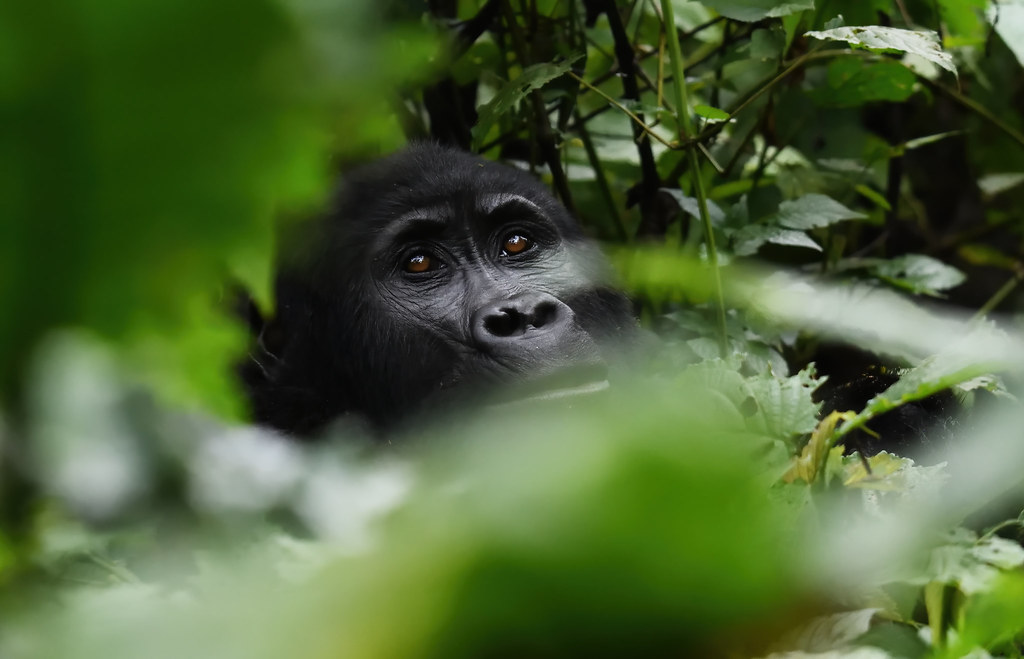
Gorilla trekking is not just another safari activity – it’s a genuine journey into the heart of Africa’s forests, and one of the most sought-after wildlife encounters found anywhere in the world. Unlike lions or elephants seen on open savannahs, gorillas live in mist-covered mountains and dense rainforest, requiring a determined hike before the reward of seeing them up close. This guide covers gorilla trekking across the whole continent: where all four gorilla subspecies live, not just the three countries where we personally operate.
The Four Gorilla Subspecies
Gorillas split into four subspecies, each confined to a distinct region of Africa. Mountain gorillas, the most famous and the only ones we personally guide treks for, live in Uganda, Rwanda and eastern DR Congo. Eastern lowland gorillas live only in Congo’s Kahuzi-Biega National Park. Western lowland gorillas inhabit Central African rainforest across Gabon, Cameroon and the Republic of Congo. Cross River gorillas are the rarest of all, with fewer than 350 individuals surviving across a small area straddling Nigeria and Cameroon.
Mountain gorillas are, in practice, the only subspecies most travellers can realistically plan a trip around – eastern lowland gorillas in Kahuzi-Biega require considerably more complex logistics given the park’s remoteness and current access constraints, and western lowland and Cross River populations sit largely outside organised tourism infrastructure entirely. That’s why our operation focuses specifically on Uganda, Rwanda and DR Congo – between them, these three countries hold the entire trekkable mountain gorilla population, and the permit system, ranger infrastructure and one-hour viewing rule are consistent across all three. Anyone researching gorilla trekking broadly and arriving here from a general search is, in practice, researching a trip to one specific mountain range spanning these three borders, whichever initial search term brought them here.
Gorilla Trekking Across Africa at a Glance
| Mountain gorillas | Uganda, Rwanda, eastern DR Congo · $400–1,500 permit |
| Eastern lowland gorillas | Kahuzi-Biega NP, DR Congo only |
| Western lowland gorillas | Gabon, Cameroon, Republic of Congo |
| Cross River gorillas | Nigeria/Cameroon border · under 350 remaining |
Where to Go: Uganda, Rwanda and DR Congo
The most accessible, well-developed mountain gorilla trekking destinations are Uganda, Rwanda and DR Congo. In Uganda, Bwindi Impenetrable National Park is the premier site, with over twenty habituated gorilla families across four sectors and UNESCO World Heritage status; Mgahinga Gorilla National Park, smaller, offers volcanic scenery and its own habituated family. In Rwanda, Volcanoes National Park delivers a more polished, premium trekking experience, part of the Virunga range and the site of Dian Fossey’s pioneering research. In DR Congo, Virunga National Park hosts mountain gorillas alongside dramatic volcanic scenery, while Kahuzi-Biega further south offers the only trekking access to eastern lowland gorillas anywhere in the world.
What to Expect on a Trek
A trek begins at dawn with a ranger-led briefing, after which small groups of up to eight trekkers set out with guides, porters and trackers. Hikes run anywhere from one hour to six or more depending on where the family ranged overnight, through thick vegetation, steep hills and often muddy terrain. Once the trackers locate the family, trekkers spend a strict one hour actually with them – a silverback watching over his group, playful youngsters tumbling through vines, mothers tending infants, a genuine window into a world most people never get to see.
Rules That Protect Both Trekkers and Gorillas
Strict rules apply everywhere gorilla trekking happens: visitors stay at least seven metres away, avoid flash photography, and remain calm and quiet throughout. Anyone showing signs of illness is barred from trekking to prevent disease transmission, and children under 15 aren’t permitted to trek at all. These rules exist because gorillas are genuinely powerful wild animals, and because their close genetic relation to humans makes them vulnerable to many of the same illnesses.
What It Costs
Permits are expensive but fund the conservation infrastructure that makes trekking possible at all. Uganda’s standard permit costs $800, with a four-hour habituation permit at roughly $1,500. Rwanda charges $1,500 per permit, reflecting its premium tourism positioning. DR Congo’s permit costs roughly $400, the most affordable of the three, though subject to the country’s variable security conditions. These prices fund anti-poaching patrols, veterinary care and community revenue-sharing programmes that have helped the mountain gorilla population grow steadily after decades of decline.
Best Time to Go
The two dry seasons – June to September and December to February – offer the easiest trail conditions. The wetter months (March-May, October-November) bring harder going but fewer crowds and, at some lodges, lower rates. Since gorillas live in rainforest, rain is possible in any month regardless of season, so proper preparation matters year-round.
How Difficult Is It, Really?
Difficulty depends almost entirely on where the assigned family happens to be that morning – some treks are short and easy, others involve hours of uphill climbing through mud and thick undergrowth, sometimes at altitude ranging from 2,200 to over 4,000 metres depending on the specific park. Most people with moderate fitness complete their trek successfully, and rangers adjust pace to the group, making it manageable across a genuinely wide range of ages and fitness levels. Hiring a porter, available at every trailhead, meaningfully reduces the physical strain.
Cultural Experiences Around the Parks
Gorilla trekking pairs naturally with cultural visits near most parks. In Uganda, the Batwa – a forest-dwelling people displaced when Bwindi became a protected park – offer storytelling, dance and forest-knowledge experiences. Rwanda offers village visits and a stop at Dian Fossey’s Karisoke Research Center. In DR Congo, cultural tours highlight traditional crafts and forest life. These add genuine human context to a trip otherwise centred on wildlife.
A Note on Conservation Status
Not every gorilla subspecies shares the same conservation trajectory. Mountain gorillas, uniquely, have seen their population grow over recent decades thanks to the trekking-funded conservation model, moving from Critically Endangered to Endangered on the IUCN Red List – one of very few great ape success stories anywhere. Cross River gorillas, by contrast, remain desperately threatened with under 350 individuals left, and western and eastern lowland gorillas both continue to face serious pressure from habitat loss, poaching and, in parts of their range, ongoing regional instability. This uneven picture is worth understanding: gorilla trekking tourism has demonstrably helped one subspecies while the others still need considerably more support.
Comparing the Trekking-Country Experience
Understanding practical differences beyond just cost helps most travellers decide where to trek. Uganda offers the widest range of activities packed around gorilla trekking itself – chimpanzees, savannah game drives, a genuine waterfall – within one country. Rwanda offers the smoothest, most predictable logistics and the shortest airport-to-trailhead transfer anywhere gorilla trekking is offered. DR Congo offers the lowest entry cost and genuinely dramatic volcanic scenery, at the cost of needing an honest, current security check before booking. None of the three is simply “better” than the others in the abstract – the right choice depends entirely on what you personally value most in a trip.
Frequently Asked Questions
Which country should I choose for gorilla trekking?
Uganda offers the best balance of cost and park variety, Rwanda the shortest transfers and most polished infrastructure, and DR Congo the lowest cost with real security caveats worth understanding first.
Can I trek gorilla subspecies other than mountain gorillas?
Yes – eastern lowland gorillas are trekkable at Kahuzi-Biega in DR Congo, though western lowland and Cross River gorillas are not offered as a standard tourist trekking activity in the same way.
Is gorilla trekking safe?
Trekking through an official park authority is considered safe – habituated families are accustomed to human presence, and rangers guide and manage the encounter throughout. Incidents are extremely rare.
How has trekking helped gorilla conservation?
Permit revenue funds ranger patrols, veterinary care and community revenue-sharing, giving local communities a direct incentive to protect gorillas rather than view them as a threat – part of why mountain gorilla numbers have grown after decades of decline.
Beyond Mountain Gorillas: Western Lowland Trekking
While mountain gorilla trekking dominates the conversation, western lowland gorilla trekking exists too, primarily in Gabon, the Republic of Congo, and parts of the Central African Republic. It’s a genuinely different experience – dense, hot lowland rainforest rather than misty volcanic slopes, generally less-developed tourism infrastructure, and considerably rarer, more logistically involved trips than the well-trodden Uganda-Rwanda-Congo circuit. It sits well outside our own operating region, but is worth knowing about for travellers with a deep, specific interest in seeing every gorilla subspecies rather than mountain gorillas alone.
Preparing for the Trek
A moderate level of fitness helps considerably, since hikes can run long and genuinely strenuous. Sturdy hiking boots, long-sleeved clothing, rain gear, gloves, insect repellent and a reusable water bottle cover the core kit list regardless of which country you’re trekking in. Walking sticks are usually provided at the trailhead, and porters – well worth hiring – carry backpacks and offer real assistance on steep sections. A waterproof bag for cameras and electronics is worth packing too, given how likely rain is in genuine rainforest.
Insider Tips for a Successful Trek
Book permits months ahead, especially for peak season travel. Some regular hiking or walking training in the weeks before your trip makes a real difference on a longer trek day. Pack lightweight, layered clothing that adjusts easily to shifting mountain weather rather than a single heavy layer. Keep a camera ready, but make sure to spend real time simply watching rather than experiencing the whole hour through a viewfinder. And above all, follow ranger instructions closely and stay calm – this is unlike any other wildlife encounter available anywhere in the world.
One Final Note
Whichever country and subspecies you end up trekking, the underlying encounter shares the same core: a wild, endangered great ape, a genuine forest, and a single hour that most travellers describe as unlike anything else they’ve done. That consistency across otherwise very different countries is part of what makes gorilla trekking such a singular activity within African travel.
Plan Your Gorilla Trek
We operate specifically in Uganda, Rwanda and DR Congo, the three countries offering the most reliable and well-established mountain gorilla trekking anywhere on the continent. Tell us your dates and priorities, and we’ll build a real, honest itinerary around them. Get in touch to start planning.