
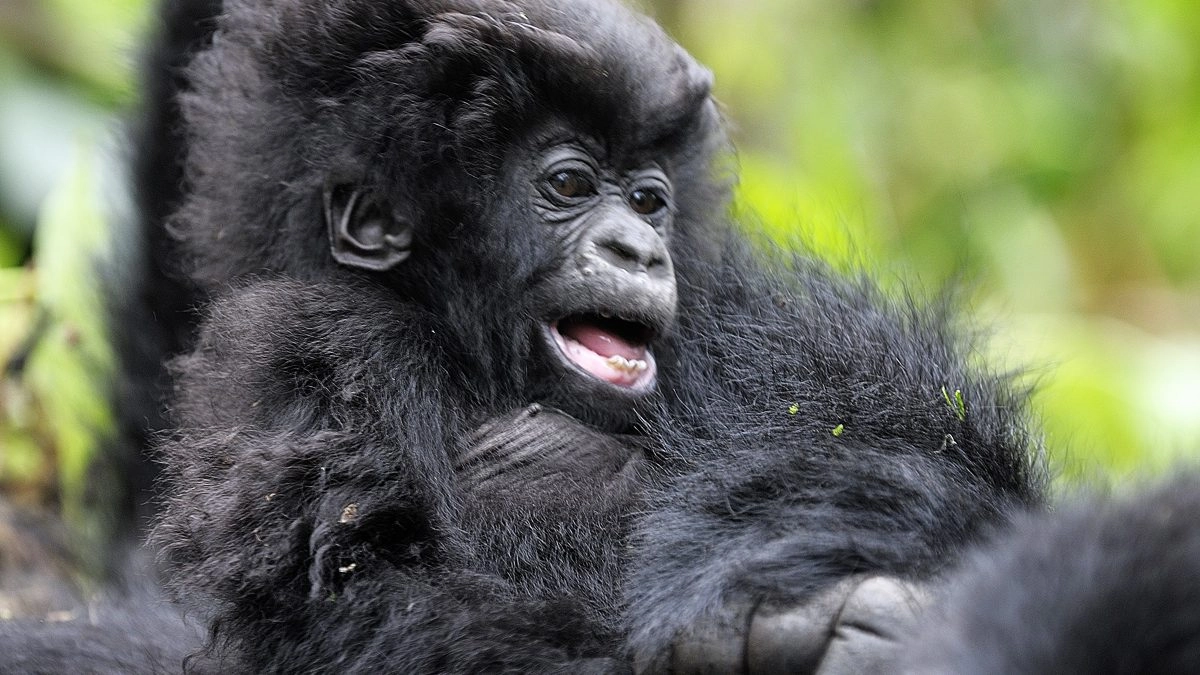
We operate across three countries – Uganda, Rwanda and the Democratic Republic of Congo – each offering its own route to the same core experience: trekking wild mountain gorillas on foot through their natural forest habitat. This page is a starting point for choosing between them, or combining more than one into a single trip.
Why These Three Countries
Mountain gorillas exist in exactly two isolated wild populations left on Earth, both confined entirely to the Virunga Massif and the surrounding volcanic forests spanning the shared borders of Uganda, Rwanda and DR Congo – nowhere else in the world can you trek them, and that fact alone shapes almost every itinerary decision that follows. That geographic reality is why our operation is built around these specific three countries rather than a broader East Africa remit: it’s where the gorillas actually are.
Each country’s page below goes well beyond a summary – full permit logistics, park-by-park detail, and the practical trade-offs that actually drive most people’s decision. Uganda’s draw is breadth: Bwindi and Mgahinga sit alongside Queen Elizabeth’s game drives and Kibale’s chimpanzees in one country. Rwanda trades that breadth for speed and polish – Volcanoes National Park is under two hours from Kigali, and the whole operation runs with a level of infrastructure the other two countries don’t quite match. Congo asks more of travellers willing to accept its security caveats, but Virunga’s permit price and Nyiragongo’s lava lake reward that willingness directly. None of these are mutually exclusive – Uganda and Rwanda combine into a single trip more easily than most visitors expect, and each country page below covers exactly what that combination looks like in practice, alongside everything else needed to plan a trip to that specific country on its own.
The Three Countries at a Glance
| Uganda | $800 permit · Bwindi & Mgahinga · widest park variety |
| Rwanda | $1,500 permit · Volcanoes NP · shortest transfers, most polished infrastructure |
| DR Congo | $400 permit · Virunga NP · most affordable, subject to security conditions |
Uganda
Uganda offers the widest variety of any single-country itinerary: gorilla trekking in Bwindi Impenetrable National Park and Mgahinga Gorilla National Park, chimpanzee tracking in Kibale Forest, classic savannah game drives in Queen Elizabeth National Park, and the Nile’s dramatic plunge at Murchison Falls, all within one country and a moderate amount of driving between them. At $800 per person, the gorilla permit here sits well below Rwanda’s, making Uganda the natural choice for travellers who want trekking plus a broader wildlife trip without Rwanda’s premium pricing. Read our full Uganda guide.
Rwanda
Rwanda’s entire gorilla trekking operation centres on Volcanoes National Park, a compact, well-run park with some of the shortest transfer times in the region – Kigali to the park gate is under two hours by road. The trade-off for that convenience and polish is price: at $1,500 per person, Rwanda’s gorilla permit is the most expensive in the region, reflecting the country’s broader premium-tourism positioning. Rwanda pairs gorilla trekking naturally with golden monkey tracking in the same park, chimpanzee trekking and a canopy walk in Nyungwe Forest, and a classic Big Five safari in Akagera National Park. Read our full Rwanda guide.
DR Congo
Virunga National Park in DR Congo offers the most affordable gorilla permit in the region at roughly $400 per person, alongside genuinely dramatic scenery including Mount Nyiragongo’s active lava lake. Congo trekking is a real option, but it comes with an important honest caveat: eastern DRC’s security situation can shift, and trekking access to Virunga has been suspended in the past during periods of regional instability. We always confirm current park operating status and give an up-to-date security advisory before booking any Congo itinerary, rather than assuming past availability holds. Read our full Congo guide.
Combining Countries on One Trip
Uganda and Rwanda combine easily – the land border crossing at Cyanika or Katuna connects Bwindi directly to Volcanoes National Park in a few hours’ drive, making a two-country gorilla trip genuinely straightforward to arrange. This is one of our most common longer itineraries: trek in Bwindi, cross into Rwanda, trek again in Volcanoes National Park (a second family, a second permit, a genuinely different experience each time), then continue on to Akagera or Nyungwe before flying home from Kigali. Congo is less commonly combined with the other two given the additional border and security considerations involved, though it’s not impossible with the right planning and current conditions.
How to Choose
If budget is the primary constraint, Uganda offers the best balance of permit cost and park variety, while Congo is the most affordable outright for travellers comfortable with its security caveats. If minimising transfer time and travelling through a highly polished, easy-to-navigate country matters most, Rwanda’s compact geography is hard to beat, even at a premium price. If you want the complete regional experience and have enough days, combining Uganda and Rwanda into one trip gives you two genuinely different gorilla trekking experiences without needing to choose between them.
What Doesn’t Change Between Countries
Regardless of which country you trek in, the underlying experience shares the same core structure: a briefing at park headquarters, trackers who go ahead to locate the assigned family, a trek of variable length depending on where the family has ranged that morning, and a strict one-hour viewing window once you find them. Group sizes are capped at eight visitors per family across all three countries, and the minimum trekking age of 15 applies universally. What genuinely differs is everything around that core experience – terrain, transfer times, permit cost, and the broader trip you can build alongside it.
Getting Between the Three Countries
Entebbe International Airport (Uganda) and Kigali International Airport (Rwanda) are the two main gateways for the region, both well served by international connections. Overland travel between Uganda and Rwanda is genuinely straightforward – the Bwindi-to-Volcanoes drive via the Cyanika or Katuna border crossing typically takes somewhere between three and four hours depending on which specific sectors on each side of the border are involved. Reaching DR Congo’s Virunga National Park usually means crossing at Gisenyi/Goma from Rwanda, a shorter hop but one that requires additional visa and border planning specific to DRC entry requirements, which we handle as part of any Congo-inclusive itinerary.
Visa Requirements Across the Three Countries
Uganda and Rwanda both offer e-visas processed in advance online, and are part of the East Africa Tourist Visa scheme that allows single-visa travel between Uganda, Rwanda and Kenya for eligible nationalities – genuinely useful if your itinerary combines Uganda and Rwanda, since it avoids paying for two separate visas. DR Congo requires its own separate visa application, typically arranged in advance through a registered tour operator rather than on arrival, and requirements can shift, so we always confirm current DRC entry rules specifically at the time of booking rather than relying on general information that may be out of date.
Frequently Asked Questions
Which country has the best chance of seeing gorillas?
Sighting rates are consistently high – generally above 95% – across all three countries, since trackers locate the assigned family before your group enters the forest. Country choice affects cost, transfer time and scenery far more than sighting probability.
Can I trek in more than one country on the same trip?
Yes – Uganda and Rwanda combine especially easily via the Cyanika or Katuna border crossing, and it’s one of our most popular longer itineraries.
Is DR Congo safe to visit for gorilla trekking?
It depends on current conditions in eastern DRC, which can change. We always check and disclose the current security status and park operating status before booking any Congo trip rather than relying on past information.
Do permit prices ever change?
Occasionally, yes – Uganda’s permit rose from $700 to $800 in mid-2026, for instance. We always confirm current pricing before finalising a quote rather than relying on older published figures.
When to Go, Across All Three Countries
The region shares a broadly similar climate pattern regardless of country: two dry windows (June through August, and December through mid-February) offering firmer trekking trails, and two wetter periods in between with muddier underfoot conditions but easier permit availability and occasionally lower lodge rates. Gorilla sightings stay consistently high across every month in every country, since families don’t migrate seasonally – season affects the walk to reach them, not whether they’re found. This holds true whether you’re trekking in Uganda, Rwanda or Congo, making the choice of when to go largely independent of which country you choose.
Currency and Payment Across the Region
Uganda uses the Ugandan shilling, Rwanda the Rwandan franc, and DR Congo the Congolese franc, though US dollars are widely accepted for tourism transactions – lodges, permits and most tour-related payments – across all three countries, and are in fact the required currency for gorilla permit payments specifically in each. We recommend carrying a reasonable amount of US dollars in cash for incidental expenses regardless of which country or combination you end up visiting, since reliable card payment infrastructure remains genuinely inconsistent outside major hotels and city centres.
Health Requirements Across the Region
A yellow fever vaccination certificate is a firm entry requirement for Uganda, Rwanda and DR Congo alike, and it is genuinely checked on arrival at each border, so this is worth arranging well ahead of travel rather than leaving it until the last minute before departure. Malaria prophylaxis is recommended across all three countries given the risk profile of the region, and we suggest discussing the right option with a travel health provider before departure regardless of which country or combination you’re visiting. None of these health requirements vary meaningfully between the three countries, so taking care of them once genuinely covers your whole trip regardless of how many borders you end up crossing.
Start Planning
Tell us which country or countries interest you, or simply describe what you’re hoping to get out of the trip overall, and we’ll recommend the right country or combination based on your actual priorities rather than a generic default. Get in touch to start planning.