
Rwanda, widely known as the “Land of a Thousand Hills,” offers what is probably the most compact and polished gorilla trekking experience in the entire region: one main trekking park just a couple of hours from the capital, some of the shortest transfer times found anywhere in East Africa, and a country that has invested heavily and visibly in making its tourism infrastructure genuinely easy to navigate for a first-time visitor. That convenience comes at a price – Rwanda’s gorilla permit is the most expensive in the region – but for travellers who value polish and short drives over budget, it’s hard to beat.
Gorilla Trekking in Volcanoes National Park
Every Rwanda gorilla trek happens in Volcanoes National Park, home to several habituated families spread across the lower slopes of the Virunga volcanic range. Unlike Uganda’s four-sector Bwindi system, Volcanoes National Park operates as a single trekking base out of Kinigi, near the town of Musanze, with rangers assigning trekkers to specific families each morning based on fitness level and where a family was last located. The park’s conservation history is inseparable from primatologist Dian Fossey, who established her research camp here in the 1960s and whose work laid the foundation for the country’s modern gorilla conservation programme.
Volcanoes National Park’s compact size means a Rwanda gorilla trip rarely needs the long internal transfers Uganda or Congo sometimes require – most visitors trek, then either fly home from Kigali within a few days or extend into Nyungwe Forest for chimpanzee tracking and Rwanda’s excellent canopy walk, or Akagera National Park for a proper Big Five game drive experience most people don’t associate with Rwanda specifically. Golden monkey trekking, in the same park as the gorillas and considerably gentler physically, is worth adding on a rest day between activities rather than treating gorilla trekking as the only thing worth doing here. For travellers weighing Rwanda against Uganda specifically, the honest comparison usually comes down to premium infrastructure and shorter transfers against a meaningfully higher permit price – our East Africa overview lays out that trade-off directly, and a combined Uganda-Rwanda trip via the Cyanika or Katuna border crossing is a genuinely common way to get both without choosing.
Rwanda at a Glance
| Gorilla permit | $1,500 per person |
| Golden monkey permit | ~$100 per person |
| Main gateway airport | Kigali International Airport |
| Currency | Rwandan franc (USD widely accepted) |
| Core parks | Volcanoes NP, Nyungwe Forest, Akagera NP |
Golden Monkey Tracking
Volcanoes National Park is also home to habituated golden monkey troops living in the bamboo zones on the lower volcano slopes. Considerably less physically demanding than a gorilla trek, golden monkey tracking makes a natural add-on for travellers with an extra day, or a lower-intensity primate option for family members not trekking gorillas. The permit is a fraction of the gorilla trekking cost, and sightings are highly reliable given the troops’ relatively small, contained range.
Nyungwe Forest: Chimpanzees and the Canopy Walk
Rwanda’s primary chimpanzee destination, Nyungwe Forest National Park, is a montane rainforest of rolling hills and dense canopy in the country’s southwest. Chimpanzee tracking here runs on a similar structure to gorilla trekking – an early start, trackers locating the community, a limited viewing window – though the terrain and elevation make it somewhat more physically demanding than Kibale in Uganda. Nyungwe’s other signature draw is Africa’s highest canopy walkway, a suspended bridge strung between the treetops offering a genuinely different vantage on the rainforest than any ground-level trail.
Akagera National Park: Classic Big Five Safari
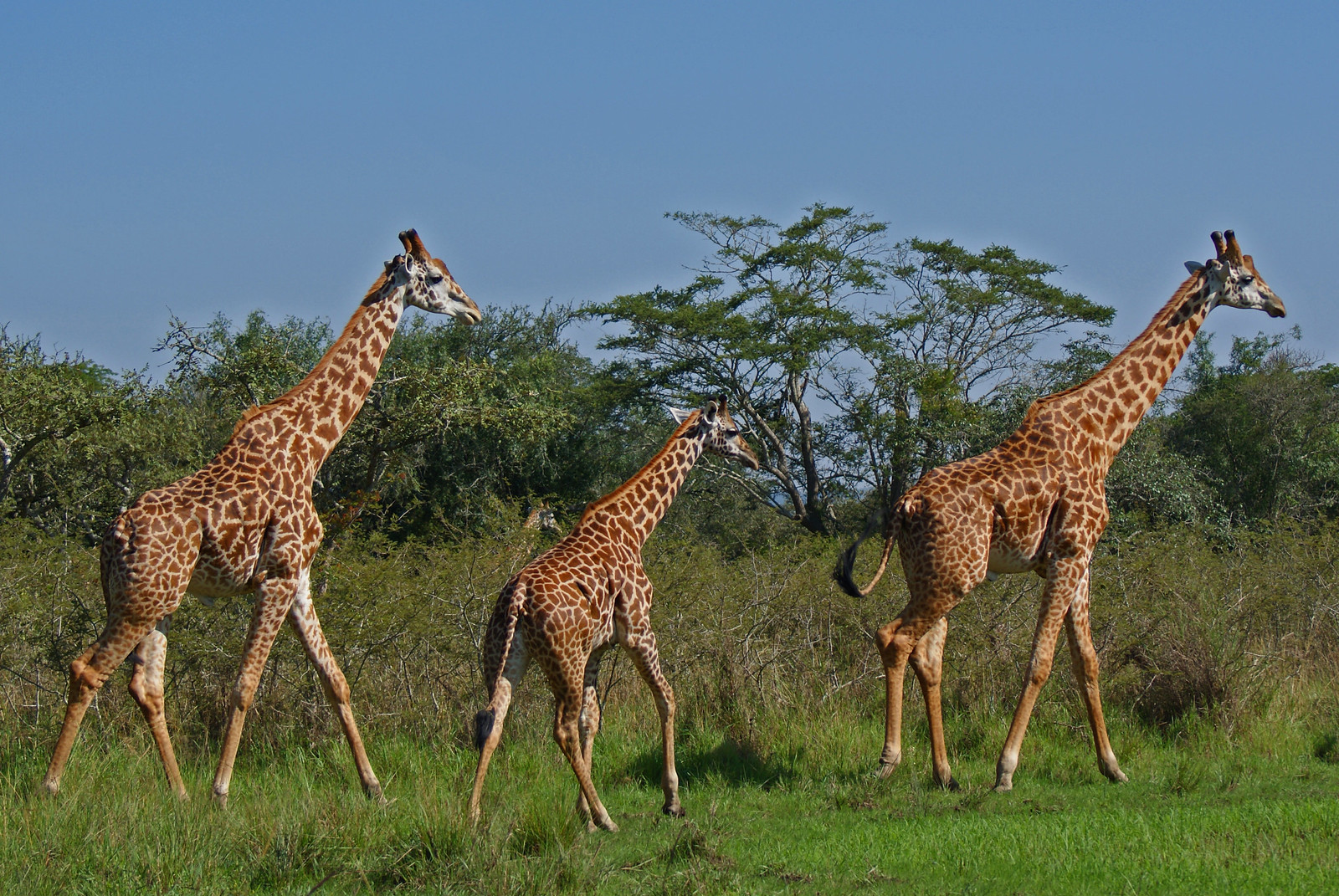
For travellers wanting savannah wildlife alongside primates, Akagera National Park in Rwanda’s east delivers a genuine Big Five safari – lion, elephant, buffalo, leopard and both black and white rhino, reintroduced after local extinction and now a conservation success story in their own right. Akagera’s rolling hills, lakes and wetlands support strong birdlife too, and boat trips on Lake Ihema add a water-based game-viewing option distinct from the standard vehicle game drive.
Kigali: More Than a Gateway City
Most Rwanda itineraries pass through Kigali at the start and end of the trip, and it’s worth building in time here rather than treating it purely as a transit point. Widely regarded as one of Africa’s cleanest and safest capital cities, Kigali offers the sobering but important Kigali Genocide Memorial, a growing contemporary art and craft scene, and a walkable, well-organised city centre that makes a comfortable adjustment point on arrival or departure.
Why Rwanda’s Permit Costs More
Rwanda’s $1,500 gorilla permit, nearly double Uganda’s $800, reflects a deliberate national tourism strategy rather than simply higher operating costs – Rwanda has positioned itself toward a premium, lower-volume tourism model, using higher permit revenue to fund conservation and community development while keeping daily visitor numbers controlled. In practice this means a slightly less crowded trekking experience and a country whose tourism infrastructure feels noticeably more polished, at a real cost premium over Uganda’s equivalent experience.
Best Time to Visit
Rwanda follows the same broad seasonal pattern as the rest of the region – June through September and December through mid-February are the driest, firmest-trail months, while the shoulder seasons bring more rain but easier permit availability. Given Volcanoes National Park’s high elevation, expect cooler temperatures and mistier conditions here than in Uganda’s lower-lying parks at almost any time of year.
Where to Stay in Rwanda
Accommodation near Volcanoes National Park spans from Kinigi’s more accessible guesthouses through to established luxury properties like Virunga Lodge, known for its panoramic volcano views, and Mountain Gorilla View Lodge, popular with travellers wanting a strong mid-range option. Lake Kivu, roughly two hours from Kinigi, adds a genuinely different lakeside register for a rest stretch either before or after trekking, with properties like Lake Kivu Serena Hotel offering a calmer close to a trip built mostly around forest and volcano scenery.
A Sample Rwanda Itinerary
A representative six-day trip might open with a night in Kigali to recover from international flights, followed by a short transfer to Kinigi for the gorilla trek itself the next morning. A second primate day – golden monkey tracking, considerably lighter than the gorilla trek – often follows, before a longer transfer south to Nyungwe Forest for chimpanzee tracking and the canopy walkway. The trip closes with a return to Kigali via a stop at Lake Kivu, or an extension east to Akagera National Park for travellers wanting a savannah safari to round out the primate-focused first half of the trip.
Combining Rwanda With Uganda
Because Volcanoes National Park sits so close to the Uganda border, combining Rwanda with a Bwindi gorilla trek in Uganda is one of the most popular longer itineraries we build – trek one habituated family in Bwindi, cross the Cyanika or Katuna border in a few hours, then trek an entirely different family in Volcanoes National Park days later. This gives genuinely distinct gorilla trekking experiences (different terrain, different park systems, different permit costs, different guiding teams) within one seamlessly connected trip, without the added logistical complexity that combining more geographically distant countries would otherwise involve.
Rwanda’s Landscape and Climate
The country’s nickname, “Land of a Thousand Hills,” is a fairly literal description – Rwanda is almost entirely hilly terrain, with terraced agriculture climbing nearly every slope not under forest cover. This topography means road journeys, while short in distance, often take longer than a flat-map estimate would suggest, winding through switchbacks rather than running in straight lines. The elevation also keeps the climate notably mild for a country this close to the equator, with cooler temperatures at Volcanoes National Park’s higher elevation than visitors sometimes expect from an African safari destination.
Frequently Asked Questions
Why is Rwanda’s gorilla permit more expensive than Uganda’s?
It reflects Rwanda’s deliberate premium-tourism strategy, using higher permit revenue to fund conservation while keeping visitor numbers controlled, rather than a difference in trekking difficulty or gorilla population.
How far is Volcanoes National Park from Kigali?
Under two hours by road, among the shortest airport-to-trailhead transfers anywhere gorilla trekking is offered.
Can I combine gorilla and golden monkey trekking on the same trip?
Yes, and it’s a common combination since both happen in the same park – many itineraries trek gorillas one day and golden monkeys the next.
Is Rwanda safe to visit?
Yes – Rwanda is widely and consistently regarded as one of Africa’s safest and most politically stable countries for travellers, including Kigali itself, which feels genuinely relaxed to walk around even after dark in most central areas.
Rwanda’s Conservation Model
Rwanda channels a meaningful share of its tourism revenue directly back into conservation and the communities living alongside its parks, a model formalised through revenue-sharing schemes that direct a percentage of park earnings into local infrastructure, schools and health facilities in the districts bordering Volcanoes National Park. This is part of why the country’s premium permit pricing exists in the first place – it’s not purely a market rate decision but a deliberate funding mechanism, and it’s a large part of why Rwanda’s gorilla population has grown steadily over recent decades even as the country’s overall land area under protection remains small compared to its neighbours.
Getting to Rwanda
Kigali International Airport is well connected internationally, with direct or one-stop flights from major hubs in Europe, the Middle East and elsewhere in Africa. Most nationalities can obtain an e-visa online in advance, and Rwanda participates in the East Africa Tourist Visa scheme alongside Uganda and Kenya, allowing a single visa to cover travel between all three countries for eligible travellers – genuinely useful if your itinerary combines Rwanda with a Uganda extension. On arrival, the drive from Kigali to Kinigi (the base for Volcanoes National Park trekking) takes under two hours on generally well-maintained roads, among the smoothest airport-to-trailhead transfers anywhere gorilla trekking is offered globally.
A Note on Rwanda’s Genocide Memorial
The Kigali Genocide Memorial, honouring the roughly 800,000 people killed during the 1994 genocide against the Tutsi, is a sobering but genuinely important stop for travellers wanting to understand modern Rwanda beyond its wildlife and landscapes. Many travellers build in a couple of quiet hours here on arrival or departure, and staff and guides are experienced at presenting the history respectfully to international visitors of all backgrounds.
Plan Your Rwanda Safari
Tell us your dates, budget and priorities, and we’ll build a genuinely tailored Rwanda itinerary around Volcanoes National Park and whichever additional parks and activities actually fit your particular trip. Get in touch to start planning.