
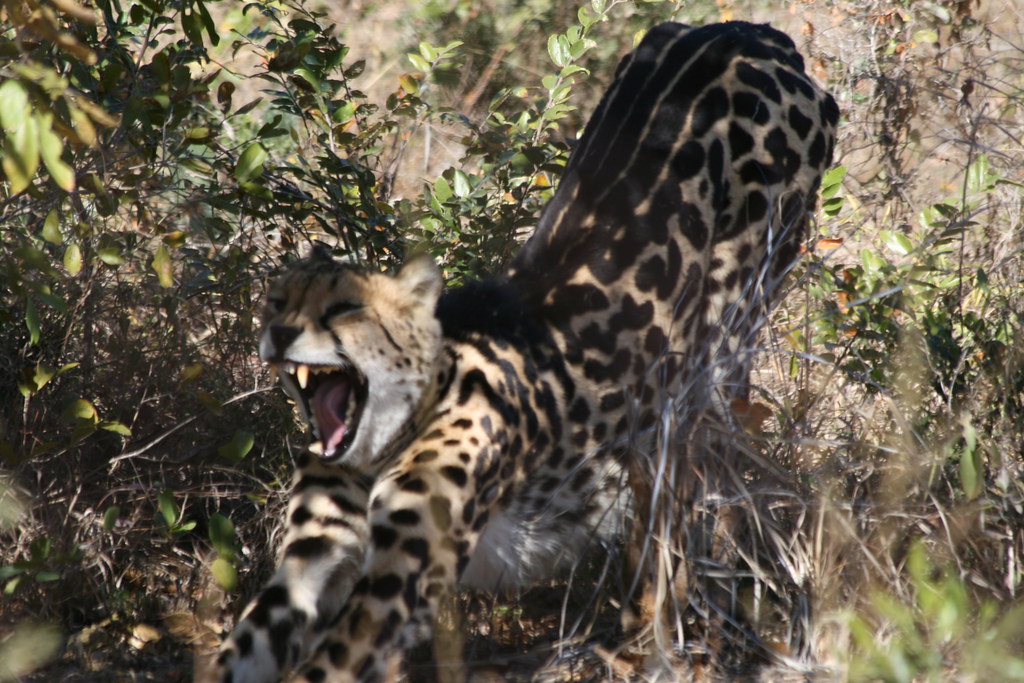
Are There Cheetahs in Uganda?
Yes – there are cheetahs in Uganda, but they are rare and localized. These sleek and powerful cats are found mainly in the northeastern regions of the country, where Uganda’s landscapes open into dry savannahs and semi-arid plains. Unlike lions and leopards, which are widely distributed across Uganda’s parks, cheetahs are confined to a few select areas where open terrain allows them to do what they do best – run.
The cheetah (Acinonyx jubatus) is the fastest land animal on Earth, capable of reaching speeds of up to 100–120 km/h (62–75 mph) in short bursts. In Uganda, their presence adds to the country’s diverse predator population, though seeing one in the wild is a truly special and rare experience.
Where to See Cheetahs in Uganda
1. Kidepo Valley National Park – The Best Place for Cheetahs in Uganda
Nestled in the remote northeast near the borders with Kenya and South Sudan, Kidepo Valley National Park is Uganda’s ultimate cheetah stronghold. Its wide, open grasslands and rugged beauty make it the perfect habitat for these fast hunters.
The Narus Valley, with its rolling plains and scattered acacia trees, is where cheetahs are most frequently sighted. They share the landscape with lions, leopards, and hyenas, but cheetahs tend to keep to themselves, preferring solitude and open spaces for sprinting after prey like Uganda kob, Grant’s gazelle, and Jackson’s hartebeest.
Because Kidepo is less visited than other national parks, every wildlife encounter feels personal and exclusive. Spotting a cheetah here, often silhouetted against the golden savannah, is one of Uganda’s most thrilling safari moments.
2. Pian Upe Wildlife Reserve – A Growing Habitat for Cheetahs
Located just south of Kidepo in eastern Uganda, Pian Upe Wildlife Reserve is another key area where cheetahs roam. It’s Uganda’s second-largest protected area, stretching over 2,000 square kilometers, and offers vast open plains ideal for these sprinters.
Cheetah sightings here have increased in recent years, thanks to improved conservation efforts and reduced poaching. The reserve is also home to leopards, lions, zebras, oribis, and elands, making it an emerging destination for wildlife enthusiasts seeking an off-the-beaten-path safari.
Pian Upe’s remote location and raw landscapes create a sense of wilderness adventure – perfect for travelers who want to experience Uganda’s wild east away from the crowds.
3. Matheniko and Bokora Wildlife Reserves (Possible Sightings)
These lesser-known reserves, adjacent to Pian Upe and part of the Karamoja Conservation Area, also provide potential habitats for cheetahs. While sightings are rare, conservationists have reported occasional evidence of their presence, indicating a gradual recovery of cheetah populations across northeastern Uganda.
Cheetah Behavior and Adaptation in Uganda
Cheetahs in Uganda have adapted to the semi-arid savannahs, where visibility is high and prey density supports their hunting style. They rely on speed, stealth, and precision, stalking prey within 100 meters before launching a lightning-fast chase.
Unlike lions, cheetahs are not built for power but for agility. Their slender bodies, deep chests, and long tails give them balance and acceleration, allowing them to make split-second turns during pursuit. They often hunt during the early morning or late afternoon to avoid competition from stronger predators.
Conservation Status of Cheetahs in Uganda
Cheetahs are listed as Vulnerable on the IUCN Red List, with fewer than 7,000 individuals left in the wild across Africa. In Uganda, their numbers are particularly small – estimated at less than 200 individuals, mostly scattered across Kidepo, Pian Upe, and the Karamoja region.
Conservation challenges include:
-
Habitat loss due to human settlement and livestock grazing.
-
Conflict with pastoralists, as cheetahs sometimes prey on goats or calves.
-
Competition with larger predators like lions and hyenas.
However, efforts by the Uganda Wildlife Authority (UWA) and conservation partners are helping protect cheetah habitats. Community-based programs in Karamoja encourage local people to benefit from tourism while safeguarding wildlife.
Best Time to See Cheetahs in Uganda
The best time to spot cheetahs is during the dry seasons – from December to March and June to September – when vegetation is shorter and animals gather around water sources, making game viewing easier. Morning and evening drives in Kidepo or Pian Upe offer the best chances, as cheetahs are more active during cooler hours.
A Rare and Rewarding Sight
Seeing a cheetah in Uganda is an extraordinary privilege. Unlike the plains of Kenya or Tanzania, where sightings are frequent, Uganda’s cheetahs live in remote, untouched corners of the country – making every encounter feel like a discovery.
Watching one glide silently across the plains of Kidepo or scanning the horizon from a termite mound reminds you of the wild, unspoiled spirit that defines Uganda’s wilderness. It’s a moment of quiet grace and pure admiration – the kind that stays with you long after the dust has settled.