Where’s the Best Place to See the Wildebeest Migration?
The Great Wildebeest Migration is the most spectacular wildlife event on Earth — a breathtaking natural phenomenon where over 1.5 million wildebeests, 200,000 zebras, and thousands of gazelles move in a continuous loop across the Serengeti-Mara ecosystem in search of fresh grass and water. It’s the ultimate safari experience — raw, dramatic, and unforgettable.
Because this migration covers two countries — Tanzania and Kenya — and shifts throughout the year, knowing where and when to see it is key. There’s no single “best” place — it depends entirely on the month you travel and what kind of experience you want to witness: calving, river crossings, or vast herds sweeping across golden plains.
December – March: Southern Serengeti, Tanzania
Best for: Calving Season and Predator Action
From late December to March, the herds gather in the southern Serengeti plains and the Ndutu region near Ngorongoro Conservation Area. This is where the migration begins — lush green grass covers the volcanic plains, and wildebeests give birth to over 400,000 calves within a few weeks.
The short-grass plains offer nutrient-rich grazing for the mothers and easy movement for newborn calves. But this is also when predators thrive — lions, cheetahs, leopards, and hyenas prowl the grasslands in search of easy prey, creating some of the most thrilling wildlife encounters imaginable.
Highlights: Thousands of newborn wildebeests, predator–prey action at its peak, stunning green landscapes and clear light for photography.
Best Camps: Ndutu Safari Lodge, Lake Masek Tented Camp, Sanctuary Kusini, Lemala Ndutu.
April – June: Central Serengeti & Western Corridor, Tanzania
Best for: Herds on the Move and Grumeti River Crossings
As the rains end in April, the herds begin moving northward through the Central Serengeti (Seronera Valley) — the park’s beating heart. This period offers phenomenal game viewing with fewer tourists, as lions, cheetahs, and leopards follow the migrating herds through the golden grasslands.
By May and June, the herds reach the Western Corridor, where they encounter their first major obstacle — the Grumeti River. Crocodile-filled waters make for dramatic mini-crossings as the animals push west before turning north toward the Mara.
Highlights: River crossings without the crowds, excellent predator and birdlife sightings, calmer, less-touristy season.
Best Camps: Grumeti Serengeti Tented Camp, Mbalageti Safari Lodge, Kirawira Serena Camp.
July – October: Northern Serengeti, Tanzania & Masai Mara, Kenya
Best for: The Famous Mara River Crossings
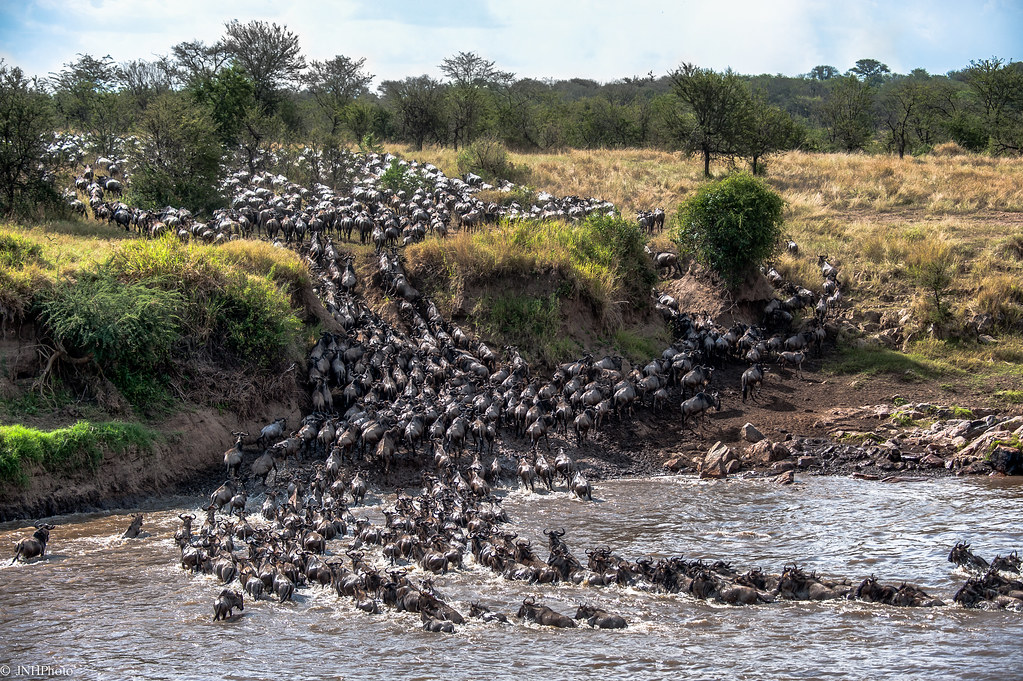
This is the most iconic phase of the migration — the Mara River crossings, where the herds gather at the northern edge of the Serengeti and the Masai Mara in Kenya.
From July to October, hundreds of thousands of wildebeests and zebras mass along the Mara River, hesitating before plunging into the crocodile-infested waters. These crossings — chaotic, emotional, and spectacular — are the ultimate highlight of the Great Migration.
While the crossings are unpredictable, patient visitors in either Northern Serengeti (Kogatende, Lamai, Lobo) or Masai Mara (Mara Triangle, Musiara, or Talek areas) are often rewarded with unforgettable scenes of courage and chaos.
Highlights: Mara River crossings — the migration’s climax, excellent predator viewing (especially lions and crocodiles), clear skies and golden light for photography.
Best Camps in Northern Serengeti: Sayari Camp, Lamai Serengeti, Lemala Kuria Hills, Mara River Camp.
Best Camps in Masai Mara: Angama Mara, Mara Plains Camp, Governors’ Camp, Mahali Mzuri.
November: Eastern Serengeti, Tanzania
Best for: Return of the Herds and Peaceful Safaris
After crossing back into Tanzania from Kenya, the herds pass through the eastern Serengeti and Namiri Plains on their way south to Ndutu. The short rains bring new grass, and the wildlife viewing remains excellent, with far fewer tourists.
This is a quieter, more reflective stage of the migration — ideal for photographers and travelers seeking solitude and dramatic skies.
Highlights: Stunning light and fresh green scenery, fewer visitors and excellent predator sightings, great opportunity for peaceful game drives.
Best Camps: Namiri Plains Camp, Ehlane Plains Camp, Lemala Ewanjan.
Quick Reference: Where to See the Migration by Month
| Month | Location | Experience |
|---|---|---|
| Dec – Mar | Southern Serengeti & Ndutu | Calving & predator action |
| Apr – May | Central Serengeti (Seronera) | Herd movement & big cats |
| Jun | Western Corridor (Grumeti River) | First river crossings |
| Jul – Oct | Northern Serengeti & Masai Mara | Mara River crossings |
| Nov | Eastern Serengeti (Namiri Plains) | Return migration & solitude |
Choosing Between Tanzania and Kenya
Both countries offer unforgettable views of the migration, but each delivers a slightly different experience.
Tanzania (Serengeti): Covers about 80% of the migration’s journey. Larger, wilder, and offers more variety — especially during calving and herd movements.
Kenya (Masai Mara): Best for river crossings and compact, high-impact game viewing between July and October. Offers easier logistics for short safaris from Nairobi.
Many travelers choose combined safaris that include both destinations — following the herds from the Serengeti into the Mara or vice versa.
Tips for Planning Your Migration Safari
Book early — migration-season camps sell out months in advance.
Stay at multiple camps to follow the herds across regions.
Be patient — river crossings are unpredictable.
Travel with experienced local guides who track herd movements daily.
A Moving Masterpiece of Nature
The Great Wildebeest Migration is more than a wildlife spectacle — it’s a timeless story of survival, instinct, and resilience. Whether you watch calves taking their first steps in Ndutu, lions chasing herds across Seronera, or thousands leaping into the Mara River, every moment is raw, emotional, and unforgettable.
The best place to see the migration? It’s wherever the herds are — and wherever your heart connects with the rhythm of Africa.