
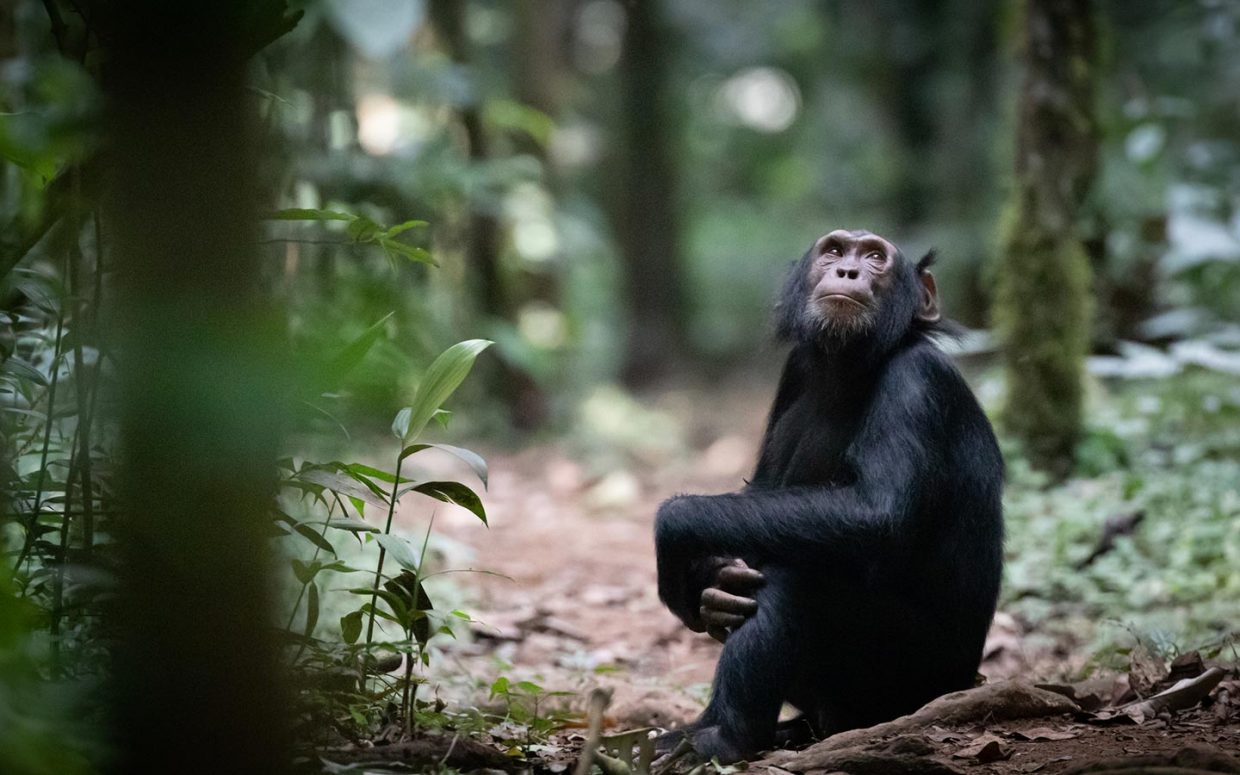
Chimpanzee Trekking in Budongo Forest near Murchison Falls
Chimpanzee trekking in Budongo Forest offers one of the most rewarding yet underrated wildlife experiences in Uganda. Located on the southern edge of Murchison Falls National Park, Budongo Forest is part of the larger Murchison conservation ecosystem and is one of the best places in East Africa to observe wild chimpanzees in their natural habitat.
Unlike more crowded trekking destinations, Budongo feels quieter, more intimate, and deeply forested. The experience is less about large-scale tourism and more about stepping into an ancient ecosystem where primates live freely among towering mahogany trees.
Where Budongo Forest Is Located
Budongo Forest Reserve lies just south of the Nile River, within the greater landscape of Murchison Falls National Park. It is one of the largest mahogany forests in East Africa and forms a critical ecological corridor for wildlife.
The forest is typically accessed from the Kichumbanyobo Gate or from lodges located in the southern sector of Murchison. Travel from Kampala usually takes several hours by road, passing through rural landscapes before reaching the dense canopy of Budongo.
Its proximity to the park makes it an easy extension for visitors already exploring Murchison Falls.
Why Budongo Is Special for Chimpanzee Trekking
Budongo Forest is home to one of Uganda’s most studied chimpanzee populations. The chimps here are semi-habituated, meaning they are accustomed to human presence but still maintain natural behavior.
This balance creates one of the most authentic chimpanzee viewing experiences in Africa.
The forest itself plays a major role in shaping this experience. Tall mahogany trees, dense understory, and seasonal fruiting patterns create a dynamic environment where chimpanzees move frequently in search of food.
Unlike open savannah wildlife viewing, chimp trekking in Budongo requires patience, listening, and careful tracking.
The Trekking Experience: How It Unfolds
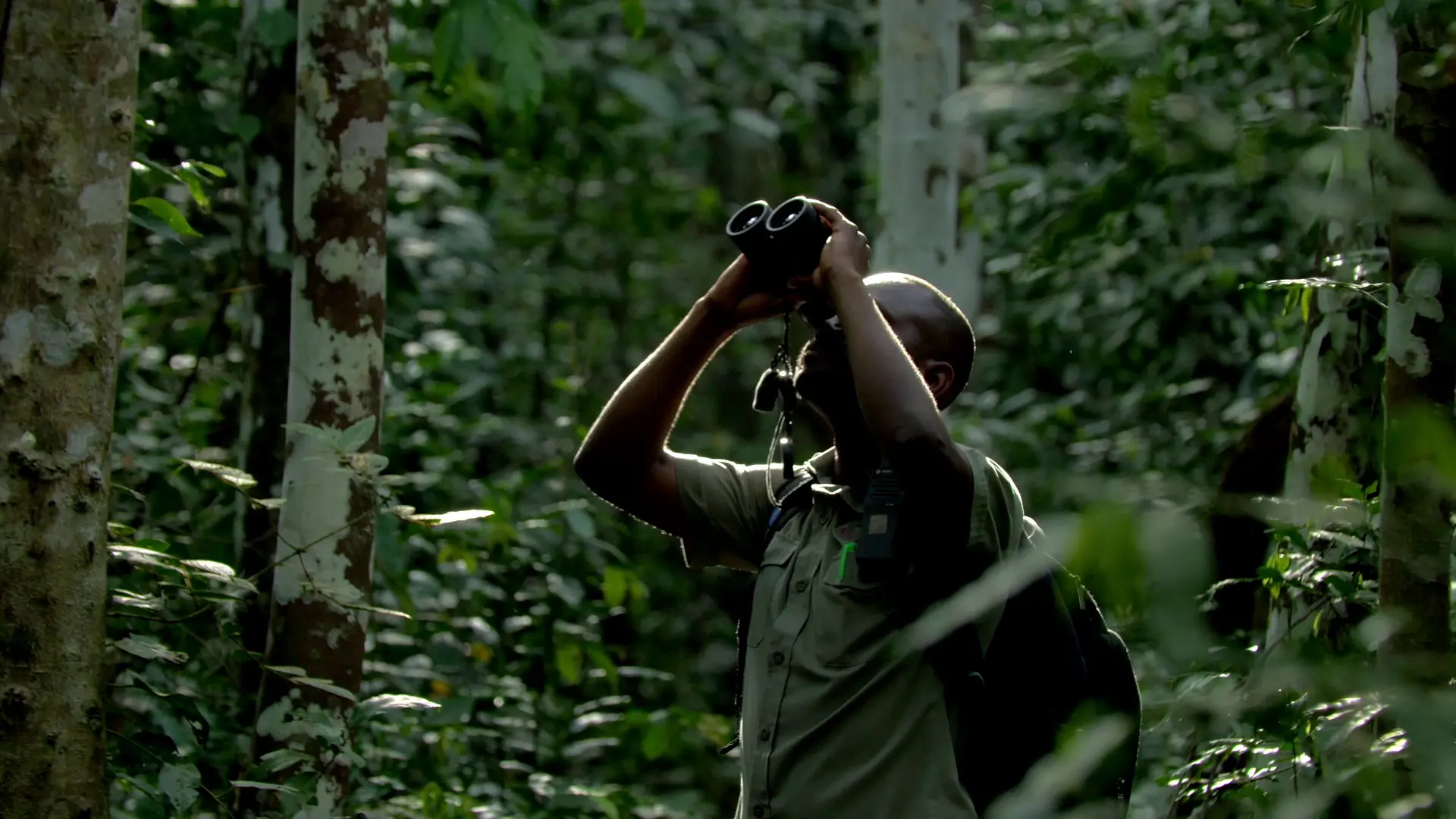
A typical chimpanzee trek in Budongo Forest Reserve begins early in the morning with a briefing from Uganda Wildlife Authority rangers. Visitors are grouped and assigned guides who track chimp movements based on nest sites, calls, and feeding patterns.
The trek itself involves walking through thick forest trails that can vary from easy to moderately challenging depending on chimp location. As you move deeper into the forest, the environment becomes more immersive, with dense canopy cover filtering sunlight into shifting patterns on the forest floor.
Guides often communicate using subtle signs and calls, listening carefully for chimp vocalizations that echo through the forest.
Encountering the Chimpanzees
Once the chimpanzees are located, the experience becomes highly dynamic. Unlike gorillas, chimpanzees are constantly moving, feeding, grooming, and interacting within complex social groups.
In Budongo Forest Reserve, you may observe them feeding on fruits in the canopy, descending to the ground, or engaging in social behaviors such as grooming and play.
Their behavior is energetic and unpredictable. Males may display dominance behaviors, while females care for infants and maintain close social bonds.
The observation window is typically limited to one hour, but within that time the intensity of interaction is extremely high.
Chimpanzee Behavior and Social Structure
Chimpanzees are among the most intelligent primates in the world, and their behavior in Budongo reflects this complexity.
They live in large communities that can exceed 50 individuals, but they move in smaller sub-groups known as parties. These groups constantly change depending on food availability and social dynamics.
Communication is highly developed, involving vocalizations, gestures, facial expressions, and even tool use.
In Murchison Falls National Park, Budongo chimpanzees have been observed using branches to extract insects and displaying coordinated movement during foraging.
Forest Environment: The Mahogany Kingdom
Budongo Forest is dominated by tall mahogany trees, some of which are centuries old. This creates a layered ecosystem where light, moisture, and vegetation interact in complex ways.
The forest floor is often covered in leaf litter, vines, and fallen branches, making movement careful and deliberate during treks.
Birdlife is abundant, and other primates such as red-tailed monkeys and olive baboons may also be encountered during the trek.
This biodiversity makes the forest experience feel rich and immersive, even before chimpanzees are seen.
Difficulty Level and Fitness Requirements
Chimpanzee trekking in Budongo is generally moderate in difficulty. While not as physically demanding as mountain gorilla trekking in Bwindi, it still requires a reasonable level of fitness.
Trails can become slippery during rainy seasons, and chimps may move quickly over long distances, requiring extended walking.
However, the forest is less steep compared to mountainous regions, making it more accessible to a wider range of travelers.
Best Time for Chimpanzee Trekking
Chimpanzees in Budongo Forest Reserve can be tracked year-round, but dry seasons offer easier trekking conditions and better visibility.
Morning treks are most productive because chimpanzees are usually active early, feeding and socializing after leaving their night nests.
During fruiting seasons, sightings are often more predictable as chimp groups gather around food sources.
Conservation and Research Importance
Budongo Forest is not only a tourism destination but also a major research site. Long-term studies have provided valuable insights into chimpanzee behavior, ecology, and conservation.
The forest is part of the larger ecosystem of Murchison Falls National Park, making it crucial for biodiversity conservation in the region.
Conservation efforts focus on habitat protection, anti-logging measures, and community engagement to ensure chimpanzee populations remain stable.
What Makes Budongo Different from Kibale
While Kibale Forest National Park is often considered the primate capital of Uganda, Budongo offers a quieter and less commercialized alternative.
Chimpanzee encounters in Budongo feel more intimate due to lower visitor numbers and denser forest conditions.
Kibale may offer higher tracking success rates, but Budongo provides a more wilderness-oriented experience.
Practical Tips for Visitors
Successful chimp trekking in Budongo depends on preparation and mindset.
Comfortable walking shoes are essential due to uneven terrain. Lightweight clothing and insect protection are also important.
Listening carefully to guide instructions improves tracking efficiency, as chimpanzees are highly mobile and can change direction quickly.
Patience is key, as locating the chimps may take time depending on their movement patterns.
A Deep Forest Encounter Worth the Journey
Chimpanzee trekking in Budongo Forest Reserve is one of Uganda’s most authentic wildlife experiences. It combines scientific interest, physical exploration, and emotional connection with one of our closest relatives in the animal kingdom.
Within the broader setting of Murchison Falls National Park, it complements game drives, boat safaris, and waterfall hikes by adding a deep forest dimension to the safari experience.
For travelers seeking something beyond the usual safari circuit, Budongo offers a quiet, powerful, and deeply rewarding encounter with Uganda’s wild primates.