
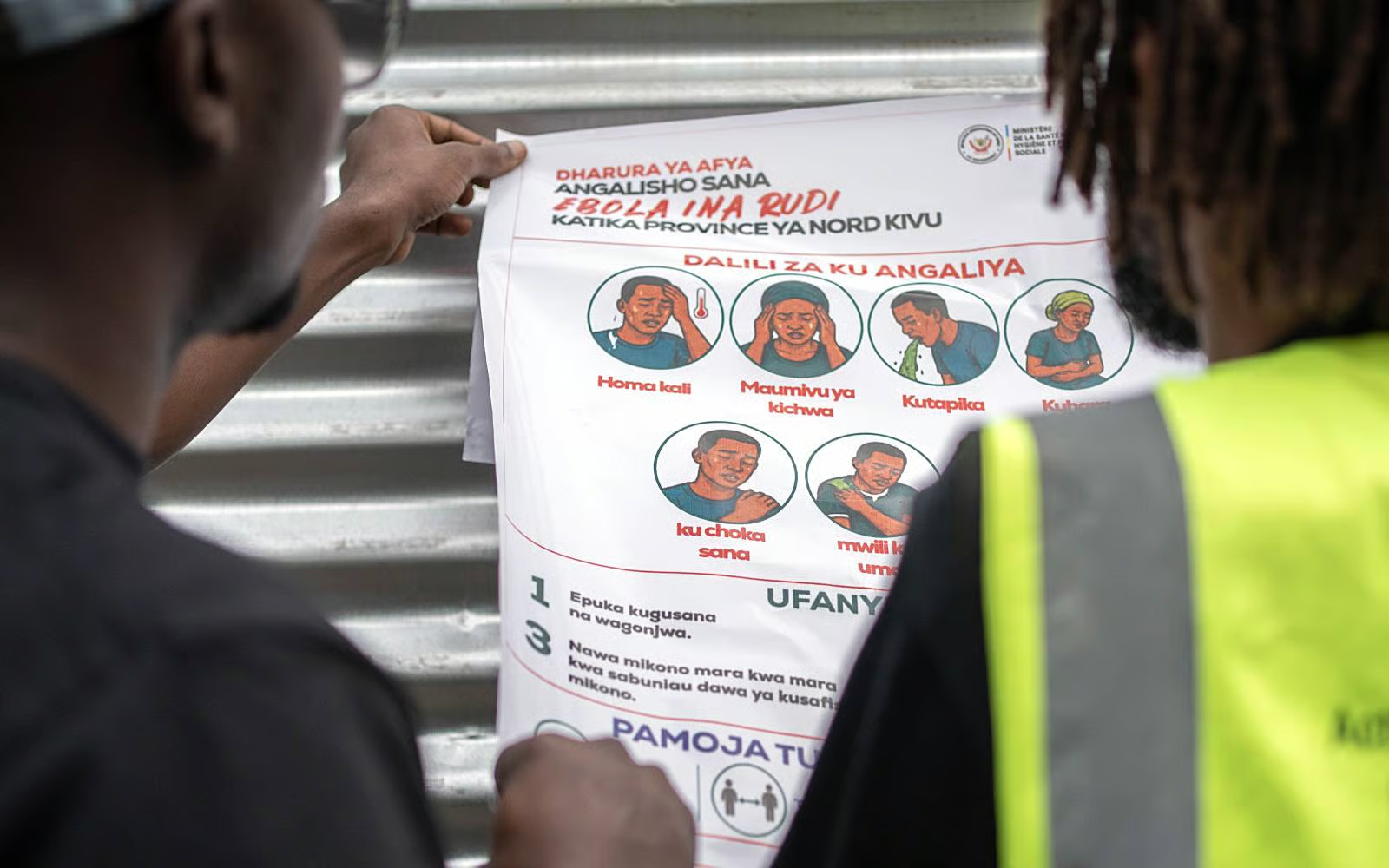
Is the Democratic Republic of Congo an Ebola-Free State?
The idea of an Ebola-free country sounds simple, but in reality it depends on timing. A country can be free of active cases at one moment and still remain at risk of future outbreaks. This is especially true for countries that have experienced repeated Ebola activity over many years.
The Democratic Republic of Congo is often discussed in this context because of its long history with the disease. To answer the question directly: the country is not permanently Ebola-free, but it can be free of active outbreaks at specific periods when transmission is fully contained.
Current Status of Ebola in DRC
The Democratic Republic of Congo is not considered permanently Ebola-free. Instead, its status changes depending on whether there is an active outbreak or not.
When there are no confirmed cases being transmitted in the community, health authorities may declare the end of an outbreak after a monitoring period. At that point, the country is considered free of active Ebola transmission. However, this does not mean the virus has disappeared completely from the environment or that the risk is gone.
Ebola is a zoonotic disease, which means it exists in animal reservoirs in forest ecosystems. Because of this, new outbreaks can reappear even after long periods without human cases.
Why DRC Cannot Be Considered Permanently Ebola-Free
The main reason the Democratic Republic of Congo cannot be classified as permanently Ebola-free is its repeated outbreak history.
Since the virus was first identified in 1976, the country has experienced more Ebola outbreaks than any other nation in the world. Some outbreaks have been small and contained quickly, while others have been large and difficult to control.
The country’s vast tropical rainforest plays an important role in this pattern. These forests are home to wildlife species believed to carry the virus, especially bats. When humans come into contact with these environments, spillover infections can occur.
Population movement also increases risk. Many communities depend on forest resources for food, farming, and trade, which increases exposure to potential transmission sources.
What “Ebola-Free” Actually Means
In public health terms, “Ebola-free” usually refers to the absence of active human transmission for a defined period.
After the last confirmed patient tests negative and all contacts complete monitoring without developing symptoms, health authorities begin a countdown period. If no new cases appear during this time, the outbreak is declared over.
At that point, a country is temporarily Ebola-free. However, this status does not guarantee that new outbreaks will not occur in the future.
History of Ebola in DRC
The Democratic Republic of Congo was the location of the first recorded Ebola outbreak in 1976 near the Ebola River, which gave the virus its name.
Since then, the country has experienced multiple outbreaks across different regions. Some of the most affected provinces include North Kivu, Ituri, Equateur, and Kasai.
One of the most severe outbreaks occurred between 2018 and 2020, with thousands of cases and significant deaths. That outbreak was complex due to insecurity in conflict-affected areas, which made response efforts more difficult.
Because of this history, the country is considered the global center of Ebola activity.
Why Outbreaks Recur in DRC
Several factors contribute to repeated outbreaks:
Dense tropical forests create natural habitats for virus-carrying animals.
Human interaction with wildlife, including hunting and forest-based activities, increases exposure risk.
Remote geography makes some areas difficult to access quickly during early stages of an outbreak.
Population movement across regions spreads infections before they are detected.
Even with strong response systems, these conditions make re-emergence possible.
Ebola Response Systems in DRC
Despite repeated outbreaks, the Democratic Republic of Congo has developed significant outbreak response capacity.
When a suspected case is identified, health teams immediately isolate the patient and begin laboratory testing. Contact tracing teams track everyone who may have been exposed.
Vaccination is also used during outbreaks, especially for frontline workers and high-risk contacts. This strategy helps reduce spread and control transmission chains more quickly than in earlier decades.
International support and local health structures work together during outbreaks to improve response speed.
Comparison with Other Countries in the Region
Unlike countries such as Kenya, Rwanda, Tanzania, and Burundi, which have not experienced major Ebola outbreaks, the Democratic Republic of Congo remains the most affected country globally.
Uganda has also experienced several outbreaks, but they are generally smaller and more contained compared to those in DRC.
This difference shows that Ebola risk is not uniform across East Africa and Central Africa. It is strongly influenced by ecological conditions and outbreak history.
Can DRC Become Ebola-Free in the Future?
It is possible for the Democratic Republic of Congo to be free of active Ebola transmission for long periods, but permanent elimination is unlikely with current conditions.
Because the virus exists in wildlife reservoirs, new spillover events can still happen. However, improved surveillance, vaccination, and rapid response systems significantly reduce the likelihood of large uncontrolled outbreaks.
The focus today is not total elimination but faster detection and containment.
The Democratic Republic of Congo is not permanently Ebola-free due to its repeated outbreak history and ecological conditions that support virus circulation in wildlife.
However, it can and often does reach Ebola-free status between outbreaks when transmission is fully stopped and no new cases appear for a defined monitoring period.
With stronger surveillance systems, vaccination programs, and rapid response capacity, the country continues to improve its ability to control outbreaks quickly and limit their impact.