
Eastern Lowland Gorilla Safaris Kahuzi-Biega: Africa’s Rarest Trek
A Different Kind of Gorilla Encounter in the Heart of the Congo Basin
Deep in the eastern forests of the Democratic Republic of Congo lies one of Africa’s most extraordinary and least visited wildlife experiences—Kahuzi-Biega National Park. Unlike the more famous mountain gorilla treks of East Africa, this park is home to the eastern lowland gorilla, also known as Grauer’s gorilla, the largest gorilla subspecies on Earth.
This is not a polished safari circuit. It is raw, remote, and deeply immersive. The forests here are part of the vast Congo Basin, one of the most important tropical ecosystems in the world. Trekking here feels less like a tourist activity and more like a true expedition into an ancient wilderness where human presence is minimal and nature dominates every layer of the landscape.
Understanding the Eastern Lowland Gorilla
The eastern lowland gorilla is the largest of all gorilla subspecies, with adult males often weighing over 180 kilograms. Despite their size, they are gentle herbivores, feeding primarily on leaves, shoots, fruits, and bamboo.
What makes them especially significant is their rarity and restricted habitat. Unlike mountain gorillas, which inhabit higher elevations, these gorillas live in dense lowland rainforests that are increasingly threatened by human activity, mining, and deforestation.
Their population has declined significantly over the past decades, making every protected encounter in Kahuzi-Biega National Park critically important for conservation awareness.
The Landscape of Kahuzi-Biega
The park itself is a UNESCO World Heritage Site, named after two extinct volcanoes—Mount Kahuzi and Mount Biega. It spans both mountainous and lowland rainforest zones, creating a diverse range of habitats that support an incredible variety of wildlife.
The lowland sector, where gorilla trekking takes place, is characterized by dense tropical forest, thick vegetation, swampy clearings, and towering trees that block out much of the sunlight. The air is humid, the ground often soft and uneven, and visibility can be limited to just a few meters in some areas.
This environment makes trekking physically demanding but also deeply immersive. Every step feels like entering a world that has remained largely unchanged for thousands of years..
Eastern Lowland Gorilla Safaris Kahuzi Biega
The Trekking Experience
Unlike more commercialized trekking destinations, gorilla trekking in Kahuzi-Biega is intentionally limited and strictly regulated. Small groups are led by experienced trackers and armed rangers who are familiar with the movements and behavior of the gorilla families.
The trek itself can vary in length depending on where the gorillas are located that day. Sometimes they are found after a short walk; other times, it can take several hours of hiking through dense forest, crossing streams, and navigating thick vegetation.
The anticipation builds gradually. There is a quiet intensity to the forest—broken only by birds, insects, and the rustling of leaves. When signs of gorillas begin to appear, such as broken branches or fresh nests, the atmosphere shifts noticeably.
The Moment of Encounter
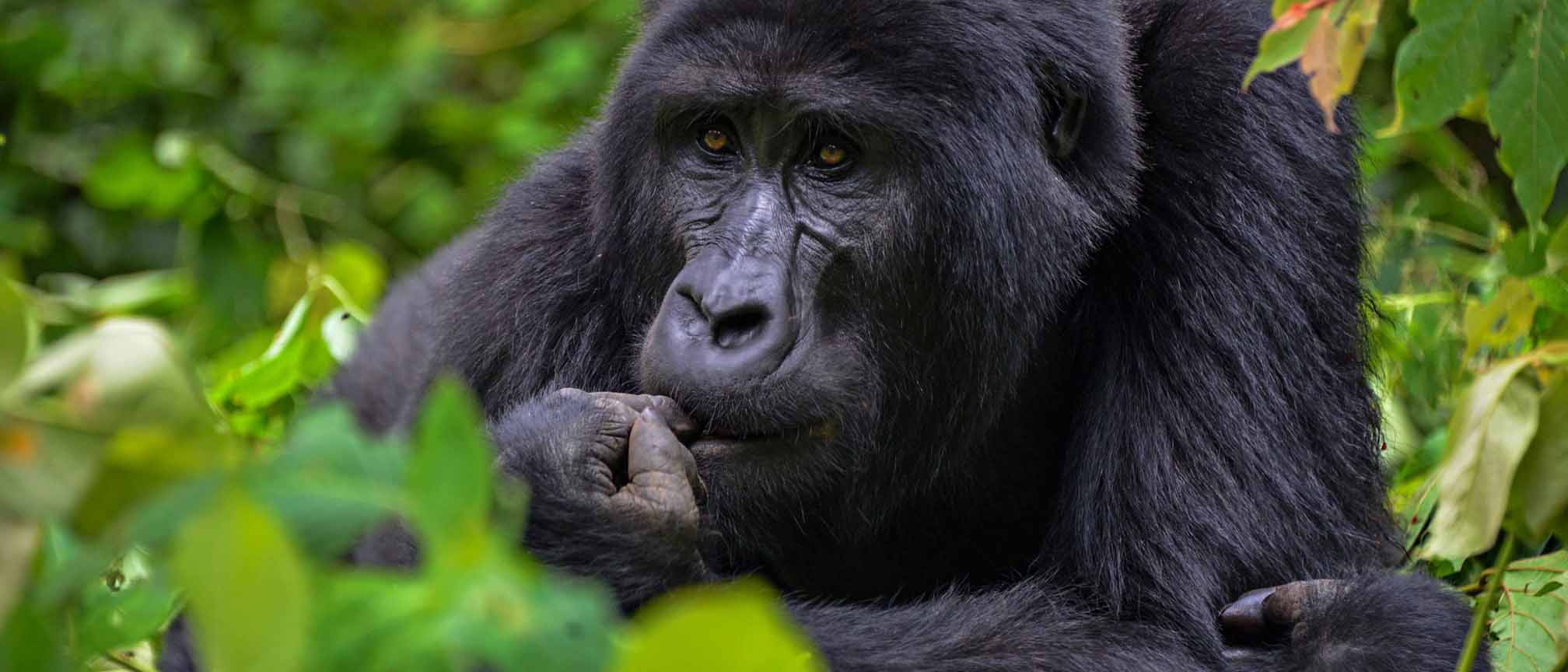
Coming face-to-face with a lowland gorilla family in the wild is a powerful experience. Unlike the high-altitude mountain gorillas that often sit calmly in open bamboo zones, lowland gorillas are often found in denser forest environments, which makes the encounter feel even more intimate and enclosed.
A dominant silverback may be seen observing the group with quiet authority, while younger gorillas play, climb trees, or forage nearby. Mothers stay close to infants, showing strong protective behavior.
Despite their size and strength, these animals are remarkably calm when undisturbed. The experience is governed by strict rules to maintain a safe distance and minimize stress on the animals, ensuring that the encounter remains respectful and non-intrusive.
Behavior and Social Structure
Eastern lowland gorillas live in stable family groups led by a dominant silverback. This leader is responsible for protection, movement decisions, and group cohesion.
Communication within the group is complex, involving vocalizations, body language, and subtle social cues. Grooming plays an important role in reinforcing bonds, while younger gorillas learn survival skills through observation and play.
One of the most fascinating aspects of observing them in the wild is how human-like many of their behaviors appear. Their expressions, interactions, and emotional responses often create a strong sense of connection for visitors.
Conservation Challenges
Despite being protected within a national park, eastern lowland gorillas face significant threats. Habitat destruction, illegal mining, armed conflict in surrounding regions, and human encroachment all contribute to population pressure.
Kahuzi-Biega National Park has also experienced periods of instability, which have impacted conservation efforts. Rangers and conservation organizations continue to work under challenging conditions to protect both wildlife and ecosystems.
Tourism, although limited, plays an important role in supporting conservation by generating funding and international attention. However, it is carefully managed to ensure minimal disturbance to the gorillas and their habitat.
Why This Trek Is So Rare
Unlike more established gorilla trekking destinations, access to Kahuzi-Biega is restricted and logistically challenging. This includes travel through remote regions, limited infrastructure, and strict permit systems.
These limitations are not drawbacks—they are part of what preserves the uniqueness of the experience. Fewer visitors mean less disturbance, allowing the gorillas to behave more naturally and reducing long-term ecological pressure.
As a result, each trekking experience feels exclusive, quiet, and deeply personal.
The Emotional Impact
Many visitors describe this trek as one of the most powerful wildlife encounters in Africa. The combination of physical effort, remote environment, and close proximity to such intelligent animals creates a lasting emotional impression.
There is a sense of privilege in witnessing a species so rare and so closely connected to human evolution. It often leaves visitors reflecting not just on wildlife, but on conservation, responsibility, and the fragile balance of ecosystems.
Final Reflection
Eastern lowland gorilla trekking in Kahuzi-Biega National Park is not a typical safari experience. It is raw, challenging, and profoundly meaningful.
It represents one of the last true wilderness encounters on the continent—where conservation, adventure, and vulnerability intersect in a single moment in the forest.
For those who make the journey, it is not just about seeing gorillas. It is about stepping into one of the most untouched ecosystems on Earth and witnessing a species that continues to survive against extraordinary odds.