
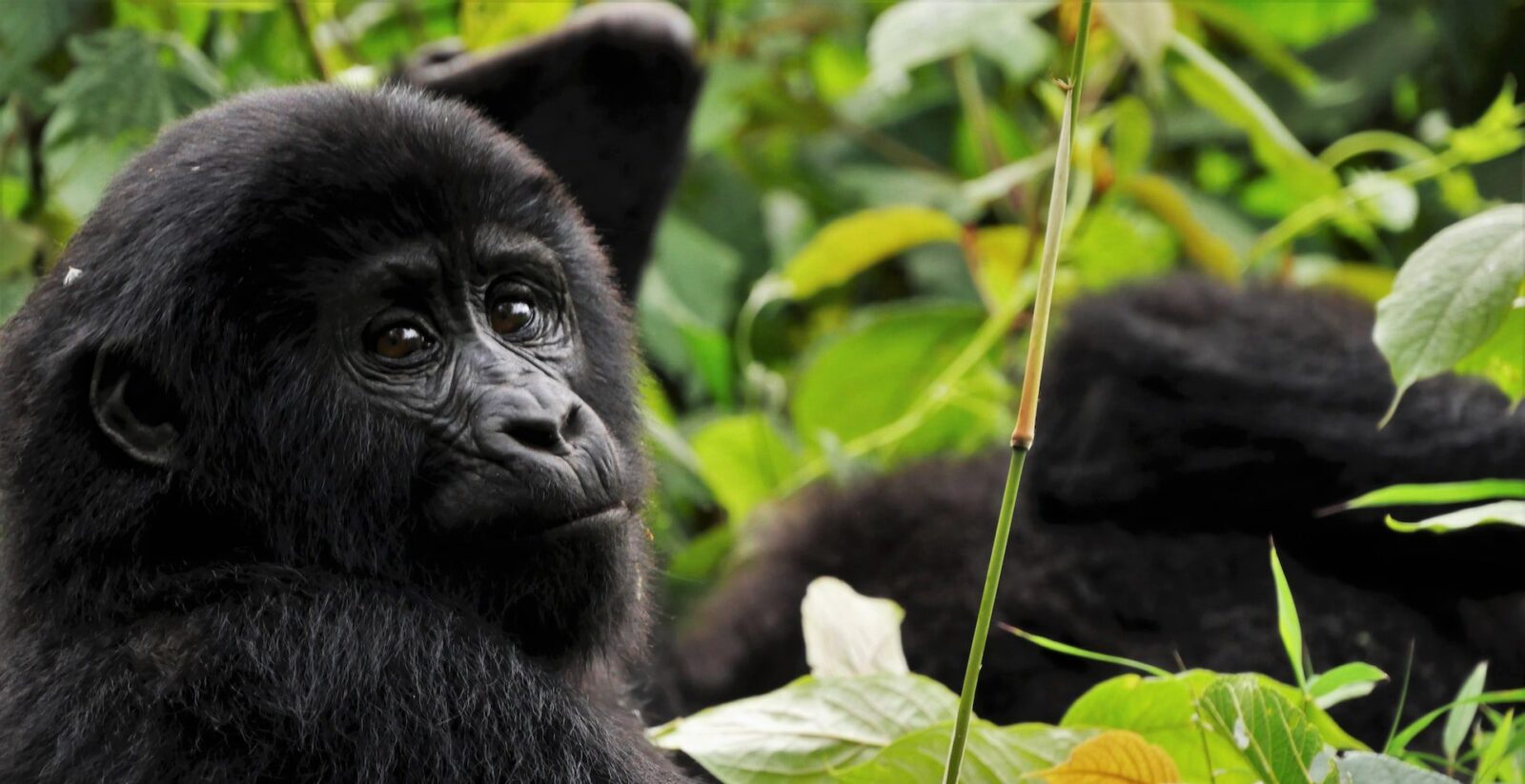
Kahungye Gorilla Family Rushaga: One of Bwindi’s Largest Groups
In the southern expanse of Bwindi Impenetrable National Park, the Rushaga sector is known for its high concentration of habituated gorilla families. Among them, the Kahungye gorilla family stands out for one defining reason-scale. This is one of the largest habituated gorilla groups in Bwindi, offering a trekking experience that feels expansive, active, and layered with constant interaction.
For visitors who want to experience the density and complexity of gorilla society, Kahungye delivers one of the most immersive encounters available.
The Origins of the Kahungye Family
The Kahungye family was opened for tourism in 2011 after a successful habituation process. By that time, Uganda had already established itself as a leading destination for mountain gorilla trekking, and the addition of Kahungye helped expand capacity while introducing a group with a significantly large population.
From the beginning, Kahungye attracted attention for its size. Unlike smaller or newly formed families, this group already had a strong social structure, multiple adult members, and a stable hierarchy.
However, like all wild gorilla groups, its history has not been static.
Over time, Kahungye experienced internal changes, including the well-documented split that led to the formation of the Busingye family. Despite this, Kahungye has remained one of the largest and most active groups in Rushaga.
What Makes Kahungye One of the Largest
Kahungye’s size is its defining characteristic.
While numbers fluctuate, the group has historically included:
A dominant silverback
Multiple adult females
Several blackbacks
Numerous juveniles and infants
This creates a multi-layered social structure where activity is happening in different parts of the group simultaneously.
For visitors, this means that the one-hour viewing window feels full. There is rarely a moment where nothing is happening.
You are not focused on a single individual-you are observing a network of interactions.
Trekking Experience in Rushaga
The Kahungye family is located in the Rushaga sector, which offers a balance between accessibility and wilderness.
Trekking conditions here typically include:
Moderate to challenging terrain
Rolling hills with occasional steep sections
Dense forest interspersed with more open patches
Compared to Nkuringo, Rushaga is generally less physically extreme, but it still requires a good level of fitness.
The size of the Kahungye group can influence how the trek feels. Because the family may spread out over a wider area, tracking can involve navigating across slopes and adjusting position to observe different clusters of gorillas.
A Dynamic Viewing Experience
What sets Kahungye apart is the level of activity.
In a large group, there is constant movement:
Juveniles playing and chasing each other
Infants interacting with multiple adults
Females grooming and feeding
Blackbacks positioning themselves within the group
The silverback remains the central figure, but he is part of a broader system rather than the sole focus.
This creates a more dynamic and visually engaging experience.
Instead of waiting for moments, you move between them.
Social Complexity and Behavior
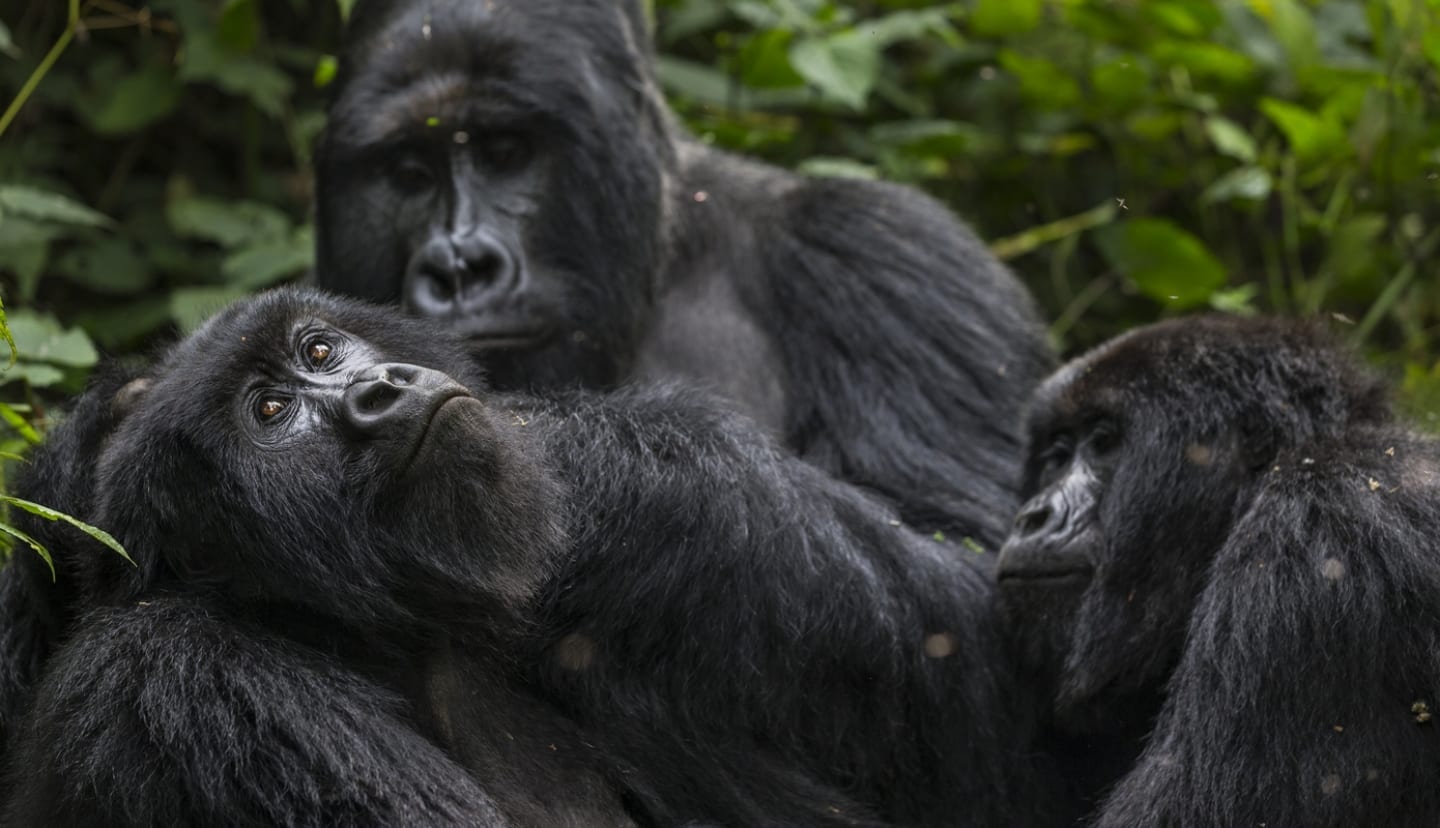
Kahungye provides one of the best opportunities in Bwindi to observe complex gorilla social behavior.
In a large group, hierarchy becomes more visible.
You may notice:
Subtle dominance interactions between males
Group coordination during movement
Protective behavior toward infants
Multiple grooming relationships forming and shifting
These interactions offer insight into how gorilla societies function at scale.
It is not just about individual behavior-it is about relationships.
Photography Opportunities
For photographers, Kahungye offers both advantages and challenges.
Advantages:
High number of subjects
Variety of interactions to capture
Opportunities for layered compositions
Challenges:
Group spread can make framing difficult
Movement requires constant adjustment
Vegetation may obstruct certain angles
However, for those willing to adapt, Kahungye provides some of the richest storytelling opportunities in gorilla photography.
Conservation Importance of Large Groups
Large families like Kahungye play a critical role in conservation.
They represent:
Strong population growth
Successful reproduction
Stable social systems
Their presence also supports tourism capacity, allowing more visitors to experience gorilla trekking without overburdening smaller groups.
Revenue generated from trekking permits contributes directly to:
Park protection
Anti-poaching initiatives
Community development
Kahungye is a key part of this system.
Comparing Kahungye with Other Rushaga Families
Rushaga offers a wide range of gorilla families, each with distinct characteristics.
Some are known for:
Smaller, more intimate group sizes
Calmer, more predictable behavior
Recent formation and ongoing development
Kahungye stands out for:
Its large population
High activity levels
Complex social interactions
This makes it one of the most engaging options for visitors who want a full-scale gorilla experience.
Who Should Choose the Kahungye Family
The Kahungye group is best suited for:
Visitors who want to see a large number of gorillas
Travelers interested in social behavior and interaction
Photographers seeking variety and activity
Those comfortable with moderate trekking conditions
It may be less ideal for:
Visitors seeking a quiet, minimal-movement encounter
Those who prefer very short or easy treks
Rules and Responsible Trekking
As with all gorilla trekking experiences in Bwindi, strict rules apply.
Visitors must:
Maintain a minimum distance of 7 meters
Limit viewing time to one hour
Follow ranger instructions at all times
Avoid trekking if unwell
Keep noise levels low
These rules ensure that even large groups like Kahungye remain protected and undisturbed.
The Emotional Impact of Scale
Encountering the Kahungye family creates a different emotional response compared to smaller groups.
There is a sense of immersion-not just in the forest, but within a living system of relationships.
You become aware of multiple layers of life happening at once. No single moment defines the experience. Instead, it is the accumulation of interactions that leaves the strongest impression.
It feels less like observing a group and more like stepping into a community.
Final Perspective
The Kahungye Gorilla Family in the Rushaga sector of Bwindi Impenetrable National Park stands as one of the most expansive and engaging gorilla groups available for trekking.
Defined by its size, shaped by its history, and driven by constant interaction, it offers a deeper and more dynamic understanding of gorilla life.
For visitors seeking more than a simple encounter-those who want to experience the full complexity of a gorilla society-Kahungye is one of the most compelling choices in Bwindi.
It is not just about seeing more gorillas.
It is about seeing how they live together at scale.