
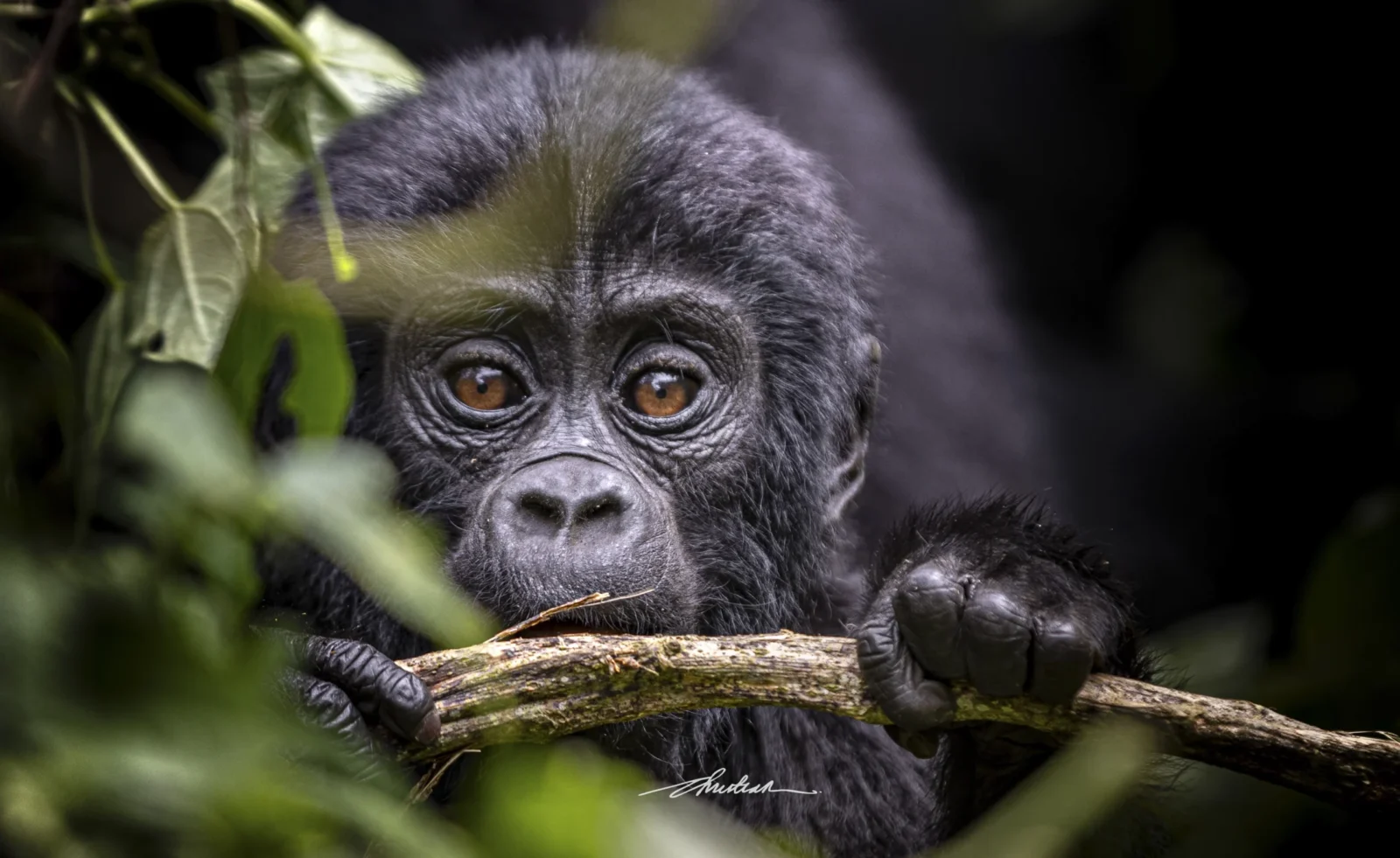
Rwigi Gorilla Family Ruhija: High Altitude Residents
High in the misty elevations of Bwindi Impenetrable National Park, far from the more frequented southern and northern trails, the Ruhija sector offers a quieter, more elevated gorilla trekking experience. Among the families that inhabit this part of the forest, the Rwigi gorilla family stands out as one of the most recent additions-defined by its altitude, evolving structure, and the distinct ecological conditions of its habitat.
Rwigi is not just another habituated group. It is a family shaped by elevation, cooler climate, and a different rhythm of life compared to gorillas in lower parts of Bwindi.
The Origin of the Rwigi Family
The Rwigi family was officially opened for tourism in 2019, making it one of the newest habituated groups in the Ruhija sector. Its formation followed a familiar but always fascinating pattern in gorilla society-breakaway and establishment.
The group is led by a dominant silverback named Rwigi, who separated from the Kyaguliro research group. Unlike purely tourism-focused families, Kyaguliro has long been associated with scientific research, meaning Rwigi’s transition into a fully habituated tourism group represents a bridge between research and visitor experience.
This origin gives the Rwigi family a unique background. It is rooted in a setting where gorillas were already accustomed to human presence in a controlled, scientific context before becoming part of the tourism framework.
Ruhija Sector: A Different Kind of Bwindi
The Ruhija sector is often described as one of the most tranquil and less crowded areas of Bwindi.
Located at higher altitudes than Buhoma or Rushaga, it offers:
Cooler temperatures
Dense montane forest
Steeper but less congested trails
Fewer trekking groups per day
This creates a quieter, more reflective trekking experience.
For many visitors, Ruhija feels less commercial and more remote, even though it is fully integrated into Bwindi’s tourism system.
What High Altitude Means for the Experience
The defining characteristic of the Rwigi family is its high-altitude habitat.
This has several implications.
First, the climate. Temperatures in Ruhija are generally cooler, especially in the early morning. Mist and cloud cover are common, creating a moody, atmospheric environment.
Second, the vegetation. The forest here is thick, with moss-covered trees, bamboo sections, and dense undergrowth. This affects visibility but enhances the sense of immersion.
Third, physical exertion. Trekking at higher altitude can feel more demanding, even if the terrain is not as steep as Nkuringo. Oxygen levels are slightly lower, and the body works harder during sustained movement.
For visitors, this means pacing is important.
Trekking the Rwigi Family
Tracking the Rwigi group typically involves moderate to challenging trekking conditions.
Expect:
Gradual but sustained climbs
Uneven forest terrain
Sections of dense vegetation
Cool and sometimes damp conditions
Unlike some groups in Buhoma that may be reached quickly, Rwigi often requires a more committed trek. However, the absence of heavy foot traffic and the quieter environment make the journey feel less rushed.
The trek itself becomes part of the experience, not just a means to an end.
Group Structure and Development
As a relatively new family, Rwigi is still evolving.
The group generally consists of:
A dominant silverback
Several adult females
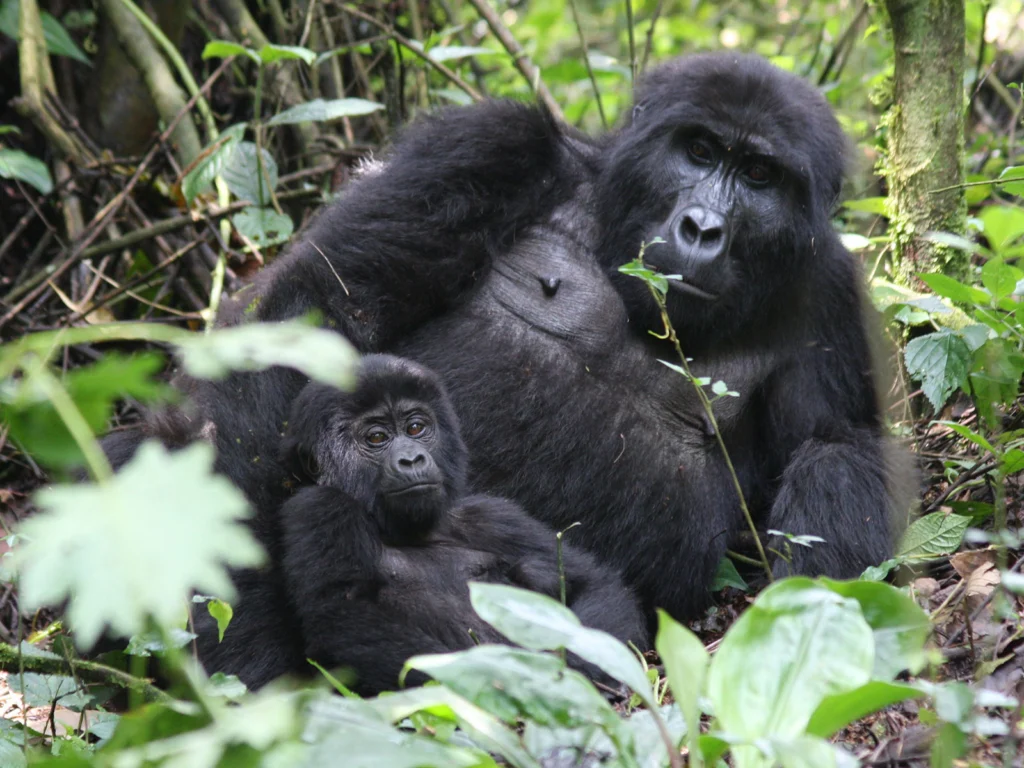
Juveniles and possibly infants
Because of its recent formation, the group’s size and structure may change over time. This makes each visit slightly different.
You are not observing a fixed system but one that is still stabilizing.
This adds depth to the experience, especially for visitors interested in gorilla behavior and social development.
Behavior and What You Will Observe
The Rwigi family offers a balanced mix of activity and calm.
During your one-hour viewing window, you may observe:
The silverback maintaining a central position
Females feeding and interacting
Juveniles exploring their surroundings
Quiet movement through dense vegetation
Because of the forest density, sightings may feel more intimate. You are often closer to individual gorillas, with vegetation framing the view rather than wide-open spaces.
This creates a more enclosed, immersive atmosphere.
Photography in Ruhija Conditions
Photography in the Rwigi family’s habitat requires adaptation.
Challenges include:
Lower light due to dense canopy
Frequent mist or cloud cover
Limited open sightlines
Advantages include:
Atmospheric conditions for unique images
Soft, diffused light
Close-range encounters
Photographers who understand low-light settings and composition in confined spaces can achieve highly distinctive results here.
Conservation and Research Significance
The Rwigi family’s connection to the Kyaguliro group highlights the link between research and tourism in Bwindi.
This relationship is important.
Research provides:
Long-term behavioral data
Health monitoring
Insights into gorilla ecology
Tourism provides:
Funding for conservation
Community support
Increased protection efforts
Rwigi sits at the intersection of these two systems, benefiting from both.
Comparing Rwigi with Other Bwindi Families
Each sector of Bwindi offers a different experience.
Buhoma is known for accessibility and established groups.
Rushaga offers variety and multiple trekking options.
Nkuringo provides rugged terrain and dramatic landscapes.
Ruhija, and specifically the Rwigi family, stands out for:
Higher altitude conditions
Quieter trekking environment
A newer, evolving group structure
This makes it particularly appealing to visitors looking for something less conventional.
Who Should Choose the Rwigi Family
The Rwigi group is best suited for:
Travelers seeking a quieter, less crowded trek
Visitors interested in high-altitude forest environments
Those curious about newer gorilla families
Photographers looking for atmospheric conditions
It may be less ideal for:
Visitors seeking the easiest or shortest trek
Those who prefer more open visibility for photography
Rules and Responsible Trekking
As with all gorilla trekking experiences in Bwindi, strict guidelines apply.
Visitors must:
Maintain a minimum distance of 7 meters
Limit viewing time to one hour
Follow ranger instructions at all times
Avoid trekking if unwell
Keep noise levels low
These rules are essential for protecting both gorillas and visitors, especially in a more sensitive, high-altitude environment.
The Experience in Perspective
Encountering the Rwigi family feels different from visiting groups in other sectors.
There is a sense of elevation-not just physically, but atmospherically.
The cooler air, the mist, and the quieter trails create a more reflective experience. You are less likely to feel the presence of other trekking groups, and more likely to feel immersed in the forest itself.
This changes how you engage with the gorillas.
It becomes less about spectacle and more about observation.
The Rwigi Gorilla Family in the Ruhija sector of Bwindi Impenetrable National Park offers a high-altitude gorilla trekking experience that is both unique and deeply immersive.
Defined by its elevation, shaped by its recent formation, and enriched by its connection to research history, this group provides a perspective that differs from more established families in other sectors.
For visitors willing to embrace cooler conditions, denser forest, and a quieter environment, Rwigi delivers one of the most distinctive gorilla encounters in Bwindi.
It is not the most accessible option.
But it is one of the most atmospheric and rewarding.