
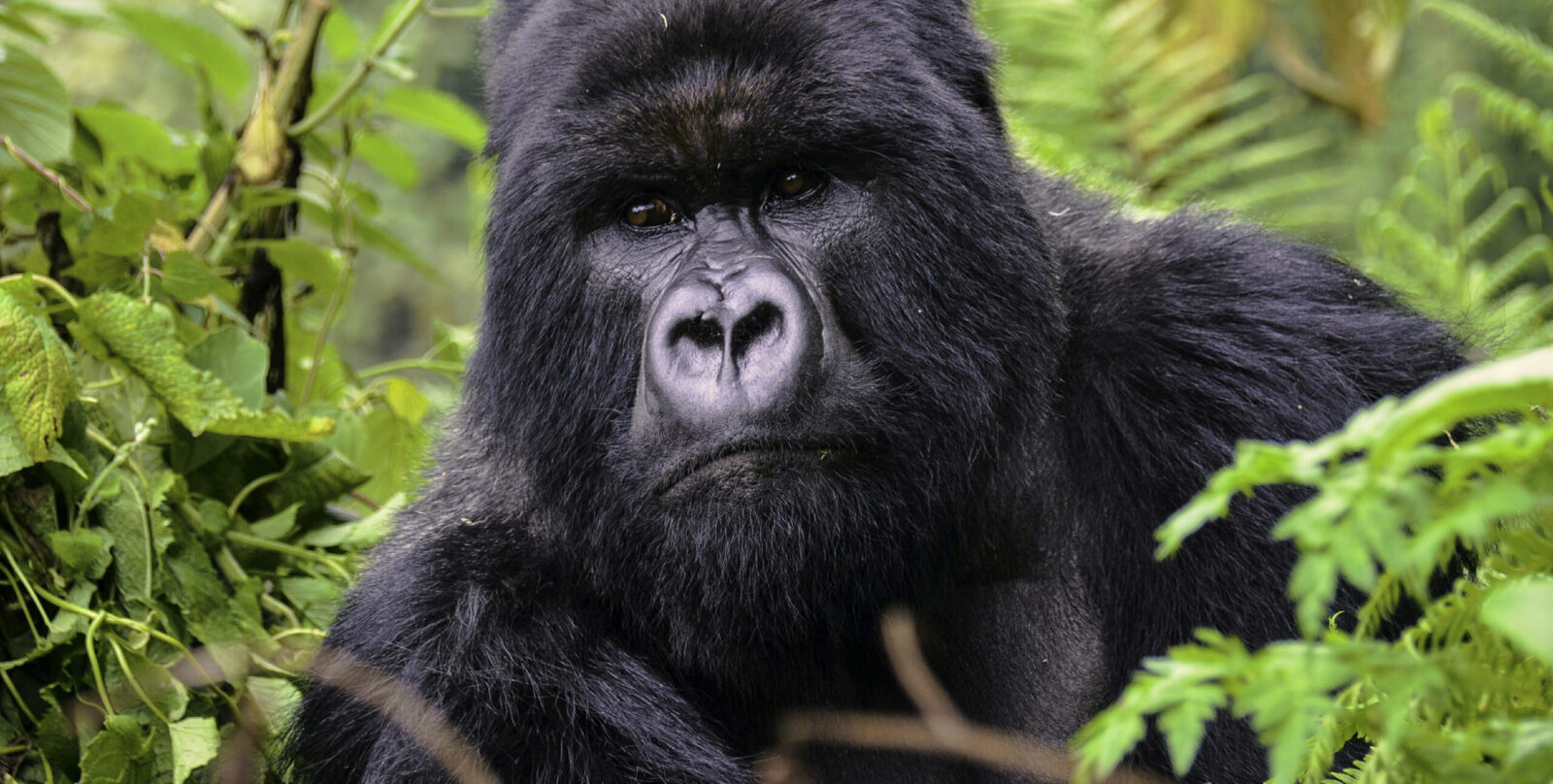
Silverback Gorilla Safari: Role, Behaviour and What to Do If Charged
A silverback gorilla safari focuses on one of the most powerful and socially important animals in the African rainforest: the dominant adult male mountain gorilla. In the forests of Bwindi Impenetrable National Park and the Virunga region, the silverback is not just the largest member of the group. He is the protector, decision-maker, conflict manager, and central figure that holds the entire family together.
Understanding silverback behaviour is essential for anyone planning a gorilla trekking experience, because most of what visitors observe in the wild is shaped directly or indirectly by his actions. He determines where the group feeds, how it moves, how it reacts to threats, and how safe the encounter feels for both gorillas and humans.
At the same time, the silverback is often misunderstood as aggressive. In reality, most of his behaviour is controlled, strategic, and focused on avoiding unnecessary conflict.
Who Is the Silverback?
A silverback is a mature male mountain gorilla, typically over 12 years old, named for the distinctive silver-grey hair that develops on his back as he ages. This physical change signals adulthood and dominance within gorilla society.
In most gorilla families, there is one dominant silverback who leads the group. However, some groups may contain multiple adult males, especially younger subordinate silverbacks who have not yet taken over leadership roles.
The dominant silverback is usually the father of most infants in the group, although his role extends far beyond reproduction.
The Role of the Silverback in Gorilla Society
The silverback is the central stabilizing force of the gorilla family. His responsibilities are not symbolic; they are functional and essential for survival.
He leads movement decisions, choosing when and where the group travels through the forest. He assesses feeding areas, evaluates safety, and guides the group through complex terrain.
He also acts as the primary protector. If a threat is detected, whether from predators, rival gorillas, or unfamiliar disturbances, he is the first to respond. His physical presence alone is often enough to deter danger.
Conflict management is another key role. Within the group, tensions may arise between individuals, especially juveniles or competing males. The silverback intervenes to restore order, often through displays rather than physical confrontation.
In the forests of Bwindi Impenetrable National Park, this leadership is essential because visibility is limited and coordination depends heavily on social structure.
Silverback Behaviour in the Wild
Silverback behaviour is often calm, deliberate, and highly observant. Contrary to popular belief, he does not spend most of his time in aggression. Instead, he monitors the group and environment continuously.
During feeding periods, the silverback is usually relaxed but attentive. He may sit slightly apart from the group while still maintaining visual awareness. This allows him to assess potential risks without disrupting group activity.
During movement, he often leads or stays at the front or center of the group. His movement signals direction, and others follow his lead without hesitation.
When resting, he may groom or be groomed by others, reinforcing social bonds and maintaining cohesion.
However, when tension arises, his behaviour changes noticeably. He becomes more alert, his posture stiffens, and he positions himself strategically between the group and perceived threats.
Displays of Dominance and Authority
Silverbacks use a range of displays to communicate dominance without immediate physical conflict.
One of the most iconic is chest beating, which produces a deep, resonant sound that travels through the forest. This display communicates presence, strength, and identity. It is often used to deter rivals or signal control over territory.
He may also use forward charging displays. These are fast but usually controlled movements toward a perceived threat, often ending just before physical contact. These charges are intended to intimidate rather than injure.
Vocalizations such as grunts, roars, and barks also reinforce authority and coordinate group reactions.
Facial expressions and body posture further communicate dominance. A confident silverback maintains upright posture, direct orientation, and steady eye contact when necessary.
Silverback Intelligence and Decision-Making
The silverback is not only physically dominant but also cognitively central to the group. His decisions are based on environmental awareness, social understanding, and long-term group stability.
He selects feeding areas based on food availability and safety. He decides when the group should move, rest, or remain alert. He also interprets external stimuli such as distant sounds or unfamiliar movement in the forest.
In essence, he functions as a decision-making hub, balancing risk and resource needs in real time.
Interaction Between Silverbacks
In regions where gorilla groups overlap, silverbacks may encounter each other. These interactions are among the most intense in gorilla society.
They often begin with visual assessment and vocal displays. Chest beating, posture changes, and strategic positioning are used to establish dominance without immediate physical conflict.
Most encounters are resolved without fighting, as physical injury would be costly for both groups. However, when conflicts do escalate, they can be extremely powerful and physically demanding.
Such encounters are rare for tourists but are an important part of understanding gorilla social structure.
What Happens If a Silverback Charges
One of the most important aspects of a silverback gorilla safari is understanding charging behaviour. A charge is not always an attack. In most cases, it is a defensive or warning display designed to control space and reduce perceived threat.
A typical charge involves a rapid forward movement toward a perceived danger, often accompanied by chest beating, vocalization, and sudden stopping before contact. The purpose is intimidation, not injury.
Actual physical attacks on humans during regulated gorilla trekking are extremely rare, especially in well-managed parks such as Bwindi Impenetrable National Park.
What You Should Do If a Silverback Charges
If a silverback gorilla charges during a trek, the most important principle is to remain calm and follow ranger instructions immediately.
Sudden movement, running, or loud reactions can escalate the situation because gorillas interpret these as threatening behavior. Instead, visitors are instructed to stay still, avoid direct eye contact, and keep body movements slow and controlled.
Rangers are trained to manage such situations and will use vocal cues and positioning to calm the group or redirect attention away from visitors.
In most cases, a charge ends without contact, as it is part of a controlled warning system rather than an attempt to harm.
Why Silverbacks Rarely Attack Humans
Mountain gorillas that are part of regulated trekking systems are habituated, meaning they are accustomed to human presence through gradual exposure. This reduces fear and defensive aggression.
Silverbacks also prioritize group stability over confrontation. Physical aggression carries risk of injury, which could weaken their ability to protect the group or maintain dominance.
As a result, most interactions with humans are neutral or cautious rather than aggressive.
Behaviour During Gorilla Trekking Encounters
During a typical safari encounter, the silverback’s behaviour may include resting, feeding, observing, or occasionally monitoring visitors.
He may position himself between the group and humans as a protective measure, but this is not necessarily aggression. It is a standard protective posture.
Visitors often notice that the silverback remains aware of their presence at all times, even when appearing relaxed.
Understanding Body Language of Warning
Recognizing early warning signs helps interpret silverback behaviour correctly.
A stiffened posture, direct forward movement, chest beating, or sudden vocalization may indicate heightened alertness. These signals do not automatically mean danger, but they do indicate that the silverback is assessing a potential threat.
In such moments, maintaining calm behavior is essential.
Conservation Role of the Silverback
Beyond group leadership, silverbacks play an important role in conservation success. Their stable family structure allows researchers to monitor population health, reproduction, and social dynamics.
In protected ecosystems such as Bwindi Impenetrable National Park, silverbacks are central to long-term ecological studies that track the recovery of mountain gorilla populations.
A silverback gorilla safari is ultimately about understanding leadership in one of the most powerful animal societies in the world. The silverback is not simply a dominant male. He is a protector, strategist, communicator, and stabilizer whose behaviour shapes every aspect of gorilla life.
Encounters with him are rarely dangerous when properly managed, but they are always significant. His movements, signals, and decisions define the experience of the entire group.
Understanding what a charge means, how behaviour escalates, and how to respond calmly transforms a safari from passive observation into informed awareness.
In the end, the silverback is not a symbol of uncontrolled aggression. He is a carefully balanced leader operating within a structured social system, ensuring the survival and cohesion of his family in the complex forest world of Bwindi.