
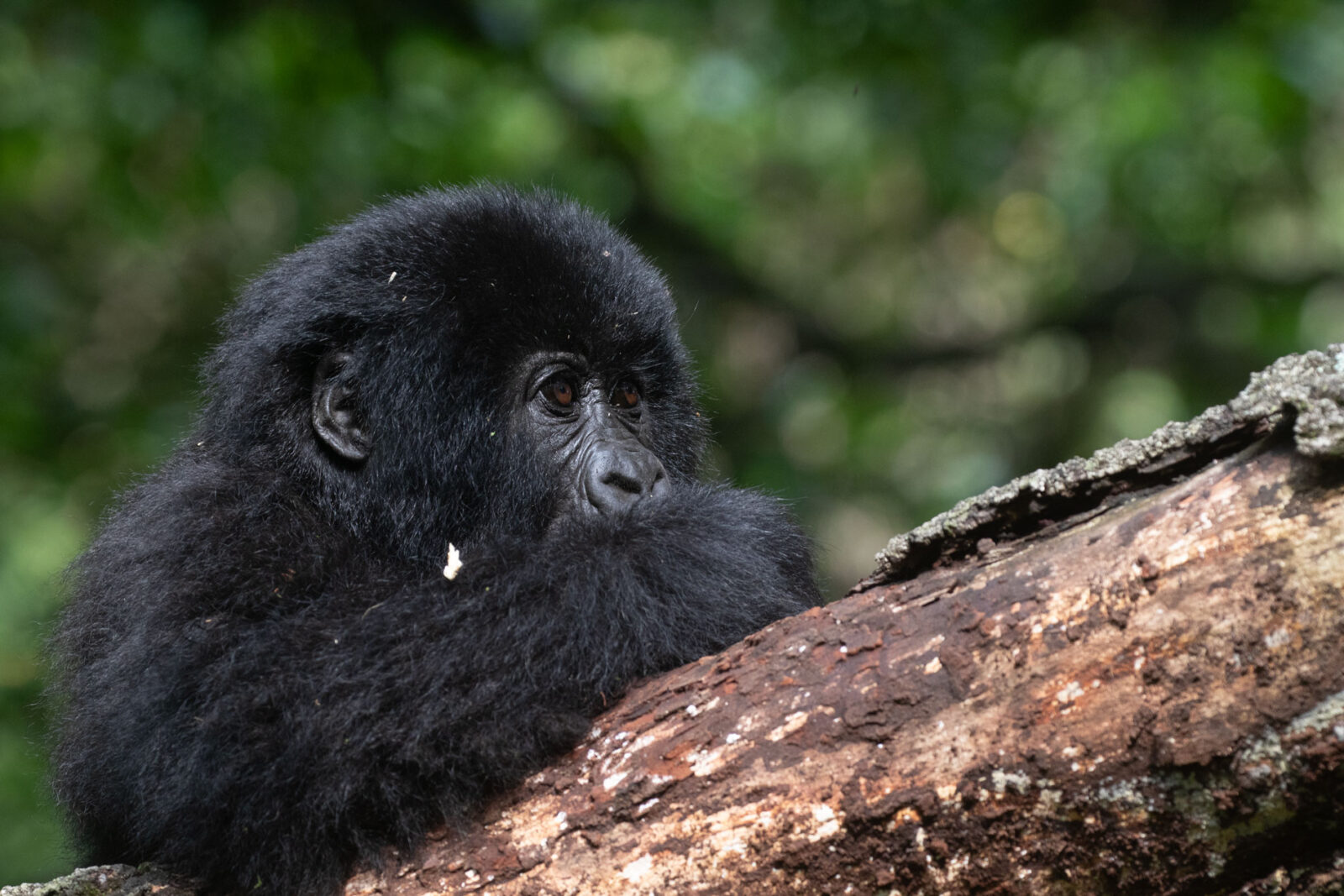
Mountain Gorilla Communication Safari: Calls, Gestures and Displays
A mountain gorilla communication safari is one of the most revealing ways to understand how life actually works inside a gorilla family. In the dense montane forests of Bwindi Impenetrable National Park and the wider Virunga ecosystem, mountain gorillas are rarely still and never truly silent. Even when they appear calm and relaxed, they are continuously exchanging information through a layered system of vocal calls, body movements, facial expressions, and physical displays.
What makes this communication system especially interesting is that it is not loud or dramatic in the way many people expect from large primates. Instead, it is subtle, highly contextual, and deeply embedded in social relationships. Every sound or movement carries meaning depending on who produces it, who receives it, and what situation is unfolding at that moment.
Understanding gorilla communication changes the entire safari experience. What looks like simple feeding or resting becomes a structured social conversation happening in real time.
The Foundation of Gorilla Communication
Mountain gorilla communication is built on integration rather than a single dominant channel. They do not rely only on sound or only on movement. Instead, they combine multiple signals simultaneously to express meaning.
Vocalizations help maintain contact over distance or through dense vegetation. Gestures and posture are used for close interaction within the group. Facial expressions add emotional context. Physical displays, especially from dominant silverbacks, regulate social order and communicate strength or intention.
In the forest environment of Bwindi, where visibility can be extremely limited, this multi-channel system is not optional. It is essential for survival and coordination.
Vocal Communication: The Sound Layer
Mountain gorillas use a diverse range of vocalizations, each with specific meaning depending on tone, rhythm, and context. These sounds are often low-frequency, which allows them to travel effectively through dense forest.
One of the most common vocalizations is the grunt. Grunts are soft, repetitive sounds used during feeding or movement. They help maintain contact between group members and reduce uncertainty when individuals are not in direct visual range. A series of grunts often signals that everything is normal and the group is stable.
Barks are sharper and more urgent. They are typically used when attention is needed quickly. A bark might signal a disturbance in the environment, a sudden change in direction, or awareness of something unusual nearby. When one gorilla barks, others often pause immediately to assess the situation.
Rumbles are deeper and more continuous sounds. They are often associated with calm coordination, especially during resting or slow movement phases. A rumble can signal reassurance or help maintain group cohesion without requiring visual contact.
Screams or high-intensity vocalizations are rare but important. They usually occur in moments of distress, conflict, or physical struggle. These calls trigger immediate attention from other group members and may lead to intervention by the silverback.
In the forest environment of Bwindi Impenetrable National Park, where sound travels farther than sight, vocal communication plays a critical role in maintaining group unity.
Body Language: The Silent Conversation
While vocalizations handle distance communication, body language dominates close-range interaction. Gorillas are extremely sensitive to posture, movement speed, and physical orientation.
A relaxed gorilla typically has a loose posture, slow movements, and minimal tension in the shoulders and arms. This signals safety and calmness to others nearby. In contrast, a stiff posture with raised body position often indicates alertness or mild tension.
Approach behavior is also important. When a gorilla approaches another slowly with relaxed posture, it is generally interpreted as peaceful intent. Rapid or direct movement, especially without accompanying vocal signals, can indicate dominance or agitation.
Withdrawal behavior is equally meaningful. A gorilla that turns away, increases distance, or avoids eye contact is often signaling submission or uncertainty. These signals help prevent unnecessary conflict within the group.
Because gorilla groups are large and socially complex, these subtle body cues are essential for maintaining order without constant physical confrontation.
Facial Expressions and Emotional Context
Mountain gorillas have highly expressive faces that provide emotional context to their behavior. These expressions are subtle but consistent across individuals.
Eye contact plays a key role. Short, neutral eye contact is often used for recognition or awareness. However, prolonged staring can be interpreted as a challenge or threat, depending on the situation.
Mouth position also carries meaning. A relaxed, slightly open mouth often indicates calmness. Tightened lips or sudden changes in mouth shape can signal tension or discomfort.
Combined with posture, these facial signals allow gorillas to communicate emotional states without sound. In dense forest environments like Bwindi, this silent communication is especially important during close interactions.
Chest Beating: Identity and Power Display
One of the most iconic gorilla behaviors is chest beating. While it is often interpreted as aggression, its meaning is far more complex.
Chest beating is primarily a long-distance communication signal. When a silverback beats his chest, the sound travels through the forest and can be heard far beyond visual range. This allows other group members or rival groups to identify his location.
It also functions as an identity marker. Each silverback has a unique chest-beating rhythm, which helps distinguish individuals.
In social contexts, chest beating can communicate confidence or dominance without physical contact. It is often used to prevent conflict rather than initiate it.
Juvenile gorillas also engage in chest beating, usually as part of play behavior or imitation of adult males. This helps them learn social roles within the group.
Grooming as Communication and Bonding
Grooming is one of the most important social communication behaviors among mountain gorillas. It serves multiple functions beyond hygiene.
When one gorilla grooms another, it reinforces trust and strengthens social bonds. Grooming is often directed toward higher-ranking individuals, especially the silverback, as a form of respect or affiliation.
It also serves as a calming mechanism. Grooming reduces tension within the group and helps resolve minor conflicts without aggression.
Within populations in Bwindi Impenetrable National Park, grooming is a frequent and structured behavior that contributes significantly to group stability.
Infant Communication and Learning Signals
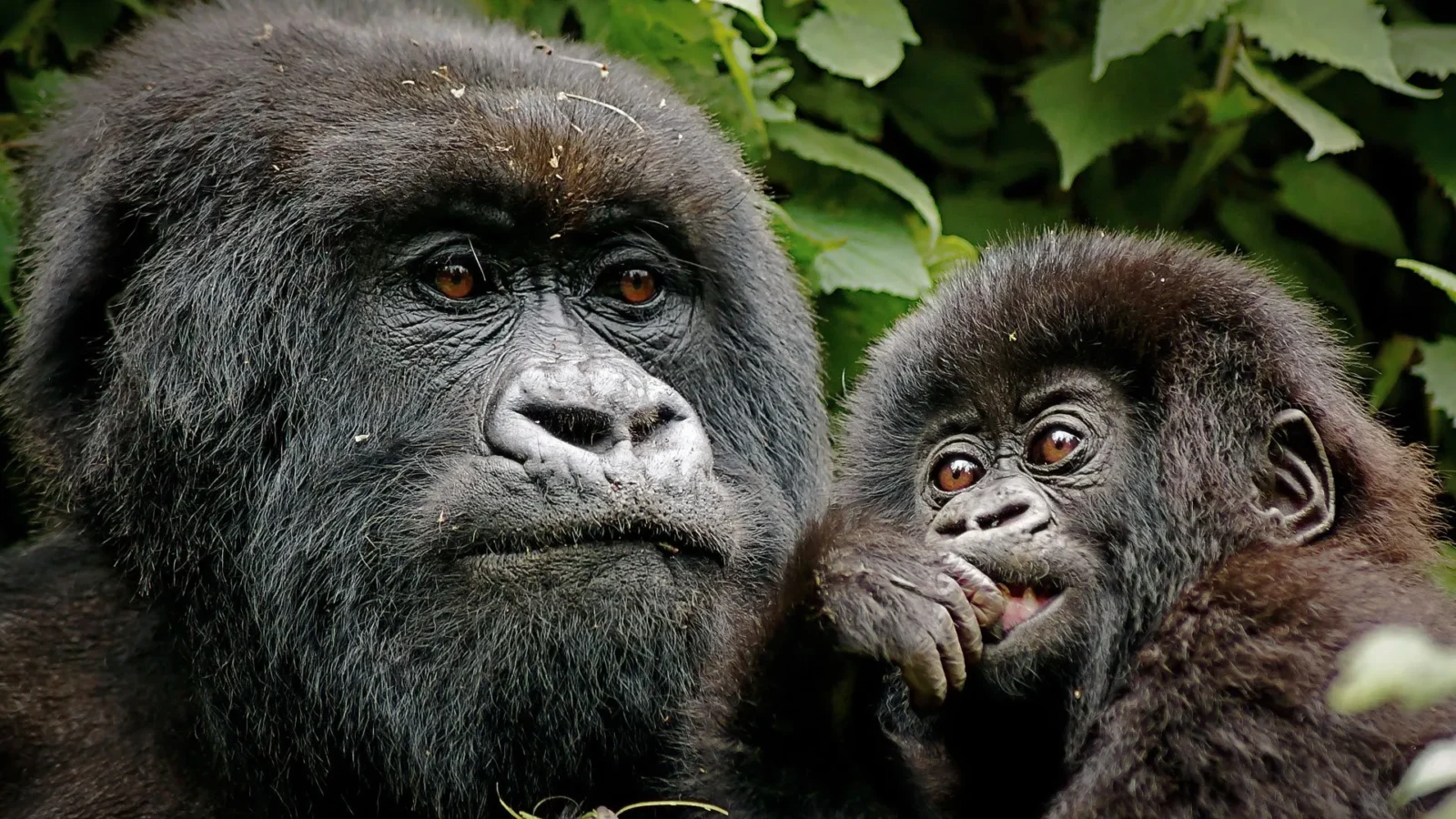
Infant gorillas rely heavily on non-verbal communication. Since they are still developing vocal abilities and social understanding, they depend on touch, proximity, and imitation.
Mothers communicate with infants through gentle vocalizations, physical contact, and positioning. Infants respond by clinging, following, and mimicking behaviors.
This early communication forms the foundation of social learning. Infants gradually learn how to interpret vocalizations, recognize gestures, and respond appropriately to social cues.
Over time, they transition from dependent communicators to active participants in group communication.
The Silverback as Communication Leader
The silverback is the central figure in gorilla communication systems. His signals influence group movement, social structure, and conflict resolution.
He also plays a key role in mediating conflict. His presence alone can reduce tension, and his displays can stop escalation before physical confrontation occurs.
In many ways, the silverback functions as a communication hub that stabilizes the entire social system.
Communication During Movement and Feeding
During daily activities such as feeding and travel, gorillas maintain continuous low-level communication. This ensures coordination even when individuals are spread out.
Soft grunts, occasional gestures, and visual tracking help maintain group cohesion. Even when feeding in different directions, group members remain aware of each other’s position through these signals.
In the dense terrain of Bwindi Impenetrable National Park, where visibility is limited, this system prevents separation and maintains unity.
Conflict Communication and Resolution
When tension arises within a gorilla group, communication becomes more structured. Warning vocalizations, changes in posture, and avoidance behavior often appear before any physical confrontation.
However, actual fighting is relatively rare. Most conflicts are resolved through displays, submission signals, or intervention by the silverback.
After conflict, reconciliation often occurs through grooming or relaxed proximity. This helps restore social balance and prevents long-term instability.
Communication Between Different Groups
Mountain gorillas also communicate between separate groups, especially in overlapping territories. These interactions are often cautious and structured.
Chest beating, vocal displays, and controlled movement are used to establish boundaries and avoid direct conflict. These signals help maintain spacing between groups and reduce unnecessary confrontation.
Why Communication Is Essential for Survival
In forest ecosystems like Bwindi Impenetrable National Park, communication is not optional. It is essential for survival.
Limited visibility, complex terrain, and dispersed food resources make coordination critical. Without structured communication, groups would struggle to maintain cohesion, find food efficiently, or respond to threats.
Every aspect of gorilla life depends on this communication system, from feeding to movement to social stability.
What Visitors Observe on a Communication Safari
For trekkers, a mountain gorilla communication safari transforms observation into interpretation. Instead of seeing isolated actions, visitors begin to recognize structured behavior.
A grunt becomes reassurance. A chest beat becomes identity signaling. A grooming session becomes social bonding. A change in posture becomes a shift in group dynamics.
This deeper understanding changes the safari experience from simple wildlife viewing to behavioral analysis.
Mountain gorilla communication in Bwindi Impenetrable National Park is a highly sophisticated system that integrates vocal calls, body language, facial expressions, and physical displays into a unified social framework.
It is not random or simplistic. It is structured, adaptive, and essential for survival in a complex forest environment.
Ultimately, gorilla communication reveals a society that is constantly active, socially aware, and emotionally responsive. What appears quiet from a distance is in fact a continuous network of signals that holds entire families together in one of the most challenging ecosystems on Earth.