
The Golden Hour Begins
There is a special moment on every safari when the day begins to slow down.
The heat softens, the wind becomes cooler, and the harsh midday light gives way to warm shades of gold and orange. Birds become active again, antelope emerge from shady hiding places, and predators begin preparing for the night ahead.
Our vehicle rolled across the open plains as the sun slowly descended towards the horizon. The landscape seemed to glow. Every blade of grass caught the fading light, transforming the savannah into a sea of gold.
Then we saw them.
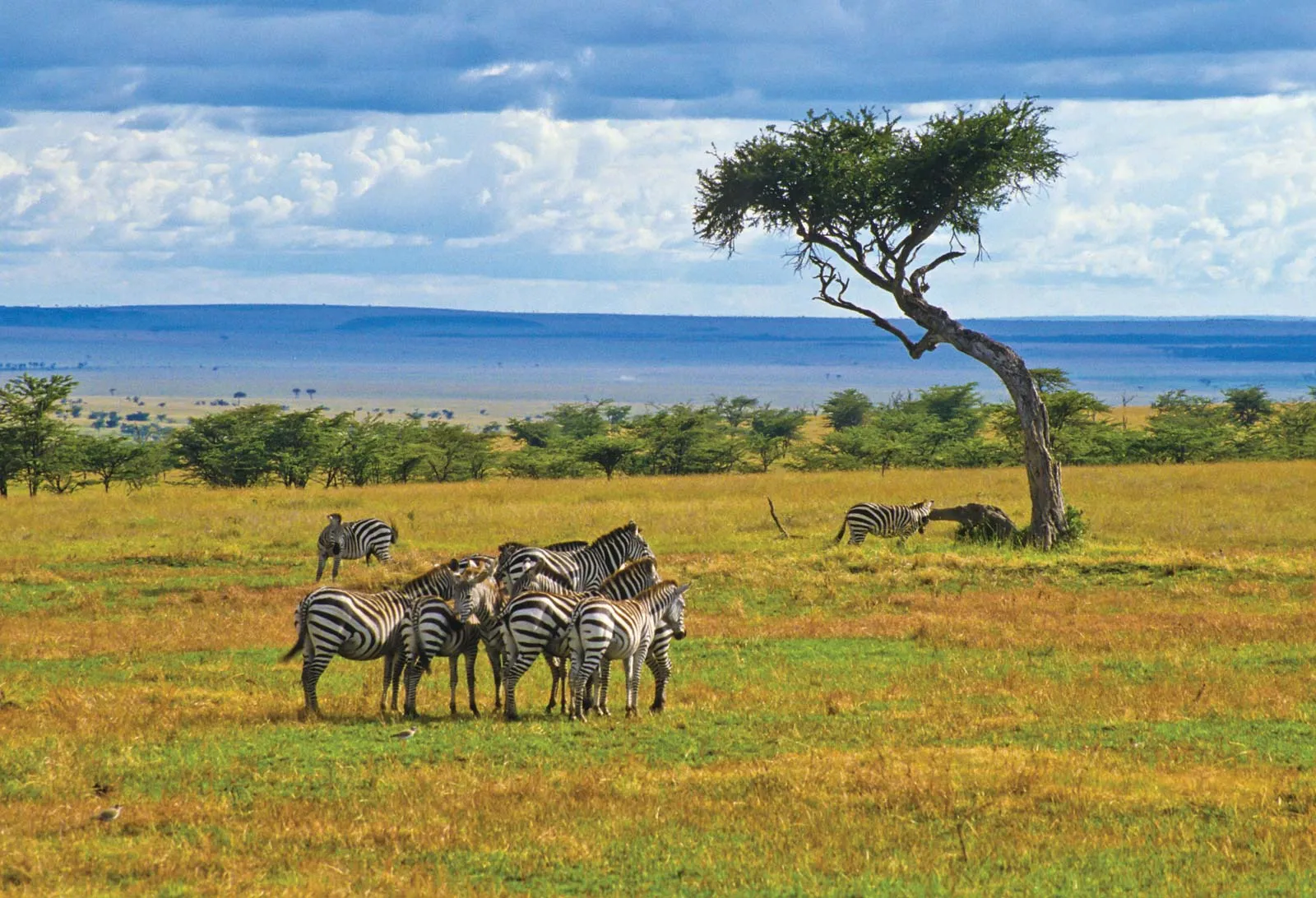
A herd of zebras appeared in the distance, standing quietly against the evening sky.
A Landscape Painted in Contrasts
As we drove closer, the scene became even more striking.
The setting sun had turned the grasslands into rich shades of amber and bronze. Against that colourful backdrop stood dozens of zebras, their black and white stripes creating a dramatic contrast that seemed almost unreal.
The plains had become a canvas of colour, yet the zebras remained perfectly black and white.
It was one of those rare wildlife moments that photographers dream about and travellers remember for years.
Why Zebras Look Different at Sunset
The low angle of the evening sun changes the way light falls across a zebra’s coat.
During the middle of the day, their stripes appear sharp and highly defined. At sunset, however, the warm light softens the contrast and creates long shadows that stretch across their bodies and the surrounding grass.
The result is a scene that feels almost artistic.
Some zebras appeared as silhouettes against the glowing horizon, while others reflected the golden light across their white stripes. Every movement created a new pattern of light and shadow.
The Herd Comes Alive
Although the day was ending, the zebras were becoming more active.
Several animals moved towards fresh grazing areas while young foals chased one another through the grass. A dominant stallion occasionally raised his head to monitor the surroundings before returning to feed.
The cooler temperatures of late afternoon encourage many herbivores to become active again after resting through the hottest hours of the day.
For safari visitors, this period often provides some of the best wildlife viewing opportunities.
Animals are moving, feeding, socialising, and preparing for the long night ahead.
A Perfect Time for Predators
The zebras understood that sunset was beautiful, but they also understood it could be dangerous.
As daylight faded, the herd became noticeably more alert.
Lions often begin hunting during the evening hours when temperatures become comfortable enough for sustained activity. Leopards emerge from resting places, and spotted hyenas begin patrolling the plains.
Several zebras paused repeatedly to scan the surrounding grasslands.
Their ears rotated constantly.
Their eyes watched every movement.
Even in peaceful moments, survival remains a full time job on the African savannah.
Why Zebras Stay Together
The closer we watched, the more obvious their social behaviour became.
Rather than spreading out randomly, the herd stayed relatively close together. Foals remained near their mothers while adults maintained a loose but organised formation.
This behaviour offers protection.
Many eyes are better than two. If one zebra notices danger, the entire herd benefits from that warning. A predator approaching from the grass has a much harder time surprising a large group than a single animal.
The setting sun may have created a beautiful scene, but the zebras never forgot the risks that arrived with darkness.
The Magic of Silhouettes
As the sun touched the horizon, the view became unforgettable.
The zebras moved onto a small rise overlooking the plains. Their bodies formed dark silhouettes against a glowing orange sky. Every stripe disappeared into shadow, leaving only their distinctive shapes visible against the fading light.
The herd stood motionless for a few moments.
Nobody in the vehicle spoke.
Sometimes the best safari experiences are the quietest ones.
No dramatic chase was unfolding. No predator was stalking through the grass. Yet everyone watching understood they were witnessing something special.
Photography During Sunset Safaris
Sunset is one of the most rewarding times for wildlife photography.
The softer light reduces harsh shadows and creates warm tones that add depth to images. Photographers often focus on silhouettes, dust clouds illuminated by the setting sun, or animals framed against colourful skies.
Zebras are particularly photogenic during this time because their distinctive patterns stand out even when details become less visible.
A herd crossing the horizon at sunset often creates one of the most iconic images of an African safari.
Where to Experience Sunset Zebra Safaris
Sunset game drives featuring zebras can be enjoyed throughout many of East Africa’s premier wildlife destinations.
In Uganda, Lake Mburo National Park offers exceptional evening views of zebras grazing across open grasslands. Kidepo Valley National Park provides dramatic sunset landscapes where wildlife moves beneath distant mountain ranges.
Kenya’s Maasai Mara National Reserve, Amboseli National Park, and Tsavo National Parks all offer remarkable opportunities to watch zebras against spectacular evening skies.
In Tanzania, Serengeti National Park, Tarangire National Park, and the Ngorongoro Conservation Area provide some of Africa’s most famous sunset safari experiences.
Each destination delivers its own unique scenery, but the combination of zebras and a setting African sun rarely disappoints.
The Last Light of the Day
As darkness slowly spread across the plains, the herd began moving away.
The golden colours faded into shades of purple and blue. Birds settled into trees for the night, and distant sounds echoed across the landscape as nocturnal animals prepared to emerge.
The zebras became smaller and smaller until they finally disappeared into the gathering darkness.
Only a few moments earlier they had dominated the landscape. Now they were part of the night.
When the Plains Turned Black and White
The memory of that evening remained long after the safari ended.
It was not just the zebras themselves that made the experience memorable. It was the contrast between their timeless black and white patterns and the brilliant colours surrounding them. For a brief period, the African plains seemed to transform into a living work of art where light, wildlife, and landscape combined perfectly.
As the final rays of sunlight vanished below the horizon, the zebras carried on with their lives, unaware that they had created one of the most beautiful scenes the savannah could offer.
For those fortunate enough to witness it, a sunset safari is more than the end of a day. It is a reminder that some of Africa’s most remarkable wildlife moments happen not during dramatic action, but during the quiet transition between daylight and darkness, when the plains themselves seem to turn black and white.