
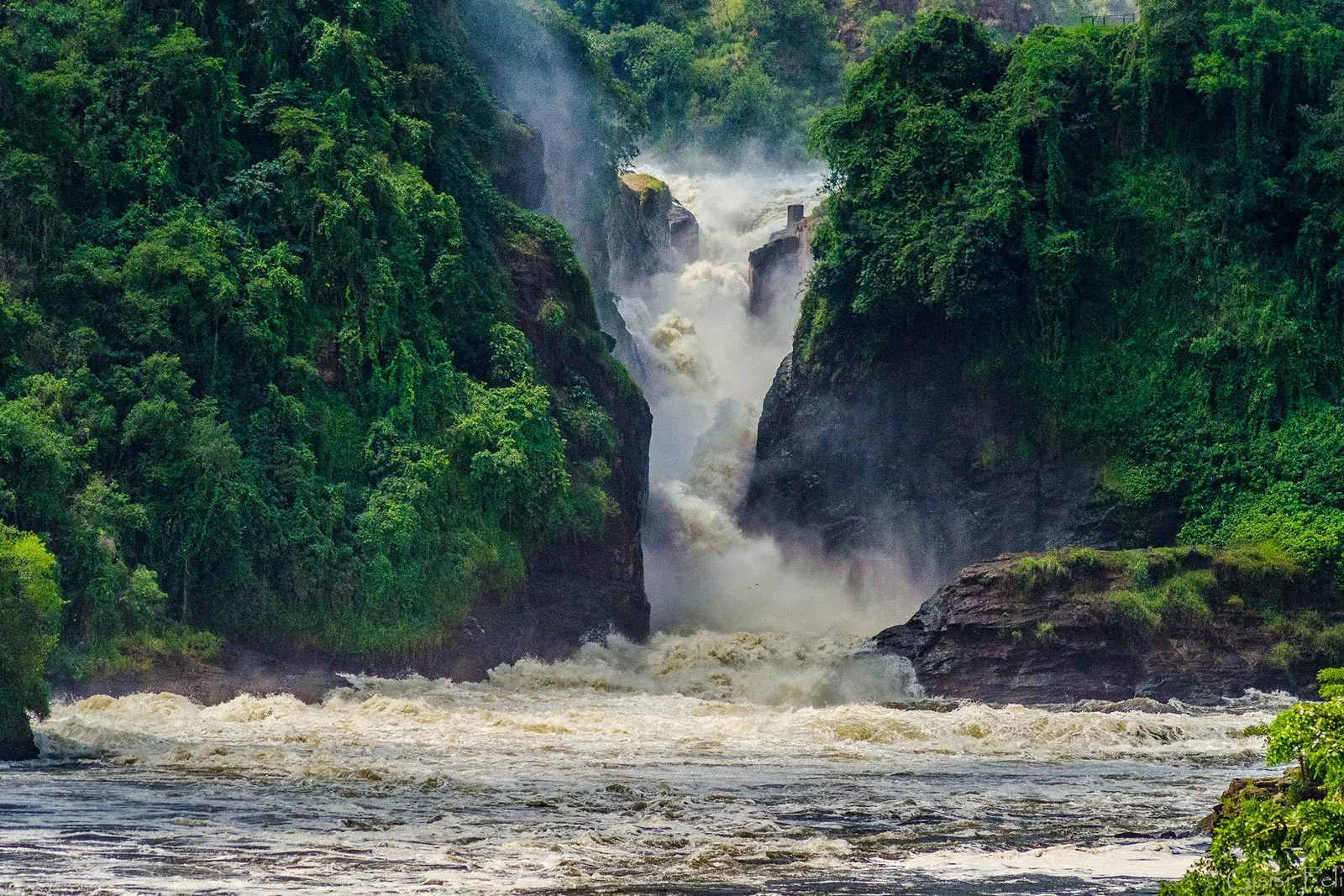
Sipi Falls: The Ultimate Guide to Uganda’s Triple Waterfall Wonder
On the lower slopes of Mount Elgon, in Uganda’s far eastern reaches near the Kenyan border, a striking series of three waterfalls tumbles down through coffee-covered hillsides in a setting that regularly ranks among the country’s most photographed landscapes outside the national parks themselves. Sipi Falls is not one waterfall but three, spread across a hiking loop that takes in dramatic drops, sweeping valley views, and one of Uganda’s most productive Arabica coffee growing regions along the way, all within a single well-marked, guided circuit.
Three Falls, Three Distinct Characters
The main, lower falls are the most famous and most photographed of the three, plunging roughly a hundred metres over a sheer cliff face into a pool below, the classic image most visitors associate with Sipi before they have even arrived. This is the waterfall visible from many of the area’s lodges and viewpoints, and it is the one that anchors most people’s first impression of the area.
The middle falls drop through a slightly different landscape, tumbling over a rock ledge that, from certain angles, appears to spill directly over the mouth of a small cave behind the curtain of water. The third and uppermost of the falls completes the set, a narrower but still impressive drop that rounds out the full loop hike connecting all three sites.
The Full Loop Hike
Most visitors experience Sipi Falls via a guided loop hike of roughly seven kilometres that links all three waterfalls together, typically taking somewhere between three and five hours depending on pace, fitness, and how much time is spent lingering at each viewpoint. The trail winds through a landscape that shifts constantly between cultivated coffee gardens, patches of indigenous forest, and open ridgeline with sweeping views out over the Karamoja plains stretching away to the north, a genuinely different visual character from the forested national parks that dominate most Uganda itineraries.
Shorter Options for Limited Time
Travellers without time for the full loop can still see the main lower falls via a much shorter walk from most of the area’s lodges, some of which sit close enough that the falls are visible directly from the property. This shorter option sacrifices the middle and upper falls along with much of the coffee-garden scenery the full loop passes through, but it remains a worthwhile stop for anyone travelling through the region on a tighter schedule.
Guides and Safety
While it is technically possible to view the lower falls independently from some lodges, the full loop hike is best done with a local guide, both for navigation across the network of intersecting farm paths and community trails, and because guides here are typically drawn from the immediate community and can add genuine context about the coffee farming, local customs, and history of the area that would otherwise be missed entirely. Guiding fees also directly support the community whose land the trail crosses, an arrangement that benefits both visitor experience and local livelihoods.
The trail includes some genuinely steep and occasionally slippery sections, particularly after rain, and while it does not require technical climbing skill, reasonable fitness and sturdy footwear make a meaningful difference to how comfortably the full loop can be completed.
Coffee Country
The slopes around Sipi Falls sit at an altitude and climate ideally suited to Arabica coffee, and the region has become one of Uganda’s more significant coffee-growing areas as a result. Coffee gardens line much of the hiking route, and many visitors combine their waterfall hike with a dedicated coffee tour, walking through the full process from picking ripe cherries to roasting and grinding beans by hand, often finishing with a fresh cup brewed on the spot. This pairing has become such a natural complement to the waterfall hike that many guides and lodges offer it as a standard combined activity rather than a separate booking.
Abseiling and Other Adventure Activities
Beyond hiking, Sipi Falls has developed a small but genuine adventure tourism scene, with abseiling down sections of the falls available through a handful of local operators for visitors wanting a more adrenaline-driven way to experience the waterfalls up close. This has added another dimension to the area’s appeal beyond the classic hike-and-viewpoint experience most visitors expect, drawing a slightly different segment of travellers specifically interested in the activity.
Getting There
Sipi Falls sits a considerable distance from Kampala in Uganda’s eastern region, and most visitors reach it either as part of a broader eastern Uganda circuit that includes Mount Elgon National Park itself, or as a standalone multi-day trip focused on the falls, the coffee tour, and the surrounding hiking. The drive from Kampala typically takes the better part of a day, which makes an overnight stay in the area, rather than a rushed day trip, the more common and more comfortable way to experience what Sipi has to offer.
Best Time to Visit
Sipi Falls can be visited year-round, though the region’s drier months generally offer more comfortable hiking conditions and better long-distance visibility across the Karamoja plains from the trail’s higher viewpoints. The wetter months bring their own appeal, with the falls typically running fuller and the surrounding coffee gardens and forest at their greenest, a trade-off worth weighing depending on whether photography of the falls themselves or comfortable hiking conditions matters more to a given visit.
Why Sipi Falls Earns Its Reputation
Uganda has no shortage of waterfalls, but the specific combination Sipi offers, three distinct falls connected by a single scenic hike, a thriving coffee culture woven directly into the trail experience, and sweeping views over one of Uganda’s more remote and dramatic landscapes, sets it apart from simpler single-waterfall destinations elsewhere in the country. For travellers building an itinerary around Sipi Falls and the surrounding Mount Elgon region, the falls function as both a headline attraction in their own right and a natural gateway into the wider hiking and coffee-growing landscape of Uganda’s eastern highlands.
Where to Stay
Accommodation around Sipi Falls ranges from simple budget guesthouses to more comfortable lodges built specifically to take advantage of the area’s views, several of them positioned so that the main falls are visible directly from a room’s veranda or a shared viewing deck. Given the area’s popularity as a scenic overnight stop rather than a rushed day trip, most properties are set up around exactly this kind of relaxed, view-oriented stay, with communal dining areas and lounges arranged to make the most of the surrounding scenery rather than simply providing a bed for the night. Booking ahead is worth doing during Uganda’s busier travel periods, since the area’s total bed capacity is modest compared to more heavily developed tourism destinations elsewhere in the country.
Combining Sipi Falls With Mount Elgon National Park
Sipi Falls sits just outside the boundary of Mount Elgon National Park itself, and the two destinations pair naturally for travellers with enough time to experience both. Mount Elgon offers considerably more demanding, multi-day hiking options up toward its caldera and higher peaks, while Sipi provides a shorter, more accessible hiking experience combined with the coffee culture that has become such a defining feature of the region. Many itineraries treat Sipi as a base for exploring the wider area, using it as a comfortable overnight anchor point between shorter local activities and any longer excursions into the national park proper.
A Genuinely Different Kind of Uganda Stop
For travellers whose Uganda itinerary otherwise centres entirely on gorilla trekking and savannah wildlife, Sipi Falls offers something genuinely different, a highland, agricultural landscape built around coffee, waterfalls, and long-distance views rather than forest primates or grazing wildlife. This contrast is part of what makes it such a popular addition to broader eastern Uganda circuits, giving a trip real variety in both scenery and activity type rather than a string of similar wildlife-focused stops.
The area’s remoteness relative to Kampala and the southwestern gorilla parks means it tends to attract a slightly different, often more independently minded traveller than Uganda’s headline destinations, though its growing reputation has meant steadily increasing visitor numbers over recent years as word of the falls, the hiking, and the coffee tours has spread. Even with that growth, Sipi retains a noticeably quieter, more low-key atmosphere than Uganda’s more established wildlife circuits, a quality many visitors specifically cite as part of its appeal.
What to Pack
Layered clothing suits the altitude and variable weather typical of the region, since mornings and evenings can turn cool even during the drier months, while midday sun on the more exposed ridgeline sections of the hiking loop can be intense. Sturdy, broken-in hiking footwear matters given the trail’s steep, occasionally slippery sections, and a rain jacket is worth carrying regardless of season, since weather here can shift with little warning given the area’s elevation and proximity to Mount Elgon’s own localised climate patterns, turning a sunny morning viewpoint into a misty, cloud-wrapped afternoon in the space of little more than an hour.