
Lake George Uganda: Flamingos, Fishing & Wildlife by the Shore
Sitting quietly along the far northern edge of Queen Elizabeth National Park, Lake George rarely gets top billing on a Uganda safari itinerary, overshadowed by the more famous Kazinga Channel it feeds into and the tree-climbing lions the wider park is known for. Yet this shallow, expansive lake holds its own significance, both ecologically and culturally, as Uganda’s very first internationally recognised wetland and a genuinely working lake still central to the daily livelihoods of the fishing communities settled along its extensive shore.
Uganda’s First Ramsar Site
In 1988, Lake George became Uganda’s first site designated under the Ramsar Convention, the international treaty for the protection of wetlands of global significance. That designation reflects the lake’s importance as a centre of biological diversity, particularly its extensive papyrus swamp margins, which support a wetland ecosystem considerably richer than the open water alone might suggest. Covering roughly 250 square kilometres but averaging only about 2.4 metres in depth, Lake George is a genuinely shallow lake, a characteristic that shapes almost everything about its ecology, from the wetland vegetation that thrives around its edges to the specific fish and bird species that have adapted to these conditions.
Papyrus Swamps and Their Hidden Residents
The dense papyrus swamps ringing Lake George are far more than scenic backdrop, they provide critical habitat for species that depend specifically on this kind of wetland environment. Sitatunga, a shy, semi-aquatic antelope adapted to swamp life with splayed hooves that let it move across soft, waterlogged ground, inhabit these papyrus stands, though sightings require patience and a good guide given how effectively the dense vegetation conceals them. The shoebill stork, one of Africa’s most sought-after and instantly recognisable birds thanks to its enormous, clog-shaped bill, is also associated with Lake George’s papyrus wetlands, drawing dedicated birders specifically hoping to tick this famously elusive species off their list.
Flamingos and the Wider Birdlife
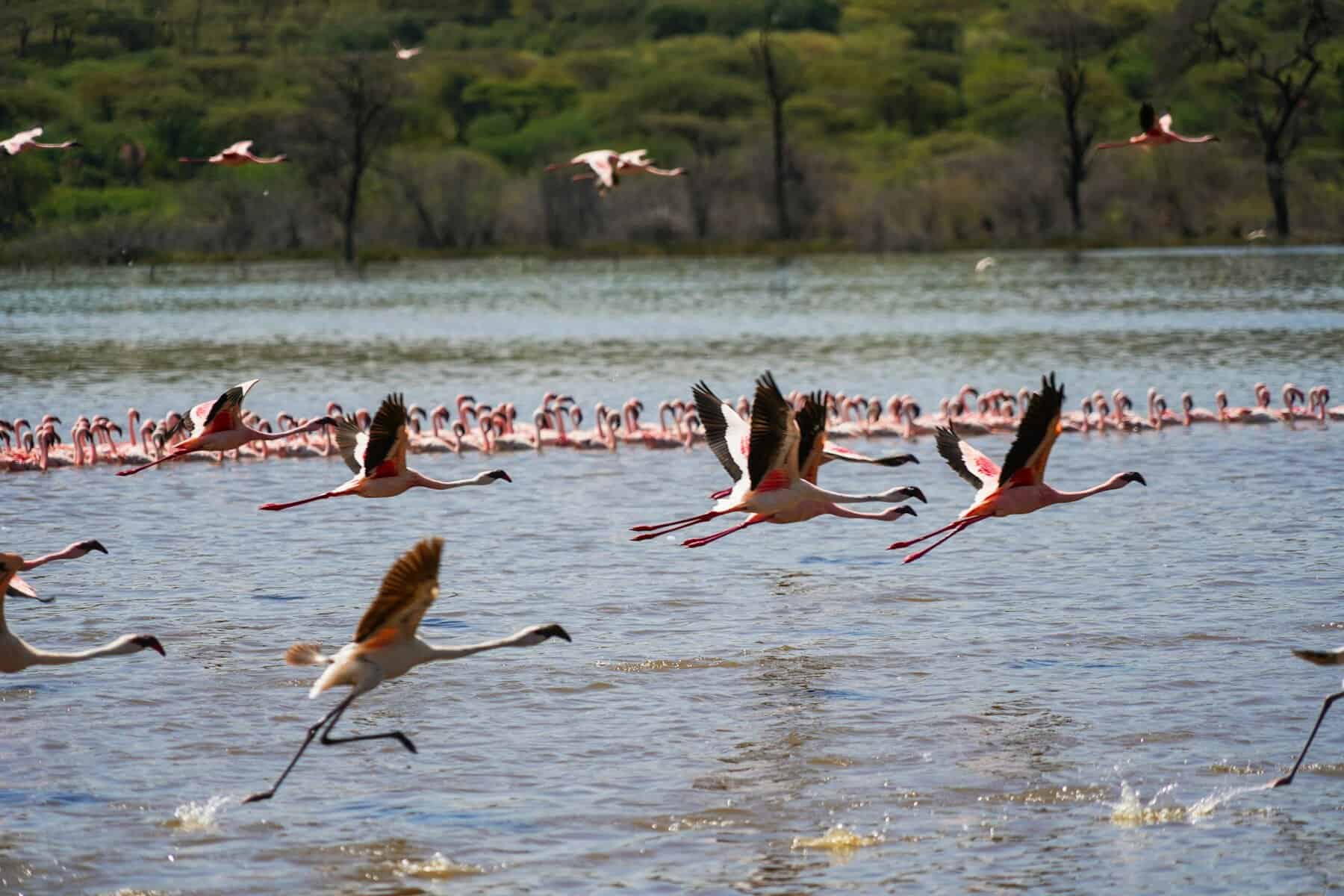
Lake George and the surrounding Kazinga Channel ecosystem support flamingo sightings among a broader and genuinely impressive bird community, with well over one hundred and fifty species recorded across the lake’s wetland habitat. Pelicans, marabou storks, African fish eagles, cormorants, and a wide range of kingfishers round out a genuinely rewarding birding checklist that rivals many of Uganda’s more heavily promoted birding destinations, despite Lake George rarely receiving the same dedicated attention from visiting birders that parks like Semuliki or Bwindi attract.
A Working Lake Central to Local Livelihoods
Unlike some of Uganda’s more purely scenic or recreational lakes, Lake George remains a genuinely working body of water, supporting numerous fishing villages along its shore whose economies depend directly on its fish stocks. Nile tilapia and various haplochromine species form the backbone of local fishing activity, caught using both traditional and more modern methods depending on the specific community and its resources. Visiting one of these fishing villages offers travellers a very different kind of experience from the wildlife-focused activities that dominate most of a Queen Elizabeth National Park itinerary, an opportunity to see boats being repaired, nets carefully mended, and the daily rhythm of a lake-dependent community continuing much as it always has for generations.
Fishing Villages Worth Visiting
Several fishing communities dot Lake George’s shoreline, offering varying degrees of tourist access and cultural interaction depending on the specific village and how it has developed alongside the tourism economy of the wider Queen Elizabeth region. Guided visits typically include the chance to observe fishing methods firsthand, from traditional hook fishing practised by younger community members to the larger-scale netting used by established fishing crews, along with general insight into how these communities balance their livelihoods with the surrounding national park’s conservation regulations.
Connection to the Kazinga Channel
Lake George feeds into the thirty-two kilometre Kazinga Channel, which connects it to Lake Edward further west, and this connected waterway system forms the ecological backbone of Queen Elizabeth National Park’s wildlife concentrations. While the Kazinga Channel boat cruise is the far better-known tourist activity within this connected system, understanding Lake George’s role as the source feeding that channel adds useful context for travellers curious about how the park’s water systems and wildlife distribution actually function together as a single interconnected ecosystem.
Visiting Lake George as Part of a Queen Elizabeth Itinerary
Lake George is rarely visited as a standalone destination, and most travellers encounter it as an extension of a broader Queen Elizabeth National Park stay, whether through a dedicated fishing village visit, a birding excursion focused on the papyrus swamp species, or simply as a point of interest passed while exploring the park’s northern sector. Given how comprehensively the Kazinga Channel boat cruise already covers much of this connected ecosystem’s wildlife highlights, Lake George itself tends to appeal most to travellers with specific interests, dedicated birders after the shoebill or flamingos, or those curious about the human, fishing-based side of life around Uganda’s protected wetlands, rather than casual visitors working through a standard highlights list.
A Quiet but Significant Part of Uganda’s Wetland Heritage
Lake George may lack the singular headline attraction that draws visitors to other parts of Queen Elizabeth National Park, but its status as Uganda’s first Ramsar site, its rich papyrus swamp ecosystem, and its ongoing role sustaining local fishing communities give it a genuine significance that rewards a closer look. For travellers exploring Lake George and its surrounding wetlands, the lake offers a quieter, more grounded counterpoint to the park’s bigger wildlife draws, a window into both Uganda’s conservation history and the everyday lives shaped by its waters.
The Lake’s Place Within the Broader Rift Valley System
Lake George sits within the Albertine Rift Valley, part of the same broader tectonic system responsible for the dramatic lakes, mountains, and volcanic features scattered across western Uganda and neighbouring Congo and Rwanda. Its shallow, expansive character contrasts sharply with some of the region’s much deeper rift lakes further south, a difference driven by its particular position and geological history within this larger system. This context matters for understanding why Lake George developed such an extensive papyrus swamp ecosystem rather than the steep, forested shorelines found around some of Uganda’s other lakes, its shallow depth and gentle surrounding terrain created ideal conditions for the kind of wetland vegetation that now defines the lake’s ecological character.
Conservation Challenges Facing the Lake
Like many wetlands supporting both significant biodiversity and substantial human economic activity, Lake George faces an ongoing balancing act between conservation priorities and the needs of the fishing communities whose livelihoods depend on its resources. Overfishing pressures, occasional real conflicts between strict conservation regulations and long-standing traditional fishing practices, and the broader challenges facing Ramsar-designated wetlands right across the wider region all factor into how the lake is managed. Understanding this tension adds useful depth for travellers interested in the practical realities of conservation in a working landscape, rather than viewing Lake George purely through a scenic or recreational lens disconnected from the livelihoods it supports.
Best Time to Visit
Lake George and its surrounding wetlands can be visited throughout the year, though birding conditions and general visibility tend to be somewhat better during Uganda’s drier months, when papyrus swamp trails are more accessible and water levels more predictable. Wetter periods bring their own rewards, with the swamp vegetation at its lushest and migratory bird numbers sometimes higher depending on the specific season, though access to some of the more remote fishing villages and swamp-edge birding spots can become more logistically challenging when trails turn muddy.
Getting There
Lake George is most easily accessed as part of a wider Queen Elizabeth National Park visit, typically approached from within the park’s northern sector rather than as an independent destination requiring separate travel arrangements. Most visitors combine a Lake George excursion, whether a fishing village visit or a targeted birding outing, with the park’s more established activities such as game drives or the Kazinga Channel boat cruise, making efficient use of a single stay in the area rather than requiring additional overnight stops purely for the lake itself.
Why Dedicated Birders Make the Effort
For birders specifically chasing the shoebill stork, one of the most sought-after sightings anywhere on the African birding circuit thanks to its prehistoric appearance and famously elusive habits, Lake George’s papyrus swamps represent a genuine, credible opportunity within a Uganda itinerary that might otherwise focus on Mabamba Swamp near Entebbe or the Murchison Falls delta as the primary shoebill destinations. Having multiple credible shoebill locations spread across a Uganda trip meaningfully improves overall odds of a successful sighting, and Lake George’s relative proximity to the broader Queen Elizabeth circuit makes it a logical addition for birders already spending time in the park rather than a location requiring an entirely separate special trip. Guides who work this particular specific stretch of wetland regularly develop a genuine, well-earned feel for where shoebills have been reliably encountered in recent weeks, information worth asking about directly when arranging a dedicated birding excursion to the lake’s papyrus margins.