
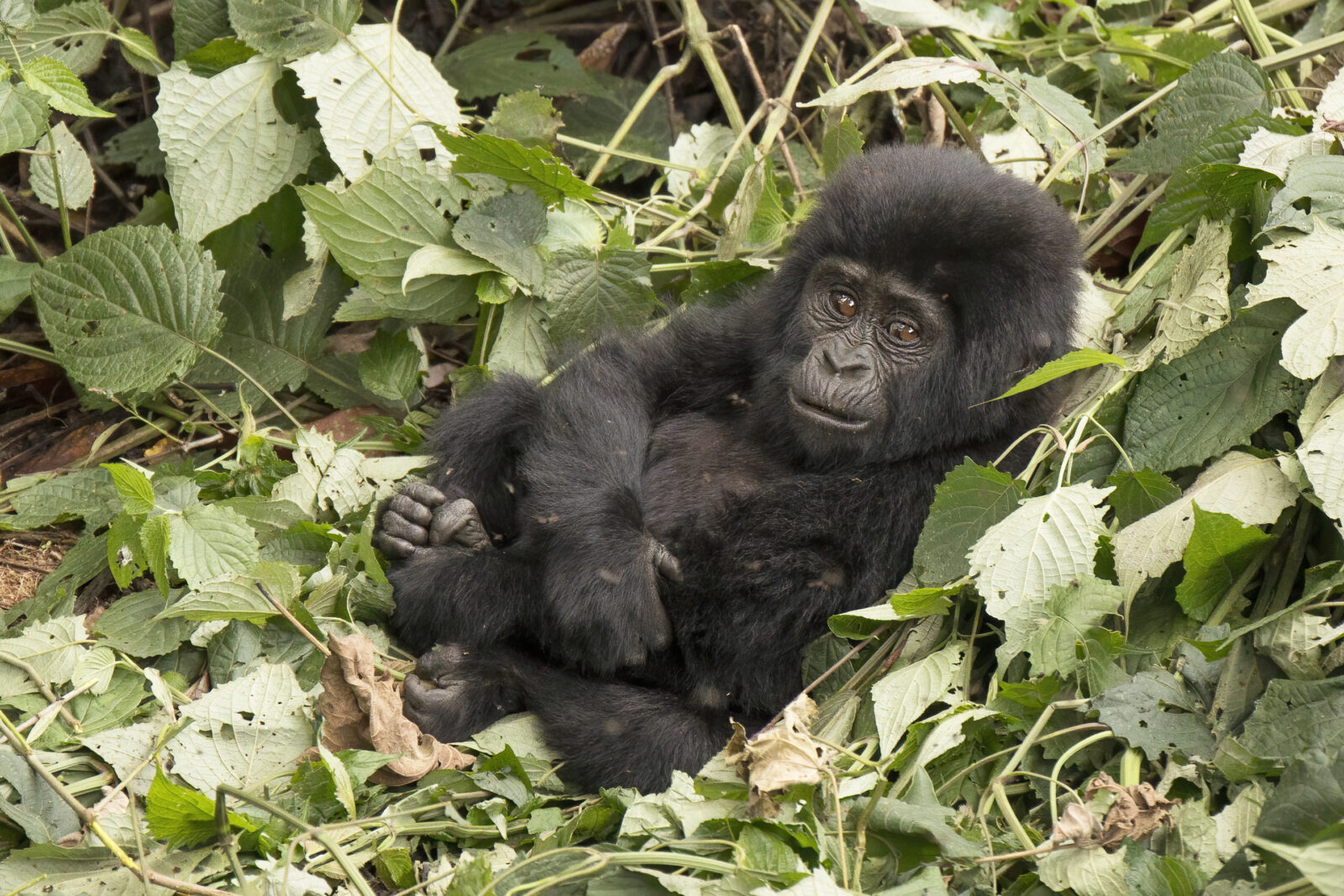
Bwindi vs. Volcanoes National Park: A Gorilla Lover’s Comparison
Bwindi Impenetrable National Park in Uganda and Volcanoes National Park in Rwanda represent the two most popular mountain gorilla trekking destinations in the world, and travellers planning a gorilla trip inevitably face the question of which to choose, or whether the trip justifies visiting both. While both parks offer genuinely extraordinary gorilla encounters, they differ meaningfully in terrain, permit cost, accessibility, and overall trekking experience.
Terrain and Trekking Difficulty
Bwindi lives up to its name, dense, tangled rainforest covering steep, often muddy hillsides that make trekking here physically demanding regardless of which gorilla family a group is assigned to track. Volcanoes National Park, by contrast, sits on the lower slopes of the Virunga volcanic range, offering more open, bamboo-forest terrain that many trekkers find somewhat less physically punishing than Bwindi’s dense understory, though the volcanic slopes bring their own considerable elevation gain to contend with.
Permit Cost: A Significant Differentiator
Cost represents perhaps the starkest difference between the two destinations, Uganda’s gorilla permit costs $800, while Rwanda’s costs $1,500, nearly double, a gap substantial enough to meaningfully influence many travellers’ final decision. This pricing difference reflects Rwanda’s deliberate positioning strategy, emphasising a premium, lower-volume tourism model, compared to Uganda’s somewhat more accessible pricing aimed at a broader range of travellers.
Gorilla Family Numbers and Trekking Groups
Bwindi hosts considerably more habituated gorilla families than Volcanoes National Park, spread across four distinct trekking sectors, Buhoma, Ruhija, Rushaga, and Nkuringo, giving Uganda greater overall trekking capacity and correspondingly more available permits on any given day. Volcanoes National Park operates with fewer habituated families relative to its permit demand, one factor contributing to Rwanda’s higher pricing as a mechanism for managing the more limited daily trekking capacity relative to overall demand.
Accessibility from the Capital City
Volcanoes National Park sits remarkably close to Kigali, roughly two to three hours by road, making it possible to combine a Kigali city visit with gorilla trekking within a genuinely short overall trip. Bwindi, by contrast, sits considerably further from Kampala, typically requiring a full day’s drive or a short domestic flight, adding meaningfully more travel time to a Uganda-based gorilla trekking itinerary compared to Rwanda’s more compact geography.
Scenery and Surrounding Landscape
Volcanoes National Park offers genuinely dramatic scenery, the volcanic peaks of the Virunga range dominating the skyline throughout the trekking experience, giving the entire visit a distinctive visual character beyond the gorilla encounter itself. Bwindi’s scenery, while less dramatically volcanic, offers its own considerable appeal, ancient, biodiverse rainforest that feels genuinely primordial, among the oldest and most ecologically rich forests in Africa, supporting far more than just its gorilla population.
Accommodation Options Around Each Park
Both parks have developed strong accommodation sectors around their respective trekking hubs, though Volcanoes National Park has attracted a particularly dense concentration of ultra-luxury lodges in recent years, several ranking among Africa’s most internationally acclaimed safari properties. Bwindi offers a broader range across budget, mid-range, and luxury categories, giving travellers somewhat greater flexibility in matching accommodation choice to overall trip budget compared to Rwanda’s accommodation landscape, which skews more heavily toward the premium end.
Combining Both Parks in a Single Trip
Given their relative proximity, roughly four to five hours’ drive between the two, a meaningful number of travellers choose to combine Bwindi and Volcanoes National Park within a single itinerary, trekking gorilla families in both countries during one trip. This combination allows travellers to compare the two experiences directly, and for those able to justify the cost of two separate gorilla permits, offers genuinely the richest possible gorilla trekking experience available anywhere in the world.
Chimpanzee and Additional Wildlife Considerations
Uganda’s broader wildlife offering extends considerably beyond Bwindi’s gorillas, chimpanzee tracking in Kibale, classic savannah safari in Murchison Falls and Queen Elizabeth, all reachable within a single, comprehensive Uganda itinerary. Rwanda offers its own complementary wildlife experiences, golden monkey trekking within Volcanoes National Park itself, and savannah safari in the recovering Akagera National Park, though generally on a smaller scale than Uganda’s more extensive park network.
Weather and Best Trekking Seasons
Both parks share broadly similar dry season windows, roughly June through September and December through February, offering the most reliable trekking conditions with drier trails and somewhat easier underfoot conditions. Neither park cancels treks for rain, mountain gorilla habitat is inherently wet forest regardless of season, but travellers particularly averse to muddy, slippery trekking conditions should prioritise these dry season windows for either destination.
Booking Timeline and Permit Availability
Given Rwanda’s smaller trekking capacity relative to demand, Volcanoes National Park permits often sell out further in advance than Uganda’s more plentiful Bwindi permits, particularly during peak season months. Travellers with flexible date preferences generally find Bwindi permits somewhat easier to secure on shorter notice, while Rwanda trekking during peak periods typically requires booking many months ahead to guarantee availability.
Which Destination Should You Choose
Travellers prioritising budget flexibility, extended wildlife variety beyond gorillas alone, and slightly more available permit capacity will likely find Bwindi the stronger choice, while those prioritising minimal travel time from a capital city, premium accommodation, and dramatic volcanic scenery may find Volcanoes National Park’s higher price tag justified. Neither destination disappoints travellers seeking a genuine mountain gorilla encounter, the decision ultimately comes down to budget, available time, and which surrounding experience appeals more.
The Verdict for Most Travellers
For travellers with sufficient time and budget, combining both parks delivers the richest possible gorilla trekking experience, but for those choosing just one, the decision should rest on realistic budget constraints and travel time preferences rather than any meaningful difference in gorilla encounter quality itself, both parks deliver genuinely extraordinary, comparable wildlife experiences. Travellers focused specifically on Uganda’s more affordable, accessible option should explore a Bwindi gorilla trekking safari as their primary planning starting point.
Physical Fitness Requirements Compared
Both parks demand genuine physical fitness from trekkers, but the specific challenges differ somewhat in character, Bwindi’s dense undergrowth and steep, often muddy hillsides requiring more constant, varied physical exertion, scrambling, ducking under vines, and navigating uneven ground throughout. Volcanoes National Park’s volcanic slopes present a more sustained, cardiovascular climbing challenge, particularly at higher elevation where thinner air adds an additional layer of difficulty that Bwindi’s lower elevation forest doesn’t quite replicate in the same way.
Porter Support and Trekking Assistance
Both destinations offer porter services allowing trekkers to hire local community members to carry daypacks and provide physical assistance navigating difficult terrain, a genuinely worthwhile investment for trekkers of any fitness level given how demanding both treks can prove regardless of overall preparation. Hiring a porter in either location also directly channels tourism income into surrounding communities, making the decision as much a meaningful economic choice as a practical trekking convenience.
Time Spent With Gorillas: Identical Across Both Parks
One element remains entirely consistent between Bwindi and Volcanoes National Park, the strictly regulated one-hour viewing window once a gorilla family is located, a rule enforced identically across both countries specifically to minimise stress and disease transmission risk to habituated gorilla populations. This means that regardless of which park a traveller chooses, the actual gorilla encounter itself, once located, offers an identical structure and duration, making the meaningful differences between the two destinations almost entirely about everything surrounding that hour rather than the hour itself.
Visa and Entry Requirements
Travellers should factor visa requirements into their decision between the two destinations, Uganda and Rwanda both offer relatively straightforward visa processes for most nationalities, including the East Africa Tourist Visa covering both countries plus Kenya for travellers planning to visit multiple destinations within a single trip. Confirming specific visa requirements for a traveller’s particular nationality well before booking either trek avoids last-minute complications that could jeopardise an already carefully planned and paid-for gorilla permit.
Group Size and Trekking Pace
Both parks limit trekking groups to a maximum of eight visitors per gorilla family, a rule designed to minimise disturbance to gorillas while keeping each group small enough for guides to manage effectively across genuinely challenging terrain. Trekking pace in both locations depends heavily on where the assigned gorilla family happens to be on a given day, sometimes a manageable thirty-minute walk, other times a considerably more demanding multi-hour trek, a variable that applies equally to both Bwindi and Volcanoes National Park regardless of overall park choice.
Age Restrictions and Family Trekking
Both Uganda and Rwanda enforce an identical minimum age requirement of fifteen years for gorilla trekking, a rule grounded in genuine safety and gorilla welfare considerations rather than an arbitrary bureaucratic restriction, given the physical demands and behavioural discipline the activity requires. Families travelling with younger children should plan accordingly, arranging alternative activities such as golden monkey trekking in Rwanda or a cultural village visit in Uganda for children below the minimum age while other family members complete the gorilla trek itself.
A Final Word on Choosing Between Them
However thoroughly travellers research and compare Bwindi and Volcanoes National Park beforehand, both destinations consistently deliver an experience that ranks among the most profound wildlife encounters available anywhere on Earth, and travellers who choose one over the other purely for practical reasons, budget, travel time, or itinerary logistics, rarely come away feeling they made the wrong choice. The gorillas themselves, ultimately, remain the constant at the centre of either experience, regardless of which side of the Uganda-Rwanda border a trekker happens to be standing on when they finally encounter one.