
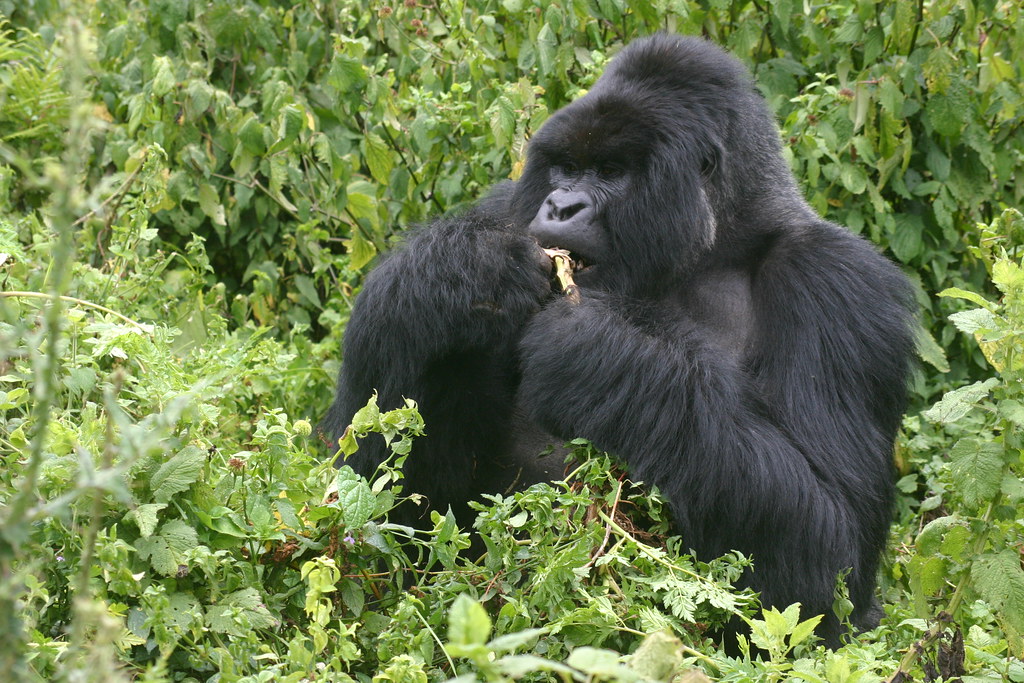
As a physical activity, gorilla trekking breaks down into a fairly consistent, repeatable structure regardless of which of the three countries you happen to be doing it in: a pre-dawn start, a briefing, a variable-length walk to find a habituated family, and a strict one hour once you do. This page walks through what the activity itself actually involves, hour by hour, separate from the destination-level detail covered on our main Gorilla Trekking guide.
The Morning, Hour by Hour
Most trekking days begin around 6am with an early breakfast at your lodge, followed by a short transfer to park headquarters for a 7:30am briefing. Rangers assign trekking groups to specific families based on that morning’s tracker reports and each group’s general fitness level, a process that typically takes twenty to thirty minutes. From there, the trek itself begins – anywhere from thirty minutes to six hours depending entirely on where the assigned family has ranged overnight, through genuinely dense, often muddy rainforest terrain.
What Happens Once You Find the Family
Once trackers signal the family has been located, your group leaves backpacks and walking sticks with a porter or guide and approaches on foot for the final stretch. From that point, a strict one-hour clock starts, spent watching the family feed, groom, rest and move at a maintained distance of roughly seven metres. Rangers manage the group’s positioning and behaviour throughout, ensuring both visitor safety and minimal disturbance to the family.
The Activity at a Glance
| Typical start time | 6:00–6:30am, lodge departure |
| Briefing time | 7:30am at park headquarters |
| Walk duration | 30 minutes to 6 hours, variable |
| Time with family | Strict 1 hour |
| Group size | Maximum 8 visitors per family |
Physical Difficulty in Practice
Difficulty varies enormously by which family your group is assigned, which is determined by overnight ranging rather than anything you can control in advance. A family found close to the trailhead might mean a manageable ninety-minute round trip on relatively gentle terrain; a family that ranged far overnight can mean a genuinely strenuous six-hour day across steep, muddy slopes. Rangers genuinely do factor group fitness into family assignment wherever it’s possible to do so, but there remains an irreducible element of chance in exactly how demanding your own specific trekking day ultimately turns out to be.
What Rangers and Trackers Actually Do
Trackers set out ahead of the main group, often before dawn, following signs from the previous day’s nest site – broken branches, dung, feeding traces – to establish roughly where the family has moved overnight. This groundwork is what allows your ranger guide to lead the group relatively directly rather than searching blind, and it’s a large part of why sighting rates stay consistently high (typically above 95%) despite gorillas being genuinely wild, unconfined animals rather than a managed exhibit.
Etiquette During the Encounter
A short list of rules applies throughout the hour: maintain the roughly seven-metre distance rangers establish, keep voices low, no flash photography, and anyone showing cold or flu symptoms is asked not to trek at all given gorillas’ susceptibility to human respiratory illness. These aren’t bureaucratic formalities – they exist specifically to protect a genuinely endangered species during an activity that necessarily brings people into close proximity with wild animals.
Fitness Preparation Specific to the Activity
Because you can’t know in advance whether your day will be a ninety-minute walk or a six-hour slog, the sensible approach is preparing for the harder scenario regardless of what actually happens. A few weeks of regular cardio and, ideally, some hill walking before your trip makes a genuine difference on a longer trek day, even for travellers who end up with an easier assignment. Trekking poles, available to rent at most trailheads, help considerably on steep or slippery sections, and a porter – hired for a modest fee at every trailhead – carries your daypack and offers a steadying hand on difficult terrain, both practical help and a direct way to support the local trekking economy.
What’s in Your Daypack
Beyond the standard trekking kit (boots, layered clothing, rain jacket, gloves), your daypack on trekking day should hold water, a packed lunch or snacks for a potentially long day, a basic first-aid kit, and camera equipment in a dry bag or waterproof cover given the genuine likelihood of rain in rainforest regardless of season. Many trekkers also carry a printed or photographed copy of their permit and passport, since ID verification happens at the briefing before the day’s family assignments are finalised.
After the Hour Ends
Once the hour is up, the return walk retraces your route back to the trailhead, generally covering the same ground in less time than the outbound walk since the pace isn’t dictated by tracking a moving family. Most lodges plan for trekkers to return sometime between early and mid-afternoon, though a longer trek day can push this later – worth keeping in mind if you have onward plans the same day. A trekking certificate is typically issued at park headquarters once everyone’s back, a small but popular memento of the day.
If You Can’t Complete the Trek
Occasionally a trekker realises partway through that they can’t continue, whether from fitness, an injury, or simple exhaustion on a longer-than-expected day. Rangers handle this without judgment – arrangements exist for someone to be escorted back to the trailhead, or in more difficult terrain, carried out on a improvised stretcher by porters if genuinely necessary, a service worth knowing exists even though it’s rarely needed. Being honest about your fitness level during the pre-trek briefing, rather than pushing through silently, helps rangers plan appropriately from the start.
Age and Health Rules on the Day
The 15-year minimum age is checked with ID at the briefing, not simply taken on trust, so bring a passport or other photo ID regardless of how old you obviously look. Health screening is similarly real rather than a formality – anyone showing visible symptoms of a cold, flu or other communicable illness will be asked not to trek that day, a rule that exists specifically because gorillas share enough genetic similarity with humans to be vulnerable to many of the same respiratory illnesses, sometimes seriously so.
The Descending Trek Back
The return leg deserves a quick mention, since it’s easy to focus entirely on the outbound walk and encounter. Retracing steep or muddy terrain on tired legs, sometimes in fading light on a longer trek day, is genuinely where a walking stick or porter’s steadying hand earns its keep most. Guides pace the descent to the group’s slowest comfortable member, the same courtesy applied on the way in, so there’s no pressure to rush even at the end of a long day.
Frequently Asked Questions
How will I know how long my specific trek will take?
You won’t know for certain until trackers report the family’s location that morning – this is precisely why trek duration varies so much between visitors on the very same day.
What happens if the hour runs out mid-encounter?
Rangers enforce the one-hour limit strictly regardless of what’s happening at that moment, a firm rule designed to limit cumulative disturbance to the family across every visiting group.
Can I request an easier family assignment?
You can mention fitness concerns during the briefing, and rangers do take this into account, but assignment ultimately depends on where families actually are that morning rather than pure visitor preference.
Weather on Trekking Day
Rainforest means rain in every month, and trekking proceeds regardless – there’s no weather-related cancellation policy the way there might be for an outdoor activity elsewhere. Dry-season months (June–August, December–February) offer firmer underfoot conditions, but a shower can still arrive without much warning even then. Wet-season months bring genuinely muddier trails and slower going, which is reflected in gaiters and proper rain gear being standard kit recommendations regardless of when you’re travelling, not just a wet-season-specific precaution.
Photography During the Encounter
Flash photography is prohibited throughout the hour, both for the gorillas’ comfort and because it genuinely doesn’t help in forest light conditions – a fast lens and a willingness to shoot at a higher ISO serves better than flash ever would. The one-hour window moves quickly once you’re actually with the family, so many experienced trekkers recommend spending the first several minutes simply watching before reaching for a camera, rather than experiencing the whole encounter through a viewfinder.
Group Dynamics on the Day
Your trekking group of up to eight people, plus a ranger guide and however many trackers and porters are involved, moves and treks together for the full day – a shared experience that often becomes a genuine bonding point by the time you’re all watching the same gorilla family an hour or more later. Groups are typically assigned rather than chosen, meaning you may well be trekking alongside travellers from an entirely different lodge or even a different tour operator, all converging at the same park headquarters that morning.
Book Your Gorilla Trek
For much fuller detail on parks, permits, real costs and broader trip planning, see our main Gorilla Trekking guide, or get in touch directly to start planning.