
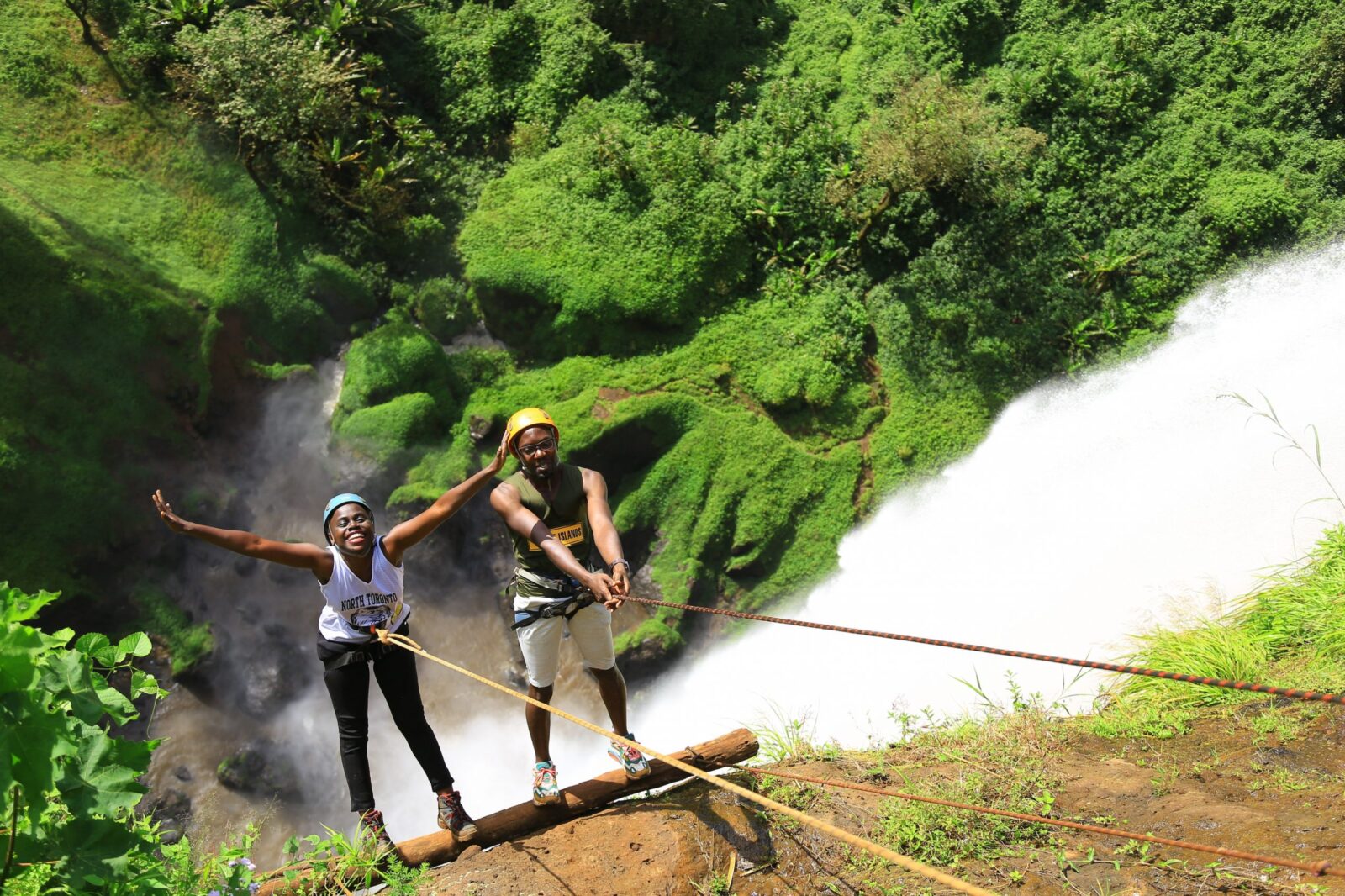
Abseiling Sipi Falls: The Most Thrilling Adventure in Eastern Uganda
Most visitors come to Sipi Falls initially for the hiking, the views, and the coffee, but a smaller and steadily growing number of adventurous travellers come specifically for the chance to descend one of the falls itself on a rope, one careful step at a time, with a hundred metres of open air and cascading water beside them. Abseiling at Sipi has become one of the signature adventure activities in eastern Uganda, and it delivers an entirely different way of experiencing a waterfall that most visitors only ever see from a viewpoint or the base of a trail.
Where the Main Descent Happens
The primary abseiling experience takes place at Kaptogolo Waterfall, the tallest of Sipi’s three falls, dropping a dramatic hundred metres in a single sheer descent. This is the same waterfall that anchors most people’s first impression of Sipi, visible from many of the area’s lodges, and abseiling down beside it turns a familiar photographed landmark into something considerably more visceral and immediate.
How the Descent Works
Every abseiling session begins at the top of the falls with a thorough safety briefing from an experienced local team, covering the equipment, the descent technique, and what to expect once the rope takes your weight over the edge. Harnesses, helmets, and ropes are checked and rechecked before anyone begins the descent, and trained guides remain in close contact throughout, either alongside participants or managing the rope system from above.
The controlled descent down the hundred-metre drop typically takes somewhere between ten and twenty minutes, depending on the pace a participant chooses and how much time they want to spend suspended partway down simply taking in the view and the sensation of the falling water nearby. First-timers are talked through the technique in detail before starting, and the pace is entirely dictated by the participant rather than rushed by guides, making it considerably more approachable than the phrase “hundred-metre abseil” might initially suggest.
A Gentler Introduction for Beginners
For visitors nervous about jumping straight into the full hundred-metre descent, a shorter beginner abseiling option is available on one of the area’s volcanic rock faces, roughly sixty metres in height, near one of the local campsites. This shorter descent uses the same equipment and safety procedures as the main falls but offers a considerably gentler introduction, allowing first-timers to build confidence with the technique before deciding whether to attempt the full waterfall descent.
Rock Climbing as a Complementary Activity
Alongside abseiling, Sipi has developed a genuine rock climbing scene centred on a thirty-five metre cliff face with roughly ten established bolted routes, graded across easy, medium, and difficult categories. Climbers with no prior experience can take a short lesson before attempting one of the easier routes, while more experienced climbers can work through the harder graded lines on the same cliff. This pairing of abseiling and rock climbing has turned Sipi into a genuine small-scale adventure sports destination, an unexpected complement to its reputation as a hiking and coffee-growing region.
Cost and What’s Included
A typical abseiling session runs around fifty US dollars per person for a session lasting roughly ninety minutes, covering equipment, guiding, and the safety briefing that precedes every descent. This price point sits comfortably within reach for most travellers already budgeting for a Uganda safari, and it is commonly booked as a half-day add-on alongside the standard Sipi Falls hiking loop or the area’s coffee tours, rather than as a standalone full-day activity.
Who Runs These Activities
Abseiling and rock climbing at Sipi are run by local operators staffed largely by guides and instructors drawn from the surrounding community, several of whom have built genuine specialist expertise in adventure activities over years of operating on this specific cliff and waterfall. Booking through an established, safety-conscious operator matters here more than for most of Uganda’s other adventure activities, given the technical nature of a hundred-metre descent, and most visitors arrange the activity either directly with a local operator on arrival or in advance through their lodge.
Is It Right for You?
Abseiling at Sipi does not require prior climbing or rope experience, and the activity is genuinely accessible to a wide range of fitness levels and ages, provided participants are reasonably comfortable with heights and willing to trust the safety systems and guidance provided. That said, anyone with a severe fear of heights should think carefully before committing to the full hundred-metre descent, and the shorter beginner option exists precisely to give nervous first-timers a lower-stakes way to test their comfort level before deciding whether to attempt the main falls.
Best Time to Go
Abseiling runs throughout the year, though conditions at the falls can vary with rainfall, and operators adjust scheduling and technique slightly depending on how much water is flowing over Kaptogolo Falls at any given time. Drier season visits generally offer slightly calmer conditions at the rock face itself, though the activity remains available and genuinely popular across most of the year, weather permitting on any given day.
An Unforgettable Way to Experience Sipi
For travellers who have already done the classic Sipi Falls hiking loop and coffee tour, abseiling offers a genuinely different, adrenaline-driven way to engage with the same landscape, transforming a waterfall admired from a distance into something experienced at extremely close range, rope in hand, water rushing past. Combined with a stay built around Sipi Falls and Mount Elgon’s surrounding attractions, abseiling adds a genuine adventure-sport dimension to what might otherwise be a purely scenic, laid-back stop on an eastern Uganda itinerary.
What the Descent Actually Feels Like
Descriptions from first-time participants tend to follow a similar arc. The first few metres, stepping backward over the lip of the falls with the ground falling away beneath you, are almost universally described as the most nerve-wracking part of the entire experience, a brief but genuinely intense moment where trust in the equipment and the guide’s careful instructions matters far more than any prior technique or experience. Once the initial step is behind them, most participants describe a surprisingly quick shift into a more controlled, almost meditative rhythm, feeding rope through the harness at a steady pace while the waterfall rushes past just an arm’s length away, close enough to feel the spray on a windier day.
The middle section of the descent, suspended roughly halfway down the falls with open space in every direction, is the part most participants cite afterward as the genuine highlight, a vantage point on the waterfall that is simply unavailable through any other means, hiking included. Reaching solid ground at the bottom typically brings a mix of genuine relief and a strong, almost immediate urge to do it all again, a reaction guides say is common enough that repeat descents within the same booking window are not at all unusual among first-timers who arrived nervous and left thoroughly exhilarated.
Photography and Video
Because the activity is inherently visual and dramatic, many operators offer photography or video documentation of the descent as an add-on, capturing the moment from both above and, where safely possible, from positions partway down the cliff face. Given how difficult it is for participants themselves to safely operate a camera mid-descent, arranging this in advance is worth considering for anyone who wants a lasting record of the experience beyond memory alone, particularly given how visually striking the setting is against the falling water and surrounding coffee-covered hillsides.
Combining Abseiling With the Rest of a Sipi Visit
Most visitors treat abseiling as one component of a broader day or two spent in the Sipi area rather than the sole reason for their visit, pairing it naturally with the classic three-waterfall hiking loop, a coffee tour through the surrounding gardens, or simply a relaxed stay at one of the area’s view-oriented lodges. Because the activity itself typically takes no more than a couple of hours including the safety briefing and equipment fitting, it fits comfortably into a single morning or afternoon alongside at least one other Sipi activity without requiring an additional overnight stay purely for the abseiling itself.
A Growing Reputation Among Adventure Travellers
Word of Sipi’s abseiling and rock climbing scene has spread steadily among adventure-focused travellers over recent years, adding a new audience to a destination historically associated more with scenic hiking and coffee tourism than adrenaline sports. This shift has brought welcome investment into local guiding infrastructure and equipment standards, and the activity now sits comfortably alongside more established East African adventure offerings like white-water rafting on the Nile, offering visitors a genuine alternative or complement for travellers building an itinerary around active, adrenaline-driven experiences rather than purely wildlife-focused ones. For a country whose tourism identity is so heavily anchored in gorilla trekking and savannah safaris, Sipi’s quiet emergence as a legitimate adventure sports destination adds a dimension to Uganda’s travel offering that surprises even well-travelled visitors who arrive expecting nothing more than a scenic waterfall stop along the way to somewhere else.