
Antelopes of Murchison Falls: Jackson’s Hartebeest, Oribi & More
Lions, elephants, and giraffes genuinely dominate most casual conversations about Murchison Falls National Park’s broader wildlife offering, understandably given how much these headline species drive initial trip planning, but the park’s genuinely diverse antelope community deserves far more attention than the passing glance most visitors give it between more famous sightings. Murchison Falls genuinely hosts a remarkably varied, wide-ranging assortment of antelope species, from towering hartebeest down to gazelle-sized oribi, each occupying its own genuinely distinct ecological niche within the park’s mix of savanna, woodland, and riverine habitat. Understanding what you are actually looking at across these different species adds genuine, lasting depth to a game drive that most visitors otherwise treat as simply passing scenery between predator sightings, rather than a genuinely rich ecosystem worth appreciating fully on its own terms.
Jackson’s Hartebeest: The Distinctive Giant
Jackson’s hartebeest ranks among the park’s most immediately recognizable antelope, a large, robust animal weighing anywhere from 100 to 200 kilograms and standing just over a meter at the shoulder, with an elongated, somewhat unusual-looking face and distinctively curved horns that can exceed 40 centimeters in length. This particular subspecies of hartebeest is named for that same nineteenth-century naturalist tradition that produced many of East Africa’s common species names, and it remains one of the more visually distinctive antelope found within Uganda’s protected areas, its distinctively elongated skull shape making it genuinely instantly identifiable even to visitors with absolutely no prior antelope-identification experience whatsoever. Herds of Jackson’s hartebeest move steadily across Murchison’s open grassland in loose, often widely scattered groups, generally noticeably less tightly clustered than the dense herds Uganda kob typically form, giving the species a somewhat more solitary, genuinely independent character during a typical park game drive.
Oribi: The Park’s Smallest Antelope
At the very opposite end of the size spectrum entirely, the oribi represents one of Murchison’s genuinely smallest antelope species, a slender, gazelle-like animal standing just 50 to 67 centimeters at the shoulder and weighing a modest 12 to 22 kilograms, genuinely easy to overlook entirely amid the park’s considerably larger, more conspicuous wildlife species. Despite its small size, the oribi is genuinely active during daylight hours, giving visitors a reasonably good chance of spotting one during a standard game drive rather than needing a specifically timed early morning or dusk outing the way some more nocturnal or shy species require. Oribi typically appear specifically in short grass areas where their strong preference for close-cropped grazing land makes them somewhat easier to spot against open terrain, though their small size and tendency to freeze motionless when they sense a vehicle approaching means genuinely careful, attentive scanning rewards patient visitors considerably more than a quick, passing glance.
Why Size Diversity Matters Ecologically
The dramatic size range across Murchison’s antelope community, from the oribi’s modest frame to the considerably larger hartebeest and waterbuck, reflects genuine ecological specialization rather than simple biological variety for its own sake. Different antelope species have evolved to exploit different vegetation heights, grazing patterns, and habitat niches within the same broader savanna ecosystem, meaning multiple species can coexist within overlapping territory without directly competing for identical resources. Oribi favoring short grass, kob grazing across mid-height plains, and waterbuck sticking closer to riverine vegetation each represent a slightly different feeding strategy layered across the same broader landscape. This kind of ecological niche partitioning is part of what allows Murchison Falls to support such a genuinely diverse herbivore community within a single park, each species filling a slightly different role within the broader food web that ultimately supports the park’s predators as well.
Uganda Kob: The National Animal
Uganda kob, found in genuinely large, dense numbers across Murchison’s wide open plains, hold the distinction of being Uganda’s official national animal, a medium-sized antelope whose reddish-brown coat and distinctive lyre-shaped horns, present only on males, make it one of the most consistently visible species across nearly every game drive in the park. Kob form the primary prey base for Murchison’s healthy lion population, meaning dense kob concentrations often correlate directly with the areas most likely to produce predator sightings as well, a connection worth understanding for travelers specifically hoping for a lion encounter during their visit. Male kob defend small, temporary territories during the breeding season through a distinctive display and occasional direct confrontation, behavior visitors occasionally witness firsthand during a well-timed game drive. These territorial displays, males rutting and posturing to attract females while defending a small patch of ground from rival males, tend to concentrate within specific traditional breeding grounds visited generation after generation, and guides familiar with a particular kob population’s habits can sometimes anticipate roughly where and when this behavior is most likely to be visible during a given season.
Defassa Waterbuck and the Park’s Water-Associated Antelope
Defassa waterbuck, a genuinely substantial antelope with males reaching up to 262 kilograms and standing considerably taller than kob or oribi, favor the areas closer to the Nile and other water sources within the park, reflecting their genuine physiological dependence on regular, reliable access to water and the noticeably lusher vegetation growing near riverine habitat specifically. Their shaggy, somewhat coarse coat and, in the case of Uganda’s population, the distinctive white rump patch rather than the ringed marking seen in some other regional waterbuck populations, make them reasonably easy to distinguish from Murchison’s other larger antelope species once you know what specific features to look for. Waterbuck are also notable for a defensive trait worth mentioning to curious visitors: their skin secretes an oily, strongly scented substance that many predators find genuinely unpalatable, a natural deterrent that helps explain why waterbuck herds sometimes appear more relaxed around nearby predators than other similarly sized antelope species might in the same situation.
Bushbuck and Duiker: The Woodland Specialists
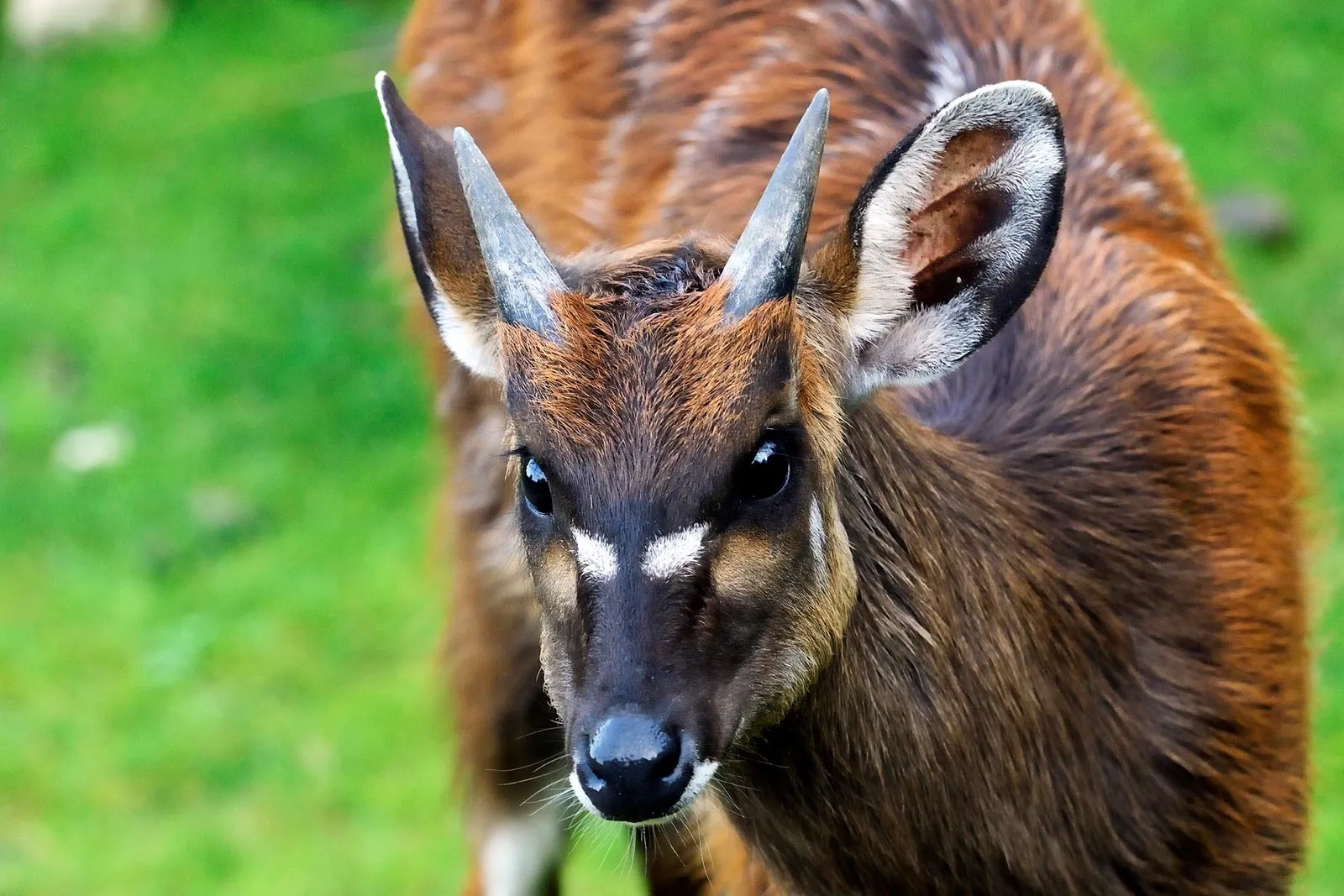
Beyond the park’s more open-plains species, bushbuck and grey duiker occupy Murchison’s denser woodland and forest-edge habitat specifically, generally more solitary and considerably more secretive than the open-grassland species that dominate typical game drive sightings. Bushbuck, with their distinctive white spots and stripes against a reddish-brown coat, occasionally appear along the park’s woodland fringes, though their genuinely shy, cautious nature and strong preference for denser cover means sightings tend to be brief and require considerably more luck than encountering the park’s more habituated, open-terrain species. Grey duiker, considerably smaller still and even more genuinely elusive, round out the considerably fuller overall picture of Murchison’s genuine antelope diversity, a reminder that the park’s wildlife extends well beyond what a standard, open-plains-focused game drive typically reveals. Guides familiar with specific woodland-edge territories occasionally know particular spots where bushbuck have grown somewhat accustomed to regular vehicle traffic, and requesting a slower pass through these known areas, rather than sticking purely to the fastest route toward the next headline sighting, can meaningfully improve your odds of encountering these otherwise elusive species.
Tips for Spotting and Identifying Different Species
Learning to genuinely distinguish Murchison’s various antelope species meaningfully improves the entire overall game drive experience, transforming what might otherwise register as a generic blur of similar-looking animals into a genuinely varied, identifiable community worth actively observing. Horn shape offers the most reliable identification cue for many species, hartebeest’s distinctively curved horns, kob’s lyre shape, waterbuck’s long, gently ringed horns, each providing a genuinely useful visual shorthand once you know what to look for. Body size and habitat context matter too, since a smaller antelope spotted in open short grass is considerably more likely to be an oribi, while a larger animal near water more likely represents a waterbuck, useful mental shortcuts for travelers without a dedicated field guide close at hand during the drive itself. Coloration provides a further useful cue, since Jackson’s hartebeest carries a noticeably lighter, tawny-brown coat compared to the deeper reddish-brown typical of kob and bushbuck, a subtle but genuinely learnable distinction that becomes considerably easier to apply confidently after just a few sightings of each species side by side.
Building Antelope Watching Into Your Murchison Itinerary
Our broader overview of Murchison Falls National Park safaris covers the full range of activities worth combining with dedicated wildlife viewing, including the antelope species that form such an essential part of the park’s broader ecosystem. Asking your guide to point out and identify specific antelope species during your game drive, rather than focusing purely on predators and the park’s more famous giraffe and elephant populations, adds genuine depth and variety to the overall experience. Murchison Falls’s antelope community, from the towering Jackson’s hartebeest to the diminutive, easily overlooked oribi, represents one of the park’s genuinely underappreciated wildlife stories, well worth seeking out actively rather than treating as background scenery on the way to a more famous sighting. Travelers who spend even a portion of their game drive time deliberately focused on antelope identification consistently report a richer, more varied sense of the park’s ecology afterward, since noticing the subtle behavioral and physical differences between species reveals a level of detail that a purely predator-focused drive tends to miss entirely.