Best Time to Witness the Great Wildebeest Migration in Tanzania
Introduction: Nature’s Greatest Wildlife Show
The Great Wildebeest Migration is one of the most spectacular natural events on Earth — a breathtaking movement of over 1.5 million wildebeest, accompanied by hundreds of thousands of zebras and gazelles, as they journey across the vast plains of East Africa in search of fresh grazing lands. Every year, this endless cycle of movement unfolds across Tanzania’s Serengeti National Park and Kenya’s Maasai Mara Reserve, attracting wildlife enthusiasts, photographers, and safari lovers from around the world.
Witnessing the migration in Tanzania offers a front-row seat to dramatic river crossings, predator hunts, and the renewal of life on the plains. But one of the most common questions for travelers is — when is the best time to witness the Great Wildebeest Migration in Tanzania?
Understanding the migration’s timeline will help you plan your safari around nature’s greatest show.
Understanding the Great Wildebeest Migration
The Great Migration is a year-round circular movement that follows the rainfall patterns and grass growth across the Serengeti ecosystem. Wildebeest, zebras, and gazelles migrate in a continuous loop through Serengeti National Park (Tanzania) and the Maasai Mara (Kenya), covering over 1,800 miles (2,900 km) annually.
This natural phenomenon is driven by the animals’ instinct to find fresh pastures and water. Along the way, they face constant threats from predators such as lions, cheetahs, hyenas, and crocodiles. Each stage of the migration presents a different spectacle — from calving and nurturing newborns to dramatic river crossings filled with danger and determination.
Best Time to See the Great Wildebeest Migration in Tanzania
While the migration happens all year, the best time to witness specific events depends on which part of the Serengeti you visit. Here’s a month-by-month guide to help you choose the right time for your safari.
December to March – Calving Season in the Southern Serengeti
From December to March, the migration congregates in the southern Serengeti plains and the Ngorongoro Conservation Area, particularly around Ndutu and Kusini. This is the calving season, when nearly 500,000 wildebeest calves are born within just a few weeks — a truly miraculous sight.
The short grass plains are lush and nutrient-rich after the rains, attracting vast herds and numerous predators. Visitors during this time can witness the circle of life in action: newborn calves taking their first steps, mothers fiercely protecting them, and predators like lions and cheetahs taking advantage of the abundance of prey.
Best areas: Ndutu Plains, Kusini, Maswa Game Reserve
Best time: December to March
April to May – The Long March Northward
By April, as the rains subside, the herds begin moving northward toward the central and western Serengeti. The migration stretches across vast distances, creating mesmerizing scenes of endless columns of wildebeest on the move.
Although the landscape is still green, this is a quieter season for tourism, offering great opportunities for photography and peaceful game drives. Lodges often have fewer guests and lower rates, making it an excellent time for travelers seeking value and solitude.
Best areas: Seronera Valley, Moru Kopjes, Western Corridor
Best time: April to May
June to July – The Grumeti River Crossings
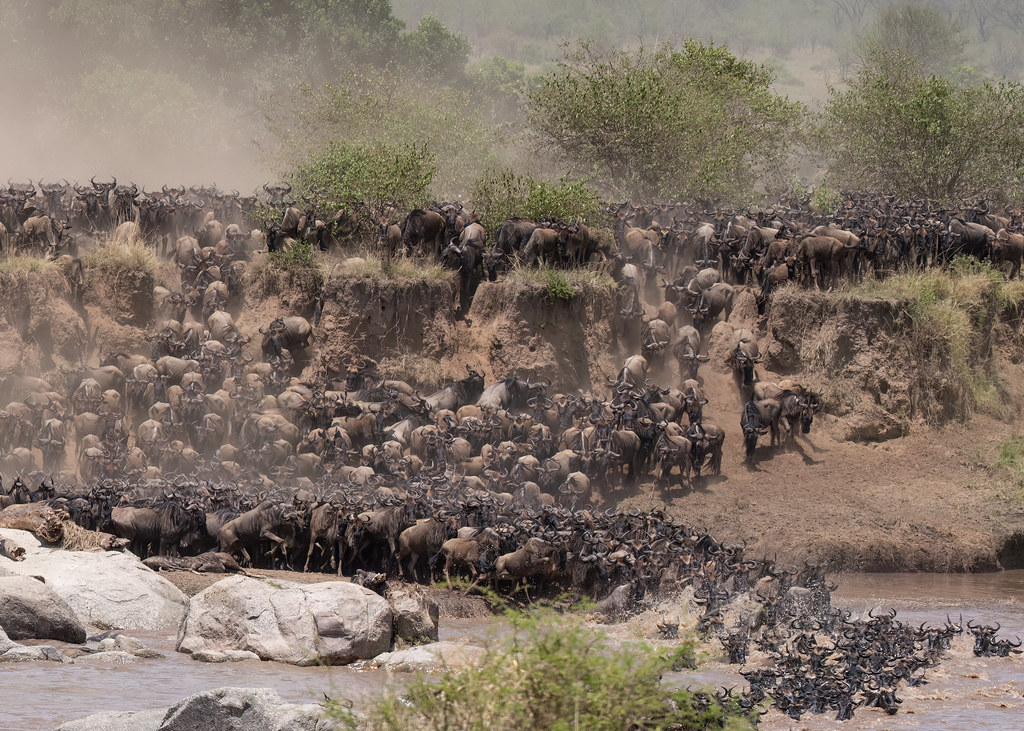
By June, the herds reach the Western Corridor, gathering along the Grumeti River — the first major obstacle in their journey. The river crossings here are thrilling and dramatic, as wildebeest plunge into crocodile-infested waters in their desperate attempt to continue north.
This is one of the best times to witness intense predator action, with lions and crocodiles lying in wait for the weakest animals. The weather is dry and pleasant, making game viewing easy and rewarding.
Best areas: Grumeti Game Reserve, Kirawira, Western Serengeti
Best time: June to July
July to September – The Mara River Crossings
From July to September, the migration reaches its most dramatic stage — the Mara River crossings in the northern Serengeti near the Kenya border. This is the highlight of the entire migration, where thousands of wildebeest and zebras face one of the deadliest challenges of their journey.
Watching the herds gather on the riverbanks, nervously pacing before plunging into the raging waters filled with crocodiles, is one of the most unforgettable experiences in African wildlife viewing. Not all make it across, but those who do continue into Kenya’s Maasai Mara before returning to Tanzania later in the year.
Best areas: Kogatende, Lamai, Mara River, Northern Serengeti
Best time: July to September
October to November – Return to the South
After spending a few weeks grazing in the Maasai Mara, the herds begin their southward journey back into Tanzania around October. By November, they are once again in the eastern and southern Serengeti, following the short rains that bring new grass to the plains.
This period marks the completion of the migration cycle, and travelers can enjoy fewer crowds, beautiful landscapes, and plenty of wildlife still on the move.
Best areas: Lobo, Loliondo, Eastern Serengeti
Best time: October to November
Best Overall Time to Visit
If your goal is to witness river crossings and high drama, the best time to visit Tanzania is from July to September in the northern Serengeti. However, for travelers who prefer to see calving and predator action, the December to March season in the southern Serengeti is equally rewarding.
Ultimately, the best time depends on what aspect of the migration you wish to experience — new life, long treks, or intense predator-prey interactions.
Travel Tips for the Great Migration Safari
-
Book early: The peak migration months (June–September) are highly sought after; lodges and camps fill up quickly.
-
Stay mobile: Choose safari camps that move seasonally to follow the herds.
-
Use experienced guides: Local knowledge is key to finding the herds, as their movements depend on rainfall patterns.
-
Combine destinations: Pair your Serengeti safari with Ngorongoro Crater or Tarangire National Park for a more diverse wildlife experience.
Conclusion: Witness the Circle of Life in Tanzania
The Great Wildebeest Migration is a timeless journey of endurance, instinct, and survival — a spectacle that defines Africa’s wilderness. Whether you witness newborn calves taking their first steps in the southern plains or the heart-stopping river crossings in the north, Tanzania offers the most authentic and immersive vantage point for this extraordinary event.
Each season reveals a different chapter of the migration story, reminding us that nature moves in perfect rhythm, and those who follow it are rewarded with one of the most awe-inspiring experiences on Earth.