
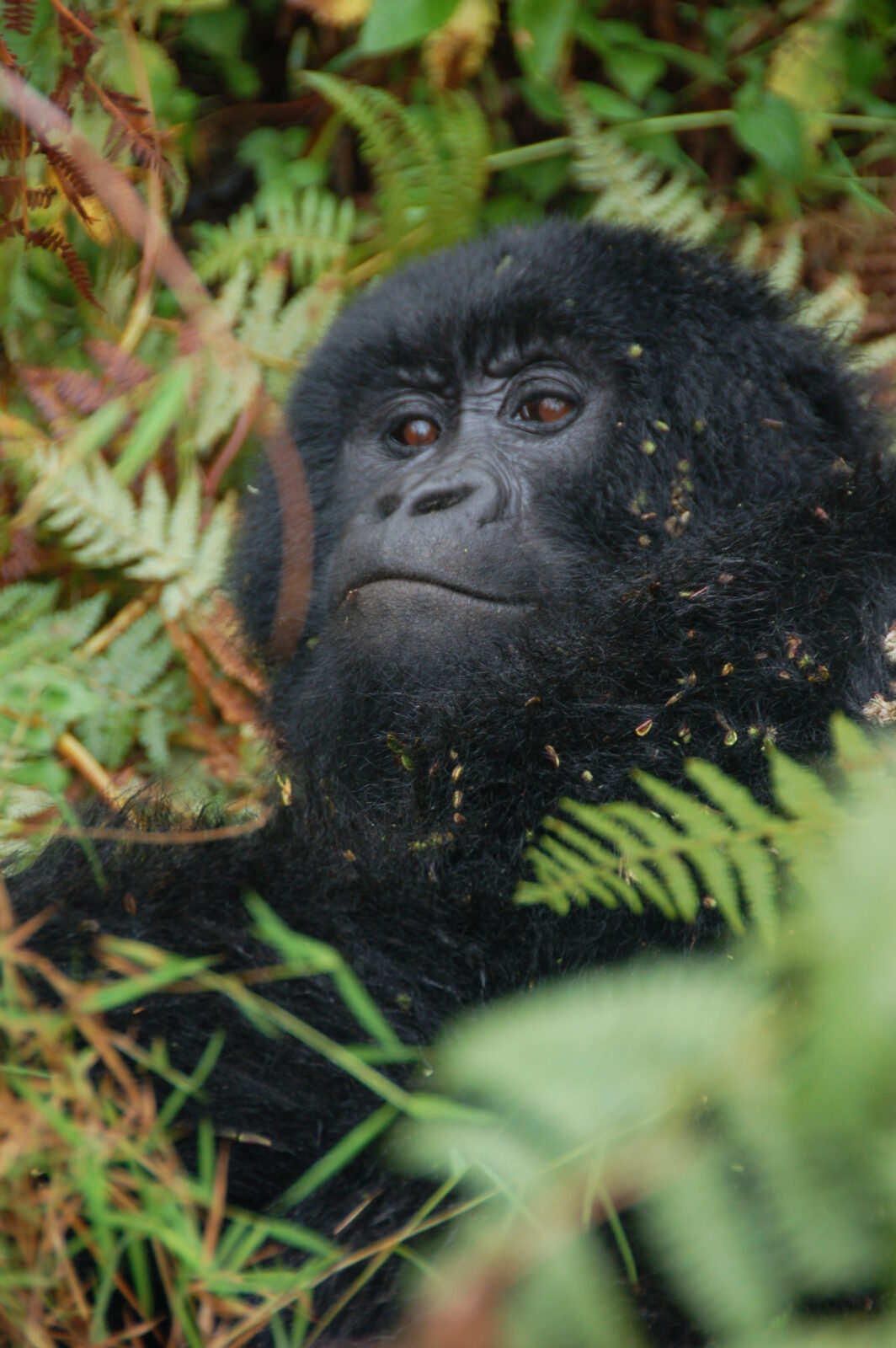
Availability is often the real constraint on a gorilla trek, not price — permits sell out on popular dates well before money changes hands. How many gorilla permits are issued each day in Mgahinga Gorilla National Park is one of the most practically useful questions a trekker can ask before committing to specific travel dates, since the honest answer here is genuinely different from Bwindi’s, in a way that meaningfully affects how far ahead you need to plan.
This guide covers exactly how many daily permits Mgahinga issues, why that number is so much smaller than Bwindi’s, and what it means for your own booking timeline.
The Daily Permit Limit at Mgahinga
Mgahinga Gorilla National Park currently has just one habituated gorilla family available for standard trekking, the Nyakagezi group, and Uganda Wildlife Authority caps each habituated family’s daily visitor allowance at a strict maximum of eight people to limit stress and disease-transmission risk to the gorillas. With only one family, that means Mgahinga issues a maximum of eight standard trekking permits per day — a genuinely small number worth understanding clearly before you assume Mgahinga has flexible, always-available slots the way a larger park might.
Why This Number Is So Much Smaller Than Bwindi’s
Bwindi spreads its far larger total daily permit allowance across numerous habituated families in four different sectors, so its overall daily capacity runs into the hundreds. Mgahinga’s much smaller number isn’t a policy quirk — it’s a direct, simple consequence of having only one habituated family to allocate visitors to, following the exact same eight-per-family cap that applies at every gorilla trekking destination in the region.
Understanding this distinction matters practically: a Mgahinga trek isn’t inherently harder to arrange because of stricter rules, it’s harder to arrange purely because there are fewer total slots available on any given day compared to Bwindi’s broader network.
What the Eight-Person Cap Is Actually Protecting
The eight-person daily limit per family isn’t arbitrary — it reflects research-based conservation guidance on how much sustained human presence a single habituated gorilla family can tolerate without meaningful stress or elevated disease-transmission risk, given how genetically close gorillas are to humans and how easily certain illnesses can pass between the two species. This cap applies uniformly across every UWA-managed park, Mgahinga included, regardless of how much visitor demand exists for a particular family.
What This Means for Booking Timing
Given Mgahinga’s genuinely limited eight-permit daily ceiling, booking well ahead of your intended travel date matters considerably more here than for a Bwindi trek, where a much larger total daily allowance gives you more flexibility even when booking closer to your travel window. Popular season dates at Mgahinga can be fully allocated further in advance, relative to demand, than equivalent Bwindi dates simply because there’s so much less daily capacity to work with.
How Golden Monkey Permits Factor In
Mgahinga’s golden monkey tracking permits are allocated entirely separately from its gorilla trekking permits and aren’t subject to the same eight-person single-family constraint, since golden monkey groups tend to be larger and the activity carries a different visitor cap structure. It’s worth not conflating the two when researching availability — a fully booked gorilla trekking day at Mgahinga doesn’t necessarily mean golden monkey tracking is also unavailable that same day.
What an Eight-Person Trekking Group Actually Looks Like
In practice, an eight-person cap means your entire trekking group for the day, gathered around one ranger guide and one tracking team, rarely feels crowded even standing together at the viewing distance from the Nyakagezi family. This intimacy is part of what many trekkers value about gorilla trekking generally, and it’s worth knowing that Mgahinga’s small overall capacity doesn’t translate into a cramped individual experience — if anything, the opposite, since the whole sector’s low visitor volume means the trailhead and park headquarters rarely feel busy either.
Groups are typically assembled from whichever individual bookings happen to fall on the same date, so your fellow trekkers may be travelling independently, as a couple, or as part of an entirely different tour group booked through a different operator — everyone simply shares the same permit date and family assignment once allocated.
Seasonal Demand Patterns Worth Knowing
Mgahinga’s small daily capacity means seasonal demand swings hit its availability harder, proportionally, than they hit Bwindi’s much larger total. Uganda’s dry seasons, roughly December through February and June through August, see the heaviest demand region-wide, and Mgahinga’s eight-permit ceiling can fill during these windows with meaningfully less total booking volume than it would take to fill out Bwindi’s far larger daily allowance. Trekkers targeting these peak months specifically for Mgahinga should treat early booking as considerably more important than it might be for a Bwindi trek during the same period.
What Happens if Mgahinga’s Slots Are Full on Your Dates
Given how quickly Mgahinga’s small daily allowance can fill on popular dates, trekkers with genuinely fixed travel windows are often better served considering Bwindi as a fallback or primary choice, given its far larger total daily capacity across four sectors and multiple families. An experienced operator checking real-time availability across both parks at once, rather than assuming Mgahinga will simply have room, is worth doing early in your planning process rather than late.
What Booking Confirmation Actually Guarantees
Once a permit is purchased and confirmed for a specific date, your slot within Mgahinga’s eight-person daily allowance is locked in regardless of how much demand later materialises for that same date — the cap protects existing confirmed bookings just as firmly as it limits new ones. This is worth knowing if you’re weighing whether to book early or wait: booking early doesn’t just improve your odds of finding availability, it also removes any risk that a later demand surge could somehow bump an already-confirmed reservation.
Comparing Mgahinga’s Capacity to Rwanda and Congo
Rwanda’s Volcanoes National Park and Congo’s Virunga National Park both host multiple habituated families, giving each a meaningfully larger total daily allowance than Mgahinga’s single-family constraint, even though both apply the same per-family eight-person cap. Trekkers specifically drawn to Mgahinga’s quieter, less-visited character should understand that this appeal and its limited daily capacity are, in a real sense, two sides of the same coin.
How Weather and Family Movement Affect the Numbers
The eight-permit daily ceiling is a fixed administrative limit, but it’s worth understanding it doesn’t guarantee the Nyakagezi family will be easy to locate on any given day — heavy rain, seasonal food availability, and natural ranging patterns all affect how far the tracking team needs to travel before finding the group each morning. This is a separate consideration from permit availability itself, but worth knowing alongside it: securing one of the eight daily slots guarantees your reservation, not a short or predictable trek.
Trackers who head out ahead of the main group, often before sunrise, use the previous evening’s nesting site as their starting reference point, then follow feeding trails, broken vegetation, and other signs to pinpoint the family’s current location before radioing back to guide your specific group efficiently once you set off from the trailhead that morning.
Frequently Asked Questions
How many total gorilla permits does Mgahinga issue per day?
Currently a maximum of eight, since Mgahinga has only one habituated family available for standard trekking and Uganda Wildlife Authority caps each family at eight visitors daily.
Could Mgahinga’s daily capacity increase in the future?
Yes, if additional gorilla families in the park are successfully habituated over time, which would raise the daily total accordingly, though this is a long, careful conservation process rather than something that happens quickly.
Does the eight-person cap include children or non-trekking companions?
The cap applies specifically to trekking participants; gorilla trekking has a minimum age requirement (generally 15), so young children accompanying a family typically wouldn’t be part of that count in the first place.
Is it harder to get a last-minute Mgahinga permit than a Bwindi one?
Generally yes, given Mgahinga’s much smaller total daily allowance — Bwindi’s larger network of families and sectors typically offers meaningfully better last-minute availability.
Does a smaller daily capacity make the Mgahinga trekking experience better?
Many trekkers who choose Mgahinga specifically for this reason do feel it results in a quieter, less crowded atmosphere around the trailhead, though the actual encounter with the gorillas themselves follows the same structured format regardless of park.
Can I check Mgahinga’s current availability myself before contacting an operator?
Real-time availability isn’t published in a simple public format, so contacting a licensed operator or UWA directly remains the most reliable way to get an accurate, current answer for your specific dates.
Plan the Rest of Your Trip
For the full picture of what a Mgahinga trek costs once you’ve confirmed availability, this Mgahinga permit cost guide is worth reading, alongside this step-by-step Uganda permit booking guide. If Bwindi ends up a better fit given availability, this Bwindi permit cost guide covers that park in the same depth, and this Kisoro town guide is useful if Mgahinga remains your plan.