
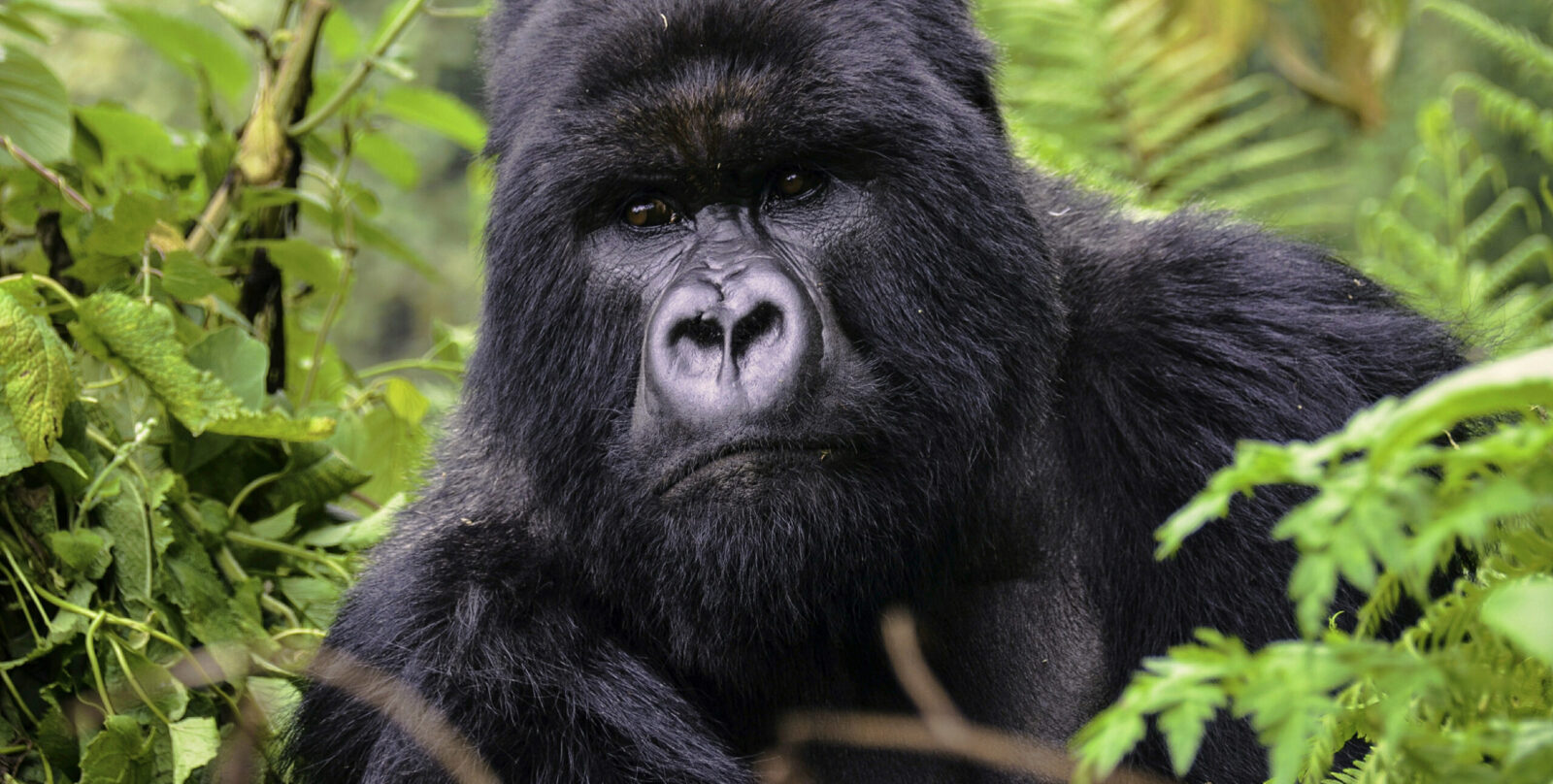
Gorilla Trekking from Kampala: Is It Possible in One Day?
Gorilla trekking from Kampala in a single day is technically possible in a narrow set of circumstances, but the honest answer for the overwhelming majority of travelers is no, not realistically, and understanding exactly why saves considerable frustration during trip planning. Bwindi Impenetrable National Park sits roughly 500 kilometers from Kampala in Uganda’s remote southwest, and covering that distance, arriving in time for gorilla trekking’s early morning briefing, and completing an unpredictable multi-hour trek all within one calendar day pushes against nearly every constraint the trip involves at once.
Why the Road Route Doesn’t Work
Driving from Kampala to Bwindi takes approximately eight to nine hours under good conditions, longer if road conditions are poor or if the drive includes stops. Gorilla trekking briefings at park headquarters begin around 7:30 in the morning, meaning a same-day road trip would require departing Kampala well before midnight to arrive in time, then immediately joining a physically demanding trek after a full night on the road with no rest. Even setting aside the question of whether this is physically wise, it is not logistically realistic given how Uganda’s roads to the southwest, particularly the final stretch through Kabale toward Kisoro or into Bwindi’s various sectors, are winding, hilly, and genuinely unsafe to drive through at night at the pace needed to make up time. Poor visibility, limited street lighting outside major towns, and the risk of encountering unmarked hazards or wildlife on rural roads after dark all compound the danger of an overnight drive attempted purely to save a single day of itinerary. No reputable tour operator will build an itinerary around this approach, and for good reason, since the physical toll alone would undermine the entire point of making the trip in the first place. Some travelers assume a private driver could push through the night faster than a scheduled coach service might, but the constraint is the road itself and the darkness, not the vehicle, and hiring a private car changes none of the underlying safety math.
The Flight Option: Closer, But Still Genuinely Tight
Domestic flights offer the only theoretically viable path to a true one-day Kampala-to-Bwindi gorilla trek, and even this option requires near-perfect timing to work. Scheduled flights depart Entebbe International Airport, roughly forty minutes from central Kampala, for the small airstrips at Kihihi or Kisoro near Bwindi, with flight time itself running around one to two hours depending on the specific route and aircraft. The earliest scheduled departures leave Entebbe around 7:00 a.m., landing at Kihihi or Kisoro roughly an hour or so later, after which a further ground transfer of thirty minutes to over an hour, depending on which sector you are trekking, still stands between the airstrip and park headquarters.
Doing the arithmetic honestly: even the earliest flight option puts a visitor arriving at park headquarters well after the standard 7:30 briefing start time in most realistic scenarios, meaning this approach only works at all if you already have accommodation near Entebbe the night before, take the very first flight of the day, and get fortunate with ground transfer timing on arrival. It is not a same-day trip from Kampala itself in any meaningful sense once you account for the fact that reaching Entebbe Airport for a 7:00 a.m. flight from central Kampala already requires leaving well before dawn given traffic conditions around the capital.
What This Means in Practice
For travelers hoping to add gorilla trekking onto a short Kampala stopover without adjusting the rest of their itinerary, the realistic takeaway is that a true single calendar day, starting the morning in Kampala and completing a gorilla trek that same day, essentially does not work as a plannable, bookable itinerary. What does work, and what most operators recommend instead, is treating gorilla trekking as a minimum two-day commitment from Kampala or Entebbe: flying or driving to Bwindi one day, trekking the next morning, which still represents an efficient, compact way to include gorilla trekking without committing a full week to it.
What About a Helicopter or Private Charter?
Private charter flights, as opposed to scheduled commercial routes, can shave meaningful time off the journey and offer more flexible departure windows than fixed scheduled flights, theoretically making a genuine one-day round trip somewhat more plausible for travelers with the budget for it. A private charter departing Entebbe at first light, landing closer to whichever specific sector your permit is assigned to, could realistically arrive close enough to briefing time to make the trek, particularly if the permit itself is arranged for a sector with a shorter airstrip transfer. This remains an expensive, logistically complex option reserved almost exclusively for high-end tailor-made itineraries rather than something available to typical bookings, and it still carries real risk: any delay, weather, mechanical issue, air traffic timing, collapses the tight margin entirely, leaving a trekker having spent a considerable sum without actually reaching the briefing in time.
Even with a private charter, the trek itself remains unpredictable in length, and a same-day return flight assumes the gorilla family is found relatively quickly rather than requiring a multi-hour trek deep into the forest. Building any return flight, chartered or scheduled, with a comfortable buffer after the estimated end of the one-hour viewing window is essential, since missing a return flight because a trek ran long is a genuinely common and avoidable planning mistake.
Building a Realistic Fast-Track Itinerary Instead
Travelers genuinely tight on time are better served planning a compact two- or three-day gorilla trekking add-on rather than chasing an unworkable single-day trip. Flying into Bwindi the afternoon or evening before your trekking date, overnighting near the park, and trekking the following morning before flying back is a realistic, well-tested pattern that operators run regularly for time-constrained clients, business travelers extending a Uganda work trip, or anyone with only a few spare days built around a longer Kampala-based itinerary. This approach still delivers the full gorilla trekking experience without the corners-cut approach a genuine one-day attempt would require, and it avoids the very real risk of missing your trek entirely due to a delayed flight or slow ground transfer eating into an already impossibly tight same-day schedule.
Flight costs are worth factoring into this calculation too, since scheduled flights between Entebbe and Bwindi’s airstrips run several hundred dollars each way, a meaningful addition to the overall trip budget compared to a road transfer, though the time saved is often well worth it for travelers whose itinerary genuinely cannot accommodate a full two-day road journey each direction.
Why Rushing This Particular Activity Is a Bad Trade-Off Anyway
Even setting the logistics aside, there is a strong practical argument against squeezing gorilla trekking into a single frantic day even where it might technically be possible. Arriving exhausted from a pre-dawn departure and back-to-back flights, then immediately attempting a physically demanding, unpredictable-length forest trek at altitude, meaningfully increases the odds of a poor experience: reduced enjoyment, higher risk of an injury from fatigue-related missteps on difficult terrain, and less capacity to genuinely absorb what is, for most visitors, a once-in-a-lifetime wildlife encounter costing $800 or more for the permit alone. Treating gorilla trekking as an activity worth a proper two-day minimum, rather than an item to tick off during a whirlwind day trip, tends to produce a far better outcome relative to the cost involved, regardless of whether the tight version is technically achievable on paper.
This is also why experienced tour operators, even ones capable of arranging charter flights and tight connections, generally steer clients away from a genuine single-day attempt rather than simply quoting whatever the client initially requests. Recommending against a technically possible but genuinely risky itinerary is standard, responsible practice in an industry built around a physically demanding activity with real safety considerations attached, and a good operator will say so plainly rather than promising a rushed itinerary just to close a booking. If an operator agrees enthusiastically to a genuine single-day Kampala departure without raising any of these concerns unprompted, that willingness itself is worth treating as a warning sign rather than a point in their favor.
Planning a Trip That Actually Works
Rather than forcing gorilla trekking from Kampala into an unworkable single day, our guide to flight travel from Entebbe covers the realistic flight-based options in more depth, and a well-structured two-day Bwindi gorilla trek is the closest genuinely bookable equivalent to a fast-track itinerary. For travelers with a bit more flexibility, a three-day Bwindi gorilla trekking safari builds in a proper buffer rather than cutting timing this close. Our broader piece on why Uganda is such a compelling African travel destination is worth a read if gorilla trekking is just one part of a wider Uganda itinerary you are still shaping, and travelers drawn to the country’s mountains as well as its gorillas may enjoy our nine-day Rwenzori hiking safari for a longer, less rushed adventure entirely. Whichever pace you choose, the core lesson holds: gorilla trekking from Kampala rewards a little extra planning time far more than it rewards squeezing into the shortest technically possible window.