
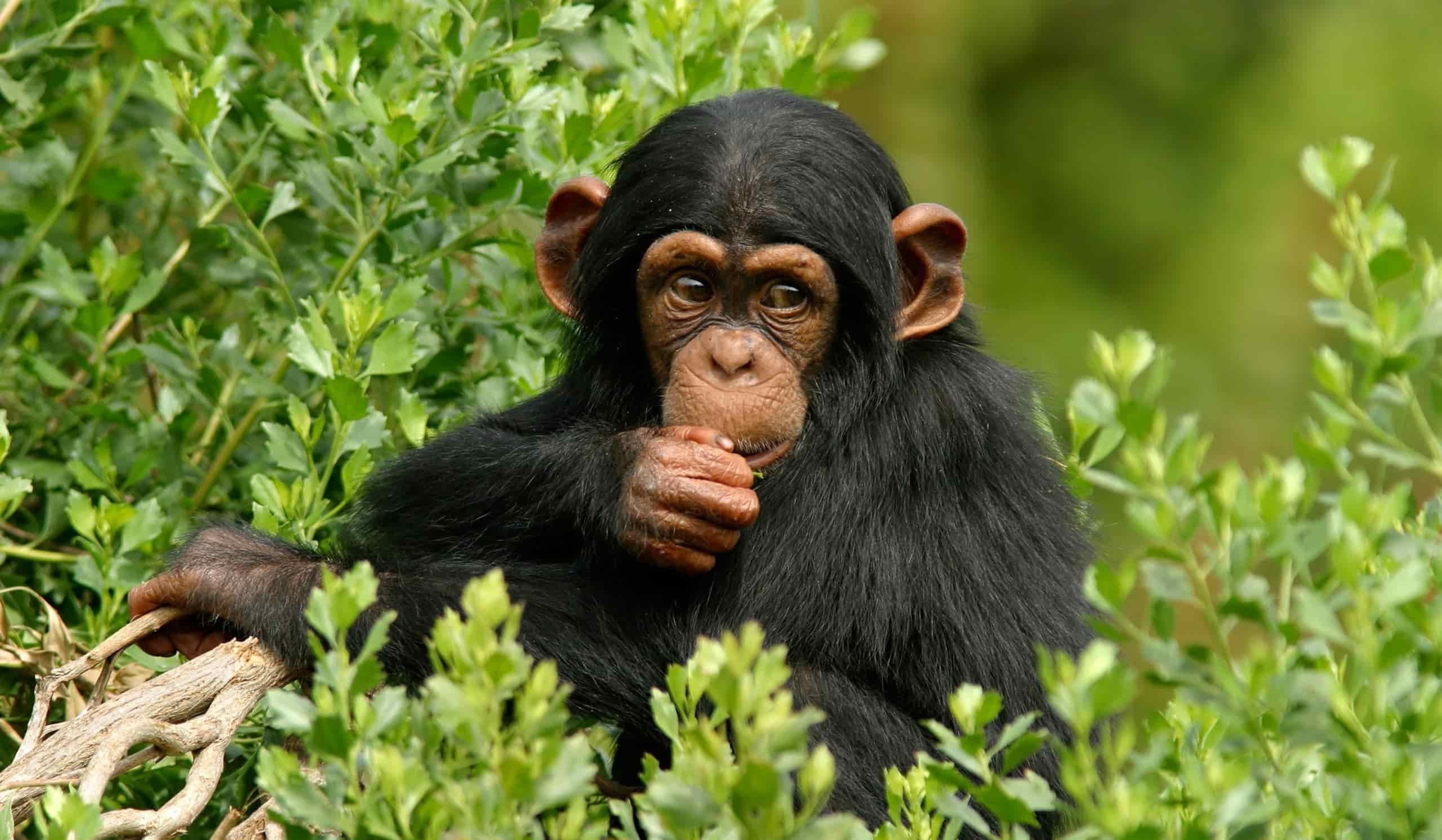
Kibale National Park Primate Census: How Many Chimps Live There?
Travelers researching chimpanzee trekking in Uganda often assume Kibale Forest is simply known as “the chimp park,” a single, vague fact absorbed from a tour brochure without much sense of the actual numbers behind it. Kibale National Park primate census figures tell a considerably more interesting, more specific, more scientifically grounded story than that shorthand suggests, and understanding the real population data adds genuine context to what makes this particular forest one of the most significant chimpanzee strongholds anywhere on the African continent. Kibale is genuinely home to an estimated 1,500 chimpanzees, distributed across several distinct, separately territorial communities within the park, a population size that places it among the very few remaining places left on Earth where wild chimpanzee numbers are genuinely counted in the thousands rather than merely the hundreds.
How the Population Has Changed Over Time
Census figures for Kibale’s chimpanzee population have shifted meaningfully over the decades as survey methods improved and conservation efforts matured. The Jane Goodall Institute’s 2001 Uganda-wide chimpanzee census recorded roughly 1,200 chimpanzees within Kibale specifically, a figure that more recent surveys have revised upward toward 1,450 to 1,500 individuals, reflecting both genuine population growth under sustained protection and improved counting methodology capable of detecting communities and individuals earlier surveys likely missed. This upward trajectory stands in genuine contrast to the population declines many other African great ape strongholds have experienced over the same period, making Kibale’s overall trend line a rare, genuinely encouraging conservation story that gets considerably less attention than Uganda’s more widely publicized mountain gorilla recovery.
How Many Communities Live Within the Park
Kibale’s chimpanzee population is not a single, undifferentiated group but rather several genetically and socially distinct communities spread across the forest’s roughly 795 square kilometers, each occupying its own territory with limited direct interaction between groups. Four main communities are generally recognized within current population estimates, each numbering anywhere from several dozen to well over a hundred individuals depending on territory size and food availability within their specific range. The most famous of these, the Kanyanchu community, is the one habituated specifically for tourist trekking, meaning the vast majority of Kibale’s actual chimpanzee population lives entirely outside the direct tourist experience, a detail that surprises many visitors who assume the trekking encounter represents the whole picture rather than a small, carefully managed slice of a considerably larger population.
The Ngogo Community: Kibale’s Longest-Running Research Site
Beyond Kanyanchu, the Ngogo community holds particular scientific significance as the subject of one of the longest continuous chimpanzee research projects in the world, with researchers tracking individual chimpanzees, their relationships, and their population dynamics across nearly five decades of sustained observation. Ngogo has, at various points, been documented as one of the largest single chimpanzee communities ever recorded anywhere in Africa, numbering well over 200 individuals during peak periods, a genuinely remarkable concentration within a single social group given how much smaller most other studied chimpanzee communities across the continent tend to be. This decades-long research record has produced some of primatology’s most detailed insights into chimpanzee social structure, hunting behavior, and inter-group conflict, insights that would simply not exist without Kibale’s unusually large, stable, and well-studied population. Researchers working at Ngogo have documented everything from complex hunting strategies targeting red colobus monkeys to sophisticated coalition-building between male chimpanzees vying for status within the group, behavioral detail that requires exactly the kind of sustained, decades-long individual recognition only a stable, well-studied population of this scale can realistically provide.
Why Kibale Supports Such a Large Population
Kibale’s exceptional chimpanzee numbers trace directly back to the forest’s ecological richness and the sustained protection it has received since gaining national park status. The forest’s diverse, largely intact habitat, a mix of tropical rainforest, swamp, and grassland, supports the varied fruit and vegetation sources chimpanzees depend on across seasonal cycles, while decades of consistent ranger patrol and anti-poaching enforcement have allowed the population to grow rather than simply hold steady against ongoing pressure. This combination, genuinely rich habitat plus sustained protection, is precisely the formula conservationists point to when explaining why Kibale has bucked the broader trend of declining chimpanzee numbers seen across much of West and Central Africa, where habitat loss and ongoing poaching pressure continue to outpace conservation capacity across many range countries.
Comparing Kibale’s Numbers to Other Great Ape Populations
Placing Kibale’s roughly 1,500 chimpanzees in broader context helps illustrate just how significant this specific population genuinely is. Uganda’s entire mountain gorilla population across both Bwindi and Mgahinga numbers only in the low hundreds, meaning Kibale’s chimpanzee community alone considerably outnumbers the country’s entire mountain gorilla population several times over, a comparison that surprises many travelers who assume gorillas represent Uganda’s larger primate conservation story simply because they receive more tourism marketing attention. Globally, few individual protected areas anywhere host chimpanzee populations approaching Kibale’s scale, making it one of the genuinely significant strongholds for the species worldwide, not simply a notable destination within Uganda’s own tourism landscape. Conservation biologists studying chimpanzee populations across Africa regularly cite Kibale alongside a handful of other flagship sites, including parts of Tanzania and the Democratic Republic of Congo, when identifying the populations most critical to the species’ long-term survival, a designation that reflects both Kibale’s raw numbers and the genetic diversity a population of this size is able to sustain over successive generations.
What This Means for Your Trekking Experience
Understanding these specific population figures genuinely reframes what a Kibale chimpanzee trek actually represents. Visitors trek specifically to the habituated Kanyanchu community, generally encountering a portion of that group’s members during the standard two-hour trekking permit, rather than any random cross-section of the park’s total population. Sighting rates for habituated Kanyanchu chimpanzees run notably higher than for Uganda’s gorilla trekking, often exceeding ninety percent, given both the community’s smaller territory relative to Bwindi’s sprawling gorilla sectors and chimpanzees’ more vocal, easier-to-locate behavior compared to the quieter movement patterns gorilla families exhibit. Our page on discounted Uganda chimpanzee trekking safari permits covers the practical booking details for arranging this specific encounter.
Habituation Status and What It Means for Numbers You’ll See
Only a small fraction of Kibale’s total chimpanzee population is habituated for either standard tourist trekking or the longer chimpanzee habituation experience, meaning the vast majority of the park’s roughly 1,500 individuals live their entire lives without direct human contact beyond occasional ranger monitoring and ongoing research activity. This is worth understanding clearly: a successful trek encountering a dozen or more Kanyanchu chimpanzees represents a meaningful but genuinely small sample of the forest’s total population, not evidence that the much wider 1,500-strong population as a whole behaves with anything close to similar tolerance toward human visitors. Our page on the chimpanzee habituation experience in Uganda covers the longer, more immersive alternative to standard trekking for visitors who want extended time with a habituated community beyond the standard permit window.
How Census Data Actually Gets Collected
Counting a wild chimpanzee population accurately is a genuinely difficult undertaking, considerably more complex than simply walking through the forest and tallying sightings. Researchers rely on a combination of nest counts, since chimpanzees build fresh sleeping nests nightly and nest density across systematically surveyed transects provides a reliable population proxy, direct observation of habituated communities, and increasingly, genetic sampling from dung and hair to distinguish individuals and confirm community boundaries without requiring direct visual contact with every counted animal. This methodology, refined considerably since the Jane Goodall Institute’s original 2001 census, is part of why more recent population estimates carry greater confidence than earlier figures, even though the underlying work remains genuinely labor-intensive and time-consuming to conduct across a forest of Kibale’s size. Ongoing monitoring rather than a single, one-time count is what actually keeps these figures reliable over time, since chimpanzee communities can shift territory boundaries, split, or merge over successive years, meaning a population estimate from a decade ago cannot simply be assumed accurate today without genuinely fresh survey data behind it.
Experiencing Kibale With This Context in Mind
Our broader page on fascinating facts about Kibale Forest National Park covers further detail on the park’s ecology and wildlife beyond chimpanzee numbers specifically. Travelers wanting to experience more of Kibale’s forest beyond the standard chimpanzee trek should also look at our page on guided forest walks in Kibale National Park, which covers the park’s broader thirteen-primate-species community beyond chimpanzees alone. Understanding Kibale’s genuine scale, a population several times larger than Uganda’s entire mountain gorilla community, spread across distinct communities including one of Africa’s most intensively studied research sites, turns a standard chimpanzee trek into an encounter with a considerably more significant conservation story than most visitors realize before ever setting foot in the forest. Carrying that context into the trek itself changes the experience in a genuinely meaningful way, transforming a wildlife sighting into an encounter with one small, carefully monitored piece of a population that conservation scientists consider among the most important of its kind anywhere on the planet.