
Rwenzori Trekking Routes: Which Trail Is Right for Your Fitness Level?
The Rwenzori Mountains offer two well-established routes to Africa’s third-highest peak, and choosing between them is one of the first genuinely important decisions anyone planning a Rwenzori trek needs to make. Both eventually lead to the same destination, the glaciated summit zone around Margherita Peak, but they get there in noticeably different ways, and picking the wrong one for your fitness level and experience can turn what should be a demanding but manageable expedition into something considerably harder than it needed to be.
The Central Circuit Trail
The Central Circuit is the range’s original and most established trekking route, entering the park from Nyakalengija on the eastern side and typically taking somewhere between seven and eight days to complete for parties attempting the full summit. It is widely regarded as the more balanced of the two main options, still a serious high-altitude trek by any measure, but one that spreads its difficulty more evenly across the itinerary rather than front-loading it into a punishing early climb.
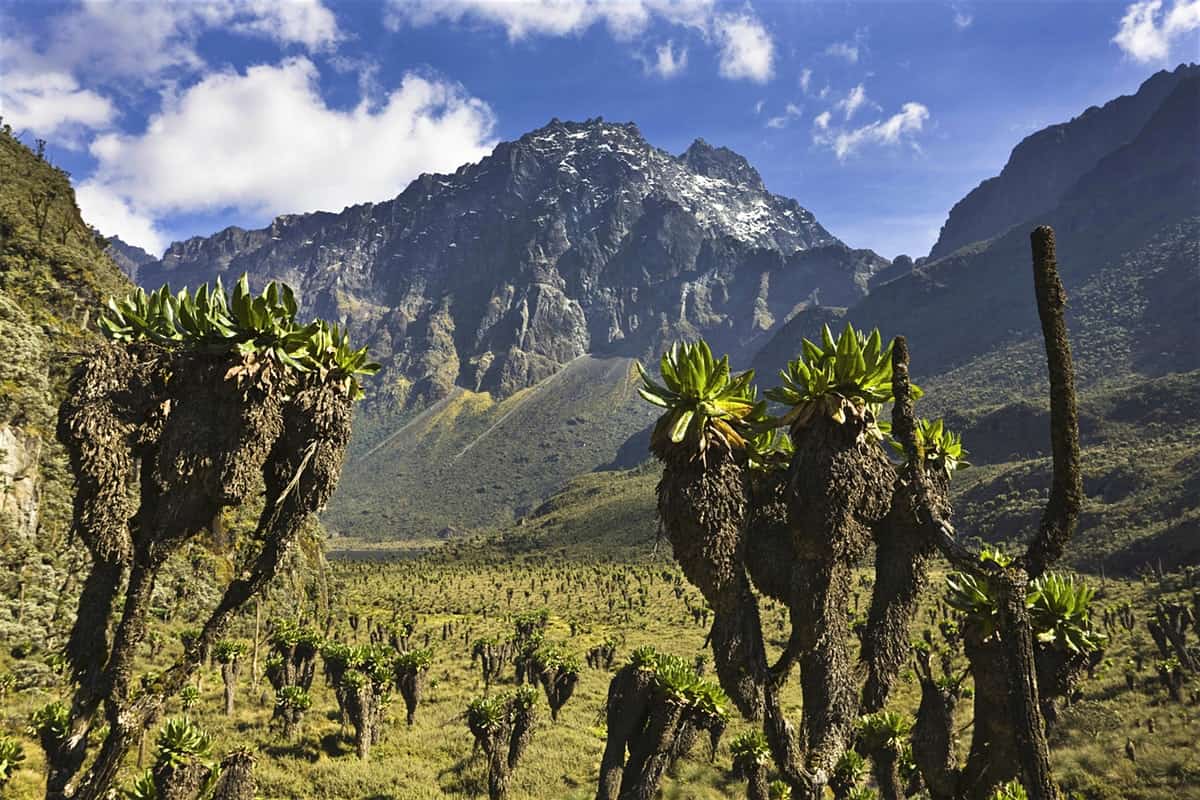
The route’s classic highlights include the Bujuku Valley, a striking stretch of afroalpine landscape framed by several of the range’s major peaks, Scott Elliot Pass, one of the trek’s more demanding technical sections en route to the summit attempt, and the Kitandara Lakes, a pair of glacial lakes that rank among the most photographed spots in the entire range. The trail loops back down through the Mubuku Valley, giving trekkers a genuine circuit rather than an out-and-back retracing of the same ground.
The Kilembe Trail
The Kilembe Trail, sometimes referred to as the southern circuit, approaches the range from the town of Kilembe on the southern side and was formally opened as a developed trekking route in 2009, considerably more recently than the Central Circuit’s long-established history. It typically takes eight to ten days, a day or two longer than the Central Circuit, and has a reputation among guides and past trekkers as the steeper, more physically demanding of the two options.
What the Kilembe Trail trades in raw difficulty, it offers back in scenery and acclimatisation quality. The extended timeline built into most Kilembe itineraries allows for a more gradual altitude gain, which many trekkers find genuinely helps with how their bodies cope with the thinning air at higher camps. The route is also known for offering some of the more varied and dramatic landscape transitions in the range, along with generally higher-standard hut accommodation than some of the older infrastructure found along sections of the Central Circuit.
Matching a Route to Your Fitness Level
Trekkers with solid cardiovascular fitness but relatively limited high-altitude mountaineering experience are generally better served by the Central Circuit. Its shorter overall duration and more moderate daily difficulty make it a sensible entry point into serious African high-altitude trekking, while still delivering the full scenic and technical experience the range is known for, including the demanding final push toward Margherita Peak’s glaciated summit zone.
Trekkers who are already experienced at altitude, comfortable with sustained steep climbing over multiple consecutive days, and who place a premium on acclimatisation quality and scenic variety over simply minimising trip length, tend to get more out of the Kilembe Trail. The additional days built into most Kilembe itineraries are not padding, they serve a genuine physiological purpose, giving the body more time to adjust before the most demanding altitude is reached, which can meaningfully reduce the risk of altitude sickness derailing a summit attempt.
Neither Route Is a Casual Undertaking
It is worth being direct about one thing regardless of which route is chosen: neither the Central Circuit nor the Kilembe Trail is a beginner-friendly hike in the way that, say, a day trek in Sipi Falls or a nature walk in one of Uganda’s savannah parks might be. Both involve multiple consecutive days of sustained climbing, exposure to genuinely cold and often wet conditions, technical sections requiring scrambling and, on the final summit push, the use of fixed ropes and basic climbing technique. Reasonable general fitness, prior hiking experience at altitude where possible, and a realistic assessment of your own physical condition matter more here than on almost any other trekking route commonly offered in East Africa.
Shorter Options for Non-Summit Trekkers
Not every visitor to the Rwenzoris is aiming for Margherita Peak itself, and both main trails can be shortened into non-summit itineraries of three to five days that reach the range’s lower and mid-altitude zones, the dense montane forest, the bamboo belt, and the lower stretches of heather and afroalpine vegetation, without pushing on to the technical glaciated summit sections. These shorter treks are considerably more accessible to trekkers with moderate fitness and limited technical climbing experience, while still delivering a genuine taste of the range’s dramatic scenery and unique high-altitude plant life.
Guides, Porters, and Logistics
Both routes are run through organised trekking operations with mandatory guides and porter support, a system that reflects both the technical demands of the terrain and the importance of supporting the local communities whose livelihoods are tied to the trekking economy in the foothills. Advance booking is standard practice for either route, particularly given the multi-day hut accommodation involved, and most operators require a reasonable lead time to arrange permits, staffing, and provisions for a trip of this length and remoteness.
Choosing Well Matters More Here Than on Most Treks
Because both Rwenzori routes represent such a significant time and physical commitment, choosing the one that actually matches your fitness level and goals is worth real consideration rather than a quick decision based on which name sounds more familiar. Trekkers who are honest with themselves about their conditioning, altitude experience, and appetite for a longer, tougher route tend to have a considerably better experience than those who pick based on convenience alone and find themselves struggling on day four of a trek they were not adequately prepared for.
For travellers weighing up whether a full Rwenzori expedition fits their itinerary and fitness level, a well-planned multi-day Rwenzori trekking safari built around the right route for your ability is the difference between a genuinely rewarding expedition and one spent simply enduring the days until it ends.
Preparing Your Body Before You Arrive
Whichever route you choose, the preparation that happens in the months before you land in Uganda matters as much as anything decided on the trail itself. A solid cardiovascular base, built through regular hiking, running, or stair-climbing over an extended period, makes a genuine difference once you are carrying a daypack up steep, muddy trail for six or seven hours at a stretch. Leg strength matters just as much as aerobic fitness given how much of both routes involves steep ascent and descent over uneven, often slippery terrain, and trekkers who arrive having done little more than casual weekend walks tend to struggle noticeably more than those who have put in a genuine, sustained training block beforehand.
Altitude adds a layer of unpredictability that no amount of sea-level fitness training can fully prepare for, which is part of why the extra acclimatisation days built into the Kilembe Trail carry real value beyond simply extending the trip. Trekkers with any prior experience at altitude, even moderate hikes above three thousand metres elsewhere, tend to have a rough sense of how their own body responds, information worth taking seriously when deciding which of the two routes, and which pace within that route, makes sense for you specifically.
Weather and When to Go
The Rwenzoris earn their old nickname, the Mountains of the Moon, partly from persistent cloud cover that can make the range appear almost mythically elusive from a distance, and that same cloud cover means rain is a near-constant possibility on both routes regardless of season. The driest and most favourable trekking windows generally fall from mid-December through February and again from June through August, when trail conditions tend to be more manageable and summit weather windows more reliable, though even during these periods trekkers should come prepared for wet, cold conditions at any point along either route. Proper waterproof layers, well broken-in boots, and gear rated for genuinely cold high-altitude nights are non-negotiable regardless of which trail or which season is chosen.
Deciding With Confidence
Ultimately, the choice between the Central Circuit and the Kilembe Trail comes down to an honest inventory of your own fitness, your prior experience at altitude, how much time you have available, and what you personally value more, a slightly shorter and more moderate classic route, or a longer, tougher trek that trades extra days for better acclimatisation and arguably more dramatic scenery along the way. Both routes deliver a genuine, hard-earned view of Africa’s rarest high-altitude landscape, and neither one is the wrong choice so long as it is chosen with a clear-eyed sense of what your body is actually capable of handling over the course of a demanding, multi-day expedition through some of the most remote and dramatic high-altitude terrain anywhere in East Africa.