
Uganda Gorilla Trekking from USA
Overview of Gorilla Trekking from the United States to Uganda
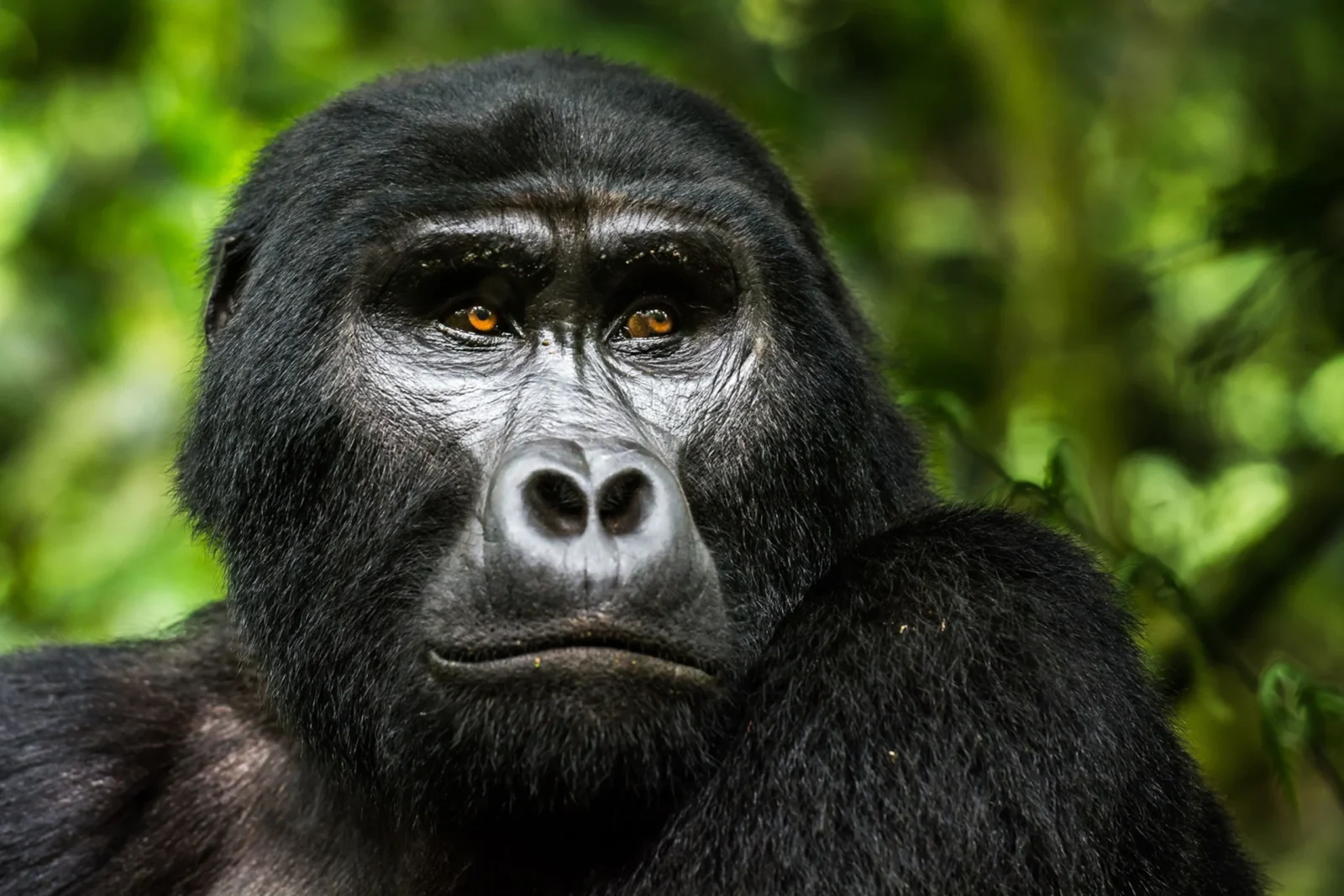
Uganda Gorilla Trekking from the United States is one of the most extraordinary wildlife journeys available to North American travelers. Uganda, often referred to as the Pearl of Africa, is home to nearly half of the world’s remaining mountain gorillas. For American travelers seeking an immersive, conservation-driven safari experience, trekking endangered gorillas in the dense rainforests of southwestern Uganda represents a rare and transformative expedition.
Mountain gorilla trekking in Uganda takes place primarily in Bwindi Impenetrable National Park and Mgahinga Gorilla National Park. These protected areas form part of the greater Virunga ecosystem and are internationally recognized for strict conservation management. This pillar guide explains departure airports in the USA, flight routes to Entebbe, travel duration, visa procedures for U.S. citizens, yellow fever requirements, insurance expectations, currency considerations, ideal travel timing based on American holiday patterns, and a sample itinerary optimized for typical U.S. leave structures.
Departure Airports in the United States
The United States offers multiple major international gateways with strong connectivity to East Africa. The most common departure cities for Uganda gorilla trekking include New York (JFK and Newark), Washington D.C. (Dulles), Atlanta, Chicago O’Hare, Dallas–Fort Worth, Los Angeles, and San Francisco.
East Coast airports typically provide the shortest total travel time due to proximity to European and Middle Eastern transit hubs. West Coast departures generally require slightly longer total travel durations but maintain reliable one-stop routing.
Because gorilla trekking itineraries usually span 8 to 14 days, travelers often select evening departures from the U.S. to maximize arrival efficiency in Uganda.
Typical Flight Routes to Entebbe
All Uganda gorilla trekking tours begin with arrival at Entebbe International Airport, located on the shores of Lake Victoria.
There are no direct nonstop flights from the United States to Entebbe. However, efficient one-stop connections are widely available via Europe or the Middle East. Common transit hubs include Doha, Istanbul, Amsterdam, Dubai, Brussels, and Addis Ababa.
Major airlines operating these routes include Qatar Airways via Doha, Turkish Airlines via Istanbul, Emirates via Dubai, KLM via Amsterdam, and Ethiopian Airlines via Addis Ababa.
Most itineraries require one international connection, with total travel time depending on departure city and layover duration.
Average Flight Duration from the USA to Uganda
Flight time from the East Coast of the United States to connecting hubs averages between 6 and 13 hours depending on routing. The onward flight from the transit hub to Entebbe typically takes approximately 6 to 8 hours.
Including layovers, total travel time generally ranges from 18 to 24 hours. West Coast departures may extend total journey time to approximately 22 to 28 hours.
Despite the long-haul nature of the journey, arrival logistics in Uganda are well structured. Most travelers spend the first night in Entebbe before continuing to the gorilla trekking regions the following day.
Visa Process for U.S. Citizens
U.S. passport holders require a tourist visa to enter Uganda. The visa application is completed online through Uganda’s electronic visa platform prior to departure.
The standard tourist visa permits stays of up to 90 days. For travelers planning to combine Uganda with Rwanda or Kenya, the East African Tourist Visa allows multi-country access under a single authorization.
Passports must remain valid for at least six months beyond the intended travel date and contain adequate blank pages for entry stamps.
Yellow Fever Requirements and Health Considerations
Yellow fever vaccination is mandatory for entry into Uganda. U.S. travelers must present proof of vaccination via the International Certificate of Vaccination upon arrival.
Malaria prophylaxis is strongly recommended, as Uganda lies within a malaria-risk zone. Routine travel vaccinations such as hepatitis A, hepatitis B, and typhoid are commonly advised before departure.
Travelers should prepare for humid rainforest conditions by packing lightweight, moisture-wicking clothing, waterproof jackets, and durable hiking boots suitable for uneven forest terrain.
Travel Insurance Expectations
Comprehensive travel insurance is essential for gorilla trekking tours. Coverage should include emergency medical care, evacuation services, trip cancellation protection, and coverage for high-cost safari components such as gorilla permits.
Gorilla trekking occurs in remote forested regions with limited immediate medical facilities. Emergency evacuation coverage ensures protection in the unlikely event of injury or illness.
Most reputable safari operators require confirmation of travel insurance before issuing final travel documents.
Currency Comparison: U.S. Dollar and Ugandan Shilling
Uganda’s official currency is the Ugandan Shilling. While major safari payments such as permits and lodges are often quoted in U.S. dollars, local transactions are conducted in shillings.
For American travelers, the U.S. dollar is widely accepted at established hotels and safari lodges, particularly for large payments. However, small purchases in rural areas require local currency.
Exchange services are available at Entebbe International Airport and in major towns. Credit cards are accepted at most high-end establishments, though travelers should inform their banks prior to departure to avoid transaction issues.
Best Time to Travel from the USA Based on Holiday Patterns
American travel patterns strongly influence safari scheduling. Popular vacation windows include summer holidays from June through August, Thanksgiving in late November, and the Christmas–New Year period in December.
Uganda’s dry seasons align well with these periods. The June to September window offers firm trekking trails and excellent wildlife viewing conditions. December through February also provides favorable weather for gorilla trekking and safari extensions.
Travelers planning during peak U.S. vacation months should secure gorilla permits at least six months in advance due to limited daily availability.
Shoulder seasons such as February and early November may offer better lodge availability while maintaining consistent gorilla sighting success rates.
Sample 10-Day Uganda Gorilla Trekking Itinerary for U.S. Travelers
Day 1 involves departure from a major U.S. international airport with overnight travel.
Day 2 arrival in Entebbe, followed by overnight rest near Lake Victoria.
Day 3 transfer by domestic flight or road to Bwindi Impenetrable National Park.
Day 4 dedicated to gorilla trekking in Bwindi. After a ranger briefing, visitors hike into the rainforest to locate a habituated gorilla family. One regulated hour is spent observing their natural behavior.
Day 5 relaxation at the lodge or cultural visit to surrounding communities.
Day 6 transfer to Queen Elizabeth National Park.
Day 7 morning game drive and afternoon boat cruise along the Kazinga Channel.
Day 8 transfer to Kibale Forest for chimpanzee tracking.
Day 9 chimpanzee trekking followed by return to Entebbe.
Day 10 international departure to the United States.
This itinerary aligns effectively with a typical two-week vacation allocation, including travel time without compressing core experiences.
Gorilla Trekking Locations in Uganda
Uganda offers two primary gorilla trekking destinations: Bwindi Impenetrable National Park and Mgahinga Gorilla National Park. Bwindi contains multiple trekking sectors with varying terrain and vegetation density, while Mgahinga provides dramatic volcanic landscapes within the Virunga Mountains.Each gorilla family is visited by a maximum of eight trekkers per day, ensuring minimal environmental impact and highly intimate wildlife encounters.Uganda Gorilla Trekking from the USA combines efficient global air connectivity with one of the world’s most exclusive wildlife experiences. Despite the long-haul journey, structured logistics, conservation management, and strong tourism infrastructure make Uganda a highly accessible destination for American travelers.For those seeking a transformative safari defined by biodiversity, authenticity, and conservation impact, trekking mountain gorillas in Uganda stands among the most remarkable adventures available anywhere in the world.