
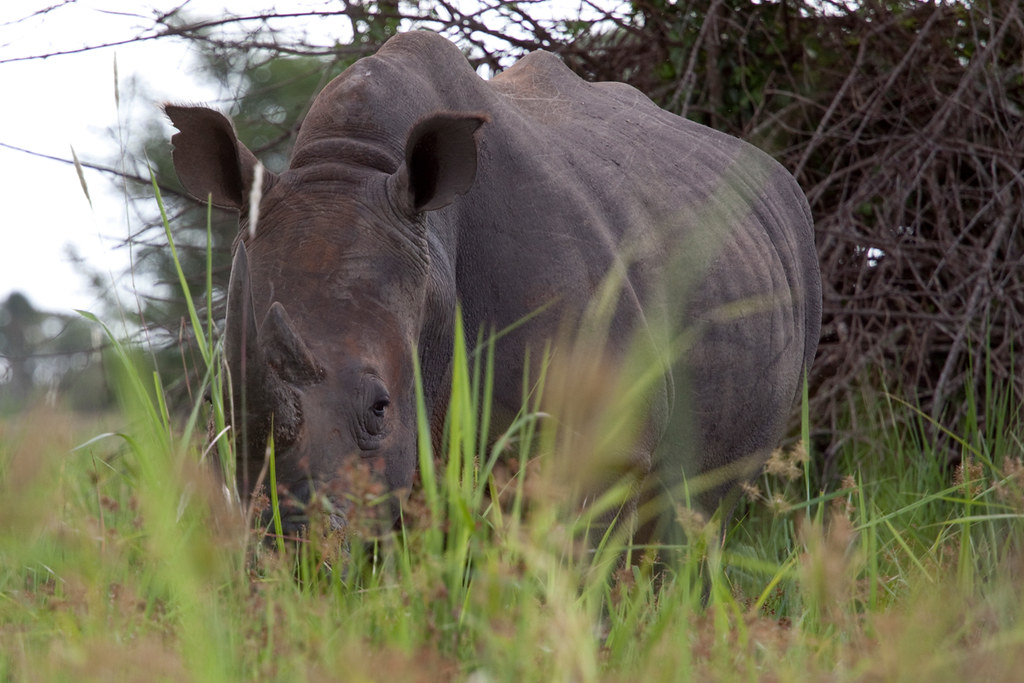
Ziwa Rhino Sanctuary is Uganda’s only place to see rhinos in the wild, home to a reintroduced population of southern white rhinos after the species was hunted to local extinction by the late 1980s. Sitting directly on the main road between Kampala and Murchison Falls National Park, roughly 176 kilometres from the capital, it’s one of the easiest wildlife detours to add to a Uganda itinerary – no separate trip required, just a stop en route to the park.
The Story of Uganda’s Rhinos
Uganda once had healthy populations of both black and white rhinos, but decades of poaching and civil conflict wiped them out entirely by 1983. Ziwa Rhino Sanctuary was established in 2005 as a dedicated breeding and reintroduction site, starting with a small founder population of southern white rhinos donated from Kenya and Disney’s Animal Kingdom in the United States. The long-term goal has always been reintroduction into Uganda’s national parks once the population is large and secure enough, with Murchison Falls National Park identified as the eventual release site.
The programme has been a genuine conservation success. From that small founding group, the sanctuary’s population has grown steadily through natural breeding, and Ziwa now represents one of East Africa’s clearer rhino conservation wins, run by Rhino Fund Uganda in partnership with the Uganda Wildlife Authority.
Understanding White Rhino Behaviour
Southern white rhinos, despite the name, aren’t actually white – the name is thought to derive from a mistranslation of the Dutch word “wijd,” meaning wide, referring to their broad, square lips adapted for grazing grass rather than browsing leaves like their black rhino relatives. They’re the more social of Africa’s two rhino species, often found in small groups rather than the solitary, territorial pattern typical of black rhinos, which is part of why Ziwa’s population dynamics have worked well for a breeding and reintroduction programme – group behaviour makes both monitoring and eventual release planning more manageable than it would be with a naturally solitary species.
Adult white rhinos are also, weight for weight, among the largest land mammals after elephants, with mature bulls regularly exceeding two tonnes. Seeing an animal of that scale up close, on foot, without a vehicle between you, is part of what makes the Ziwa experience feel distinct from anything else on a typical Uganda itinerary.
Rhino Tracking on Foot
Unlike most wildlife viewing in Uganda’s parks, which happens from a vehicle, Ziwa’s signature activity is a guided rhino tracking walk on foot. Rangers who know the sanctuary’s rhinos individually – their names, personalities and typical ranging patterns – lead small groups on a walk that brings visitors to within a safe, carefully managed distance of a resting or grazing group. Because white rhinos are generally more placid than their black rhino cousins and the sanctuary’s population is well-habituated to visitors, sightings on the walking tracking activity are highly reliable.
The walk itself is easy to moderate, taking place across the sanctuary’s flat savannah and woodland habitat rather than challenging terrain, making it accessible to most fitness levels and a comfortable stop on a longer travel day.
The Founder Rhinos
The sanctuary’s original population traces back to a small handful of individuals brought together from conservation partners in the mid-2000s, each rhino given a name that rangers still use today when tracking and discussing the group’s movements and family relationships. Because the population is small enough for every animal to be known individually rather than managed as an anonymous herd, rangers can usually tell visitors specifically who they’re looking at, how that individual relates to others in the group, and something of their history at the sanctuary – a level of personal detail rarely possible with wildlife viewing elsewhere.
What Else to See at Ziwa
Beyond rhinos, the sanctuary’s wetlands and woodland support a genuinely strong bird list, including the shoebill stork on occasion, along with various antelope species and smaller mammals. A boat trip along the Lugogo River, which runs through the sanctuary, adds a water-based alternative for visitors with a bit more time, offering good birding and a different perspective on the reserve’s ecology.
Visiting as Part of a Murchison Falls Itinerary
Ziwa’s location directly on the Kampala–Murchison Falls road makes it a natural stop to break up what would otherwise be a long, unbroken drive. Most itineraries schedule the visit either on the way north to Murchison Falls or on the return journey south, adding perhaps two to three hours to the day for the rhino tracking walk itself plus any time spent at the visitor centre.
| Location | 176km north of Kampala, en route to Murchison Falls |
| Signature activity | Guided rhino tracking on foot |
| Species | Southern white rhino (reintroduced population) |
| Typical visit length | 2–3 hours |
| Established | 2005 |
How the Rhino Population Has Grown
The sanctuary’s approach has always centred on natural breeding within a secure, well-monitored 70-square-kilometre area rather than a zoo-style enclosure. Rangers track each individual rhino daily, recording behaviour, health and movement patterns, which has allowed the programme to intervene early when needed while otherwise letting the population develop naturally. Successive calves born at Ziwa have been given names reflecting their parentage and birth circumstances, and long-term visitors sometimes return specifically to see how individual animals they first encountered years earlier have grown or had calves of their own.
This slow, patient growth model reflects the reality of rhino conservation more broadly – the species breeds slowly, with a roughly 16-month gestation period and calves that stay dependent on their mothers for several years, meaning population recovery is measured in decades rather than seasons.
Security and Anti-Poaching Efforts
Given the value poachers place on rhino horn, security at Ziwa is taken extremely seriously, with a dedicated ranger force monitoring the population around the clock. This level of protection is precisely why Uganda’s rhino reintroduction has succeeded where a less secure approach likely would have failed, and it’s part of the broader reason the sanctuary charges an entrance and tracking fee – funding the security infrastructure that keeps the population safe is a direct, ongoing cost of the programme’s success.
Best Time to Visit
Ziwa is a year-round stop, and rhino tracking success rates remain consistently high across all seasons since the population is well-habituated and the sanctuary relatively compact. The main seasonal consideration is the same as anywhere in the region – dry-season months (June–August and December–February) offer firmer underfoot conditions for the tracking walk, though this matters less here than on a genuine forest gorilla trek given the flatter, more open terrain.
Frequently Asked Questions
Do I need a separate permit for Ziwa, like a gorilla permit?
No – Ziwa charges a standard entrance and tracking fee rather than a limited-availability permit system, so it can generally be added to an itinerary without months of advance booking.
Is Ziwa safe to visit on foot given the rhinos are wild animals?
Yes, when accompanied by the sanctuary’s experienced rangers, who monitor the rhinos daily and manage safe viewing distances throughout the walk.
Can I see rhinos anywhere else in Uganda?
Not currently – Ziwa remains the only place to see rhinos in Uganda, since the species was locally extinct until this reintroduction programme began.
How long until rhinos are reintroduced to Murchison Falls National Park?
There’s no fixed date – reintroduction depends on the sanctuary population reaching a size and security level the programme considers safe for release, a process that continues to develop over time.
Is Ziwa suitable for young children?
Generally yes – there’s no minimum age requirement as there is for gorilla trekking, and the flat, open terrain makes the walk manageable for most families.
How does Ziwa fund its conservation work?
Primarily through visitor entrance and tracking fees, supplemented by donor support through Rhino Fund Uganda, the NGO that manages the sanctuary in partnership with the Uganda Wildlife Authority.
What to Bring
Standard walking-safari kit applies: comfortable closed shoes, sun protection, insect repellent and water, since the tracking walk takes place in open savannah with limited shade. Binoculars aren’t essential for the rhino tracking itself given how close rangers bring visitors, but they’re worthwhile if you’re also interested in the sanctuary’s birdlife or planning the river boat trip.
A Practical Stop, Not Just a Detour
It’s worth framing Ziwa correctly on an itinerary: this isn’t a side trip that competes with Murchison Falls for attention, but a genuinely efficient use of a drive day that would otherwise involve several hours of uninterrupted road travel with little to break it up. Most visitors come away considering it one of the more memorable single stops of their entire Uganda trip precisely because it’s unexpected – a close, safe, on-foot encounter with a species many travellers assume they’d need to go elsewhere in Africa entirely to see at all, let alone on the way to somewhere else.
Add This to Your Itinerary
We build a Ziwa Rhino Sanctuary stop directly into Murchison Falls itineraries at no extra transfer cost, since it sits right on the route north from Kampala. Get in touch and we’ll add it to your trip and confirm timing around your other planned activities.