
Gorilla Safari Village Walk: Local Life Near Bwindi Forest
A gorilla safari village walk is one of the most culturally grounded experiences you can add to a visit around Bwindi Impenetrable National Park. While gorilla trekking places you deep inside ancient rainforest ecosystems, a village walk brings you to the human landscape that exists immediately around the forest edge. It reveals how local communities live, adapt, and interact with one of the most important conservation areas in Africa.
This experience is not a performance or staged attraction in its best form. It is an opportunity to observe everyday life in rural southwestern Uganda, where agriculture, tradition, conservation, and modern tourism intersect in a very direct way.
The Core Idea: Life at the Forest Boundary
Bwindi is not an isolated wilderness. It is surrounded by villages, farms, and small trading centers where people live in close proximity to protected gorilla habitat. A village walk is designed to explore this interface between human settlement and forest conservation.
What makes this experience important is the realization that conservation does not happen in isolation. The survival of mountain gorillas depends not only on rangers inside the forest but also on the communities living just outside it. These communities shape land use patterns, participate in tourism, and often serve as the first line of protection against illegal activities.
Walking Through the Village Landscape
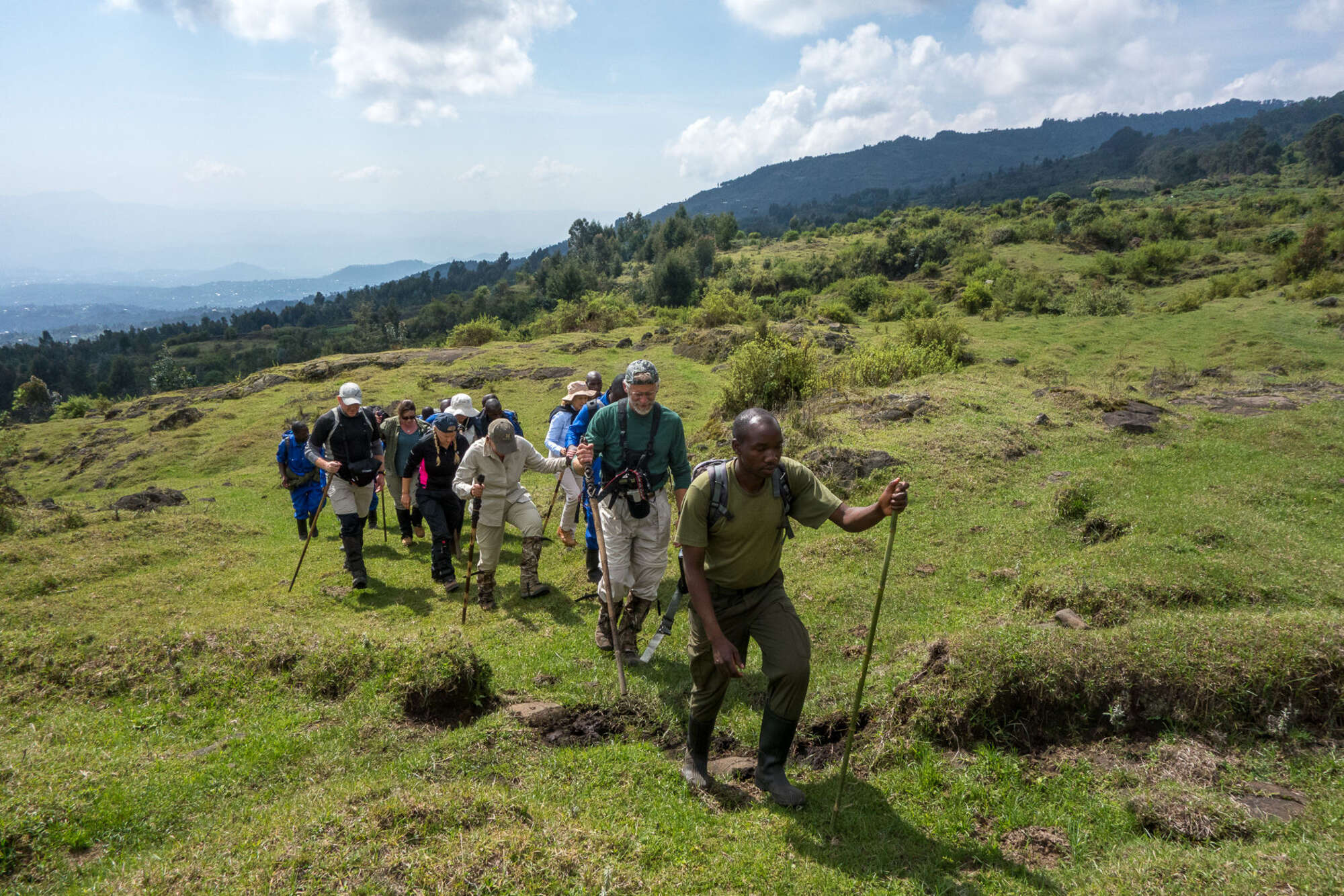
A typical village walk begins near the lodge or a designated community meeting point. From there, you move on foot through paths that connect homes, gardens, and communal spaces.
The landscape is characterized by small-scale farming plots. You will see banana plantations, coffee gardens, vegetable gardens, and grazing areas for livestock. These are not large commercial farms but family-managed plots that support daily livelihoods.
The walking pace is slow and observational. Guides often come from the local community and provide explanations about land use, farming practices, and cultural traditions as you move through the area.
Agriculture and Daily Life
Agriculture is the backbone of life around Bwindi. Most households depend on subsistence farming combined with cash crops such as coffee and tea. The volcanic soils in the region are fertile, allowing for diverse crop cultivation even on small plots of land.
During a village walk, you may observe how families manage mixed farming systems. Bananas are often a staple crop, used for food, beer production, and household consumption. Coffee is cultivated as a key income source, linking rural households to international markets.
Livestock such as goats and chickens are commonly kept, providing additional food security and income stability. These everyday activities form the foundation of rural resilience in the region.
Traditional Housing and Settlement Patterns
Housing in villages near Bwindi is typically simple but functional. Many homes are built using locally sourced materials such as timber, mud, bricks, and thatch or iron roofing.
Settlement patterns are often dispersed rather than tightly clustered. Homes are surrounded by agricultural land, reflecting the integration of living space and farming space.
During a village walk, guides may explain how housing styles have evolved over time, especially with the influence of tourism income and development programs that have introduced improved construction techniques.
Cultural Traditions and Community Identity
Beyond agriculture, a village walk offers insight into cultural identity. The communities around Bwindi include groups with long-standing traditions, storytelling practices, and local craftsmanship.
Music, dance, and oral storytelling remain important cultural expressions. These are often shared in community spaces where visitors can learn about history, social values, and traditional knowledge systems.
Craftsmanship is another key element. Locally made baskets, wood carvings, and woven items reflect both cultural heritage and economic adaptation to tourism demand.
The Role of Tourism in Village Life
Tourism linked to gorilla trekking has had a significant impact on communities around Bwindi. Income from permits and related activities contributes to infrastructure development, education, and healthcare programs.
Village walks are part of this broader tourism ecosystem. They provide direct economic opportunities for local guides, artisans, and community groups. This helps distribute tourism benefits beyond the forest itself.
However, the relationship between tourism and local life is not one-sided. Communities also influence how tourism is experienced, shaping narratives, guiding interactions, and ensuring that cultural representation remains authentic.
Conservation and Human Coexistence
One of the most important themes of a village walk is coexistence with wildlife. Living near Bwindi means sharing space with animals that move beyond forest boundaries, including monkeys and occasionally elephants or other forest species.
This proximity creates both opportunities and challenges. Crop raiding and resource competition can occur, but conservation programs work to mitigate conflict through education, compensation systems, and community engagement.
Guides often explain how conservation awareness has changed local attitudes toward gorilla protection, turning what was once a resource area into a protected ecosystem with shared responsibility.
Education and Social Development
Many village walks include stops at local schools or community centers, depending on availability. Education is a key focus in communities surrounding Bwindi, as it is directly linked to conservation awareness and future employment opportunities in tourism.
Schools often benefit from tourism-related funding, which supports infrastructure, learning materials, and teacher development. This creates a visible connection between gorilla tourism and community development outcomes.
The Human Side of Conservation
A village walk makes it clear that conservation is not just about wildlife. It is also about people. The protection of mountain gorillas depends on the cooperation of local communities who live closest to the forest.
By participating in a village walk, visitors gain insight into this relationship. They see how livelihoods, conservation, and tourism are interconnected rather than separate systems.
This understanding adds depth to the gorilla trekking experience, as it reveals the broader social and economic context behind wildlife protection.
Emotional Tone of the Experience
Unlike gorilla trekking, which is emotionally intense and focused on wildlife encounters, a village walk is calm, reflective, and human-centered.
The emotional experience comes from interaction rather than observation. Conversations with guides, encounters with farmers, and visits to community spaces create a sense of connection to everyday life.
It is less about awe and more about understanding, offering a grounded perspective on how people live alongside one of the world’s most important conservation areas.
Final Perspective
A gorilla safari village walk around Bwindi is not an optional cultural add-on. It is an essential part of understanding the full ecosystem of the region.
While the forest represents ecological preservation and wildlife conservation, the surrounding villages represent human adaptation, resilience, and participation in that conservation system.
Together, they form a single landscape where people and nature are deeply connected. The village walk completes the gorilla safari experience by showing that the survival of mountain gorillas is closely linked to the lives and decisions of the communities living just beyond the forest edge.