
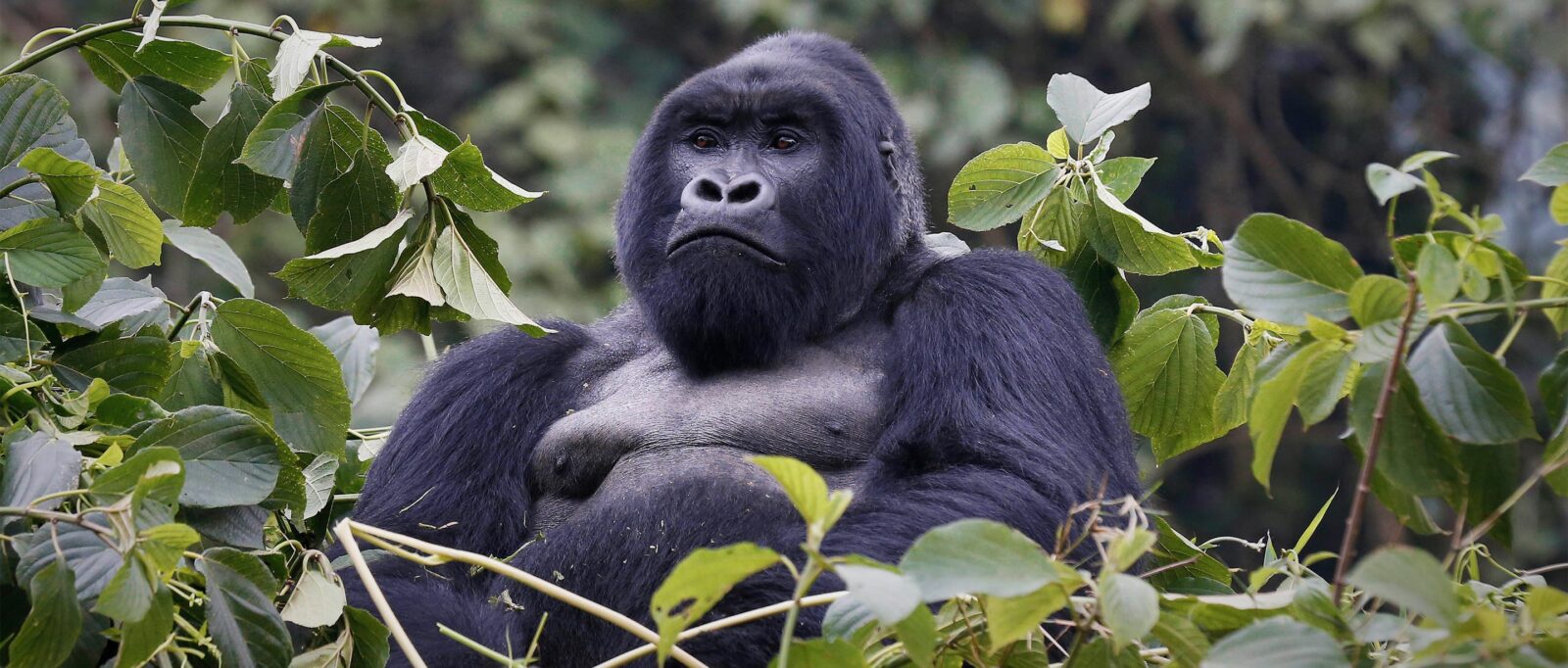
Mountain Gorilla Intelligence Safari: What Research Shows
A mountain gorilla intelligence safari is not about spectacle or trained performance. It is about observing one of the most cognitively complex non-human primates in its natural ecological and social setting. In the montane forests of Bwindi Impenetrable National Park and the broader Virunga ecosystem, mountain gorillas reveal a form of intelligence that is subtle, deeply social, and strongly shaped by long-term relationships rather than tool-based innovation.
Modern research has shifted the perception of gorillas from simple forest herbivores to highly structured thinkers with strong emotional awareness, memory capacity, and adaptive learning behavior. Unlike species whose intelligence is expressed through visible problem-solving tools, gorilla intelligence is embedded in social interaction, environmental awareness, and group decision-making.
Understanding Gorilla Intelligence in Scientific Context
Mountain gorillas belong to the great ape family, sharing evolutionary roots with chimpanzees, bonobos, and orangutans. Within this group, gorillas display a distinctive cognitive profile. Their intelligence is less focused on external manipulation of objects and more centered on internal group dynamics, emotional regulation, and environmental adaptation.
Scientific studies conducted over decades in protected habitats show that gorillas possess advanced cognitive abilities including recognition of individuals, long-term memory of social relationships, spatial awareness in complex environments, and adaptive behavioral responses to changing conditions. These traits place them among the most intelligent mammals in the wild, even though their intelligence is expressed differently from human expectations.
In forest environments such as Bwindi Impenetrable National Park, where visibility is low and movement is restricted by dense vegetation, intelligence is less about visual problem-solving and more about memory, coordination, and communication within a structured social system.
Social Intelligence as the Core of Gorilla Cognition
The most important aspect of mountain gorilla intelligence is their social structure. Gorilla groups are not random aggregations of individuals but highly organized family units led by a dominant silverback male. These groups can remain stable for many years, sometimes spanning multiple generations.
Within these groups, intelligence is expressed through social awareness. Individuals recognize one another over long periods, remember past interactions, and adjust their behavior accordingly. This requires both memory and emotional interpretation.
For example, gorillas demonstrate clear recognition of hierarchy. Subordinate individuals respond to the presence of the silverback with specific behavioral cues, often involving posture changes or reduced activity levels. At the same time, the silverback maintains group cohesion through a combination of presence, movement leadership, and conflict resolution.
The ability to maintain long-term social stability in a constantly changing forest environment is one of the strongest indicators of advanced cognitive functioning in gorillas.
Emotional Intelligence and Behavioral Sensitivity
Mountain gorillas also exhibit a high degree of emotional intelligence. Field observations consistently show behaviors associated with empathy, reassurance, and social bonding.
When an infant gorilla experiences distress, nearby group members often respond with calming proximity or gentle touch. Mothers demonstrate prolonged care for offspring, maintaining close physical contact for several years. Juveniles engage in social grooming, which serves both hygienic and bonding functions.
Conflict within gorilla groups is typically resolved without sustained aggression. Instead, reconciliation behaviors such as grooming and relaxed proximity often follow disputes. These patterns suggest that gorillas are capable of regulating social tension through emotional signals rather than constant dominance enforcement.
In forest environments like Bwindi, where group survival depends on cohesion during movement and feeding, emotional stability is a functional advantage, not just a social trait.
Memory and Learning Mechanisms
Memory plays a central role in gorilla intelligence. Mountain gorillas are capable of remembering feeding locations, seasonal plant cycles, and movement routes across complex terrain. This spatial memory allows them to navigate large forest territories efficiently without constant exploration.
Learning in gorilla societies is primarily observational. Younger individuals learn by watching older group members, particularly in feeding behavior and social interaction. This form of social learning ensures continuity of knowledge across generations without the need for individual trial-and-error learning in dangerous environments.
Studies suggest that gorillas can also remember individuals outside their immediate group and adjust their behavior based on previous interactions. This indicates a form of long-term social memory that contributes to intergroup dynamics.
Problem-Solving in Natural Environments
While mountain gorillas are not known for tool use in the wild, they do demonstrate situational problem-solving abilities. Their intelligence is expressed through environmental adaptation rather than object manipulation.
In mountainous terrain such as that found in Bwindi Impenetrable National Park, gorillas must navigate steep slopes, dense vegetation, and changing microclimates. They do so efficiently by selecting optimal paths, adjusting movement based on terrain difficulty, and responding to environmental barriers.
For example, when a feeding area becomes depleted or inaccessible, groups adjust their movement patterns and relocate to alternative zones within their home range. This reflects decision-making based on environmental feedback rather than random movement.
Communication Systems and Cognitive Expression
Gorilla communication is multi-layered and highly structured. It includes vocalizations, facial expressions, body posture, and physical gestures. Each signal has context-dependent meaning within the group.
Low-frequency vocal sounds are often used for coordination during movement. Grunts and barks help maintain group cohesion in dense forest environments where visual contact is limited. Chest beating, one of the most recognizable gorilla behaviors, is not solely aggressive but can serve as identity signaling, spatial communication, or social display depending on context.
Facial expressions also play a significant role in communication. Subtle changes in eye contact, mouth position, and head orientation can signal intent, submission, or reassurance. These non-verbal cues require both perception and interpretation, indicating a sophisticated level of cognitive processing.
Play Behavior and Development of Intelligence
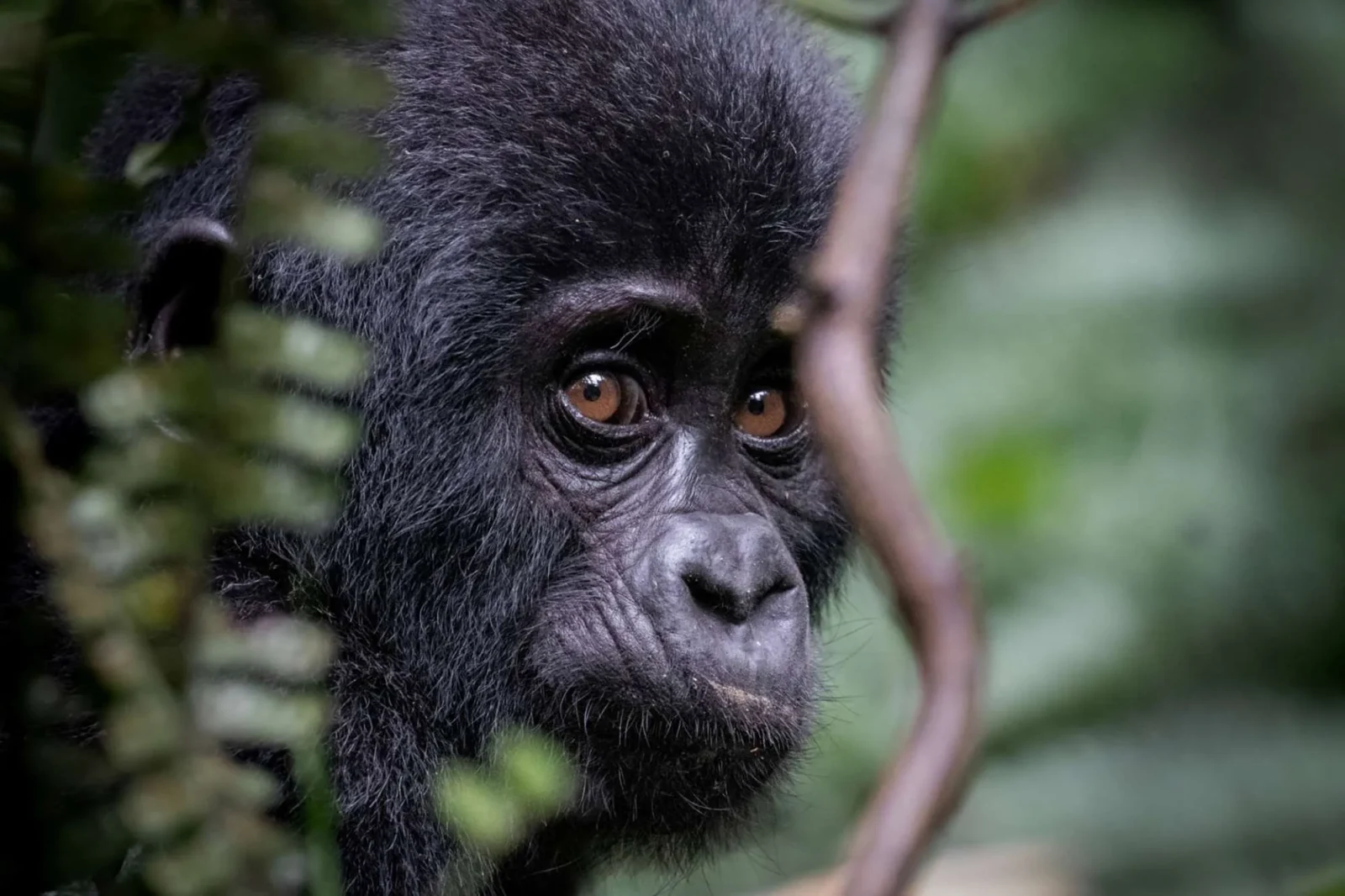
Juvenile gorillas engage extensively in play, which is a key component of cognitive development. Play behavior includes wrestling, chasing, object interaction, and social imitation. These activities are not random but serve as training mechanisms for adult behavior.
Through play, young gorillas develop motor coordination, social understanding, and conflict navigation skills. They also learn boundaries within group hierarchies and begin to understand social roles.
In environments such as Bwindi, where survival depends on group cohesion, play is not merely recreational but essential for long-term integration into the social structure.
The Role of the Silverback in Cognitive Organization
The silverback male is central to gorilla group intelligence. He acts as both leader and stabilizer, guiding movement, mediating conflict, and maintaining cohesion.
His cognitive role includes assessing environmental conditions before group movement, recognizing potential threats, and making decisions that affect group survival. In many ways, the silverback functions as a centralized decision-making unit within the group.
However, this leadership is not purely authoritarian. It is based on trust, experience, and social stability rather than constant aggression. A successful silverback maintains group cohesion through consistent behavioral patterns and environmental awareness.
Environmental Intelligence and Spatial Awareness
Mountain gorillas demonstrate strong spatial intelligence, particularly in complex forest environments. In regions like Bwindi Impenetrable National Park, where terrain varies dramatically, gorillas must continuously adapt their movement strategies.
They show awareness of elevation changes, vegetation density, and seasonal resource distribution. Groups often return to known feeding sites, suggesting long-term environmental memory.
This spatial awareness allows gorillas to optimize energy use while maximizing food intake, which is essential in environments where movement is physically demanding.
Comparative Intelligence Among Great Apes
When compared to chimpanzees, gorillas show less emphasis on tool use but greater stability in social structure. Compared to bonobos, they are more hierarchical and less fluid socially. Compared to orangutans, they are more group-oriented rather than solitary.
This positions gorillas as specialists in social cohesion intelligence rather than technological or manipulative intelligence. Their cognitive strength lies in maintaining stable, cooperative family units in challenging environments.
Conservation Insights from Intelligence Research
Understanding gorilla intelligence has directly influenced conservation practices. Recognizing their emotional sensitivity and social complexity has led to stricter tourism regulations and improved habituation protocols.
In protected areas like Bwindi Impenetrable National Park, researchers and park authorities now prioritize minimizing stress during human interaction, maintaining group stability, and protecting social structures.
This has also shaped veterinary intervention policies, ensuring that medical treatment is provided in ways that minimize disruption to social cohesion.
Why Gorilla Intelligence Matters for Tourism
For trekkers, understanding gorilla intelligence transforms the experience from simple observation to behavioral interpretation. Movements, vocalizations, and interactions become meaningful indicators of cognitive and emotional processes.
A feeding pause becomes a decision-making moment. A grooming session becomes a social bonding event. A chest beat becomes communication rather than spectacle.
This perspective deepens the safari experience into a form of field-based behavioral observation.
A mountain gorilla intelligence safari in Bwindi Impenetrable National Park reveals a form of cognition that is deeply social, emotionally rich, and environmentally adaptive. While gorillas may not demonstrate intelligence through tools or constructed artifacts, they exhibit highly developed cognitive systems centered on memory, communication, emotional regulation, and group coordination.
Their intelligence is not measured in complexity of objects, but in complexity of relationships and survival strategies within a demanding ecological environment.
Ultimately, mountain gorillas represent a form of intelligence shaped by forest life itself. Their minds are tuned not to human-like innovation, but to the demands of social cohesion, environmental awareness, and long-term survival in one of the most complex forest systems on Earth.