
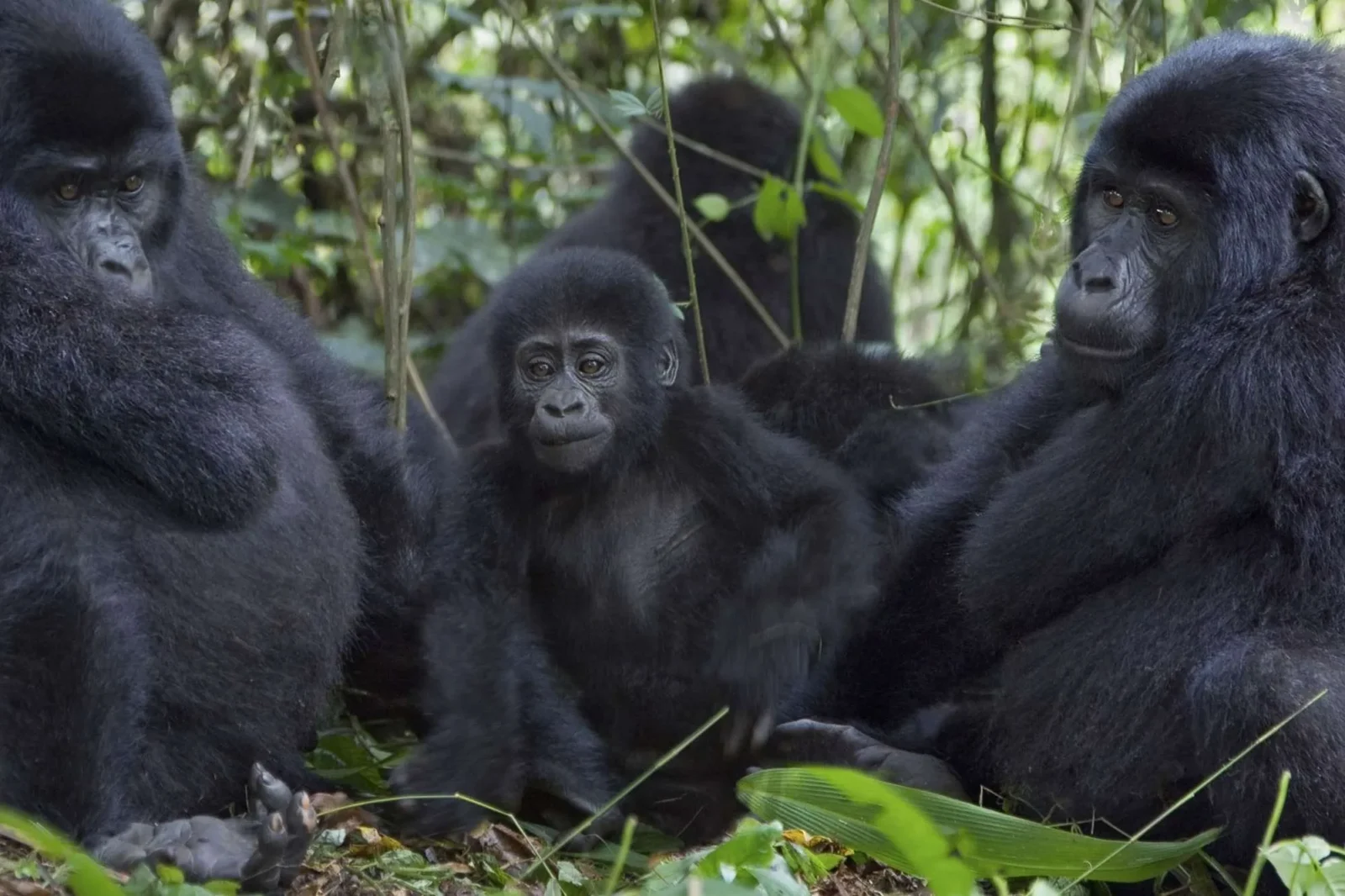
Mountain Gorilla Diet Safari: What Do Wild Gorillas Eat in Bwindi
A mountain gorilla diet safari is not about watching predators hunt or dramatic chases. Instead, it is about understanding one of the most specialized feeding systems among great apes. In the dense, high-altitude forests of Bwindi Impenetrable National Park, mountain gorillas spend most of their day feeding, moving slowly through vegetation zones that provide a continuous but highly selective food supply.
Their diet is simple in composition but complex in ecological dependence, shaped entirely by what the forest produces seasonally and what their digestive system can efficiently process.
The Core Diet of Mountain Gorillas
Mountain gorillas are primarily herbivores, and their diet is dominated by vegetation. In Bwindi, they feed mainly on leaves, shoots, stems, and plant pith. These plant parts are abundant in the forest and provide the bulk of their daily nutritional intake.
Unlike omnivores or carnivores, mountain gorillas do not rely on animal protein. Instead, their large bodies are sustained by high-fiber plant material, which they process efficiently through a specialized gut adapted for fermentation and slow digestion.
Leaves form the most important component of their diet. They are selected carefully based on tenderness, moisture content, and nutritional value. Shoots and stems provide additional energy and hydration, especially in drier conditions. Pith, the soft inner part of certain plants, is also highly valued because it is easier to digest and rich in moisture.
Seasonal Feeding in Bwindi Forest
The diet of mountain gorillas in Bwindi is strongly influenced by seasonal variation. The forest does not produce food uniformly throughout the year, so gorillas adjust their feeding behavior depending on availability.
During wetter periods, vegetation is lush and widely available, allowing gorillas to feed in concentrated areas for longer periods. During drier or transitional periods, they may travel further in search of preferred plant species. This seasonal movement is one of the reasons why gorilla groups in Bwindi often have defined home ranges but still shift locations within them.
Because Bwindi is a tropical montane rainforest, food is never completely absent, but the quality and distribution of plant resources change over time, shaping daily movement patterns.
Bamboo Shoots and High-Value Foods
One of the most important seasonal foods for mountain gorillas is bamboo shoots. These are highly nutritious, soft, and easy to digest compared to tougher vegetation. When bamboo shoots are available, gorillas often prioritize them and may adjust their movement patterns to access bamboo-rich areas.
In Bwindi, bamboo is not as dominant as in some parts of the Virunga ecosystem, but when available, it becomes a key dietary component. Shoots are especially important for juveniles and lactating females because they provide concentrated energy and hydration.
Fruits in the Gorilla Diet
Although mountain gorillas are not primarily fruit-eaters, they do consume fruit when it is available. Fruit intake in Bwindi is irregular and depends on seasonal flowering and fruiting cycles of forest plants.
When fruit is available, it is often consumed quickly and may influence short-term movement patterns as gorillas travel to fruiting trees. However, fruit never forms the main dietary base. Instead, it is considered a supplementary food source that adds variety and nutritional value.
Bark, Stems, and Fibrous Plants
A significant part of the gorilla diet in Bwindi includes bark and fibrous plant material. Bark is stripped from certain trees and consumed in small quantities, often when other food sources are less abundant.
Stems are another key component, especially from herbaceous plants. These provide both nutrition and hydration. Gorillas carefully select stems based on texture and softness, avoiding overly tough or toxic species.
Fibrous plants are important for maintaining digestive function. The gorilla gut is adapted to process large amounts of fiber, allowing them to extract nutrients through fermentation in the lower digestive tract.
The Role of Leaves in Daily Feeding
Leaves are the single most important food source for mountain gorillas in Bwindi. They are consumed in large quantities throughout the day and are selected based on plant species, maturity, and nutritional quality.
Gorillas often move slowly while feeding, stripping leaves from branches or ground vegetation. This feeding style minimizes energy expenditure while maximizing intake.
Different gorilla families may show slight variations in plant preference depending on their home range, but leafy vegetation remains the dietary foundation across all groups.
Water Intake and Hydration Strategy
Mountain gorillas rarely drink water directly from streams. Instead, they obtain most of their hydration from the vegetation they consume. Leaves, stems, and shoots contain high moisture content, which meets their hydration needs.
In Bwindi’s humid environment, this strategy is highly efficient. It reduces the need for frequent travel to water sources and allows gorillas to remain within feeding zones for extended periods.
Feeding Behavior and Daily Routine
Feeding dominates the daily life of mountain gorillas. A large portion of their waking hours is spent eating, moving slowly between feeding sites, and resting intermittently.
A typical pattern includes early morning feeding after leaving their night nests, followed by periods of movement and continued feeding throughout the day. Rest periods often involve grooming and social interaction, but feeding resumes regularly as the group moves through its range.
This slow, continuous feeding rhythm is one of the defining features of gorilla ecology.
How Diet Shapes Movement in Bwindi
The availability of food directly influences how gorilla groups move through Bwindi Impenetrable Forest. Because vegetation is patchily distributed, groups must travel between feeding zones while staying within their home ranges.
This movement is not random. It follows ecological patterns based on plant growth cycles, seasonal abundance, and historical knowledge of feeding sites passed through social learning within the group.
Silverbacks play a key role in guiding movement decisions, often leading the group toward known feeding areas.
Differences Between Age Groups in Feeding
Diet varies slightly depending on age and social role within the gorilla family. Adult males consume large quantities of vegetation to maintain body size and strength. Adult females adjust intake based on reproductive needs, especially during pregnancy or lactation.
Juveniles spend more time exploring different plant types, gradually learning feeding preferences through observation and imitation. Infants rely entirely on maternal milk during early development before slowly transitioning to solid plant foods.
Digestive Adaptation to Plant-Based Diet
Mountain gorillas have a highly specialized digestive system designed for fibrous plant consumption. Their large intestines support fermentation processes that break down cellulose and extract nutrients from plant material that would otherwise be indigestible.
This adaptation allows them to survive on a diet that is low in calorie density but abundant in volume. It also explains why they spend so much time feeding each day, as they must consume large quantities to meet energy requirements.
Conservation Link Between Diet and Habitat
The diet of mountain gorillas is directly tied to forest health. In protected areas like Bwindi Impenetrable National Park, conservation efforts focus not only on protecting gorillas but also on preserving the plant species they depend on.
Any disruption to forest composition, whether through climate change, human encroachment, or habitat fragmentation, can directly affect gorilla nutrition and survival. This makes habitat protection a central part of gorilla conservation strategy.
Understanding what mountain gorillas eat in Bwindi changes the way a safari is experienced. Instead of seeing random movement in the forest, trekkers begin to recognize feeding behavior as a structured ecological system. Every pause, every slow step, and every group movement is connected to the search for specific plant foods that sustain the entire family.
A mountain gorilla diet safari is therefore not just about observation. It is about understanding survival in one of the most biologically complex forest environments in Africa. In Bwindi, gorillas are not hunters or scavengers. They are highly specialized herbivores whose entire existence is shaped by leaves, shoots, stems, and the rhythms of the forest itself.