
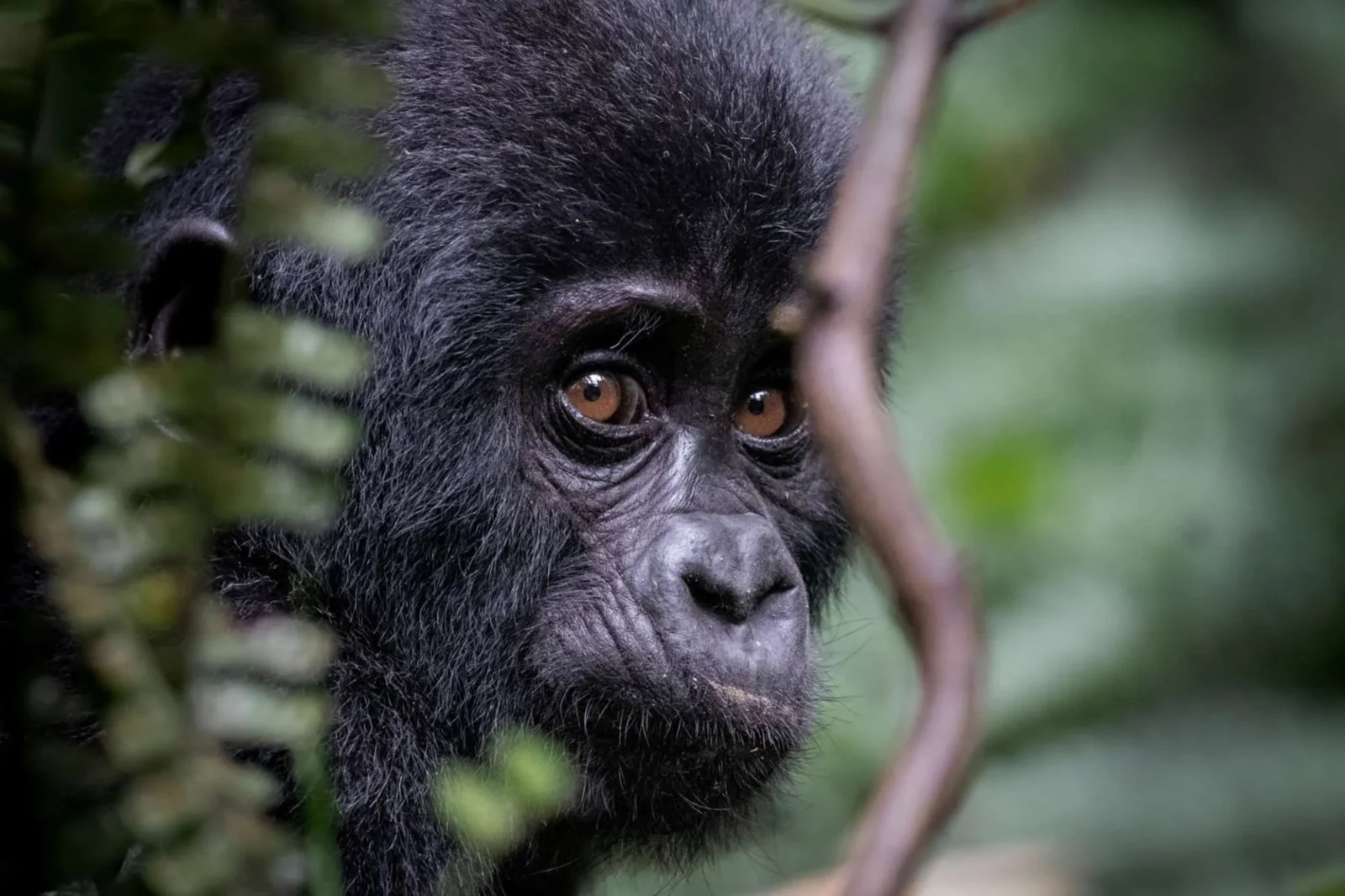
How Many Mountain Gorillas Are Left in 2026: Latest Census
Overview of the 2026 Mountain Gorilla Population
As of 2026, the most widely accepted scientific estimate places the global population of mountain gorillas at approximately 1,063 to just over 1,100 individuals. This figure represents the best available consensus from long-term conservation monitoring across their remaining natural habitats in East-Central Africa. These gorillas exist only in two main forest systems: the Virunga Massif, which spans Rwanda, Uganda, and the Democratic Republic of Congo, and Uganda’s Bwindi Impenetrable Forest. Together, these two regions contain the entire surviving wild population of the species.
This number is not a precise headcount taken at a single moment in time. Instead, it is a carefully constructed estimate based on continuous scientific fieldwork, genetic analysis, nest surveys, and long-term tracking of known gorilla families. Because mountain gorillas live in dense, mountainous rainforest where visibility is extremely limited, researchers rely on indirect but highly reliable methods to estimate population size.
Where Mountain Gorillas Live in 2026
Mountain gorillas are one of the most geographically restricted great ape species in the world. In 2026, they are found only in two regions.
The first is the Virunga Massif, a chain of volcanic mountains shared by Rwanda, Uganda, and the Democratic Republic of Congo. The second is Bwindi Impenetrable Forest in southwestern Uganda. These two ecosystems together form the entire global habitat of the species.
A significant conservation site within this range is Volcanoes National Park, which protects a major portion of the Virunga gorilla population. This park plays a central role in research, tourism, and long-term protection of mountain gorillas.
The 2026 Population Estimate Explained
The most commonly referenced baseline figure for 2026 is approximately 1,063 individuals, with a realistic upper range slightly above 1,100 depending on recent births and deaths recorded between survey cycles. Conservation scientists prefer to present the population as a range rather than a fixed number because gorilla populations are constantly changing due to natural life processes.
Births occur throughout the year across different gorilla families, while natural deaths, disease, and occasional group changes also affect totals. Because of this constant fluctuation, the population is best understood as a stable but evolving estimate rather than a static figure.
How Scientists Count Mountain Gorillas
Counting mountain gorillas is one of the most complex wildlife monitoring tasks in conservation biology. These animals live in thick forest environments where direct observation of every individual is not possible.
Researchers rely on several complementary methods. One of the most important is nest counting. Every mountain gorilla builds a fresh sleeping nest each night. By locating and analyzing these nests, scientists can estimate how many individuals are in a given area and track group movement patterns.
Genetic sampling also plays a critical role. Researchers collect dung samples along forest trails and sleeping sites, which are then analyzed in laboratories to identify individual gorillas. This allows for accurate identification of individuals and helps avoid double counting across different survey areas.
Ranger-based monitoring is another essential method. Many gorilla families are habituated for research and tourism, meaning their composition is well known and continuously updated through regular observation. These combined methods provide one of the most detailed population datasets available for any wild great ape species.
Historical Population Trends
The 2026 population figure represents the result of several decades of recovery. In the 1970s and 1980s, mountain gorillas were estimated to number fewer than 300 individuals. At that time, the species was considered critically endangered and at serious risk of extinction due to habitat loss, poaching, and regional instability.
By around 2010, conservation efforts had helped increase the population to approximately 780 individuals. This marked an important turning point, showing that sustained protection could reverse population decline. In 2018, the population crossed the symbolic threshold of 1,000 individuals for the first time in modern records. By 2026, the population has stabilized slightly above this level, with continued gradual growth.
Why the Population Is Increasing
The recovery of mountain gorillas is the result of coordinated conservation efforts across multiple countries and organizations. Strict protection of forest habitats through national parks has been one of the most important factors. Anti-poaching patrols have significantly reduced illegal hunting pressure, while veterinary intervention teams now treat injured or sick gorillas in the wild.
Another key factor has been regulated gorilla trekking tourism. Carefully managed visitor programs generate revenue that is reinvested directly into conservation, ranger salaries, and community development. This creates a system where gorilla survival is economically linked to protection efforts.
Cross-border collaboration between Rwanda, Uganda, and the Democratic Republic of Congo has also strengthened conservation outcomes by ensuring that protection strategies are aligned across the entire gorilla range.
Population Distribution in 2026
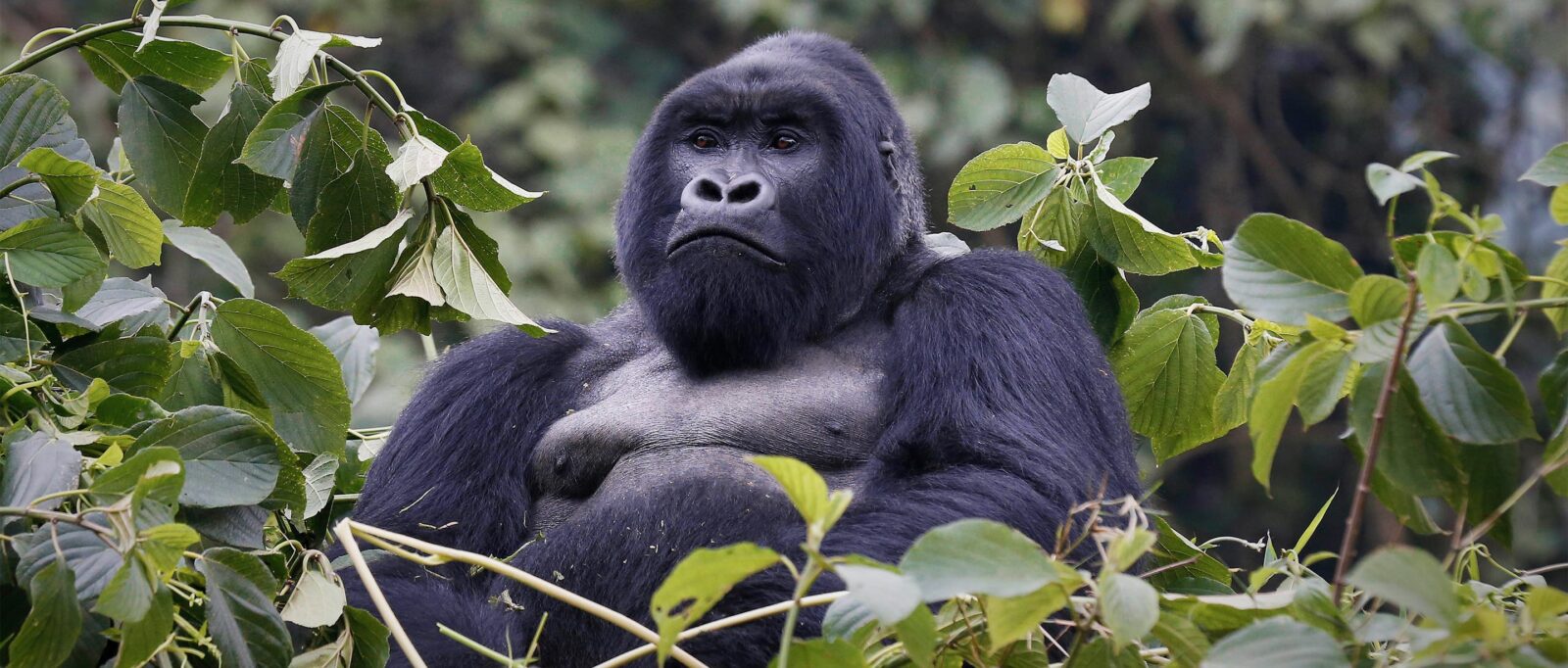
The global mountain gorilla population is divided into two main clusters. The Virunga Massif contains roughly 600 or more individuals spread across Rwanda, Uganda, and the Democratic Republic of Congo. Bwindi Impenetrable Forest in Uganda contains approximately 450 individuals.
Although separated geographically, these populations are managed as part of a connected conservation system due to their shared genetic lineage and ecological similarities.
Why Exact Numbers Are Not Fixed
The population estimate is not a fixed number because mountain gorilla monitoring is based on indirect but highly detailed scientific methods. Dense forest conditions make it impossible to conduct a continuous full census.
Instead, researchers use repeated nest surveys, genetic analysis, and long-term tracking of identified groups. These methods provide highly accurate estimates, but they naturally produce a range rather than a precise figure at any given moment.
Conservation Significance of the 1,000+ Population
Reaching and maintaining a population above 1,000 individuals is a major milestone in conservation biology. At this level, mountain gorillas have a reduced risk of immediate extinction and improved genetic diversity compared to earlier decades.
However, despite this progress, they remain classified as endangered because their entire global population is confined to a very small geographic area. This makes them vulnerable to environmental changes, disease outbreaks, and habitat disturbance.
Ongoing Threats in 2026
Even with population recovery, mountain gorillas still face several ongoing threats. Habitat pressure from surrounding human populations remains a concern, particularly in buffer zones around protected parks. Disease transmission is another serious risk because gorillas are highly susceptible to human respiratory illnesses.
Climate variability can also affect vegetation patterns and food availability in their high-altitude forest habitats. In addition, illegal activities near park boundaries require continuous monitoring and enforcement to prevent encroachment into protected areas.
Role of Protected Areas
The survival of mountain gorillas depends entirely on protected ecosystems such as Volcanoes National Park. These parks provide secure habitat, regulated human access, and the infrastructure needed for monitoring and enforcement.
Without these protected landscapes, the species would not be able to survive in the wild.
Importance of Gorilla Tourism
Controlled gorilla trekking tourism plays a central role in conservation funding. Revenue from permits is used to support anti-poaching patrols, veterinary care, habitat protection, and community development programs around protected areas.
This creates a sustainable model where tourism directly contributes to wildlife survival while maintaining strict limits on human impact.
In 2026, the global population of mountain gorillas is estimated at approximately 1,063 to just over 1,100 individuals. This reflects one of the most successful conservation recoveries in modern wildlife history, transforming the species from fewer than 300 individuals in the late 20th century to a stable and slowly growing population today.
Despite this success, mountain gorillas remain endangered due to their limited range and ongoing environmental and human-related pressures. Their survival continues to depend on strict protection, scientific monitoring, and sustained conservation funding across all regions where they exist.