
Gorilla Safaris vs Orangutan Trek: Comparing Global Primate Experiences
Two of the World’s Most Extraordinary Primate Encounters
For wildlife travelers seeking meaningful encounters with intelligent primates, few experiences compare to gorilla safaris in Africa and orangutan trekking in Southeast Asia. Both offer rare opportunities to observe great apes in their natural habitats, and both are widely considered among the most profound wildlife experiences available anywhere in the world.
Despite these similarities, the two adventures are remarkably different in landscape, animal behavior, trekking style, conservation context, and emotional atmosphere. Gorilla trekking takes place in the misty mountain forests of East and Central Africa, while orangutan treks occur in the tropical rainforests of islands such as Borneo and Sumatra.
Each experience provides a unique window into the lives of our closest relatives in the animal kingdom.
Understanding Gorilla Safaris
Gorilla safaris focus primarily on mountain gorillas found in Uganda, Rwanda, and the Democratic Republic of Congo. These endangered primates live in dense montane forests at relatively high altitudes.
The experience involves guided trekking through forests and volcanic slopes in search of habituated gorilla families. Once located, visitors spend one hour observing the gorillas at close range under ranger supervision.
Mountain gorillas live in structured social groups led by dominant silverbacks. Trekkers often observe family interactions, grooming behavior, feeding, playfulness among juveniles, and the protective nature of silverbacks.
The atmosphere during a gorilla encounter is usually calm, quiet, and emotionally intense.
Understanding Orangutan Trekking
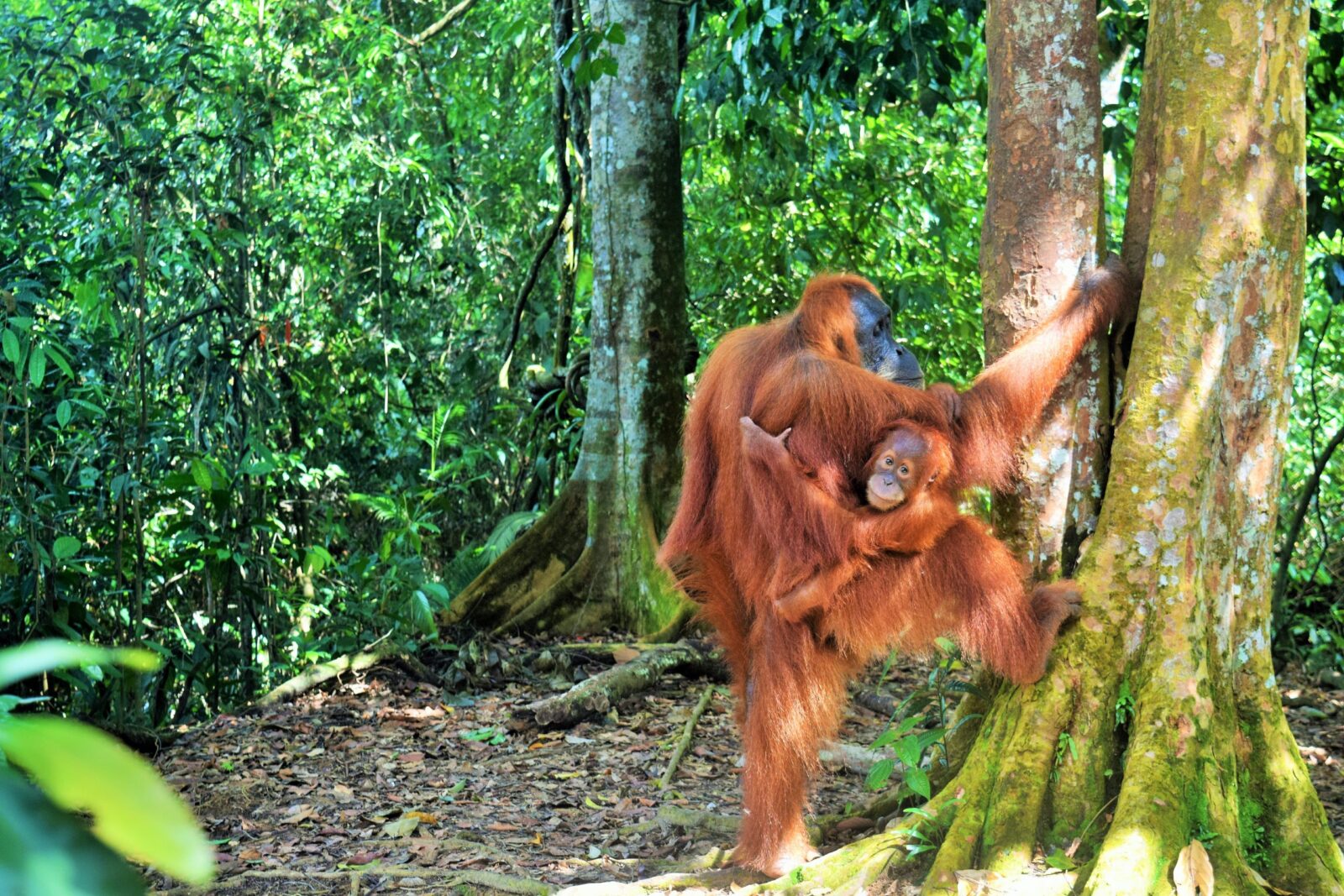
Orangutan trekking takes place mainly in the rainforests of Indonesia and Malaysia, particularly in Borneo and Sumatra. Unlike gorillas, orangutans are largely solitary animals and spend much of their lives in trees.
Treks involve hiking through humid lowland rainforest searching for wild or semi-wild orangutans moving through the canopy. In some locations, river travel by boat is also part of the experience.
Orangutans are known for their intelligence, problem-solving abilities, and remarkably human-like expressions. Watching them swing through trees, build nests, or carefully observe humans from above creates an entirely different atmosphere from gorilla trekking.
The experience often feels more exploratory and less predictable because orangutans move across large forest territories.
Habitat and Landscape Differences
One of the biggest contrasts between these safaris is the environment.
Gorilla trekking occurs in cool mountain rainforests with steep slopes, bamboo vegetation, volcanic terrain, and mist-covered forests. The landscapes feel dramatic, rugged, and physically demanding.
The forest density and mountainous terrain create a strong sense of isolation and adventure.
Orangutan trekking takes place in tropical lowland rainforest ecosystems characterized by towering trees, swamp forests, river systems, dense humidity, and thick jungle vegetation.
The rainforest environment in Borneo and Sumatra feels hotter, wetter, and more tropical than gorilla habitats. Wildlife sounds, insects, and dense canopy cover create a classic jungle atmosphere.
The Emotional Experience
Gorilla trekking is often described as deeply emotional because of the close human-like social behavior of gorilla families. Sitting quietly among mountain gorillas while they interact naturally can feel surprisingly intimate.
The gorillas’ eye contact, family structure, and calm presence often create a profound emotional connection for visitors.
Orangutan encounters produce a different emotional response. Orangutans appear highly thoughtful, curious, and independent. Because they spend much of their time in trees, encounters often involve watching them move gracefully through the canopy while observing humans from above.
The experience feels less intimate than gorilla trekking but often more mysterious and intellectually fascinating.
Social Behavior and Wildlife Viewing
Mountain gorillas live in cohesive family groups, making their social dynamics one of the highlights of the safari experience. Visitors frequently see:
- Mothers caring for infants
- Juveniles playing
- Silverbacks displaying authority
- Grooming interactions
- Group feeding behavior
This constant interaction creates a rich and emotionally engaging viewing experience.
Orangutans are more solitary by nature, especially adult males. Encounters are usually quieter and more individual-focused. Visitors may observe:
- Solitary adults feeding
- Mothers traveling with offspring
- Tree climbing and nest building
- Intelligent manipulation of branches and fruit
Because orangutans spend much of their time high in the canopy, sightings can sometimes feel more distant and observational.
Physical Difficulty and Trekking Conditions
Both experiences involve trekking, but the difficulty differs in important ways.
Gorilla trekking is often more physically demanding because of:
- Steep mountain terrain
- High altitude
- Muddy slopes
- Dense vegetation
- Long uphill hikes
Treks can last anywhere from one to several hours depending on gorilla location.
Orangutan trekking usually occurs at lower altitude but involves intense tropical humidity, muddy jungle trails, insects, and thick rainforest conditions.
While the terrain may be less steep than gorilla trekking areas, the heat and humidity can make orangutan treks physically exhausting in different ways.
Wildlife Diversity During the Experience
Gorilla safaris primarily focus on one species. Although visitors may encounter monkeys, birds, and forest wildlife during the trek, the main objective is observing gorillas.
Orangutan habitats often contain a broader range of rainforest wildlife including:
- Proboscis monkeys
- Gibbons
- Hornbills
- Macaques
- Monitor lizards
- Crocodiles in river systems
River-based orangutan safaris especially tend to include more varied wildlife sightings throughout the journey.
Photography Opportunities
Both experiences are rewarding for photographers, though technically different.
Gorilla photography focuses heavily on close-range portraits and emotional expressions. Forest lighting conditions can be difficult due to low light and dense vegetation.
Orangutan photography often involves canopy shots, jungle scenery, and behavioral images. Capturing orangutans moving through trees can be challenging because of their height and constant movement.
Gorilla images tend to feel intimate and emotional, while orangutan images often feel more atmospheric and exploratory.
Conservation Significance
Both safaris play major roles in conservation.
Mountain gorilla tourism has become one of the world’s leading conservation success stories. Permit revenue directly supports:
- Anti-poaching patrols
- Ranger operations
- Veterinary care
- Habitat protection
- Local communities
As a result, mountain gorilla populations have shown signs of recovery.
Orangutan conservation is equally urgent because orangutans face severe threats from:
- Deforestation
- Palm oil plantation expansion
- Illegal wildlife trade
- Habitat fragmentation
Responsible orangutan tourism helps fund rainforest protection and rehabilitation programs while creating economic incentives for conservation.
Cost Comparison
Gorilla safaris are generally more expensive because of limited permit numbers and highly regulated tourism systems. Gorilla permits alone can cost hundreds or thousands of dollars depending on the country.
Orangutan trekking is usually more affordable overall, though luxury rainforest lodges and specialized expeditions can still be expensive.
For travelers on moderate budgets, orangutan trekking often offers greater accessibility financially.
Accessibility and Travel Logistics
Gorilla trekking destinations in Uganda and Rwanda are relatively organized with structured tourism systems and reliable guiding services.
However, reaching remote orangutan trekking areas in Borneo or Sumatra may involve:
- Domestic flights
- Boat transfers
- River journeys
- Remote jungle lodges
Orangutan expeditions can therefore feel more remote and exploratory.
Which Experience Feels More Adventurous?
Gorilla trekking feels adventurous because of the mountain hiking and physically demanding forest search.
Orangutan trekking often feels more like deep jungle exploration, especially in remote rainforest regions where river travel and dense tropical forest create a strong expedition atmosphere.
The sense of adventure depends largely on whether a traveler prefers mountainous trekking or tropical jungle immersion.
Which Wildlife Experience Wins?
Both experiences rank among the finest wildlife encounters in the world, but they appeal to different interests.
Gorilla safaris often win for:
- Emotional intensity
- Human-like family interactions
- Intimacy
- Close-range encounters
- Structured conservation tourism
Orangutan trekking often wins for:
- Jungle exploration atmosphere
- Arboreal wildlife behavior
- Rainforest biodiversity
- Adventure feel
- Tropical ecosystem immersion
For serious wildlife enthusiasts, both experiences are complementary rather than competitive.
Gorilla safaris and orangutan treks represent two of the world’s greatest primate experiences. Gorilla trekking delivers emotional closeness and intimate encounters within mountain rainforest ecosystems, while orangutan trekking offers mysterious jungle exploration and fascinating observations of highly intelligent tree-dwelling apes.
Each experience reveals different aspects of primate behavior, intelligence, and survival in fragile ecosystems. Together, they provide an unforgettable perspective on the diversity of great apes and the importance of protecting the world’s remaining wild forests.