
Boat Safari on Lake Mburo: Hippos, Crocodiles & Water Birds
Lake Mburo National Park takes its name from the lake at its centre, and while the game drives and horseback rides tend to get most of the attention in trip planning, the boat safari across the lake itself is where a different side of the park reveals itself. Water changes everything about what you see and how you see it, and a couple of hours out on Lake Mburo brings you closer to hippos, crocodiles, and a genuinely impressive list of water birds than almost any activity on dry land could manage.
How the Boat Safari Works
Launch trips depart from Rwonyo Rest Camp, the lakeside base that also serves as the park’s main visitor hub. Boats head out onto the open water and follow the shoreline at a gentle pace, giving both the wildlife and the birdlife time to register before the boat closes the distance. A typical cruise runs around two hours, long enough to cover a meaningful stretch of the lake’s edge without becoming repetitive, and short enough to fit comfortably alongside a morning game drive or an afternoon activity elsewhere in the park.
Lake Mburo is one of a small handful of lakes in this part of Uganda where boat safaris are offered specifically for wildlife viewing rather than fishing or transport, and the compact size of the lake means sightings tend to come thick and fast rather than requiring long, quiet stretches of waiting.
Hippos in Genuine Numbers
Lake Mburo supports a substantial hippo population, with several hundred individuals spread across the lake in loose pods. Hippos spend most daylight hours submerged to keep their skin from drying out and overheating, surfacing periodically to breathe, yawn, and grunt at each other in a way that never quite stops being entertaining no matter how many times you have seen it before. A boat safari is by far the best way to observe this behaviour up close, since hippos on land are dangerous and best kept at a distance, but hippos in water, viewed from a boat that respects their space, offer a much safer and more prolonged viewing opportunity.
Pods tend to cluster in the same general stretches of the lake, and experienced boat operators know roughly where to expect them on any given morning or afternoon, though hippos do shift position throughout the day as they move to different resting spots.
Crocodiles Along the Banks
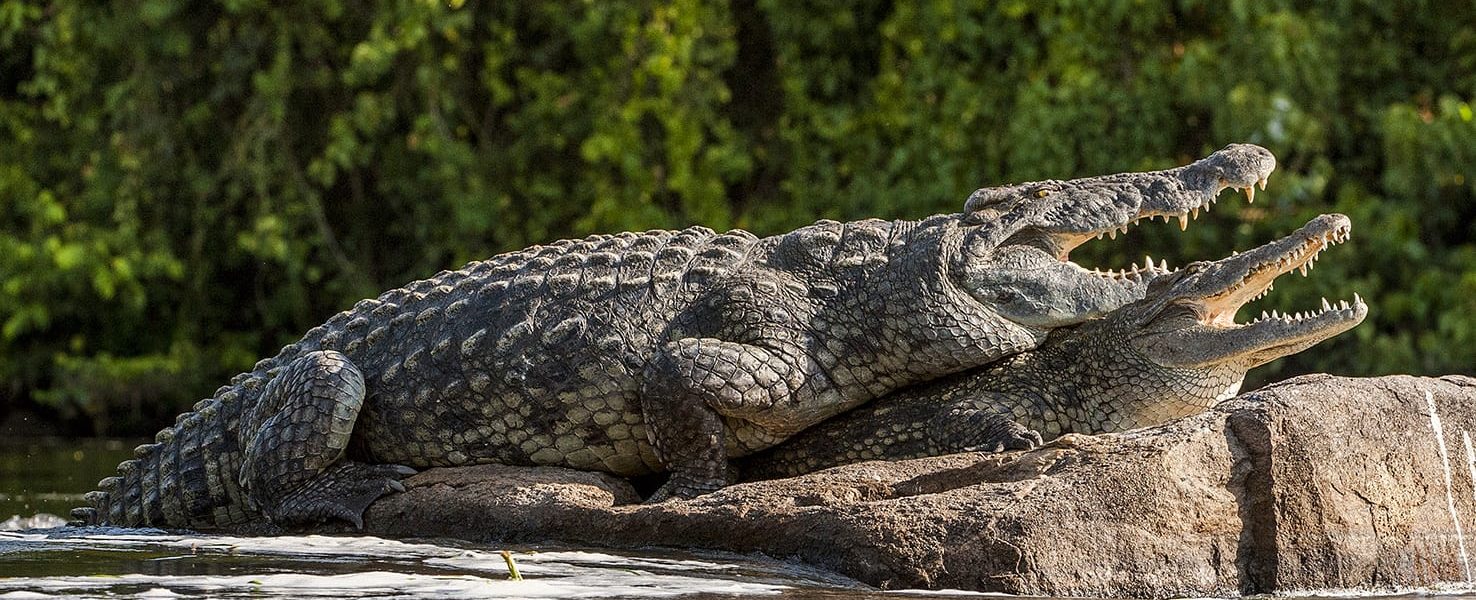
Nile crocodiles are the lake’s other headline resident, and they are usually easier to spot than the hippos precisely because they haul themselves out onto the banks to bask in the sun, often with mouths open in the thermoregulating posture that makes them so recognisable in photographs. Crocodile sightings tend to be most reliable in the early afternoon once the day has warmed up enough to draw them out of the water, which is one reason operators often recommend a mixed schedule of a morning cruise for birding and an afternoon cruise for hippo and crocodile activity if time allows for both.
A Genuinely Rewarding Birding Destination
Lake Mburo’s combination of open water, papyrus swamp, acacia woodland, and grassland supports an unusually wide range of bird habitats packed into a relatively small area, and the park’s overall species count runs well past 300. The boat safari is one of the best ways to access several species that are difficult or impossible to see from a vehicle.
The African Finfoot
Chief among these is the African finfoot, a shy, low-slung waterbird that skulks along overhanging vegetation at the lake’s edge and is notoriously difficult to see anywhere in East Africa. Lake Mburo is regarded as one of the more reliable sites in Uganda for finding one, and it is the species serious birders most hope to tick off during a boat safari here. Spotting a finfoot takes a combination of a sharp-eyed guide and a bit of luck, since the bird tends to freeze against the bank rather than flee when a boat approaches, relying on camouflage rather than distance.
Kingfishers, Fish Eagles, and the Wider List
The African fish eagle is one of the more conspicuous residents, often seen perched on a dead tree along the shoreline or heard delivering its distinctive, far-carrying call, one of the defining sounds of African lakes generally. Malachite kingfishers and pied kingfishers are both common along the lake’s edge, the malachite a small, vividly coloured bird that tends to draw an audible reaction the first time visitors spot one, and the pied a larger black-and-white species often seen hovering before it dives. Herons, egrets, and a long list of smaller wetland species round out what is, for a park of this size, a disproportionately rich birding experience.
Best Time of Day to Go
Morning cruises, generally run between around seven and ten, tend to offer the calmest water and the best light for birding, with many species most active in the cooler hours before the day heats up. Afternoon cruises, typically scheduled from early afternoon into the late afternoon, are better suited to hippo and crocodile viewing, since both species tend to be most visibly active once the sun has had time to warm the banks and the water. Travellers with time for only one cruise should decide in advance whether birding or big-animal viewing is the priority, since the two time slots genuinely do favour different sightings.
What to Bring and What to Expect
A boat safari on Lake Mburo does not require much in the way of preparation, but a few small choices make a noticeable difference to the experience. Binoculars are worth having on hand given how much of the birdlife rewards a closer look than the naked eye can manage, and a hat or light long sleeves help against the sun, since there is little shade once out on open water. Boats are generally stable and comfortable, and the pace is unhurried by design, making this one of the more relaxed activities available anywhere in the park, a welcome contrast to the earlier start times that game drives and walking safaris usually demand.
Combining the Boat Safari With Other Lake Mburo Activities
Because the boat safari only takes up a couple of hours, it slots easily alongside the park’s other signature activities. Many visitors pair a morning cruise with an afternoon game drive, or an afternoon cruise with a walking safari earlier in the day, making full use of a single day at the park without feeling rushed between activities. Lake Mburo’s small overall footprint is what makes this kind of flexible, multi-activity day genuinely achievable here in a way it rarely is in Uganda’s larger parks, where distances between activity zones can eat up hours of driving time on their own.
For travellers routing between Kampala and the gorilla trekking parks in the southwest, a stop at Lake Mburo that includes a boat safari alongside a game drive gives a well-rounded sense of the park’s range, from its dry acacia grassland to its open water, within a stay that can comfortably fit into a two or three day window on the way to Bwindi.
Safety and How the Activity Is Managed
Boat safaris on Lake Mburo are run by trained boat operators who know the lake’s contours, its hippo pods, and its crocodile basking spots well enough to keep a respectful and safe distance while still delivering close views. Hippos are responsible for more wildlife-related human fatalities in Africa than almost any other large mammal, largely because of encounters on land or in shallow water where a hippo feels cornered, but a boat safari conducted properly keeps guests on the water and hippos in it, which is precisely the arrangement in which hippos are least likely to feel threatened. Life jackets are standard practice, boats do not exceed a sensible passenger capacity, and operators generally brief guests before departure on how to behave around wildlife encountered at close range, chiefly by staying seated and keeping noise to a reasonable level.
Group sizes on any given cruise tend to be small, which works in visitors’ favour both for comfort and for wildlife viewing, since a quieter boat draws less attention from birds along the banks and allows for a more considered pace when something interesting comes into view.
Why the Lake Matters Beyond the Safari Experience
Lake Mburo itself is part of a larger wetland system that the park was established to protect, and the boat safari, beyond being an enjoyable tourist activity, offers a window into why that protection matters. The lake supports fish populations that sustain both the resident wildlife and, historically, communities living around the park’s edges, and its papyrus swamp margins are exactly the kind of habitat that has been lost at pace elsewhere in the region to agricultural expansion and settlement. Seeing the lake intact, with its hippos, crocodiles, and dense birdlife still functioning as a healthy system, is a reminder of what protected wetlands in East Africa can look like when given the chance to remain undisturbed.
This is not a heavy-handed conservation lecture built into the itinerary, and most visitors experience the boat safari simply as an enjoyable couple of hours on the water. But for anyone curious about the bigger picture, the guides running these trips are generally well versed in the park’s ecology and happy to talk through it if asked, adding a layer of context that turns a pleasant outing into a more informed one.