
Hot Springs of Sempaya: Semuliki’s Most Spectacular Natural Wonder
Deep within Semuliki National Park’s rainforest, reached via a walking trail that winds through dense Congo Basin vegetation, sit two geothermal features unlike anything else on Uganda’s tourist circuit. The Sempaya Hot Springs, divided into distinct male and female sites, produce boiling water and jets of scalding steam that have drawn both scientific curiosity and deep cultural significance from communities living around Semuliki for generations.
Two Springs, Two Distinct Characters
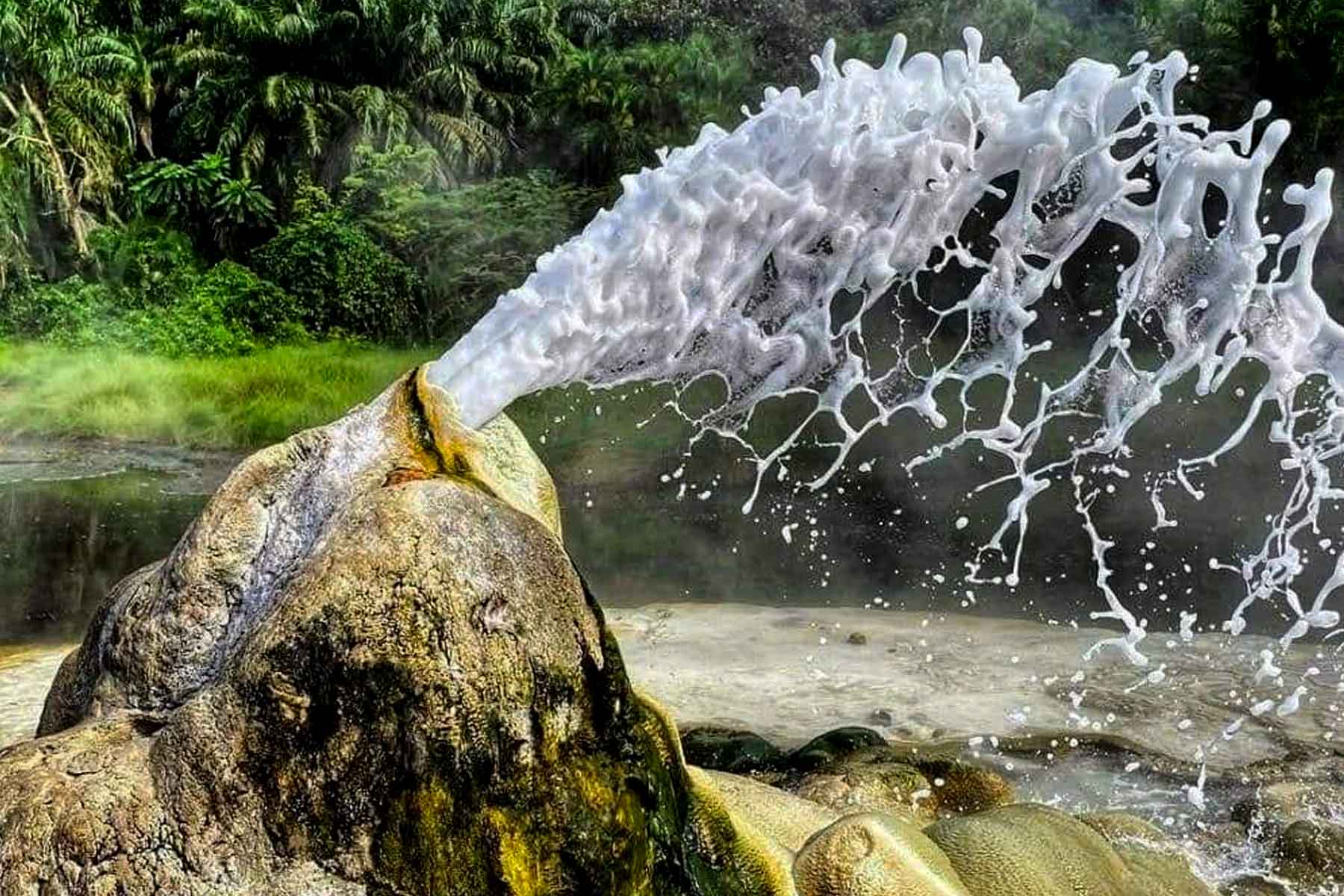
The female spring, known locally as Nyansimbi, is the more visually dramatic of the two, ejecting a powerful jet of water and steam that can shoot more than two metres into the air in bursts that draw an audible reaction from most first-time visitors. Surface temperatures at the vent consistently measure above the boiling point, a striking fact to witness firsthand given how ordinary the surrounding rainforest looks only metres away.
The male spring, Bintente, sits roughly half a kilometre from Nyansimbi in a swampy, low-lying depression, and produces a less visually explosive but, remarkably, even hotter output than its counterpart. Recorded temperatures at Bintente have reached beyond 103 degrees Celsius during peak heating periods, making it one of the hottest naturally occurring water sources documented anywhere in East Africa. Despite the naming convention, it is worth noting that the male spring’s higher temperature runs counter to what visitors might expect, and guides typically address this apparent contradiction directly as part of the visit.
The Walk to the Springs
Reaching both springs requires a guided walk through Semuliki’s forest, an experience valuable in its own right given the density and diversity of vegetation and wildlife along the trail. The walk is not physically demanding by the standards of Uganda’s more strenuous hiking destinations, making it accessible to a wide range of fitness levels, though the humid rainforest conditions mean visitors should come prepared for warm, sticky walking conditions regardless of season.
Guides lead visitors to both sites in sequence, typically starting with whichever spring sits closer to the main trailhead before continuing on to the second, and the full round trip, including time spent at both springs, generally takes a few hours depending on pace and how long visitors choose to linger observing the geothermal activity.
Cultural Significance
Beyond their scientific interest, the Sempaya Hot Springs carry genuine cultural weight for communities living around Semuliki, with traditional stories and beliefs attached to both sites that guides typically share as part of the walking visit. These narratives add a human dimension to what might otherwise be experienced purely as a geological curiosity, connecting the springs’ physical drama to generations of local interpretation and meaning that predates any formal scientific study of the site.
Practical Uses of the Springs
Beyond their symbolic and cultural role, the extreme heat produced by both springs has practical applications recognised by local communities, including their use for boiling food such as eggs or bananas, submerged briefly in the near-boiling water at the spring’s edge under careful supervision. This demonstration, when offered as part of a guided visit, gives travellers a tangible, almost playful sense of just how genuinely hot the water is, beyond what temperature figures alone can convey.
Photography and What to Expect
The springs, particularly Nyansimbi with its dramatic steam jets, reward patient photography, and visitors with cameras or phones should budget extra time at each site to capture the eruption cycles rather than rushing through on a single pass. Steam and mineral deposits around both springs create a slightly otherworldly visual atmosphere that stands in sharp contrast to the lush green rainforest surrounding the sites, a contrast that photographs particularly well in the softer light of morning visits.
Safety Considerations
Given the genuinely extreme temperatures involved, visitors should stay within the boundaries and distances indicated by guides at all times, and direct contact with the water itself is neither advisable nor permitted beyond the controlled demonstrations guides may offer. The springs are entirely natural and unmodified by any protective infrastructure beyond basic viewing paths, which is part of their appeal as a genuine, unspoiled natural phenomenon, but it does mean visitors need to respect guide instructions closely rather than treating the site as a casual tourist attraction with built-in safety barriers.
Best Time to Visit
The Sempaya Hot Springs are accessible year-round, and their geothermal activity does not vary meaningfully with Uganda’s seasonal rainfall patterns, since the heat source lies deep underground rather than depending on surface weather conditions. What does vary with season is trail comfort, with drier months generally offering firmer, less muddy walking conditions through the surrounding rainforest, though the springs themselves remain equally dramatic and worth visiting regardless of when a trip to Semuliki is scheduled.
A Highlight Worth the Journey to Reach It
Semuliki’s remote location means the Sempaya Hot Springs receive a fraction of the visitors that flock to Uganda’s more accessible natural attractions, but for travellers who do make the journey, the springs consistently rank among the most memorable single stops on a western Uganda itinerary. Combined with the surrounding Semuliki Valley’s exceptional biodiversity, the hot springs anchor a visit to one of Uganda’s most genuinely underrated corners, rewarding the extra effort required to reach this remote stretch of Congo Basin rainforest with a natural spectacle found almost nowhere else in East Africa.
The Geology Behind the Springs
The Sempaya Hot Springs owe their existence to Semuliki’s position within the Albertine Rift, part of the broader East African Rift System, a zone of tectonic activity where the earth’s crust is gradually pulling apart. This ongoing geological process brings groundwater into contact with heat sources deep beneath the surface, producing the geothermal activity that surfaces at Sempaya as boiling water and steam. The Albertine Rift is responsible for a range of dramatic geographic features across this stretch of Uganda and neighbouring Congo, including the Rwenzori Mountains and the deep rift valley lakes further south, and Sempaya’s hot springs represent one of the more directly visible, tangible expressions of this deep tectonic activity anywhere along the entire rift system.
Understanding this broader geological context adds meaningful depth to a visit, connecting what might otherwise seem like an isolated curiosity to the same forces responsible for shaping much of western Uganda’s dramatic landscape, from the glaciated peaks of the Rwenzoris to the rift valley itself.
Comparing Sempaya to Other Geothermal Sites
While hot springs exist in various forms across parts of East Africa, Sempaya’s combination of extreme recorded temperatures, dramatic visible eruption activity at the female spring, and setting within genuine untouched rainforest sets it apart from more commercially developed geothermal attractions found elsewhere in the region. Many hot springs marketed to tourists internationally have been developed into spa-like facilities with pools, changing rooms, and controlled access. Sempaya offers none of that infrastructure, and deliberately so, preserving the springs in an entirely natural state that visitors experience much as local communities always have, walking distance from a spring too hot to touch, framed by dense rainforest rather than tourist facilities.
Wildlife and Birdlife Along the Trail to the Springs
The walking trail connecting Semuliki’s entrance area to both hot spring sites passes through prime rainforest habitat, and visitors with an interest in birding or general wildlife should keep their eyes and ears open throughout the walk rather than treating it purely as transit time between the two main attractions. Semuliki’s exceptional bird diversity extends across this section of the park, and guides familiar with the trail often know specific spots where particular species are reliably encountered, adding genuine wildlife value to what is already a worthwhile walk on its own scenic merits.
What to Bring
Given the humid rainforest conditions and the walking distance involved, comfortable closed shoes suited to potentially muddy trail conditions are essential, along with lightweight, breathable clothing given how warm and humid the forest interior tends to feel regardless of season. Insect repellent is worth applying before setting out, standard practice for any rainforest walking in this part of Uganda, and a water bottle is sensible given the combination of humidity, walking distance, and Uganda’s generally warm daytime temperatures even in a forest environment offering some canopy shade along much of the route.
Combining the Springs With the Rest of a Semuliki Visit
Most visitors treat the Sempaya Hot Springs as the centrepiece of a broader half-day or full-day Semuliki visit, often combined with additional birding or wildlife-focused walking elsewhere in the park depending on available time. Given the park’s remote location relative to Uganda’s more heavily visited destinations, most travellers who make the effort to reach Semuliki build in enough time to properly experience both the hot springs and at least some of the park’s broader rainforest trails, rather than treating the springs as a rushed standalone stop squeezed between longer transfers. Given how remote and infrequently visited this corner of Uganda remains, most travellers find that slowing down to genuinely absorb the springs, the surrounding forest, and the walk connecting them delivers considerably more value than a hurried visit ever could.