
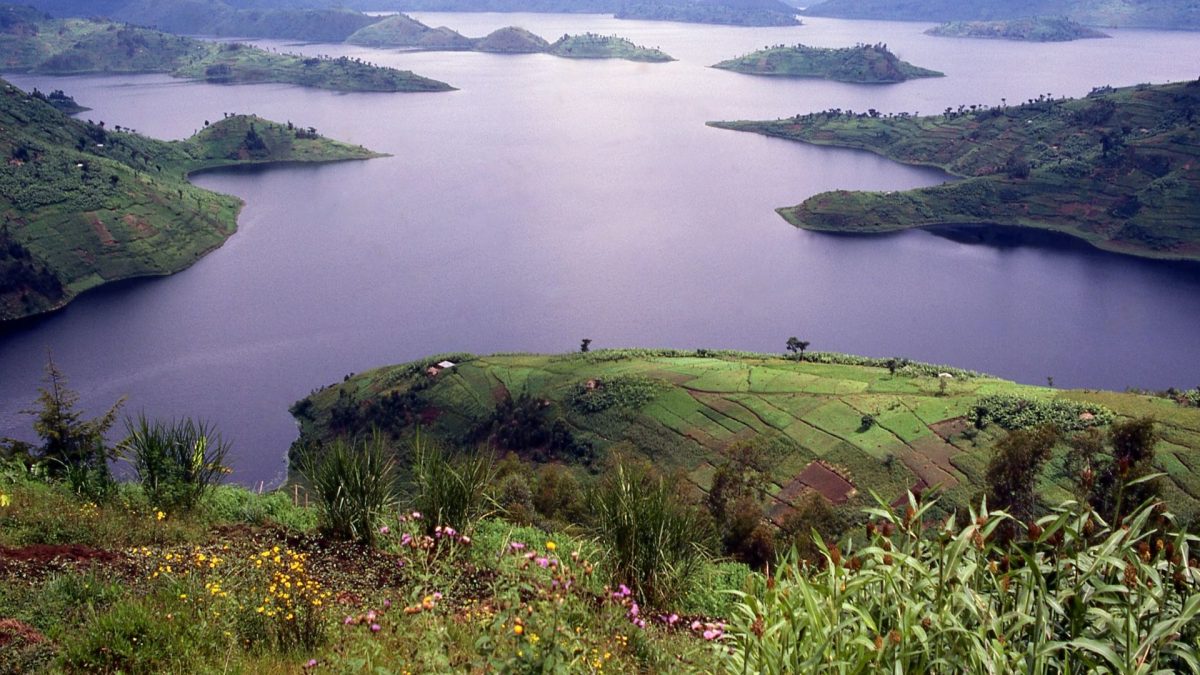
Lake Mutanda: The Hidden Gem Between Bwindi and Mgahinga
Some destinations announce themselves loudly and immediately on a typical Uganda itinerary, gorilla trekking permits, national park entrance fees, headline wildlife sightings. Lake Mutanda works differently, a quiet, freshwater lake in the far southwest that most visitors stumble into almost by accident, sandwiched between Bwindi Impenetrable Forest and Mgahinga Gorilla National Park, and then find themselves genuinely wishing, in hindsight, that they had allocated considerably more time to it.
A Lake Framed by Volcanoes
Lake Mutanda sits in Kisoro District at an altitude of roughly 1,800 metres, in the foothills of the Virunga Mountain Range, and its defining feature is the view rather than the water itself. Three of the Virunga volcanoes situated on the Ugandan side of the range, Mount Muhabura, Mount Sabinyo, and Mount Gahinga, rise dramatically over the lake’s northern horizon, their peaks frequently wrapped in soft, drifting cloud that shifts the view from one hour to the next. Few vantage points in Uganda offer this particular combination, still water in the foreground and genuine volcanic peaks looming behind it, and it is this scenery, more than any single activity, that has built Lake Mutanda’s reputation among travellers who have found their way here.
Fifteen Islands and Calm, Safe Water
Scattered across the lake are around fifteen islands, ranging from tiny outcrops to larger, more substantial landmasses, several carrying their own local names and folklore, including the evocatively named Python Island. Unlike many of Uganda’s other lakes, Mutanda carries no risk from hippos, crocodiles, or bilharzia, making it one of the few bodies of water in the country where visitors can genuinely relax on or in the water without the usual caution required elsewhere, a detail that surprises many first-time visitors given how routinely those risks apply across Uganda’s other lakes.
Canoeing as the Signature Activity
Traditional dugout canoes are available for hire directly on the lakeshore, and paddling across Mutanda’s still water ranks among the most popular and most memorable activities available in the area. The experience is unhurried by design, gliding past small islands with the Virunga peaks as a constant backdrop, and it requires no particular fitness or prior paddling experience to enjoy, making it accessible to a wide range of travellers regardless of age or physical condition. Guided canoe trips are also readily available for visitors who prefer a knowledgeable local paddler over navigating the water independently, often incorporating local stories about the lake’s islands and history along the way.
A Natural Rest Stop Between Two Gorilla Parks
Lake Mutanda’s location gives it a practical role beyond its scenery alone. Sitting almost directly between Bwindi Impenetrable Forest and Mgahinga Gorilla National Park, both major gorilla trekking destinations, the lake has become a favoured spot for travellers to unwind either before or after a demanding trek through dense forest terrain. The contrast between the physical exertion of gorilla trekking and the calm, low-effort pace of a lakeside stay makes Mutanda a genuinely restorative stop rather than simply a convenient waypoint, and many travellers report it becoming an unexpected highlight of their broader southwestern Uganda itinerary.
Kisoro Town and Access
The lake sits within roughly half an hour of Kisoro town, itself a common base for travellers moving between Bwindi and Mgahinga, which makes Mutanda an easy and low-friction addition to an existing itinerary rather than a destination requiring a significant detour. This convenient positioning is a large part of why the lake has grown in popularity among tour operators building multi-park southwestern circuits, adding a scenic, restful stop without meaningfully extending overall travel time.
Accommodation With a View
Several lodges and camps have gradually developed around Lake Mutanda’s shoreline specifically to take full advantage of the volcano views, ranging from simpler guesthouses to more polished resort-style properties positioned directly on the water. Mutanda Lake Resort, one of the better-known properties in the area, has built its reputation specifically around this combination of gorilla trekking proximity, volcano views, and birdwatching opportunities, serving travellers with a range of interests beyond the lake itself. Choosing accommodation directly on the shoreline, rather than simply passing through on a day visit, tends to deliver considerably more value given how much of the lake’s appeal depends on unhurried time spent simply taking in the changing light on the volcanoes across the water.
Birdwatching Around the Lake
Beyond canoeing and volcano views, Lake Mutanda’s shoreline and surrounding wetland habitat support a solid range of birdlife, appealing to visitors with even a casual interest in birding rather than requiring the dedicated specialist focus that some of Uganda’s premier birding destinations demand. The combination of open water, papyrus-fringed shoreline, and nearby forest edge habitat gives the area a reasonably diverse bird community for a lake of its size, adding another gentle activity option for travellers choosing to extend their stay.
Why This Hidden Gem Deserves More Than a Passing Glance
Lake Mutanda rarely appears as a headline destination in broader Uganda marketing, overshadowed by the gorilla trekking permits that define the region’s tourism economy, but for travellers who do make time for it, the lake consistently ranks among the more memorable stops on a southwestern Uganda circuit. Its combination of dramatic volcanic scenery, calm and genuinely safe water, and a restorative pace between two demanding gorilla trekking destinations makes it a natural complement to a Bwindi or Mgahinga itinerary rather than an optional extra. For travellers planning time in the region, allocating even a single night at Lake Mutanda is well worth the modest detour it requires from the standard gorilla trekking route.
A Base for Volcano Climbing Too
Beyond its role as a rest stop, Lake Mutanda’s position at the base of the Virunga range also makes it a practical staging point for travellers interested in climbing one or more of Uganda’s volcanoes, particularly Mount Muhabura, whose summit trail begins from the Mgahinga side but whose lower approach and general orientation are closely tied to this same volcanic landscape visible across the lake. Travellers combining gorilla trekking with a volcano climb often find Mutanda’s lodges a logical and scenic place to base themselves for the additional day or two such a climb requires, adding genuine value beyond the lake’s purely restful appeal.
Photography and the Changing Light
Few spots in southwestern Uganda reward patient photography quite like Lake Mutanda, given how dramatically the volcanic backdrop shifts with the day’s changing light and cloud cover. Early morning often delivers the clearest views of the Virunga peaks, before cloud typically builds through the afternoon and softens or entirely obscures the volcanoes from view, a pattern common to most of East Africa’s higher volcanic terrain. Photographers staying overnight, rather than passing through on a rushed day visit, have a meaningfully better chance of catching the mountains in clear conditions, another reason an overnight stay tends to deliver considerably more value than a brief stop.
Cultural Context of the Surrounding Area
Kisoro District and the land surrounding Lake Mutanda are home to a mix of communities including Bakiga and Bafumbira populations, alongside Batwa communities with historical ties to the surrounding forests before the establishment of the national parks. Local guides and lodge staff around the lake often carry deep knowledge of this layered local history, and travellers with genuine curiosity about the region’s cultural background, beyond its wildlife and scenery, will generally find willing and knowledgeable conversation partners among the people who call this landscape home.
Comparing Mutanda to Lake Bunyonyi
Travellers researching southwestern Uganda’s lakes often find themselves weighing Lake Mutanda against the better-known Lake Bunyonyi, and the two destinations, while broadly similar in offering calm water and a restful complement to gorilla trekking, do differ in character. Bunyonyi’s terraced hillsides and larger island count give it a slightly more developed tourism infrastructure and a wider spread of accommodation options, while Mutanda’s more direct volcanic backdrop and smaller scale lend it a quieter, less discovered feel. Neither destination is genuinely objectively better than the other in any meaningful sense, and travellers with sufficient time sometimes choose to combine both, given their relative proximity within the same broader southwestern region, though most itineraries settle on one or the other depending on which combination of gorilla parks a trip is built around.
Practical Tips for Visiting
Given Lake Mutanda’s fairly high altitude, mornings and evenings here can turn genuinely quite cool, and layered clothing is worth packing even for what is otherwise a low-effort, genuinely restful stop on an itinerary. Canoe trips are always best arranged directly through a lodge or a trusted local operator, both for safety and to ensure a knowledgeable guide who can add context to the islands and surrounding landscape passed along the way. Given how few visitors make it out to Mutanda relative to Uganda’s more heavily marketed destinations, advance planning through an established operator, rather than assuming activities can simply be arranged on arrival, remains by far the more reliable and stress-free approach for making the most of a short stay here.