
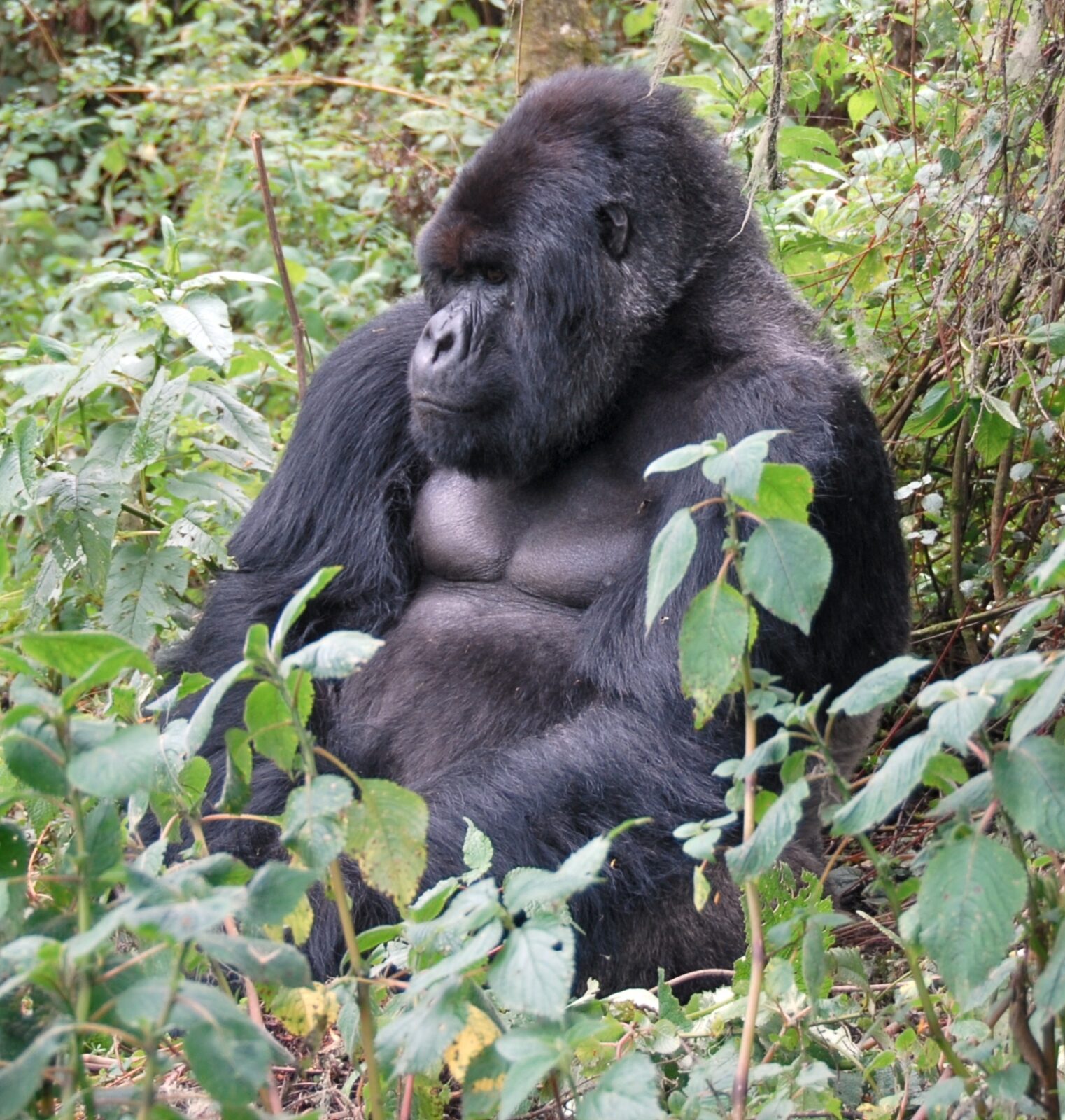
For most of the history of gorilla trekking as an organised activity, the rangers leading treks through Bwindi and the Virungas were almost exclusively men. That’s changed meaningfully over the past decade, and female gorilla safari rangers now work across Uganda, Rwanda, and the DRC in roles ranging from tracking and trekking guides to senior park management, reshaping a field that was long assumed to be unsuited to women.
Trekkers booking a gorilla safari today are increasingly likely to encounter this shift firsthand, whether through a female ranger leading their group, a female tracker locating the family before their arrival, or simply through conversation with lodge and operator staff about how the workforce has changed in recent years.
A Field That Was Long Male-Dominated, and Why
It’s worth remembering that this pattern wasn’t unique to conservation – ranger work followed a trajectory similar to many physically demanding, historically male-coded professions worldwide, from firefighting to mountaineering guiding, where entry barriers were often more cultural than practical. The specific East African context added its own layers, including traditional gender expectations around who works away from home for extended stretches and who is seen as suited to physically confrontational situations involving wildlife or poachers.
Ranger work has historically been framed around physical demands – long days on difficult terrain, occasional exposure to dangerous wildlife, remote postings far from home for extended periods – that conservation authorities and communities alike assumed made it a man’s job by default, more from unexamined tradition than from any genuine barrier specific to the work itself. That assumption held for decades largely because it went unchallenged, not because women were ever actually shown to be unsuited to it.
What’s Changing and Why
This shift hasn’t happened by accident. It reflects a broader, ongoing conversation across conservation as a field about who gets included in frontline roles, paired with a practical recognition that excluding half the available workforce from consideration for physically and intellectually demanding jobs was never a sound staffing strategy in the first place, whatever the historical assumptions behind it may have been.
Uganda Wildlife Authority, Rwanda Development Board, and various conservation NGOs operating across the region have made deliberate efforts in recent years to recruit and train women into ranger roles, partly in response to broader conversations about gender equity in conservation work, and partly because the sector recognised it was drawing from only half its potential talent pool. Dedicated training programmes and, in some cases, specific recruitment targets have accelerated a shift that was overdue by any reasonable measure.
What the Job Actually Involves
It’s worth understanding the full breadth of this role to appreciate what representation in it actually means. A ranger might spend one week on multi-day anti-poaching patrols deep into remote sections of forest, the next coordinating closely with community leaders on human-wildlife conflict issues at the park boundary, and the next leading tourist treks and fielding the same first-timer questions dozens of times over. It’s a genuinely varied, demanding career, not a single narrow function, requiring a broad skill set that goes well beyond what most visitors witness during their own single day in the forest.
A ranger’s daily work spans considerably more than leading tourist treks – anti-poaching patrols, wildlife monitoring and data collection, community liaison work, and emergency response when a gorilla is sick or injured all fall under the same broad role. Female rangers now work across this full range of responsibilities, not confined to a narrower subset of duties, which is itself part of what representation in the field has changed – the assumption that certain tasks were inherently unsuitable for women has largely fallen away as more women have simply done the work and done it well.
Challenges Female Rangers Still Face
It’s worth being honest about this rather than presenting a purely celebratory picture, since genuine progress and genuine remaining difficulty coexist here, as they typically do with any meaningful structural shift in a traditionally male-dominated field. Acknowledging both is more useful, and more respectful of the women actually doing this demanding work, than a simplified narrative in either direction.
Progress hasn’t erased every obstacle. Some female rangers describe navigating scepticism from visitors who arrive expecting a male guide and take time adjusting, balancing demanding field postings with family responsibilities in communities where domestic expectations for women remain traditional, and simply being one of a small number of women in a still male-majority workforce. None of these challenges are unique to conservation work, but they’re real, ongoing parts of the story rather than a problem that’s been fully solved.
Why Representation Matters Beyond the Individual Rangers Themselves
This effect extends beyond just the individual women in these roles, rippling outward into how entire communities near the parks think about what’s possible for their daughters, sisters, and neighbours. Conservation organisations that have studied workforce diversity report that visible representation tends to compound over time – each woman who succeeds in the role makes the path more visible and more credible for the next, in a way that top-down recruitment policy alone doesn’t fully achieve on its own, without visible role models reinforcing it in practice.
Visible female rangers change what feels possible for the next generation of women in communities bordering the parks, in a way that policy statements alone don’t achieve. A young girl growing up in a village near Bwindi who sees a woman leading a trekking group, radio in hand, clearly in command of the day’s logistics, has a concrete example of a career path that simply didn’t visibly exist a generation earlier. Conservation organisations increasingly recognise this kind of representation as valuable in its own right, not just as a diversity statistic.
Training Programmes Behind the Shift, in More Detail
A number of dedicated initiatives have specifically targeted getting more women into ranger and guide roles across the region, ranging from scholarship-style training programmes covering the cost of ranger certification, to mentorship schemes pairing newer female recruits with established rangers, male and female alike, willing to actively support their development in the field. Some of these programmes originated within government wildlife authorities directly; others have been driven by conservation NGOs and international donor organisations that identified workforce diversity as a genuine strategic priority worth dedicated funding, not just a nice-to-have alongside core conservation spending.
The results, while still a work in progress across the wider region, are measurable – a meaningfully larger proportion of new ranger recruits joining Uganda Wildlife Authority and Rwanda Development Board in recent intake classes are women than would have been the case a decade earlier, a shift that training-programme staff attribute directly to deliberate outreach into communities where the idea of this career simply hadn’t been actively presented to young women as a realistic option previously.
Meeting Female Rangers on Your Own Trek
Trekkers don’t get to choose their specific ranger team in advance, and permit allocation and staffing schedules determine who leads any given trek on any given day, but a growing number of visitors do find themselves led, at least partly, by female guides, trackers, or rangers as staffing has diversified across the parks. It’s worth approaching whichever team you’re assigned with the same respect and attention regardless of who’s leading, since experience and training, not gender, are what actually determine a ranger’s competence in the field.
Frequently Asked Questions
Can I specifically request a female ranger or tracker for my own trek?
Generally no – ranger and tracker assignments are made by park authorities based on staffing schedules and rotations, not visitor preference, though it’s worth asking your operator if this matters particularly to you and they can pass that interest along where appropriate.
Are female rangers a genuinely recent development, or has this been building for a while now?
It’s been a gradual shift over roughly the past decade, accelerating more visibly in the last several years as training programmes and recruitment efforts have expanded across Uganda, Rwanda, and the DRC, with no sign of that momentum slowing.
Do female rangers face different safety risks than male rangers in the field?
The core physical risks of ranger work – difficult terrain, wildlife encounters, remote postings – apply broadly regardless of gender, though some female rangers have spoken publicly about additional social and logistical challenges tied to gender-specific expectations in the communities they work within.
What can trekkers do to support this shift in the industry?
Simply approaching whichever ranger team you’re assigned with equal respect and attention, and asking genuine questions about their experience if the moment feels appropriate, goes further than it might seem. Operators who visibly support diverse staffing are also worth favouring when you’re choosing who to book with for your own trek.
For more on what a ranger’s role involves during your actual trek, this behind-the-scenes look at how a gorilla safari is planned is worth reading, alongside this guide to community-based conservation in Bwindi, which touches on the wider community context rangers work within every single day.