
Ask five different people what a gorilla trek is actually like and you’ll often get five different answers – and at least two of them will be wrong. Gorilla safari myths spread easily because so few people who talk about it have actually done the trek themselves; most of what circulates comes from secondhand stories, old wildlife documentaries edited for drama, or plain guesswork dressed up as fact. Before you book, it’s worth separating what’s actually true from what just sounds true.
Myth One: Gorillas Are Naturally Aggressive Toward Humans
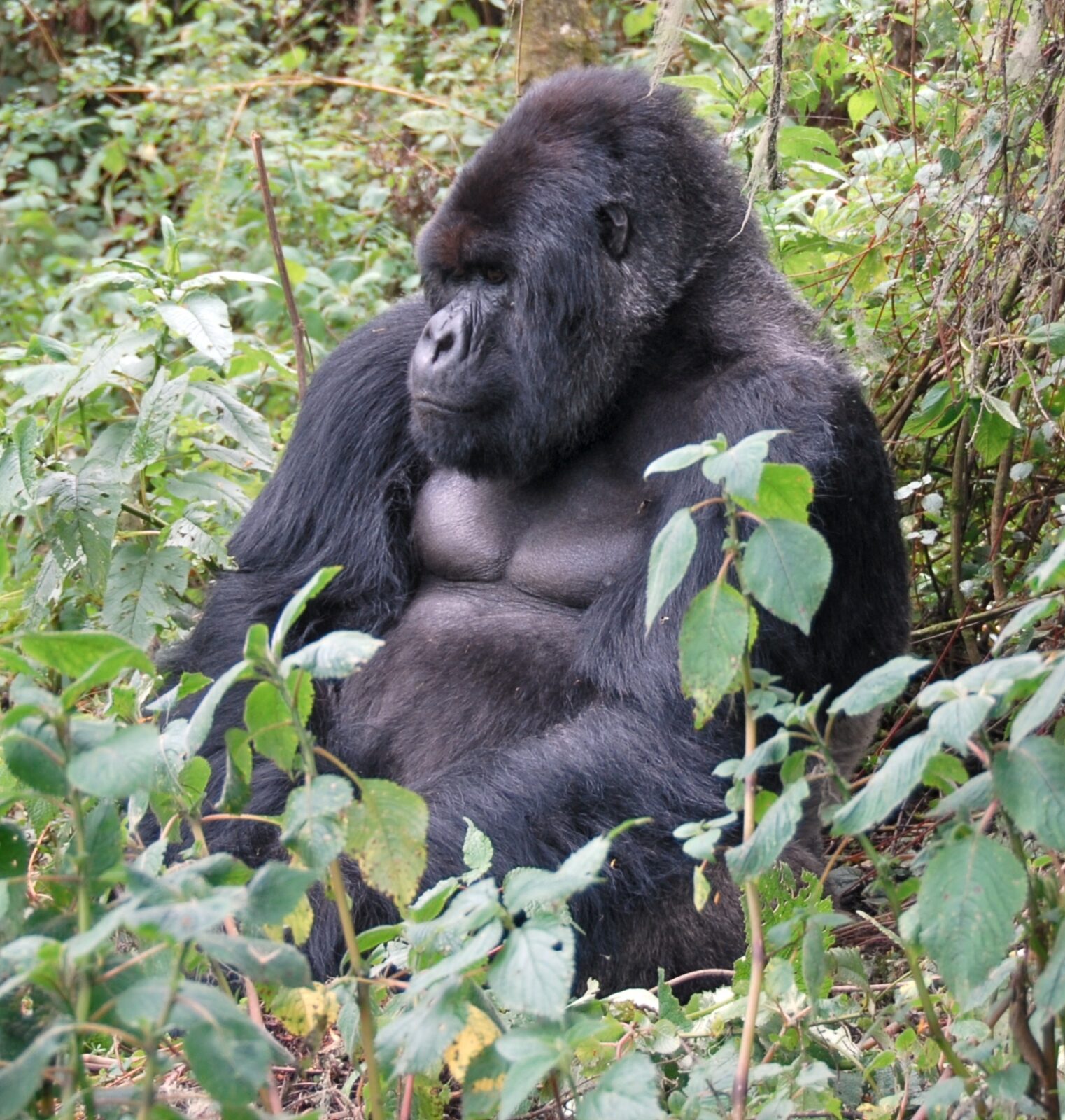
This is probably the most common misconception, and it usually traces back to footage of a silverback beating his chest or charging toward a camera. What that footage almost never shows is the context: a silverback’s job is to protect his family, and a mock charge – loud, fast, and genuinely startling – is a warning display, not the opening move of an attack. Rangers train trekkers on exactly what to do if it happens: crouch down, avoid direct eye contact, stay quiet, and let the silverback see that you’re not a threat. Mountain gorillas are, by nature, shy and family-oriented animals that spend most of the day feeding, resting, and grooming each other. Genuine attacks on trekkers are extremely rare, and in the decades gorilla tourism has operated in Uganda, Rwanda, and the DRC, serious incidents involving habituated groups are a tiny handful against many thousands of successful, calm encounters.
Myth Two: A Permit Guarantees You’ll See Gorillas
What you’re actually paying for is the chance to trek toward a family that trackers located earlier that morning, not a guaranteed sighting on a fixed schedule. In practice, sighting rates across Bwindi and the Virunga parks run extremely high – well into the high nineties as a percentage of treks – because ranger teams know each habituated family’s rough territory and send trackers ahead at dawn to pinpoint them before the trekking groups even set off. But “extremely high” isn’t the same as “certain,” and gorilla families do occasionally move further than expected overnight, or into terrain that makes an approach genuinely unsafe. Ask your operator in advance what their policy is if a trek comes back empty – some parks and operators offer a partial refund or a second attempt, and it’s a far easier conversation to have before you’ve paid than after.
Myth Three: One Trek Is Enough – You’ll Never Need to Go Back
Plenty of people say this before their first trek and quietly stop saying it afterward. A first encounter tends to be adrenaline-heavy: the hike itself, the uncertainty of not knowing exactly when you’ll find the family, the first sight of a silverback at close range. Return visitors often describe a calmer, more observational second trek, where they spend less energy processing the novelty of it and more time actually watching how a family interacts – juveniles play-fighting, an infant riding on its mother’s back, a silverback quietly keeping watch. Different sectors and different families also genuinely vary in personality and terrain, which is part of why repeat trekking is common enough that operators build entire itineraries around visiting a second country or a second sector on a return trip.
Myth Four: Gorilla Trekking Is Only for the Very Fit
It is physically demanding, and nobody should pretend otherwise – trails in Bwindi in particular can mean several hours of steep, muddy, uneven walking through dense forest, sometimes at altitude. But “demanding” is not the same as “only for elite athletes.” The trekking pace is set by the group, including its slowest member, and porters are available at a modest daily rate to carry your day bag and, if genuinely needed, to help physically support you over difficult sections. Rwanda’s Volcanoes National Park even operates a sedan-chair style stretcher service for trekkers who can pay their way to the gorillas but can’t manage the hike unassisted. Trekkers in their sixties and seventies complete this regularly. What actually matters more than raw fitness is honest preparation – some walking training beforehand, decent boots, and a realistic conversation with your operator about your own limits when you book your sector.
It also helps to know that sectors genuinely differ in difficulty, and a good operator will steer you toward one that matches your fitness rather than defaulting to whichever has availability. Buhoma tends to offer some of the gentler terrain in Bwindi, while Nkuringo is known for a steep return climb that catches unprepared trekkers off guard. None of this needs to be figured out alone – it’s a normal question to raise when booking, not an awkward one.
Myth Five: Gorilla Trekking and Chimp Trekking Are Basically the Same Trip
They get grouped together constantly, and they’re genuinely different experiences. Chimpanzees are far more mobile and vocal, moving quickly through the canopy and across wide territories, which makes chimp trekking faster-paced and noisier, often involving more walking to keep up with a group that doesn’t sit still for long. Gorilla families, by contrast, spend much of the day resting and feeding on the ground within a relatively confined patch of forest, which makes the encounter itself calmer and closer – you’re typically observing a stationary family group for a set hour, rather than chasing movement through treetops. The parks, permit systems, and costs differ too, which is why most itineraries treat them as two separate activities rather than interchangeable versions of the same thing.
Myth Six: The Permit Price Is Just Profit for Operators and Governments
The permit fee looks steep on paper, and it’s reasonable to want to know where the money actually goes. In practice, a substantial share is allocated to park management and ranger salaries, community revenue-sharing programmes for the villages bordering the park, and ongoing veterinary monitoring for the gorilla families themselves – habituated groups are checked regularly for injury and illness, which is a real, continuous cost. Tour operators typically pass the permit through to clients at close to cost; their margin sits in the accommodation, transport, and guiding package built around it, not in the permit fee itself. Price increases over the years have generally tracked specific funding needs – ranger capacity, conservation programmes, infrastructure – rather than being adjusted arbitrarily.
Myth Seven: You Can Get Close Enough for a Selfie, Like at a Wildlife Park
This one causes the most disappointment for first-timers who arrive expecting a hands-on encounter. A mandated minimum distance is enforced on every trek – historically cited as around seven metres, with some current guidance suggesting operators are tightening that to closer to ten – and it exists for a serious reason that has nothing to do with photo composition. Mountain gorillas share close to 98% of their DNA with humans, which means diseases move in both directions between the species with alarming ease; a common cold that’s a minor inconvenience for a trekker could be genuinely dangerous for a gorilla with no built-up immunity to human pathogens. Your ranger controls positioning throughout the encounter, touching is never permitted, and anyone showing signs of illness on trek day will be turned away for the gorillas’ protection, not out of excessive caution. It’s a closer encounter than almost any other wildlife experience on the planet – just not a contact one.
Frequently Asked Questions
Where do most gorilla safari myths actually come from?
Mostly from documentary footage taken out of context, and from people repeating stories they heard rather than experiences they had. Wildlife filming tends to show the most dramatic seconds of a species’ behaviour, which skews public perception toward danger and aggression that isn’t representative of a typical trek.
Is there any truth behind the “guaranteed sighting” claim some operators make?
Sighting rates genuinely are very high, which is likely where the confusion comes from, but no responsible operator or park authority can honestly promise a guarantee, since gorilla families are wild animals that move on their own schedule.
Should I be worried about the fitness demands after reading this?
Not worried, but realistic. Talk to your operator about which sector suits your fitness level – some are noticeably gentler than others – and consider a few weeks of walking practice beforehand if you’re not currently active. Most people who prepare honestly find the trek hard but manageable, not overwhelming.
Do these myths differ much between Uganda, Rwanda, and Congo treks?
The core misconceptions – aggression, guaranteed sightings, selfie distance – hold across all three countries, since they all follow the same regional habituation and safety protocols. What does vary a little is trekking difficulty and permit cost, which is why it’s worth researching the specific country and sector rather than assuming one gorilla trek is identical to another.
If you’re weighing up your first trek against these myths, this beginner’s guide to booking a gorilla safari is a good next stop, alongside these questions worth asking before you choose an operator. For the practical side of trek-day preparation, the full packing checklist and this explainer on why a guide is required for every trek cover most of what these myths tend to leave out. And if cost is the thing holding you back, this full cost breakdown is a more honest starting point than the permit-price myth above.