
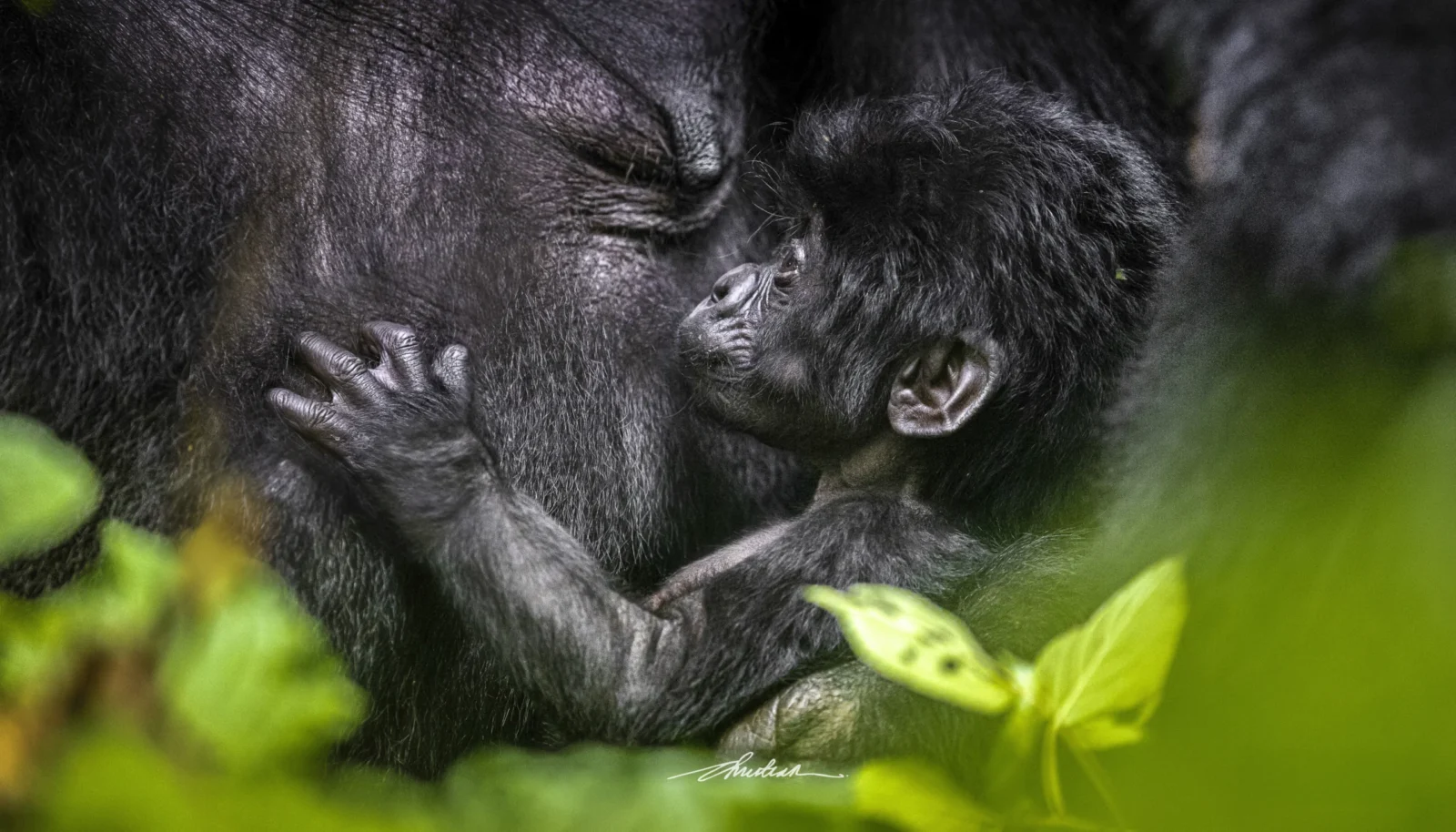
Busingye Gorilla Family Rushaga: The Newest Group Explained
In the southern sector of Bwindi Impenetrable National Park, where dense rainforest meets steep ridges and quiet valleys, the Busingye gorilla family represents one of the most recent chapters in Uganda’s gorilla tourism story. Located in the Rushaga sector, this group stands out not just because it is relatively new, but because of the personality and dominance that defined its formation.
Busingye is not simply another habituated family. It is a group shaped by ambition, strength, and the natural power struggles that govern mountain gorilla society. Understanding this family requires looking closely at how it came into existence and what makes it different from older, more established groups.
The Origin of the Busingye Family
The Busingye family was formed through a dramatic and very natural process-group takeover.
Its founding silverback, Busingye, broke away from the Kahungye family, one of the larger and well-established groups in Rushaga. Unlike peaceful splits, this was a forceful takeover. Busingye, known for his strength and assertive behavior, challenged the dominant structure of Kahungye and succeeded in attracting several females to follow him.
This type of event is a critical part of gorilla social dynamics. When a powerful blackback matures into a full silverback, he may attempt to form his own group by either attracting females or directly competing with an existing leader.
Busingye did not wait for a passive opportunity. He created one.
The result was a new family that quickly established itself within the Rushaga sector.
The Meaning Behind the Name
The name “Busingye” translates loosely to “peace,” which creates an interesting contrast with the group’s origins.
Despite the aggressive takeover that led to its formation, the name reflects a broader cultural perspective-one that acknowledges the eventual stability and balance that follows conflict in nature.
In practice, the group has settled into a more structured and cohesive unit over time, demonstrating how even forceful beginnings can lead to long-term stability.
Location: The Rushaga Sector Advantage
The Busingye family is located in Rushaga, one of the most flexible and visitor-friendly sectors of Bwindi.
Rushaga is known for:
A high number of habituated gorilla families
Relatively better permit availability
Varied trekking options
Compared to the Nkuringo sector, Rushaga generally offers slightly less extreme terrain, though it still involves typical Bwindi challenges such as hills, dense vegetation, and uneven trails.
For visitors, this means a balance between accessibility and authenticity.
Trekking Experience and Difficulty
Tracking the Busingye family can vary in difficulty depending on the group’s daily movement.
In general, expect:
Moderate trekking conditions
Gradual ascents and descents
Sections of dense forest
The group is sometimes known to move across a broader range, which can influence trek duration. Some days may involve shorter tracking times, while others require extended hikes.
This variability is normal across all gorilla families in Bwindi.
What makes Busingye interesting is not just the trek, but what you encounter once you arrive.
Group Structure and Behavior
The Busingye family typically consists of:
A dominant silverback
Several adult females
Juveniles and infants
As a relatively newer group, its structure is still evolving. Changes in membership, births, and social interactions are part of its ongoing development.
The silverback plays a particularly strong role in maintaining group cohesion. Given his history, his leadership style tends to be more assertive compared to some older, more settled groups.
This can influence the overall behavior you observe.
Behavioral Characteristics
Visitors to the Busingye family often notice a slightly higher level of alertness and movement within the group.
This does not mean constant aggression, but rather:
More active positioning by the silverback
Clear dominance signals
Occasional displays of authority
These behaviors are part of normal gorilla communication. They provide insight into how leadership is maintained and how group stability is reinforced.
At the same time, you will still observe the full range of gorilla life:
Infants playing
Females grooming
Juveniles exploring
The difference lies in the underlying energy of the group.
What Makes Busingye Unique
The uniqueness of the Busingye family comes from its combination of newness and strong leadership.
Unlike older groups that have settled into long-term stability, Busingye still carries elements of its formation history. This creates a more dynamic and sometimes less predictable experience.
For visitors, this translates into:
A sense of witnessing an evolving group
More visible social structure development
A slightly more intense atmosphere
This is not necessarily better or worse-it is simply different.
Photography and Viewing Conditions
Photographing the Busingye family depends on terrain and vegetation, as with any group in Bwindi.
Rushaga offers mixed conditions:
Some open areas with better light
Denser sections with limited visibility
Because the group may move more actively, photographers need to be prepared to adjust quickly.
However, behavioral moments-such as dominance displays or interactions-can provide unique photographic opportunities that are less common in calmer groups.
Conservation Role of New Gorilla Families
The addition of newer groups like Busingye plays an important role in conservation.
More habituated families mean:
Better distribution of trekking pressure
Reduced stress on individual groups
Increased tourism capacity
This supports both gorilla welfare and the economic sustainability of conservation programs.
Tourism revenue continues to fund:
Anti-poaching efforts
Habitat protection
Community development
Busingye contributes directly to this system.
Comparing Busingye with Other Rushaga Families
Rushaga is one of the most diverse sectors in Bwindi, offering multiple gorilla families.
Some are known for:
Large group sizes
Calm and predictable behavior
Long-established social structures
Busingye stands out for:
Its recent formation
A dominant and assertive silverback
A more dynamic social environment
This makes it particularly appealing to visitors interested in understanding gorilla behavior rather than just observing it.
Who Should Choose the Busingye Family
The Busingye group is best suited for:
Visitors interested in gorilla social dynamics
Travelers open to a slightly less predictable experience
Returning trekkers seeking variety
Those comfortable with moderate trekking
It may be less ideal for:
Visitors seeking the calmest possible encounter
Those focused purely on photography in stable conditions
Rules and Responsible Trekking
All standard gorilla trekking rules apply.
Visitors must:
Maintain a minimum distance of 7 meters
Limit viewing time to one hour
Follow ranger instructions at all times
Avoid trekking if unwell
Keep noise levels low
These rules are essential for protecting both gorillas and visitors.
The Experience in Perspective
Encountering the Busingye family feels slightly different from visiting older groups.
There is a sense of movement-not just physical, but social. You are observing a group that is still defining itself, still evolving under the leadership of a strong silverback.
This creates a more dynamic and sometimes more engaging experience.
It is less about calm observation and more about understanding the structure of gorilla society in real time.
The Busingye Gorilla Family in the Rushaga sector of Bwindi Impenetrable National Park represents one of the newest and most intriguing options for gorilla trekking.
Formed through strength and shaped by evolving dynamics, this group offers a perspective that complements older, more established families.
For visitors who want more than a standard encounter-those who want to see how gorilla groups form, stabilize, and function-Busingye provides a compelling and insightful experience.
It is not just about seeing gorillas.
It is about understanding how they become a family.