
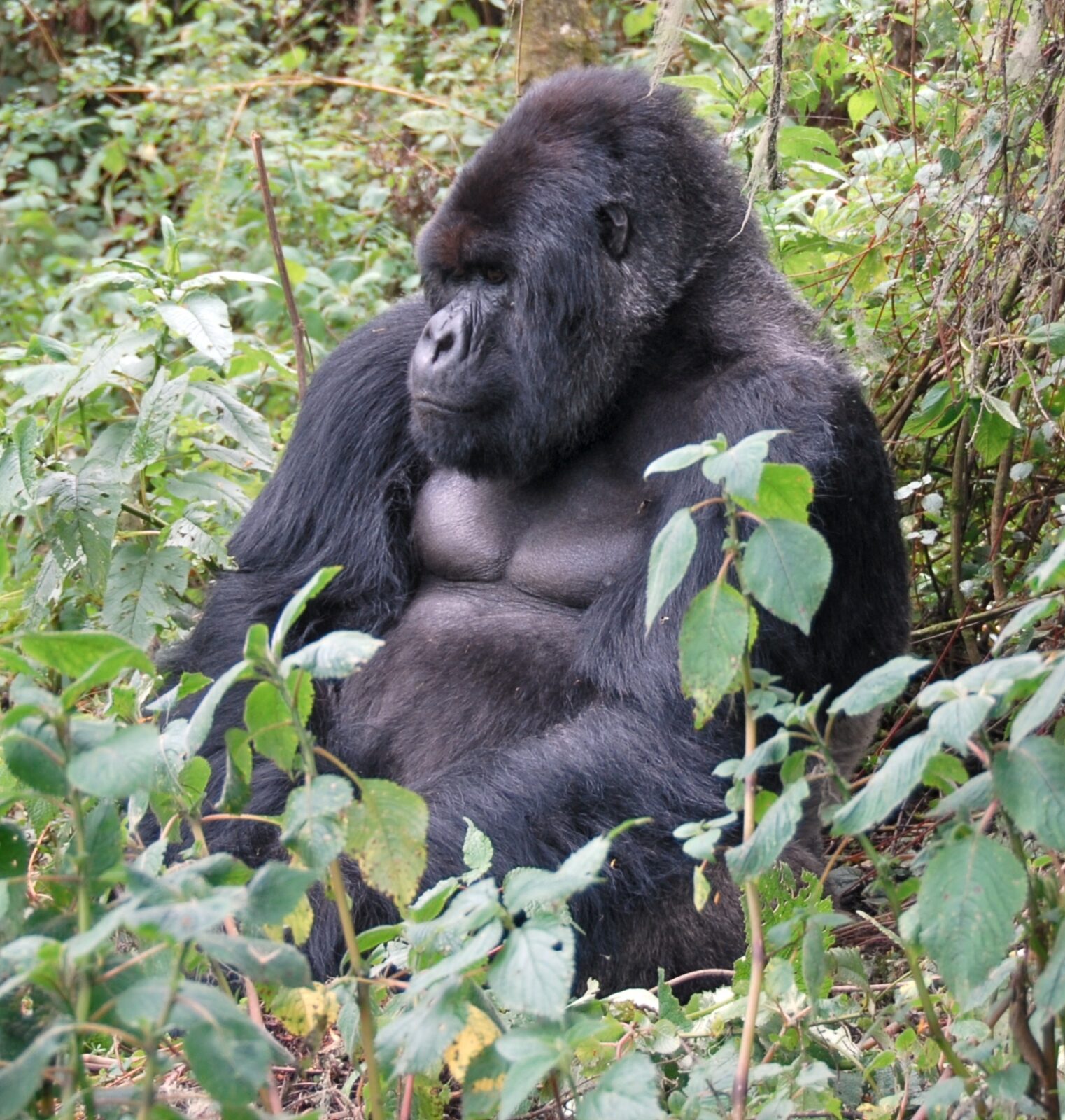
Dian Fossey: The Woman Who Saved Mountain Gorillas
Every gorilla trekking permit issued in Rwanda today exists, in some meaningful sense, because of one woman’s decades-long, ultimately fatal commitment to a species most of the world barely understood before she arrived. Dian Fossey’s work in the Virunga Mountains transformed both scientific understanding of mountain gorillas and the trajectory of their survival as a species, and her story remains inseparable from the conservation success story visitors witness on the mountain’s slopes today.
From Occupational Therapist to Primatologist
Born in San Francisco in 1932, Fossey’s path to becoming one of the twentieth century’s most significant conservationists began nowhere near a gorilla. She trained and worked as an occupational therapist, a career that, perhaps unexpectedly, later proved directly relevant to her fieldwork, she would go on to credit her experience working with children for helping her develop the patience and careful, non-threatening approach that eventually earned the trust of wild mountain gorillas.
Her turn toward primatology came through Louis Leakey, the renowned paleoanthropologist who, in 1966, helped secure funding for Fossey to study gorillas, initially in the Congo. She became one of the three researchers Leakey selected to study great apes in their natural habitat, alongside Jane Goodall’s chimpanzee research in Tanzania and Biruté Galdikas’s orangutan work in Borneo, a trio later informally known as Leakey’s “trimates,” each of whom would go on to fundamentally reshape scientific understanding of humanity’s closest living relatives.
Establishing Karisoke
Following her initial research in the Congo, Fossey established the Karisoke Research Centre in 1967, situated in Rwanda’s Virunga Mountains between Mount Karisimbi and Mount Bisoke, the name itself a combination of the two peaks framing her research camp. From this base, she conducted sustained, patient observation of mountain gorilla families, gradually developing techniques, including mimicking gorilla vocalisations and feeding behaviour, that allowed her to be accepted into close proximity with wild groups in a way no researcher had previously achieved.
A Fierce, Uncompromising Conservationist
Fossey’s approach to protecting the gorillas she studied went well beyond passive observation. She actively destroyed poachers’ traps set within the park, and by numerous accounts confronted and detained poachers directly, developing a reputation for confrontational, sometimes physically aggressive anti-poaching tactics that made her both a formidable protector of her study subjects and a genuinely controversial figure among some local communities and even within parts of the broader conservation establishment. She reportedly cultivated a local reputation involving elements of traditional belief and superstition specifically to discourage people from entering areas where her gorillas lived, an unconventional but, by her own account, effective deterrent within the specific cultural context of the region at the time.
Measurable Impact on Gorilla Survival
The population trajectory over the following decades speaks to the genuine impact of Fossey’s work and the conservation infrastructure it established. Surveys around 1981 found the Virunga mountain gorilla population had fallen to roughly 242 individuals, a sharp decline from earlier estimates closer to 400 or 500 individuals in 1960. Decades of sustained conservation effort building directly on the foundation Fossey established eventually reversed this trajectory, with more recent census figures showing the population climbing past 600 individuals within the Virunga range, a genuinely remarkable recovery for a species many feared could disappear entirely within Fossey’s own lifetime.
Murder in the Mountains
On the twenty-seventh of December 1985, Fossey was found murdered inside her cabin at Karisoke, killed with a machete in an attack that has never been officially, conclusively solved. Widespread belief within the conservation community holds that her death was connected to her relentless, uncompromising campaign against poaching, retribution from individuals whose activities she had directly and repeatedly disrupted, though the precise circumstances and responsible party remain genuinely disputed even decades later. She was buried at Karisoke itself, in a small gorilla graveyard she had established for gorillas killed by poachers during her years of research, including Digit, a gorilla whose killing had deeply affected her and helped galvanise international attention toward the broader poaching crisis.
Gorillas in the Mist
Fossey’s own 1983 book, Gorillas in the Mist, brought her research and personal story to a global audience, and the subsequent 1988 film adaptation starring Sigourney Weaver introduced mountain gorillas and their plight to millions of viewers who had never previously encountered the species or understood how close it stood to extinction. This cultural moment significantly amplified international awareness and support for mountain gorilla conservation, translating directly into increased funding, research attention, and political will behind protecting the species across both Rwanda and neighbouring range countries.
Karisoke’s Continuing Legacy
Following Fossey’s death, her research station continued operating under the Dian Fossey Gorilla Fund, an organisation that persists today as one of the most significant institutions dedicated specifically to mountain gorilla research and conservation. The fund has trained generations of researchers, many of them Rwandan and broader African conservationists directly inspired by Fossey’s example, extending her influence well beyond her own working lifetime and embedding conservation expertise directly within the communities and countries where mountain gorillas actually live.
Visiting Karisoke Today
Travellers with a specific interest in Fossey’s legacy can visit the site of the original Karisoke Research Centre and her grave within Volcanoes National Park, typically as a dedicated hike separate from standard gorilla trekking permits, offering a direct, tangible connection to the history behind the conservation success story visitors witness on every trek. Guides leading these hikes often share detailed accounts of Fossey’s specific methods, relationships with individual gorillas, and the broader arc of her research, adding genuine historical depth for visitors curious about the human story behind the species’ survival.
A Legacy Written Into Every Gorilla Trek
Every visitor who treks to see mountain gorillas in Rwanda today walks, in a very real sense, through a landscape and a population shaped directly by one woman’s uncompromising, ultimately fatal dedication to a species most of the world had barely considered before her arrival. Understanding Dian Fossey’s story adds a layer of historical weight and human context to the modern gorilla trekking experience, a reminder that the extraordinary encounter awaiting travellers on the mountain’s slopes exists because someone was once willing to give everything to protect it.
Digit and the Personal Cost of Poaching
Among the individual gorillas Fossey studied, Digit holds particular significance in the story of her conservation work and its broader public impact. A young silverback she had observed and come to know closely over years of fieldwork, Digit was killed by poachers in 1977 while defending his group against an attack, his death striking Fossey with a personal grief that went well beyond scientific detachment. His killing became a rallying point that helped drive international fundraising and awareness efforts, eventually contributing to the establishment of the Digit Fund, later renamed and expanded into the broader Dian Fossey Gorilla Fund that continues operating today.
Fossey’s Complicated Relationship With Local Communities
While Fossey’s dedication to protecting gorillas is not in serious dispute, her methods and relationships with surrounding communities remain a genuinely more complicated part of her legacy than the simplified hero narrative sometimes presented in popular accounts. Her aggressive, occasionally physically confrontational tactics against suspected poachers drew criticism even during her lifetime, and some scholars and conservationists have since argued for a more nuanced, community-inclusive approach to conservation than the one Fossey herself practised, an approach modern gorilla conservation efforts in Rwanda have generally since adopted, working more collaboratively with surrounding communities rather than through pure confrontation.
The Scientific Contribution Beyond Conservation
Beyond her direct anti-poaching efforts, Fossey’s sustained, detailed behavioural observations fundamentally advanced scientific understanding of mountain gorilla social structure, communication, and family dynamics, research that continues informing conservation strategy and guide training across the species’ range today. Her documentation methods and long-term habituation techniques, developed through years of painstaking, incremental trust-building with wild gorilla groups, established a research and habituation model that subsequent researchers and park authorities have continued refining and applying to this day, including the very habituation process that eventually made gorilla trekking tourism itself possible.
How Fossey’s Work Enabled Modern Gorilla Tourism
It is worth appreciating the direct throughline between Fossey’s research techniques and the tourism industry that now supports gorilla conservation financially across both Rwanda and Uganda. The patient habituation methods she pioneered, gradually acclimatising wild gorilla groups to sustained human presence without provoking defensive aggression, form the direct methodological foundation for the habituation process still used today to prepare gorilla families for tourist visits. In a very real sense, every successful gorilla trekking encounter draws on techniques Fossey herself developed and refined through years of painstaking, occasionally dangerous fieldwork deep in the Virunga forest.
Remembering Fossey Through Modern Conservation Funding
Tourist revenue from gorilla trekking permits today directly funds much of the conservation infrastructure protecting mountain gorillas across Rwanda, Uganda, and the Democratic Republic of Congo, a funding model that would likely have been unimaginable during Fossey’s own lifetime, when she often worked with minimal institutional support and funded much of her research through her own persistent grant-seeking efforts. This shift toward sustainable, tourism-funded conservation represents one of the more significant structural changes since Fossey’s death, building a considerably more stable long-term foundation for gorilla protection than existed during her own more precarious, underfunded years of fieldwork.
A Story Worth Knowing Before You Trek
For travellers preparing for a Rwanda gorilla trekking experience, understanding Dian Fossey’s story, her scientific contributions, her fierce and sometimes controversial protection efforts, and her ultimately unsolved murder, adds genuine depth and historical weight to what might otherwise be experienced as a purely wildlife-focused encounter. Her legacy is written directly into the forest itself, in the surviving gorilla families, the trained guides carrying forward her research methods, and the conservation funding model that now protects a species she once feared might not survive her own lifetime.