
Gorilla Safari Lodge Food: What You Eat in Bwindi Forest (2026 Guide)
Food is an underrated part of the gorilla trekking experience, yet it plays a major role in how comfortable and energized you feel during your stay in Uganda’s rainforest regions. In destinations such as Bwindi Impenetrable National Park, lodges are remote, logistics are complex, and ingredients must be carefully sourced and transported. Despite this, most safari lodges deliver surprisingly high-quality meals that blend international cuisine with Ugandan flavours.
This guide explains what food you can expect at gorilla safari lodges, how menus are designed, what local dishes appear on the table, and how dietary needs are handled deep in the forest.
How Food Works in Gorilla Safari Lodges
Gorilla trekking lodges operate in isolated environments, often several hours from major towns. This means food systems are planned in advance and rely on a mix of local sourcing and scheduled deliveries from larger supply centres like Kampala or Kisoro.
Most lodges follow a structured three-meal daily system: breakfast before trekking, packed lunch for the forest, and a hot dinner after returning from the jungle. Snacks, tea, and coffee are available throughout the day.
Because gorilla trekking starts early in the morning, breakfast is typically served before dawn or packed as a takeaway meal. Lunch is usually carried into the forest in sealed boxes, and dinner is the most elaborate meal of the day.
Breakfast in Bwindi Gorilla Lodges
Breakfast is designed for energy and endurance since gorilla trekking is physically demanding.
Common breakfast items include fresh tropical fruits such as pineapple, papaya, mango, and bananas. These are often paired with eggs cooked to order, toast, pancakes, porridge, or local chapati-style flatbreads.
Coffee and tea are essential, especially in high-altitude areas where early mornings are cold and misty. In some lodges, locally grown Ugandan coffee is served fresh, often becoming a highlight for international guests.
The goal of breakfast is simple: provide enough energy for several hours of trekking through steep and muddy forest terrain.
Packed Lunch in the Forest
Lunch is usually prepared as a packed meal carried by guides and porters during gorilla trekking.
Typical lunch boxes include sandwiches, boiled eggs, fresh fruit, snacks like biscuits or granola bars, and bottled water. Some higher-end lodges add extras such as chicken wraps, pasta salads, or small desserts.
Because trekkers may spend 2 to 6 hours in the forest depending on gorilla location, lunch is designed to be portable, non-perishable, and easy to eat in the field.
Eating lunch in or near the rainforest after a gorilla encounter is often described as one of the most memorable parts of the safari.
Dinner at Gorilla Safari Lodges
Dinner is the main culinary experience of the day and is where lodges showcase their full kitchen capability.
Meals are usually multi-course and combine international cuisine with local Ugandan influences. A typical dinner may include soup starters, a main dish featuring chicken, beef, fish, or vegetarian options, and a dessert such as fruit crumble, cake, or chocolate-based dishes.
Many lodges rotate menus daily to maintain variety for guests staying multiple nights. Ingredients often include fresh vegetables from local farms, lake fish from nearby regions, and imported products for international dishes.
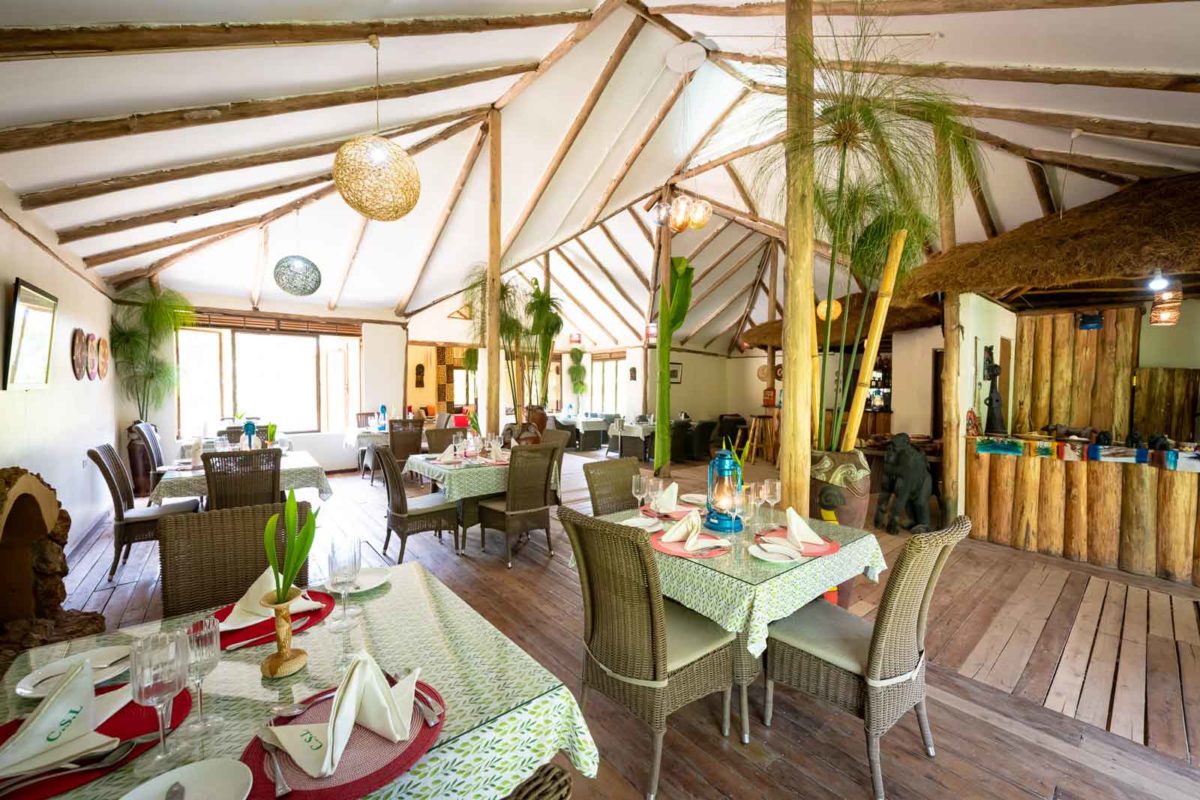
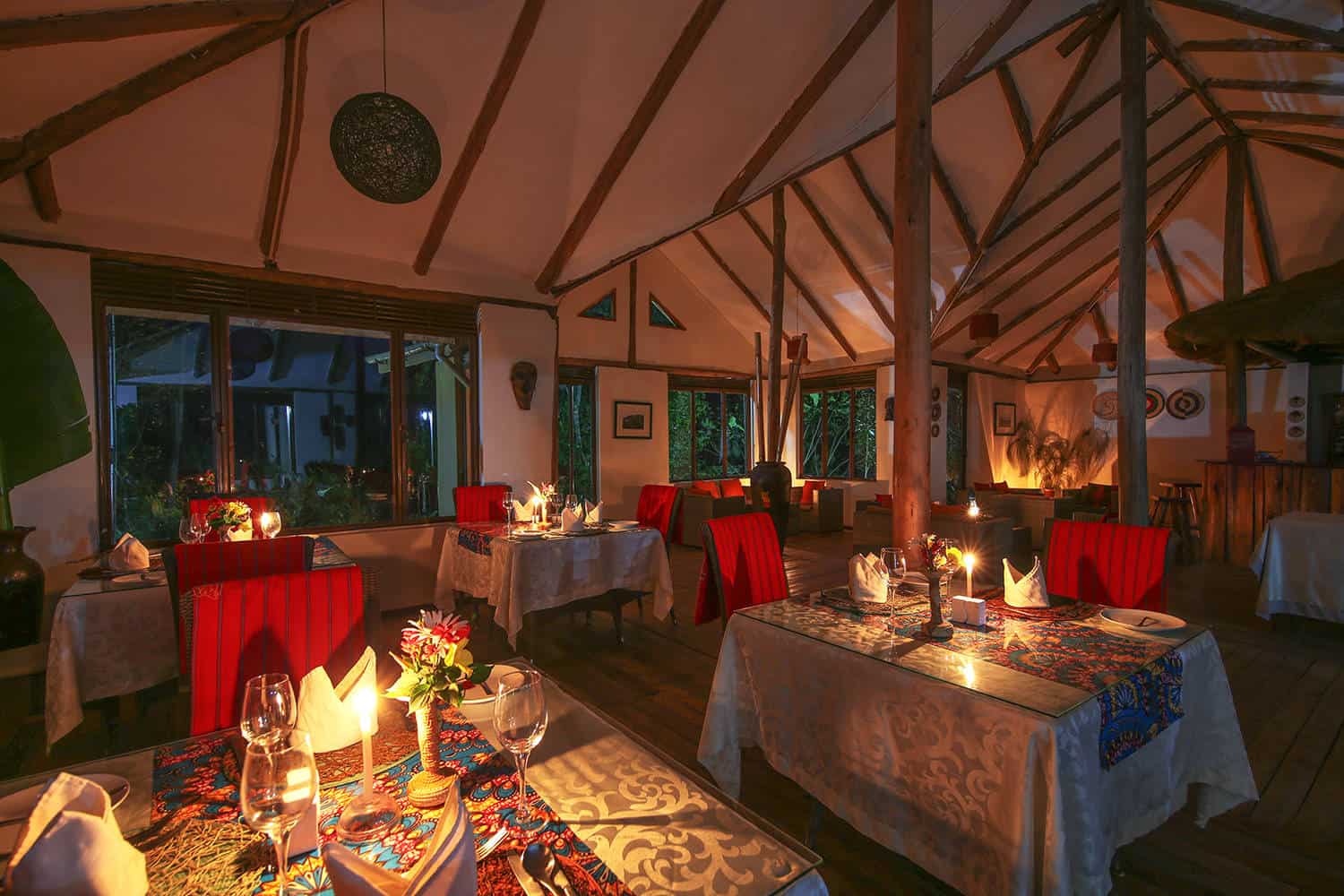
Even in remote forest locations, dinner presentation is often refined, with candlelit dining areas, outdoor setups, or lodge fireplaces enhancing the atmosphere.
Traditional Ugandan Food You May Encounter
While most gorilla lodges offer international menus, many also incorporate Ugandan cuisine to give guests a cultural food experience.
Some common dishes include matoke (steamed green bananas), groundnut sauce, posho (maize meal), and stewed beans. These dishes are staples in central and western Uganda and often appear as part of buffet-style dinners or special themed nights.
In lodge kitchens near Bwindi, you may also encounter goat stew, chicken luwombo (a traditional steamed dish wrapped in banana leaves), and grilled fish depending on supply availability.
These meals offer a deeper cultural connection to the region and are often well received by travellers looking for authentic African flavours.
Special Diets and Food Flexibility
Most gorilla safari lodges are highly experienced in handling dietary requirements due to the international nature of their guests.
Vegetarian and vegan diets are commonly accommodated with vegetable stews, lentil-based dishes, fresh salads, and fruit-heavy meals. Gluten-free and dairy-free options are also available upon request.
Lodges typically ask guests for dietary preferences in advance so that chefs can prepare appropriate menus before arrival. Because food supply logistics are complex in forest regions, advance notice is important for proper planning.
Food at Different Types of Lodges
Luxury lodges in Bwindi and surrounding regions tend to offer highly refined dining experiences with plated multi-course meals, fine dining presentation, and curated wine lists.
Mid-range lodges focus on hearty, fresh, and balanced meals that prioritize nutrition and comfort after trekking.
Budget lodges offer simpler but still satisfying home-style cooking, often based on local ingredients and traditional recipes.
Despite differences in presentation, most lodges maintain strong hygiene and food safety standards due to the sensitivity of tourism in protected ecosystems.
Drinks and Refreshments
Tea and coffee are standard across all gorilla lodges, often served throughout the day.
Soft drinks, bottled water, and fruit juices are widely available. In higher-end lodges, alcoholic beverages such as wine, beer, and spirits are offered during dinner or evening relaxation hours.
Hot drinks are especially popular after trekking, as rainforest temperatures can drop quickly in the evening due to altitude and mist.
Food During the Gorilla Trek Itself
Food is not consumed during gorilla viewing encounters, as strict guidelines require silence, limited disturbance, and minimal time spent near gorilla families.
However, energy snacks and water are often carried in small packs and consumed at safe intervals during trekking breaks or after the encounter ends.
Porters hired during treks can also carry food supplies and assist trekkers with hydration and light refreshments.
How Lodges Handle Remote Food Logistics
One of the most complex challenges in Bwindi Impenetrable National Park is logistics. Roads are steep, weather conditions are unpredictable, and supply chains can be delayed.
To manage this, lodges rely on scheduled supply deliveries from nearby towns such as Kisoro, Kabale, or even Kampala. Dry goods are stocked in advance, while fresh produce is rotated frequently depending on accessibility.
Many lodges also support local farmers, purchasing vegetables, fruits, and dairy products from surrounding communities. This not only ensures freshness but also supports conservation-linked livelihoods.
Food at gorilla safari lodges in Bwindi is far more than just a necessity-it is part of the overall safari experience. Despite the remote rainforest environment, lodges manage to deliver consistent, high-quality meals that balance international cuisine with local Ugandan flavours.
Whether it is a warm breakfast before trekking, a packed lunch deep in the forest, or a candlelit dinner after a long day in the jungle, food becomes part of the rhythm of the safari.
In the end, dining in gorilla country reflects the same philosophy as the experience itself: simplicity, authenticity, and a deep connection to place.