
Gorilla Safari Permit Rules: Age, Health and What to Bring
Deep in the mist-covered volcanic slopes of Volcanoes National Park, where bamboo forests rise from ancient lava soils and mountain gorillas move through the undergrowth like quiet shadows, trekking is one of the most tightly regulated wildlife experiences in the world.
Every visitor entering this protected ecosystem in Rwanda must follow strict permit conditions. These rules are not arbitrary-they exist to protect both the gorillas and the visitors, ensuring that every encounter is safe, respectful, and sustainable.
The permit system, managed by the Rwanda Development Board, sets clear guidelines around age, health, behavior, and what you must carry on the trek. Understanding these rules is essential before you book, because once inside the forest, there are no exceptions or shortcuts.
This guide breaks down everything you need to know about gorilla safari permit rules, including age restrictions, health requirements, and a complete field-ready packing checklist.
Age Restrictions for Gorilla Trekking
One of the most important rules enforced by the Rwanda Development Board is the minimum age requirement for gorilla trekking.
Minimum Age: 15 Years
In Rwanda, the minimum age allowed to participate in gorilla trekking is 15 years old.
This rule is strictly enforced at the briefing point in Volcanoes National Park, where rangers verify permits and identification before departure.
Why the Age Limit Exists
The age restriction exists for several reasons. Gorilla trekking is physically demanding, often involving steep, muddy, and high-altitude terrain. The experience also requires calm behavior in close proximity to wild animals, where sudden movements or noise can disturb gorillas. In addition, the trek can last several hours, which may not be suitable for younger children.
Can Exceptions Be Made?
The rule is strictly enforced. Even physically capable children under 15 are not permitted to join gorilla trekking groups. Families with younger children usually choose alternative activities in Rwanda while adults go trekking.
Health Requirements and Fitness Expectations
While no formal medical certificate is required by the Rwanda Development Board, health and fitness are critical for a successful trek in Volcanoes National Park.
General Fitness Level
Gorilla trekking requires a moderate to good fitness level. Treks may last from one hour to several hours depending on the location of the gorilla family. The terrain is steep, uneven, muddy, and located at high altitude, often above 2,000 meters.
Porters can assist with carrying bags, but visitors must still complete the hike.
Pre-Existing Health Conditions
Visitors with heart or respiratory conditions should consult a doctor before trekking. High altitude and steep climbs can be physically demanding. In some cases, rangers may assign easier trekking routes depending on availability.
Illness and Disease Precautions
Visitors showing symptoms such as cough, flu, or fever may be denied entry even with a valid permit. This strict rule protects the gorilla population in Volcanoes National Park from human-transmitted diseases and is enforced by the Rwanda Development Board.
Required Health Behavior in the Forest
Visitors must maintain safe distances from gorillas, avoid eating or drinking near them, and follow all ranger instructions. These measures reduce stress and disease risk for the animals.
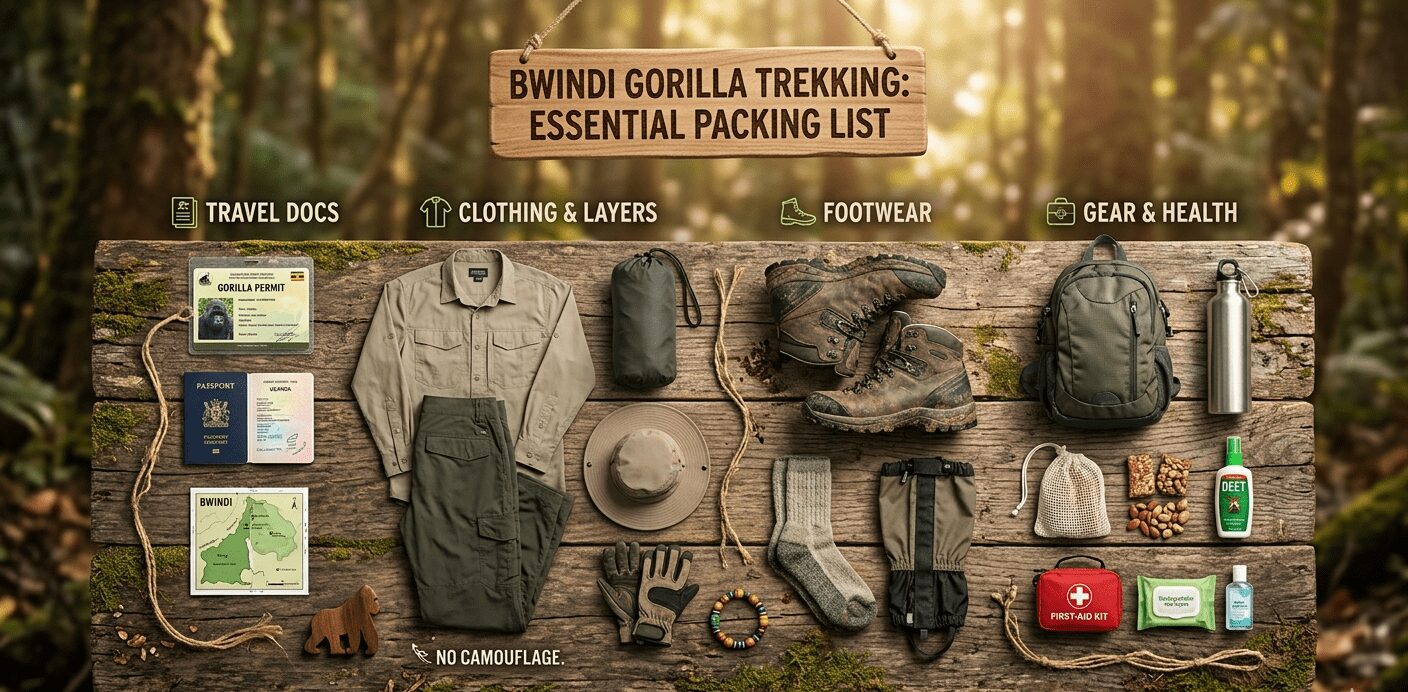
What You Must Bring for Gorilla Trekking
Proper preparation is essential for trekking in Rwanda. Weather conditions in Volcanoes National Park can change quickly, requiring practical and adaptable gear.
Clothing Essentials
Recommended clothing includes long-sleeved shirts, durable hiking trousers, a waterproof jacket, a warm fleece layer, and moisture-wicking socks. Neutral colors such as green, brown, or khaki are preferred. Bright colors should be avoided.
Footwear
Strong hiking boots with ankle support are essential. Waterproof or water-resistant boots with good grip are highly recommended due to slippery, muddy trails.
Gloves and Hand Protection
Light gloves help protect hands from thorns and rough vegetation while climbing through dense forest.
Daypack Essentials
A small waterproof backpack should include water, snacks, a camera without flash, spare batteries, and a rain cover.
Camera and Photography Rules
Photography is allowed, but flash is strictly prohibited. A zoom lens is recommended to maintain distance from gorillas.
Rain Protection
Rain can occur at any time in Rwanda. A waterproof jacket and rain cover for gear are essential even in dry seasons.
Personal Essentials
Items such as sunscreen, insect repellent, lip balm, hand sanitizer, tissues, and personal medication are highly recommended.
Rules of Conduct During Gorilla Trekking
Strict behavioral rules apply once the trek begins under supervision of the Rwanda Development Board.
Maintain Distance
Visitors must keep a safe distance of at least 7 meters from gorillas whenever possible.
One Hour Limit
Time with a gorilla family in Volcanoes National Park is limited to one hour to minimize disturbance.
No Eating or Drinking
Food and drinks must remain stored in backpacks while near gorillas.
Follow Ranger Instructions
Rangers have full authority during the trek and their instructions must be followed at all times.
Porter Services and Optional Support
Porters are available at the starting point of treks in Volcanoes National Park. They assist with carrying bags, navigating difficult terrain, and supporting hikers on steep sections. Hiring a porter also directly supports local communities in Rwanda.
Gorilla trekking in Volcanoes National Park is carefully regulated to protect both wildlife and visitors. The age limit ensures safety, health rules protect gorillas from disease, and packing guidelines ensure preparedness for challenging terrain.
All rules are enforced by the Rwanda Development Board to preserve the delicate balance of conservation and tourism in Rwanda.
When you follow these guidelines, you are not just preparing for a trek-you are helping protect one of the most endangered and remarkable species on Earth.