
Gorilla Safari Rules Briefing: What Rangers Tell You Before Trek
A gorilla safari rules briefing is the mandatory orientation session that every visitor attends before entering the forest in places such as Bwindi Impenetrable National Park and Mgahinga Gorilla National Park. This briefing is not a formality-it is a structured conservation protocol designed to protect both visitors and mountain gorillas while ensuring minimal disturbance to one of the world’s most fragile ecosystems.
The briefing is delivered by trained rangers who are responsible for gorilla protection, forest monitoring, and visitor safety. It sets the behavioral framework for the entire trek and ensures that every group follows the same conservation standards.
The Purpose of the Briefing
The main purpose of the briefing is to prepare visitors for controlled wildlife interaction. Mountain gorillas are endangered, and human proximity must be carefully managed to prevent stress, disease transmission, and behavioral disruption.
Rangers use the briefing to explain:
How to behave around gorillas
Why strict rules exist
What to expect during the trek
How safety is maintained in the forest
It is both an educational and regulatory session that ensures responsible tourism.
Group Assignment and Gorilla Family Allocation
One of the first things rangers explain is group allocation. Each trekking group is assigned to a specific habituated gorilla family.
Group sizes are strictly limited to reduce environmental pressure. This ensures that no single gorilla group is exposed to excessive human presence in a single day.
Rangers also explain that different gorilla families vary in size, behavior, and location. Some are easier to track, while others may require longer hikes through difficult terrain.
Expected Trekking Duration and Terrain
Rangers provide realistic expectations about trekking time. This is important because gorilla locations are not fixed.
You may be told that the trek could last anywhere from one hour to several hours depending on gorilla movement. Terrain conditions are also explained, including steep slopes, muddy paths, dense vegetation, and unpredictable weather.
This helps visitors mentally prepare for effort levels rather than expecting a fixed hiking duration.
The One-Meter Rule (Minimum Distance Requirement)
One of the most important rules is maintaining a minimum distance from gorillas. Rangers emphasize that visitors must stay at least several meters away from the animals at all times.
This rule exists to:
Reduce stress on gorillas
Prevent disease transmission
Maintain natural behavior patterns
Ensure visitor safety
Even if gorillas approach closely on their own, visitors are instructed to remain calm and avoid sudden movement.
Time Limit with Gorillas
Rangers explain that visitors are allowed a strictly limited time with a gorilla family, usually one hour.
This time limit is essential for conservation management. It ensures:
Minimal disturbance to gorilla routines
Fair access for all trekking groups
Controlled exposure to human presence
Once the hour is complete, groups must quietly withdraw from the location.
Health and Disease Prevention Rules
One of the most critical sections of the briefing focuses on health safety. Gorillas share a high percentage of genetic similarity with humans, which makes them vulnerable to human diseases.
Visitors are instructed not to:
Trek while sick or showing symptoms
Cough or sneeze directly toward gorillas
Leave waste in the forest
Use flash photography that may disturb animals
Rangers may even deny entry to individuals showing signs of illness to protect gorilla health.
Behavior Guidelines in the Forest
Visitors are taught how to behave once inside gorilla territory. Key instructions include:
Move slowly and calmly at all times
Avoid loud talking or sudden gestures
Follow ranger instructions without deviation
Do not attempt to touch gorillas
These rules are designed to maintain a non-threatening environment for the animals.
Photography Rules
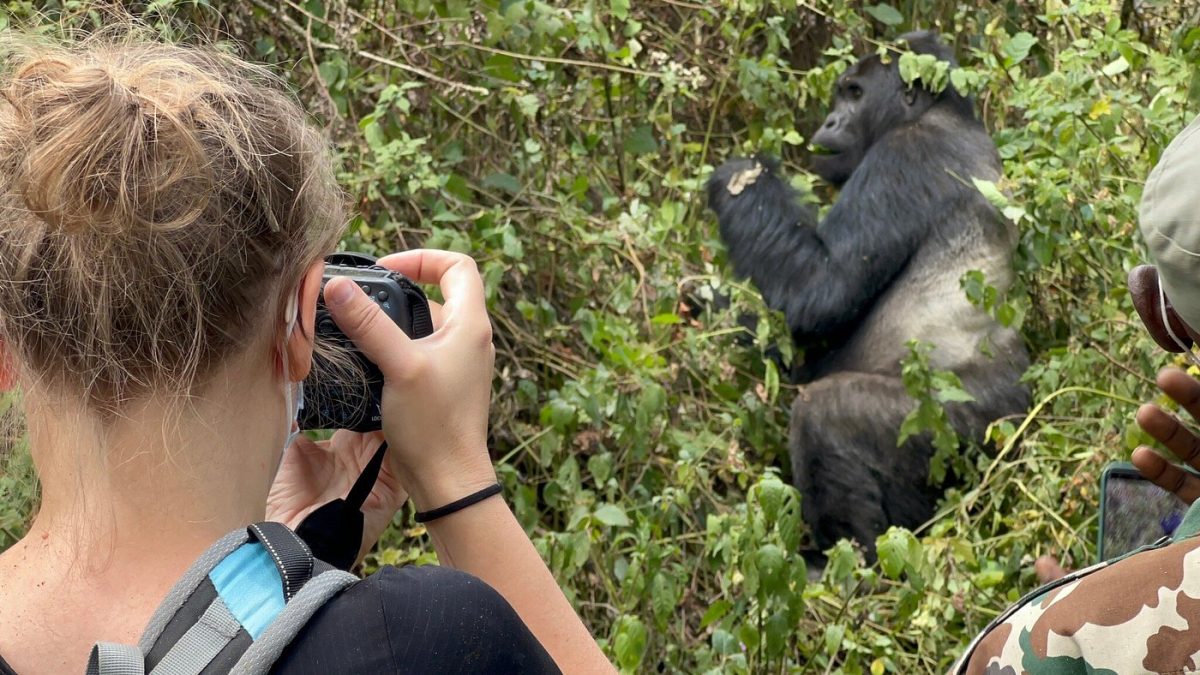
Photography is allowed but strictly controlled. Rangers explain that:
Flash photography is not permitted
Movement while photographing should be minimal
Equipment should be used quietly and efficiently
The goal is to capture natural behavior without disrupting the gorillas’ social structure.
What to Do When Gorillas Approach
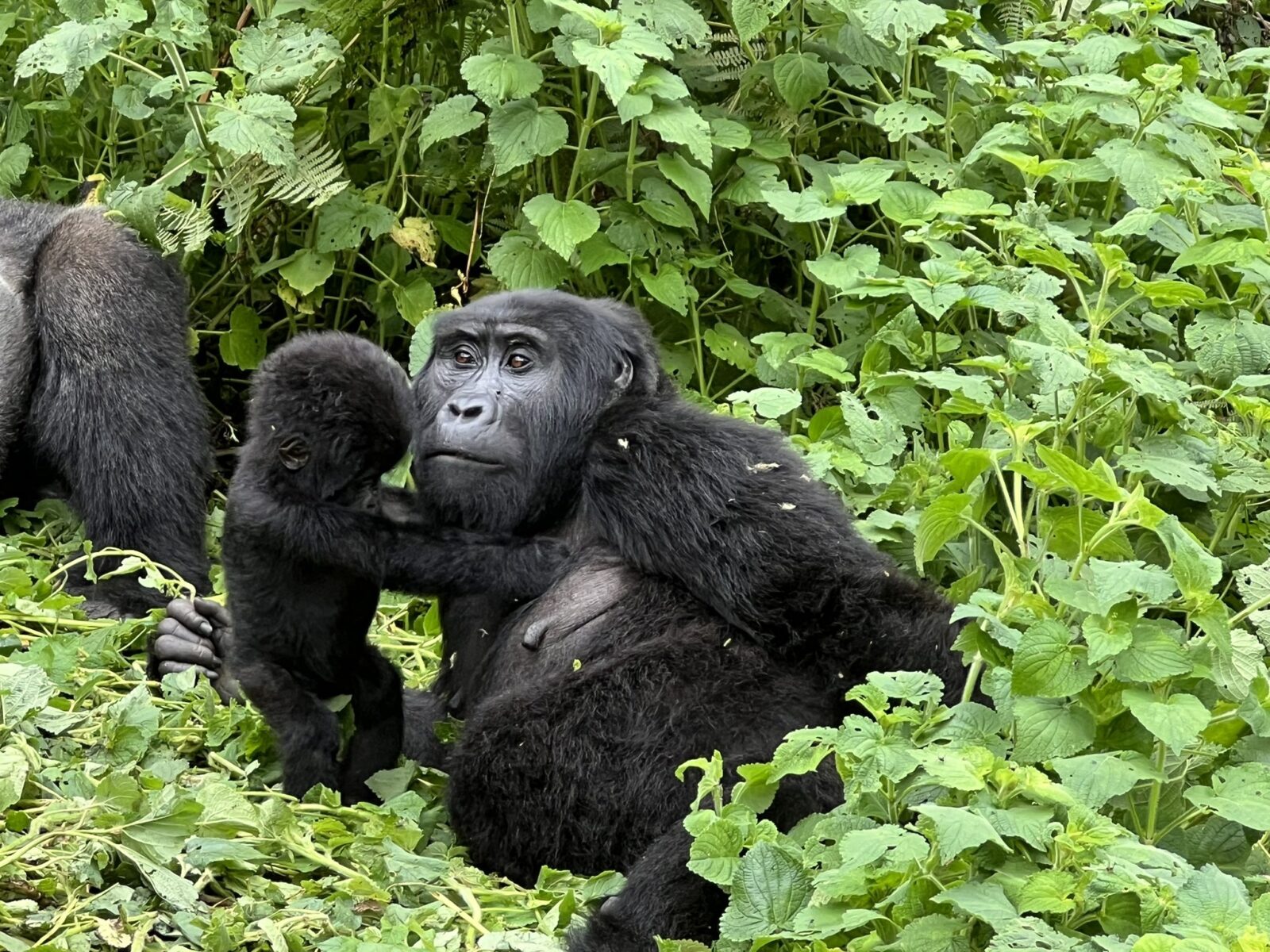
Rangers explain that gorillas may sometimes move very close to visitors. In such cases:
Remain calm and still
Avoid eye contact with dominant silverbacks if instructed
Do not attempt to move away quickly or run
Follow ranger signals immediately
Gorillas are generally calm when unprovoked, but human behavior must remain controlled.
Safety Protocols in the Forest
The briefing also covers safety procedures for unpredictable situations such as:
Sudden weather changes
Slippery terrain accidents
Gorilla movement toward the group
Navigation challenges in dense forest
Rangers are trained to manage these situations and ensure visitor safety at all times.
Importance of Staying with the Group
Visitors are strictly instructed never to separate from their group. The forest is dense, and visibility can be limited.
Staying together ensures:
Safety coordination with rangers
Efficient tracking of gorillas
Reduced risk of getting lost
Environmental Protection Rules
Conservation rules are reinforced throughout the briefing. Visitors are reminded not to:
Leave litter in the forest
Damage vegetation
Disturb wildlife habitats
Remove anything from the ecosystem
The forest is a protected environment, and every action has long-term ecological consequences.
Emotional and Psychological Preparation
Rangers also prepare visitors mentally. They explain that the experience may be emotionally powerful, especially when encountering gorillas at close range.
Visitors are encouraged to remain calm, observe quietly, and respect the natural behavior of the animals.
This helps ensure that emotional reactions do not interfere with safety or conservation rules.
Final Perspective
The gorilla safari rules briefing is a foundational part of the trekking experience in Bwindi Impenetrable National Park and Mgahinga Gorilla National Park. It is not just instruction-it is a conservation agreement between visitors, rangers, and the forest ecosystem.
By following these rules, visitors contribute directly to the protection of mountain gorillas while ensuring their own safety in a challenging rainforest environment.
The briefing transforms the trek from a simple wildlife activity into a structured conservation experience, where every action supports the long-term survival of one of the world’s most endangered species.