
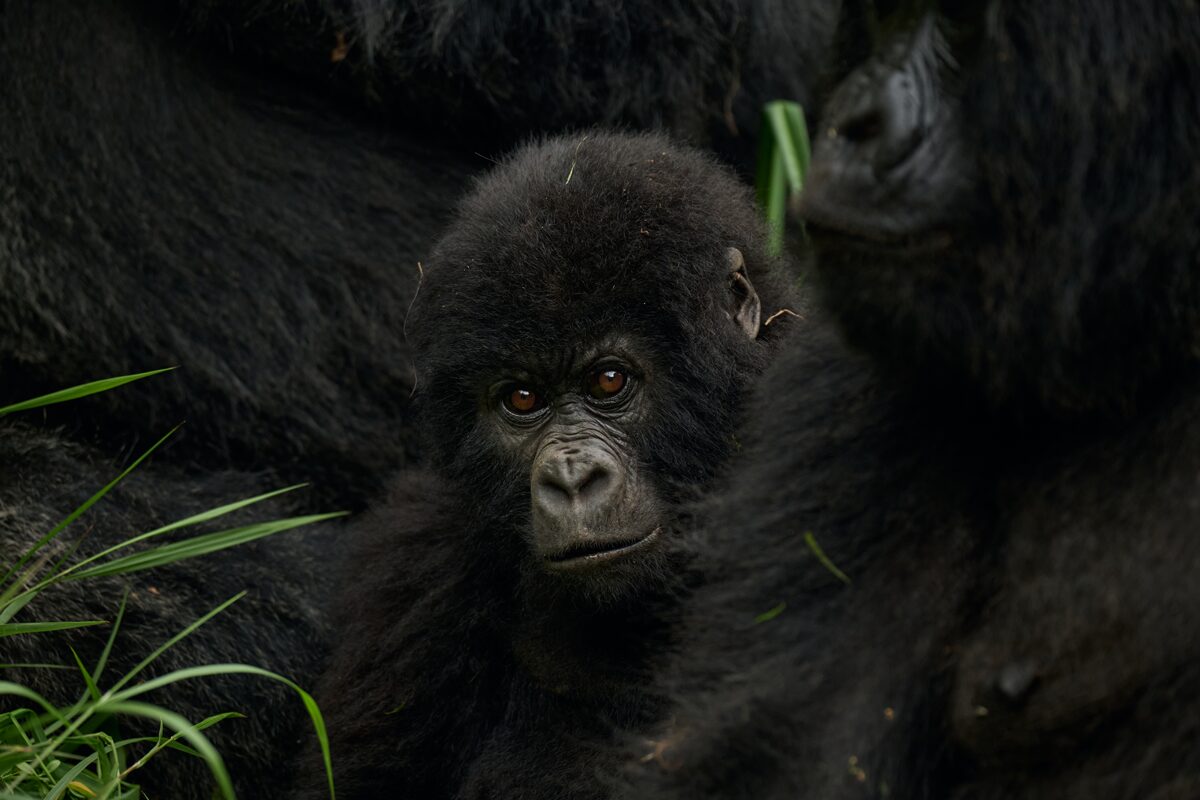
Habinyanja Gorilla Family Bwindi: Buhoma’s Largest Family
Within the thick, mist-covered rainforest of Bwindi Impenetrable National Park, the Habinyanja gorilla family stands out as one of the most dynamic and historically rich groups available for trekking. Located in the Buhoma sector, this family is often described as one of the largest and most complex gorilla groups in the region, offering a deeply engaging experience for visitors who want to go beyond a simple sighting and truly observe gorilla social structure in action.
The name “Habinyanja” comes from a local Rukiga word meaning “a place with water,” reflecting the swampy, riverine areas where the group was first identified. This detail is not just linguistic-it reflects the type of habitat this family prefers, often influencing trekking routes and overall experience.
The History of the Habinyanja Family
The Habinyanja group was habituated in 1997, just a few years after the pioneering Mubare family. By this time, Uganda had already proven that gorilla habituation could work, but Habinyanja introduced a new layer of complexity.
Unlike some smaller, more stable groups, Habinyanja has undergone multiple social transformations over the years. It has experienced internal conflicts, leadership changes, and even temporary splits. These dynamics are not unusual for wild gorillas, but in Habinyanja, they have been particularly pronounced and well-documented.
At one point, the group split into two factions due to rivalry between dominant silverbacks, eventually forming separate families before stabilizing again. These events provide valuable insight into how gorilla societies evolve naturally, even under the presence of tourism.
Why Habinyanja Is Considered One of Buhoma’s Largest
Habinyanja has consistently maintained a relatively large number of individuals compared to many other habituated groups in Bwindi. While numbers fluctuate due to births, deaths, and occasional dispersal, the group often includes multiple adult females, juveniles, infants, and at least one dominant silverback.
This larger group size creates a very different trekking experience.
Instead of focusing on a single cluster of gorillas, visitors often find themselves surrounded by activity happening in multiple directions. Juveniles may be playing nearby, females grooming each other in another area, while the silverback positions himself strategically within the group.
It feels less like observing a single unit and more like stepping into a functioning community.
Location and Trekking Difficulty
The Habinyanja family is found in the Buhoma sector, one of the most popular entry points into Bwindi Impenetrable National Park.
However, unlike the Mubare group, which is often considered more accessible, Habinyanja is known for longer and sometimes more demanding treks.
The group’s preferred habitat tends to be deeper within the forest, often requiring:
Steeper climbs
Longer walking distances
Navigation through denser vegetation
This does not make it inaccessible, but it does mean that trekkers should be prepared for a more physically demanding experience.
For many visitors, this added effort enhances the reward.
Social Structure and Behavior
One of the most compelling aspects of the Habinyanja family is its social complexity.
In a larger group, interactions are more varied and frequent. You are more likely to observe:
Multiple grooming sessions happening simultaneously
Playful behavior among juveniles and adolescents
Maternal care involving several infants
Subtle dominance signals between individuals
The silverback plays a central role, not just as a leader but as a stabilizing force. His presence regulates movement, maintains cohesion, and ensures protection from external threats.
In Habinyanja, these dynamics are easier to observe simply because there are more individuals interacting at any given time.
What Makes the Experience Unique
Trekking to Habinyanja is less predictable than visiting smaller groups.
Because of its size and movement patterns, the group can spread out over a wider area. This means that during your one-hour viewing window, you may need to shift position slightly to observe different subgroups.
This creates a more active experience.
Rather than standing in one place, you are subtly adjusting, following ranger guidance, and observing different angles of the group’s behavior.
For visitors who enjoy immersive, dynamic wildlife encounters, this is a major advantage.
Conservation Significance
Like all habituated gorilla groups in Bwindi, Habinyanja plays a vital role in conservation.
Tourism revenue generated from trekking permits supports:
Park management and protection
Anti-poaching initiatives
Community development programs around Bwindi
The success of larger groups like Habinyanja also demonstrates the long-term viability of gorilla habituation. It shows that even complex social groups can adapt to controlled human presence without losing their natural behavior.
This is critical for the sustainability of gorilla tourism in Uganda.
Comparing Habinyanja with Other Buhoma Groups
In the Buhoma sector, visitors typically choose between several habituated families, including Mubare and Habinyanja.
The key differences are clear.
Mubare offers a more accessible trek and often a smaller, more contained group experience.
Habinyanja offers:
A larger group size
More complex social interactions
A potentially more challenging trek
The choice depends on what you value more-ease and simplicity, or depth and immersion.
Who Should Choose Habinyanja
The Habinyanja family is particularly well suited for:
Visitors who want to see larger gorilla groups
Travelers interested in social behavior and interaction
Those comfortable with moderate to challenging trekking
Returning visitors who want a different experience from smaller groups
It may be less ideal for those with limited fitness or those specifically seeking the shortest possible trek.
Rules and Visitor Etiquette
As with all gorilla trekking experiences in Bwindi, strict rules apply when visiting the Habinyanja family.
Visitors must:
Maintain a safe distance of at least 7 meters
Limit observation time to one hour
Follow ranger instructions at all times
Avoid visiting if unwell
Keep noise levels low
These guidelines are essential for protecting both the gorillas and visitors.
The Emotional Impact of a Larger Group
Seeing a large gorilla family like Habinyanja has a different emotional impact compared to smaller groups.
There is a sense of scale-not in the dramatic way of savannah herds, but in the density of life within a confined forest space.
You become aware of layers of activity. No matter where you look, something is happening. It is not a single focal point but a network of interactions.
This makes the experience feel richer, more complex, and more immersive.
The Habinyanja Gorilla Family represents one of the most engaging gorilla trekking experiences in Bwindi Impenetrable National Park. Its size, history, and social dynamics offer a deeper look into gorilla life than many smaller groups can provide.
While the trek may require more effort, the reward is a more dynamic and multi-layered encounter.
For first-time visitors who want more than just a sighting, and for experienced trekkers seeking a richer perspective, Habinyanja stands out as one of the most compelling choices in Bwindi.
It is not just about seeing gorillas-it is about understanding how they live together.