
Is Camping Available Near Bwindi? Options for Budget Travellers
Travelers pricing out a gorilla trekking trip for the first time are often surprised by how much flexibility actually exists in the accommodation side of the budget, once they realize camping near Bwindi is a genuinely legitimate, widely used option rather than a workaround few people actually choose. Camping near Bwindi is genuinely available and represents one of the most effective ways budget-conscious travelers can meaningfully reduce total trip cost without compromising on the actual gorilla trekking experience itself, since the permit fee, not accommodation, dominates any gorilla trekking budget regardless of where you sleep the night before. Wild or unofficial camping inside the national park itself is not permitted, both for safety reasons given the presence of wild elephants and other animals, and for straightforward conservation management reasons, but a genuine range of established, secure campsites exists just outside the park boundary across every major trekking sector.
What Camping Near Bwindi Actually Looks Like
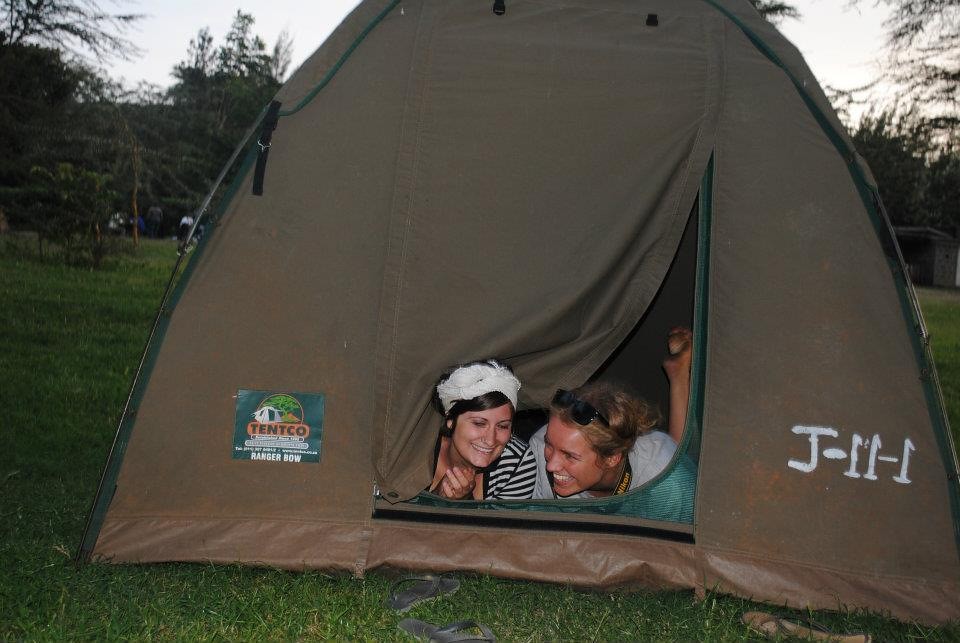
Established campsites around Bwindi generally offer designated tent areas with basic but genuinely functional facilities, shared bathroom blocks, running water, and often an on-site restaurant or the option to self-cater. This is a meaningful step up from wild, unsupported camping; most established sites provide security, a genuinely important consideration given Bwindi’s rural, forest-edge setting, alongside the basic amenities needed for a comfortable night before an early trekking departure. Costs at UWA-managed and community-run campsites generally run in the range of $5 to $15 per person per night, a fraction of even the most basic lodge accommodation, making camping the single most effective lever available for travelers determined to minimize accommodation costs specifically.
Specific Camping Options by Sector
Buhoma, Bwindi’s most developed sector, offers the most established camping infrastructure. Buhoma Community Rest Camp provides a genuinely welcoming, community-run camping option with shared bathrooms, running water, and a restaurant serving local meals, alongside opportunities to engage with cultural activities run by the same community organization. Bwindi Backpackers Lodge offers another well-regarded Buhoma-area camping option, with genuinely spectacular forest-edge views, basic shower and toilet facilities, and the flexibility to self-cater or eat at the lodge’s restaurant depending on budget and preference for the day.
Ruhija sector offers camping through Bwindi Guest House Ruhija, which provides simple camping facilities alongside its budget rooms and can arrange meals for campers who prefer not to self-cater. Rushaga sector camping options include facilities near Nkuringo campsite and several other budget-oriented properties in the area, generally offering comparable basic amenities to Buhoma’s options, though with somewhat less established infrastructure given Rushaga’s more recent development as a trekking sector compared to Buhoma’s longer tourism history.
What to Bring If You Choose to Camp
Most established campsites around Bwindi rent tents and basic camping equipment for travelers who prefer not to carry their own gear across an international trip, though bringing your own sleeping bag, suited to genuinely cool nighttime temperatures at Bwindi’s altitude, is generally recommended regardless of whether the tent itself is rented or personal. A headlamp or reliable flashlight matters more at a campsite than at a lodge, given limited or no ambient lighting after dark in most camping areas, and warm sleepwear is worth prioritizing given how significantly temperatures drop overnight even during Uganda’s warmer months.
How Camping Fits Around Your Trekking Schedule
Timing matters more for campers than for lodge guests, since gorilla trekking’s early 7 a.m. briefing means whatever campsite you choose needs a realistic, planned route to the correct trailhead well before that start time. Buhoma’s camping options sit close enough to park headquarters that this is rarely a concern, but travelers camping near Ruhija or Rushaga should confirm transport arrangements the night before rather than assuming a taxi or shuttle will simply be available at dawn. Many campsites can arrange a driver or coordinate with your tour operator’s vehicle if you are trekking as part of an organized package, and confirming this logistics detail during booking, not on arrival, avoids a stressful scramble on the actual morning of your trek. Packing your daypack the night before, rather than in the pre-dawn scramble of breaking camp, is a small habit that makes camping mornings considerably smoother than they might otherwise be.
Campers also need to think through where gear gets stored during the actual trekking day itself, since a multi-hour trek is not the time to be carrying a full pack of camping equipment. Most established sites offer secure storage or luggage rooms for exactly this purpose, letting you head out with only your gorilla trekking daypack while your tent and larger gear stay safely behind, but this is worth confirming directly with the specific site rather than assuming it as a universal feature.
Combining Camping With Other Uganda Destinations
Budget travelers building a longer, multi-park Uganda itinerary often find that a camping-based approach to accommodation scales naturally beyond Bwindi itself, since many of Uganda’s other major parks, Queen Elizabeth, Murchison Falls, and Lake Mburo among them, offer comparable budget camping infrastructure. Travelers who camp their way across a broader circuit, rather than switching to lodge accommodation for Bwindi specifically, keep the same cost-saving logic consistent across an entire trip rather than treating gorilla trekking as an exception requiring a different accommodation strategy. This approach particularly suits backpackers and independent travelers already comfortable with self-catering and basic facilities elsewhere in their itinerary, for whom Bwindi’s camping options feel like a natural continuation rather than a downgrade in comfort standards.
Weighing Camping Against Budget Lodge Options
Camping saves real money compared to even the most basic budget lodge accommodation, but it is worth weighing this saving honestly against comfort, particularly given how physically demanding trekking day itself already is. Campers get less protection from rain, generally shared rather than private bathroom facilities, and a less restful sleep surface than even basic guesthouse accommodation offers, trade-offs some travelers accept readily for the cost savings and others find genuinely not worth it once they consider how much a good night’s sleep matters before a potentially many-hours-long trek. Travelers uncertain which approach suits them might reasonably choose camping for one night of a longer trip and a basic guesthouse for the night immediately before trekking day specifically, balancing cost savings against ensuring genuine rest before the most physically demanding part of the entire trip.
Camping and Community Tourism
Many community-run campsites around Bwindi, Buhoma Community Rest Camp being a particularly well-established example, channel a meaningful share of camping fees directly back into local community projects, schools, healthcare, and infrastructure development in villages bordering the park. Choosing a community-run camping option over a purely commercial one lets budget travelers combine cost savings with a genuine, direct contribution to the local economy, a dynamic similar to the community revenue-sharing built into gorilla permit fees themselves. This is worth factoring into the choice between otherwise similarly priced camping options, since the community-benefit angle costs nothing extra but meaningfully changes where your money ends up.
Safety Considerations While Camping
Established, secured campsites near Bwindi are considered genuinely safe for travelers, staffed with on-site security and positioned in areas with established tourism infrastructure rather than truly remote or unsupervised locations. That said, basic common-sense precautions still apply: keeping valuables secured, following any specific guidance camp staff provide about wildlife in the immediate area, since Bwindi’s forest elephants and other wildlife occasionally range close to forest-edge properties, and choosing established, reviewed campsites over entirely unknown or informal options advertised without any track record. Asking your tour operator or fellow travelers for direct, current recommendations remains more reliable than booking a completely unfamiliar campsite based on online listings alone.
Weather preparation matters more for campers than for lodge guests, given Bwindi’s genuinely wet climate across large parts of the year. A properly waterproof tent, checked and confirmed rather than simply assumed, along with a ground tarp or footprint to protect against ground moisture, makes a meaningful difference to how comfortable a night’s camping actually turns out to be, particularly during the March-to-May or September-to-November rainy periods when sustained rain is a genuine possibility rather than an occasional inconvenience. Campers trekking during these wetter months should also pack an extra dry bag specifically for clothing and electronics, since a wet tent interior can otherwise leave an entire trip’s gear damp for days at a time in Bwindi’s humid climate.
Planning Your Budget Bwindi Trip
Our broader page on budget gorilla safari accommodation in Bwindi covers non-camping budget options worth comparing against camping specifically, and our overview of Bwindi accommodation tiers puts camping in context against the full range of available options. A two-day Bwindi gorilla trek pairs well with a camping-based budget approach, keeping total trip cost as low as realistically possible while still delivering the full, genuine gorilla trekking experience camping near Bwindi makes accessible to travelers on a genuinely tight budget. Whether you ultimately choose a tent or a guesthouse bed, the trek itself, and the gorillas at the end of it, remain exactly the same regardless of where you laid your head the night before.