
The Journey Begins
The first signs were easy to miss.
A few zebras appeared on the horizon, moving steadily across the plains. Then a few dozen became hundreds. Before long, the landscape seemed alive with black and white stripes stretching as far as the eye could see.
Migration season had arrived.
For many safari visitors, the Great Migration is synonymous with wildebeest. Images of massive river crossings and endless herds often focus on these famous travellers. Yet long before the wildebeest take centre stage, zebras are already on the move, leading one of Africa’s greatest wildlife journeys.
This was the season when I found myself following the zebra trail south.
More Than Followers
One of the biggest surprises about the migration is that zebras are not simply tagging along behind wildebeest.
In many cases, they are among the first animals to begin moving.
Their ability to feed on taller, tougher grasses allows them to enter areas before wildebeest. As they graze, they trim the vegetation and expose the shorter, nutrient rich shoots preferred by wildebeest.
In a way, zebras help prepare the route.
The migration is not just a mass movement of animals. It is a complex system where different species play different roles.
Reading the Rain
The migration is driven by one essential factor.
Rain.
Across the Serengeti and Maasai Mara ecosystem, seasonal rainfall determines where fresh grass will grow. Animals must constantly move to take advantage of new grazing opportunities.
Zebras seem remarkably skilled at finding these changing conditions.
As storms pass across distant plains, fresh grass begins emerging in areas that may have been dry only weeks earlier. The herds respond by gradually shifting their movements, following the promise of better feeding grounds.
The journey south often begins as animals leave northern grazing areas and move towards the southern Serengeti, where seasonal rains transform the landscape.
An Endless Line of Stripes
We spent much of the day driving alongside the migrating herds.
The scale was difficult to comprehend.
Groups of zebras stretched across valleys, hillsides, and open grasslands. Some travelled in small family units while others merged into enormous herds numbering in the thousands.
From a distance, their stripes created an almost hypnotic effect.
The black and white patterns blended together as the animals moved, creating a constantly shifting wave across the plains.
No photograph seemed capable of capturing the true size of the spectacle.
Family Groups on the Move
Despite the vast numbers involved, migration remains a deeply personal journey for each zebra family.
Mares stayed close to their foals.
Young zebras followed their mothers carefully through the moving crowds.
Dominant stallions remained alert, monitoring both their families and the surrounding landscape.
Every family group had its own pace and rhythm, yet all were moving in the same general direction.
The migration may look chaotic from afar, but closer observation reveals remarkable organisation.
The Challenges Along the Way
Migration is not an easy journey.
Animals must travel long distances while facing countless obstacles.
Predators follow the herds, taking advantage of the abundance of potential prey. Lions establish territories along migration routes, while spotted hyenas patrol the edges of moving groups. Cheetahs search for opportunities among young animals, and crocodiles wait patiently at river crossings.
Food and water can also become scarce if seasonal rains arrive late.
Every kilometre travelled represents a balance between risk and reward.
Why Zebras Migrate
The answer is simple.
Survival.
Grasslands are constantly changing. Areas that provide excellent grazing today may become dry and unproductive within a few months. By moving with the seasons, zebras gain access to fresh vegetation that supports their nutritional needs throughout the year.
Migration allows them to avoid exhausting local resources.
Instead of remaining in one place and competing for increasingly limited food, they follow nature’s cycles across vast landscapes.
It is a strategy that has worked for thousands of years.
A Partnership With Wildebeest
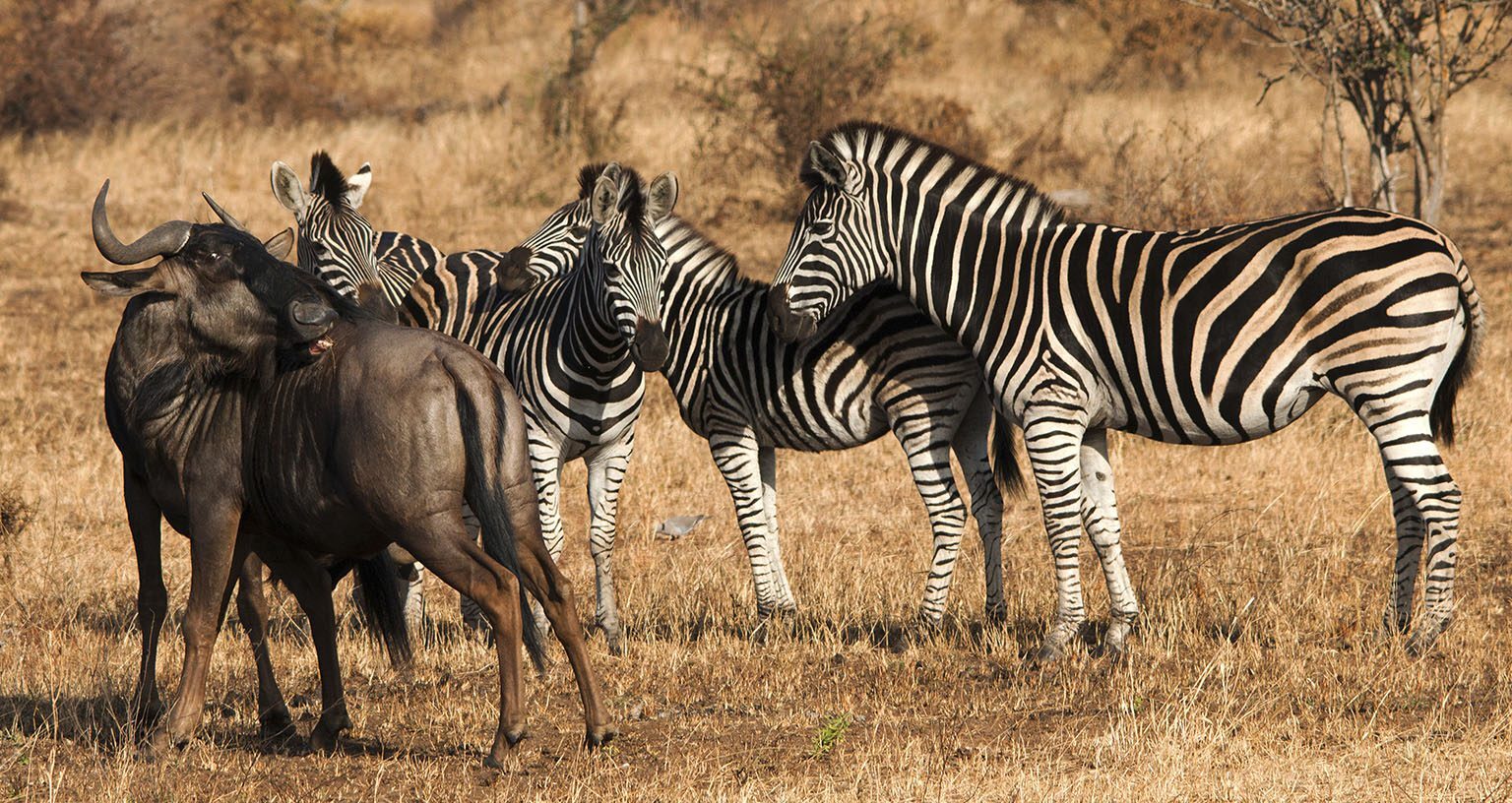
As we continued following the herds, wildebeest began appearing in larger numbers.
Soon the two species were travelling together.
The relationship benefits both animals. Zebras consume taller grasses, while wildebeest focus on shorter growth. Zebras contribute excellent eyesight, while wildebeest bring strong senses of smell and hearing.
Together they create a more effective system for locating food and detecting predators.
What appears to be a simple gathering of animals is actually a highly successful partnership shaped by generations of adaptation.
The Southern Serengeti Awaits
As the migration progressed southward, the landscape began changing.
Fresh grass covered wide sections of the plains. Seasonal water pools appeared after recent rainfall, attracting wildlife from every direction.
The southern Serengeti is particularly important because it becomes a major calving area.
Thousands of young animals are born here each year when food is plentiful and conditions are favourable. For zebras, reaching these grazing grounds is a critical part of the annual cycle.
The journey south is not simply about finding food.
It is about securing the future of the next generation.
Witnessing Movement on a Grand Scale
There is something extraordinary about watching migration unfold.
Most wildlife sightings involve individual animals or small groups. Migration is different.
The landscape itself seems to move.
Dust rises from countless hooves. Long lines of animals stretch beyond the horizon. Every direction reveals more wildlife travelling towards the same destination.
For safari travellers, it creates a sense of connection to something much larger than a single game drive.
You are witnessing a process that has shaped East African ecosystems for centuries.
Where to Experience Zebra Migration
The best place to witness migrating zebras is within the Serengeti Mara ecosystem that spans northern Tanzania and southern Kenya.
The Serengeti National Park hosts the largest portion of the migration for much of the year. Depending on rainfall patterns, herds move between the southern plains, central regions, western corridor, and northern areas near the Mara River.
Kenya’s Maasai Mara National Reserve becomes particularly important when large numbers of animals move northward before later returning south.
Timing varies from year to year because rainfall patterns change, making every migration season slightly different.
Following the Trail
As evening approached, the herds continued their journey.
Some animals grazed while moving. Others paused briefly before rejoining the flow of wildlife heading south. The movement never truly stopped.
It simply continued beyond the horizon.
Watching thousands of zebras travel together offered a new appreciation for the challenges and resilience of life in the wild. Every animal was part of a story far larger than itself, following routes established long before roads, vehicles, or national park boundaries existed.
The Southward Journey Continues
As the sun dipped below the plains, the stripes gradually disappeared into the gathering darkness.
The migration would continue through the night.
Tomorrow, the herds would be a little farther south. The grass would be a little greener. New challenges and opportunities would await.
For the zebras, the journey was far from over.
For those fortunate enough to witness it, however, following the zebra trail south revealed one of Africa’s greatest wildlife spectacles. It was a reminder that migration is not simply movement from one place to another. It is a continuous search for survival, driven by rain, grass, instinct, and the determination of countless animals moving together across one of the world’s last great wildernesses.