
Shoebill Stork in Murchison Falls: Where and How to See This Rare Bird
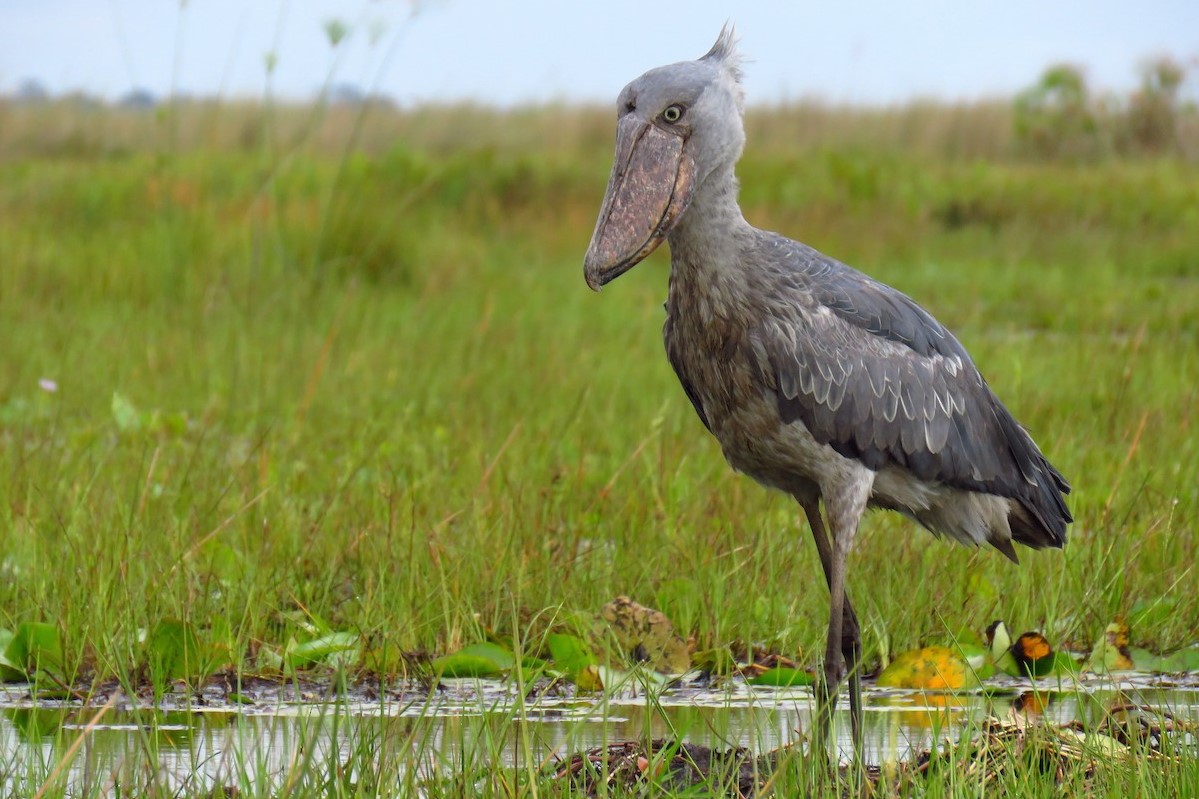
Among Africa’s most sought-after birds, the shoebill stork stands in a category of its own. With its massive shoe-shaped bill, slow deliberate movements, and prehistoric appearance, it feels less like a modern bird and more like a relic from another era.
While many travelers associate shoebill sightings with wetlands near Lake Victoria, few realize that Murchison Falls National Park offers one of the most rewarding opportunities to encounter this rare species in a true wilderness setting.
Seeing a shoebill here is not guaranteed, but when it happens, it is one of the most memorable wildlife moments in Uganda.
Why Murchison Falls Is a Key Shoebill Habitat
Murchison Falls National Park is uniquely positioned to support shoebill populations due to its mix of river systems, delta wetlands, and papyrus swamps.
The park is dominated by the Nile River, which flows through varied landscapes before emptying into Lake Albert. At this junction, large wetland areas form, creating ideal feeding grounds for shoebills.
These wetlands provide shallow waters rich in lungfish and other prey species, which are essential to the shoebill’s survival. The dense vegetation also offers the seclusion this shy bird prefers.
The Best Place to See Shoebills: The Nile Delta
The most reliable location for spotting shoebills in Murchison Falls National Park is the Nile Delta, where the Nile River meets Lake Albert.
This area is characterized by:
- Extensive papyrus swamps
- Shallow channels
- Abundant fish populations
The delta is less visited than the main sections of the park, which increases the chances of encountering undisturbed wildlife.
Shoebills are often seen standing motionless in the water, scanning for prey with intense focus.
How to See the Shoebill in Murchison Falls
The most effective way to search for shoebills is through a specialized boat safari toward the Nile Delta.
Unlike standard boat cruises that head to the base of Murchison Falls, the delta trip is quieter, slower, and more focused on birdlife.
The experience involves navigating through channels where guides scan the wetland edges carefully. Because shoebills rely on camouflage and stillness, spotting them requires trained eyes and patience.
The success of the sighting depends heavily on guide experience and timing.
Best Time for Shoebill Sightings
Shoebills can be seen year-round in Murchison Falls National Park, but certain conditions improve your chances.
Early morning is the most productive time, when the bird is actively feeding in shallow water.
Seasonally, the dry periods tend to concentrate fish in smaller areas, increasing the likelihood of sightings. However, the wetlands remain suitable throughout the year, making sightings possible in any season.
What Makes the Shoebill So Unique
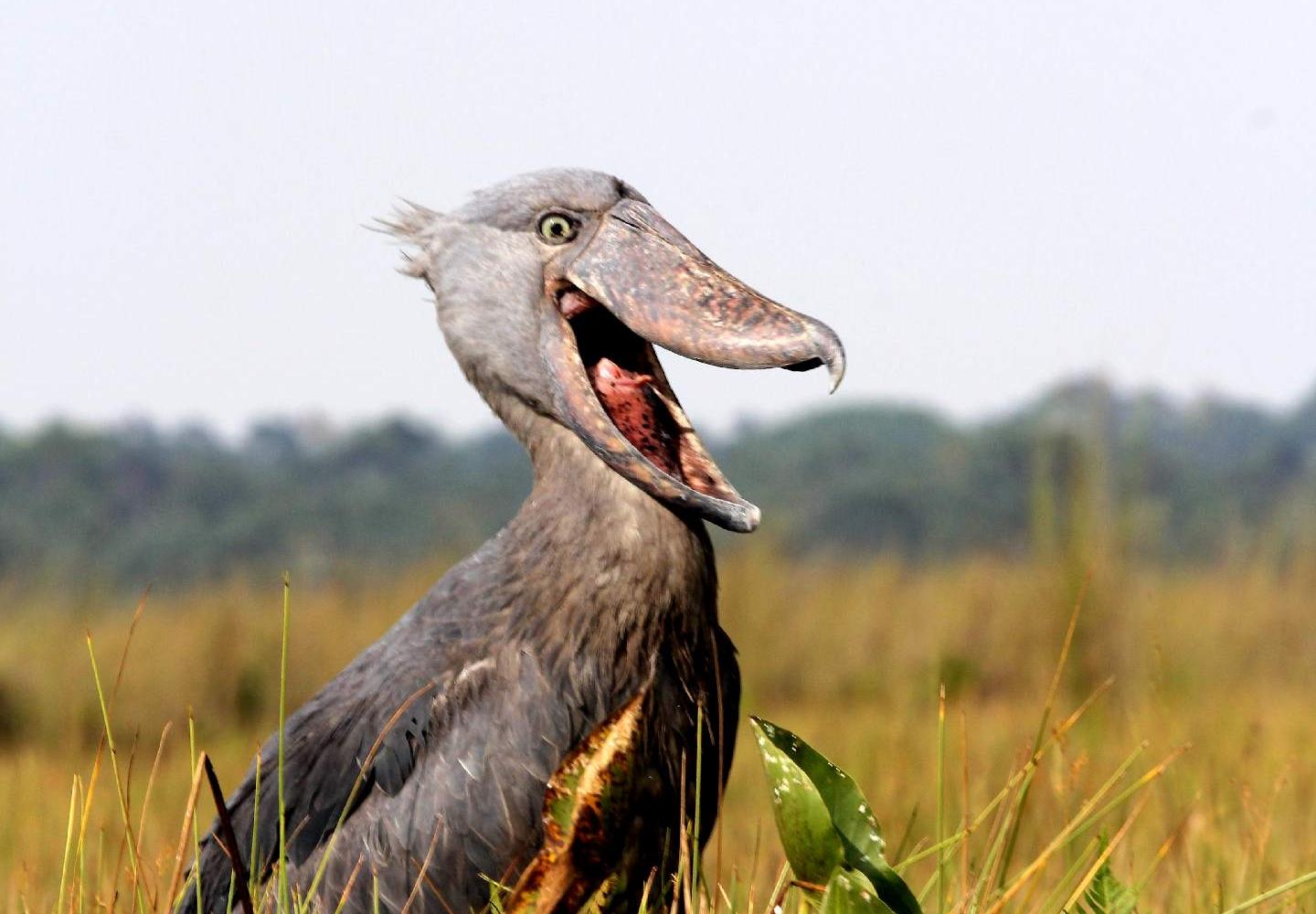
The shoebill is unlike any other bird in Africa. Its large, powerful bill is perfectly adapted for catching lungfish, its primary prey.
Its hunting style is defined by patience. It can stand completely still for long periods before striking suddenly with remarkable speed and precision.
This behavior makes the moment of capture dramatic and unforgettable for observers.
Its appearance, often described as dinosaur-like, adds to the sense of encountering something ancient and rare.
Other Wildlife Around the Delta
A shoebill search in Murchison Falls National Park is never just about one species. The delta region is rich in biodiversity.
While navigating the channels, you may encounter:
- Hippos resting in the water
- Nile crocodiles along the banks
- Elephants feeding near the shoreline
- A wide variety of water birds
The combination of wetland and savannah ecosystems creates a diverse and dynamic environment.
Comparing Murchison Falls to Mabamba Swamp
Many travelers choose between Mabamba Bay Wetland and Murchison Falls National Park for shoebill sightings.
Mabamba offers higher reliability due to its smaller, more controlled environment and consistent tracking efforts.
Murchison Falls, however, offers a more wild and expansive setting. Here, the shoebill is part of a larger ecosystem, and sightings feel more like a true discovery rather than a targeted search.
Both experiences are valuable, but they deliver different types of encounters.
Practical Tips for a Successful Sighting
Success in seeing a shoebill depends on preparation and mindset.
Patience is essential. This is not a fast-paced activity, and sightings may take time.
Silence helps significantly, as the bird is easily disturbed.
Binoculars and a good zoom camera improve your ability to observe without getting too close.
Working with experienced guides is one of the most important factors, as they understand the bird’s behavior and movement patterns.
Why the Shoebill Experience Matters
Seeing a shoebill in the wild is more than just ticking off a rare species. It is an encounter with one of Africa’s most iconic and unusual birds in its natural habitat.
In Murchison Falls National Park, this experience is amplified by the surrounding wilderness, where river, wetland, and savannah ecosystems meet.
It is a reminder that Uganda’s biodiversity extends far beyond its famous primates and large mammals.
A Rare Encounter Worth the Effort
The shoebill stork remains one of the most elusive and rewarding wildlife sightings in Uganda. In Murchison Falls National Park, the experience is both challenging and deeply satisfying.
From the quiet navigation of the Nile Delta to the sudden moment of spotting the bird standing motionless in the swamp, every part of the journey builds anticipation.
For travelers willing to invest the time and patience, the reward is unforgettable-a rare glimpse into one of Africa’s most extraordinary species in one of its most iconic landscapes.