
Tree-Climbing Lions of Ishasha: Uganda’s Most Unique Wildlife Sight
The first time someone told me lions climb trees, I nodded politely and assumed they were exaggerating.
You know how it goes. Travel stories get bigger every time they’re told. A lion resting under a tree becomes “a lion lounging in the branches.” A steep hill becomes “almost vertical.”
So when my guide said we were heading to Ishasha to see the tree-climbing lions, I smiled and thought, Sure. Maybe we’ll see one sitting on a low branch.
Then we found her.
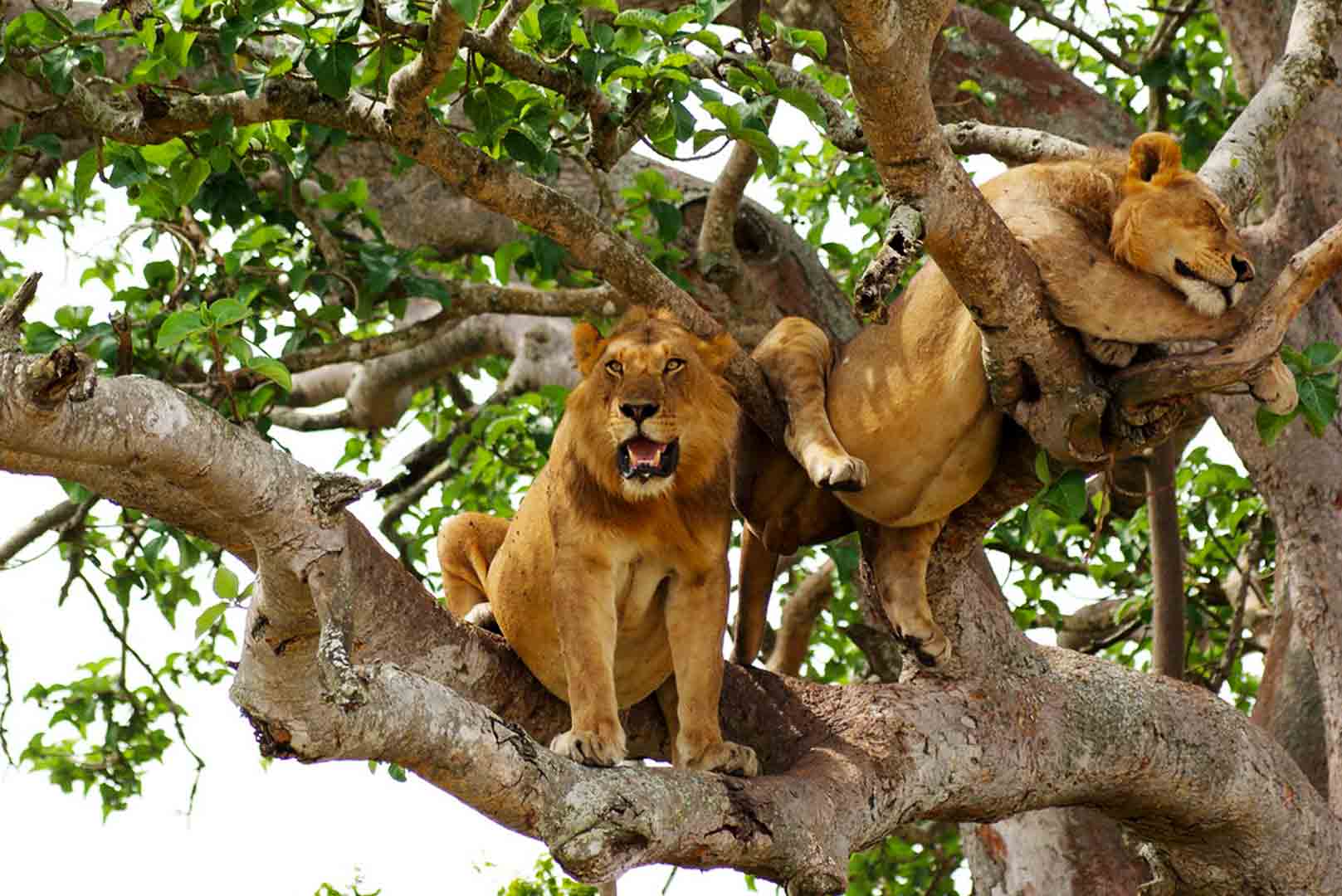
A fully grown lioness, maybe four years old, sprawled across the thick branches of a giant fig tree. One paw hanging down. Her tail twitching slowly. Easily fifteen feet above the ground.
I just stared.
My guide laughed. “First time?”
I couldn’t even answer.
Why This Makes No Sense (And That’s What Makes It Amazing)
Here’s the thing about lions.
They’re not built for climbing.
Cheetahs have claws that grip. Leopards haul entire antelopes up trees like it’s nothing. But lions? Their claws are built for gripping the ground during a hunt, not wrapping around branches.
And they’re heavy. A male lion can weigh over 200 kilos. That’s a lot of cat to hoist into a fig tree.
So why do the lions of Ishasha do it?
Honestly? Nobody fully agrees.
Some guides say it’s to escape the tsetse flies that swarm near the ground during certain seasons.
Others say it’s for the breeze – cooler air up higher, especially in the heat of the day.
Some researchers think they climb for a better view of buffalo and antelope herds moving across the plains.
And maybe it’s just habit now. Something they learned from their mothers and keep doing because… well, why not?
Whatever the reason, watching a lion yawn from a tree branch is one of those moments you don’t forget.
Where Exactly Is Ishasha?
Ishasha is the southern sector of Queen Elizabeth National Park.
Most visitors drive straight through on their way from Kampala to Bwindi (for gorilla trekking). They spend maybe two hours in Ishasha, hope to spot a lion, and move on.
That’s a mistake.
Ishasha is remote. Quiet. The roads are rough – more red dirt than gravel. There are no lodges every five minutes. Just open savanna, giant fig trees, and the winding Ishasha River where buffalo and elephants come to drink.
The feeling is different here than in the main part of Queen Elizabeth. Less crowded. Wilder. Like the park hasn’t been fully discovered yet.
The Best Time to See Them
Morning.
I can’t say this strongly enough. Go early.
The lions climb down during the heat of the day. By 11 AM, they’re often hidden in thick bush or lying flat under trees where you can barely see them.
But between 7 AM and 10 AM?
That’s when the magic happens.
We found our lioness around 8:30. She’d been there since dawn. The light was soft. The air was still cool. She was half-asleep, but every few minutes she’d open her eyes and scan the plains below.
We sat there for maybe twenty minutes just watching. No other vehicles. No noise. Just a lion in a tree and us staring up at her like idiots.
How Likely Are You to See One?
I’ll be honest.
It’s not guaranteed.
Some days, the lions are all on the ground. They’re deeper in the park where tourists don’t go. They’ve made a kill and you’ll find them sleeping it off under a bush.
But here’s what I learned.
The lions of Ishasha have favorite trees. And the guides know which ones.
If you have a good guide – someone who drives this area every week – your chances are pretty high. They talk to other guides. Check the ranger reports. Know where the prides have been hanging out.
I’ve been twice. Saw tree-climbing lions both times. Not a huge sample size, but enough to make me believe it’s more reliable than people say.
What You Actually See (Be Honest With Yourself)
Let me manage expectations.
You’re probably not going to see a lion hunt from a tree. You’re not going to watch one leap down onto an unsuspecting buffalo.
What you’ll see is a lion resting. Sleeping. Yawning. Maybe sitting up to scratch an ear.
And that’s okay.
Because there’s something quietly incredible about watching a predator that could end you in seconds… just lounging in a tree like an overgrown house cat.
My wife kept whispering, “I can’t believe that’s real.”
That feeling alone is worth the drive.
Practical Things Nobody Tells You
The roads are rough. Ishasha isn’t paved. The main track is okay, but the smaller roads where lions actually hang out? Bumpy. Dusty. You’ll feel it in your back. Bring a cushion if you’re sensitive.
Pack snacks and water. There’s almost nothing in Ishasha itself. A couple of lodges, a ranger post, and that’s it. We brought lunch and ate it under a tree while watching elephants cross the river. Not a bad office.
The tsetse flies are real. Remember how I said lions might climb to escape them? Yeah. Bring repellent. Wear long sleeves and pants. Those flies bite through thin clothes and it stings.
Stay overnight if you can. Driving in and out from the main part of Queen Elizabeth is possible but exhausting. There are a few lodges and camps in Ishasha. Even one night gives you two full drives – morning and late afternoon – which doubles your chances.
Where to Stay in Ishasha
Splurge: Ishasha Wilderness Camp. Tented camp on the Ntungwe River. Incredible location. At night you hear everything – lions calling, hyenas whooping, hippos grunting. Not for nervous sleepers.
Mid-range: Enjojo Lodge. Comfortable bandas (cottages), good food, and a watering hole where elephants come at dusk. Run by a lovely local team.
Budget: Ishasha Jungle Lodge. Simple tents with basic beds. Clean, safe, and affordable. About $50 a night. No frills, but you’re here for the lions, not the pillows.
Camping: Ishasha River Camp. Basic campsite right by the river. Bring your own tent and supplies. Incredible experience if you’re comfortable with roughing it.
The Honest One
I’ve seen lions in the Maasai Mara, them in the Serengeti and them in South Africa.
But I’ve only seen lions in trees in one place.
Ishasha is special not because it’s fancy or famous. It’s special because it’s strange. Lions shouldn’t be in trees. But there they are, every morning, sprawled across fig branches like they own the sky.
And maybe that’s the point.
Nature doesn’t read the rulebook. Animals do weird things for their own reasons, and we get to sit there with our mouths open, trying to understand.
If you’re in Uganda, don’t just rush through Ishasha on your way to see gorillas.
Spend a night. Wake up early. Drive the dusty roads. Look up into the fig trees.
You might see nothing but leaves and sky.
Or you might see a lion yawning fifteen feet above your head, completely unconcerned with your existence.
Either way, you won’t forget trying.